
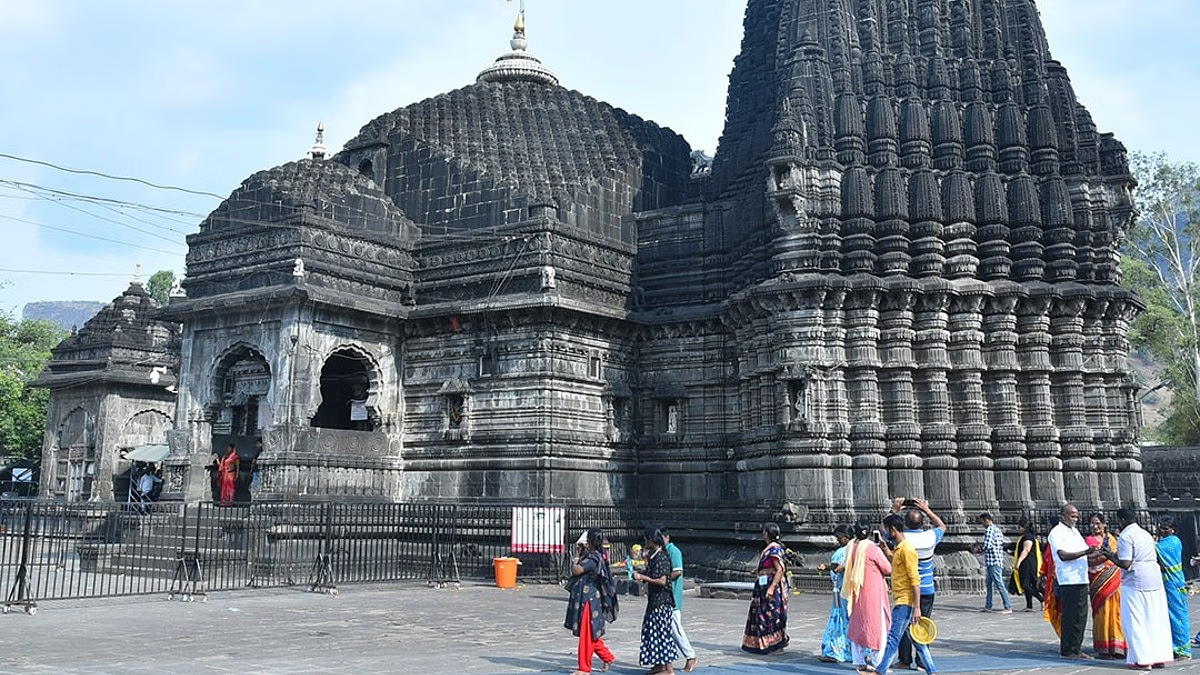
The moment you step onto the cool stone courtyard of Tryambakeshwar Temple Nashik, something shifts. It’s not just the temperature drop as you move from the Maharashtra sun into the temple’s shaded complex, but a subtle change in the air itself. The scent of jasmine and sandalwood mixes with something earthier—the damp stone of ancient architecture and the faint mineral smell of the nearby river. The sound of chanting blends with the gentle ringing of temple bells, creating a rhythm that seems to match your heartbeat.
Unlike many famous temples that feel like destinations, Tryambakeshwar feels like stepping into a living, breathing spiritual ecosystem. The temple isn’t just a building; it’s the heart of a sacred landscape where the divine isn’t confined to stone but flows through the land itself. As you remove your shoes at the entrance, the cool marble beneath your bare feet feels different—not just smooth stone, but something alive with centuries of devotion.
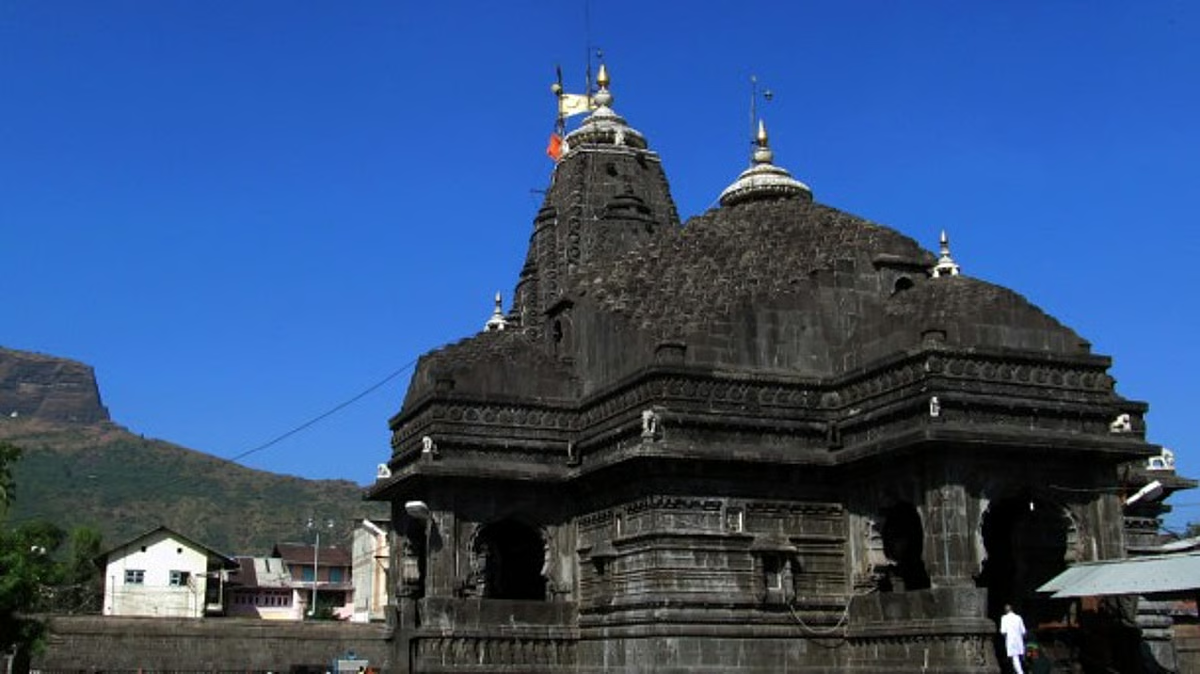
The Legend That Created a River
Tryambakeshwar’s story begins with a sage named Gautama who performed intense penance here, seeking Shiva’s blessings. Through his devotion, he created a small lake called Kushavarta Kund. But tragedy struck when a famine hit the region, and Gautama’s cow died after accidentally consuming some grains that had been ritually contaminated.
Feeling responsible, Gautama performed even more intense penance, standing on one leg in the river for years. When Shiva finally appeared, the sage requested relief for his people. Shiva agreed but warned that the river’s force would be too powerful for the land to contain.
To solve this, Shiva took the river Ganga into his matted locks, releasing it gradually onto the earth. This is why Tryambakeshwar is considered the source of the Godavari River—India’s second-longest river flows from Shiva’s hair, making this place uniquely sacred.
Standing near the Kushavarta Kund, you can almost feel the weight of that ancient moment—the moment when divinity touched earth and created a river that would nourish millions for millennia. The legend isn’t just a story here; it’s woven into the landscape, the water, and the very air you breathe.
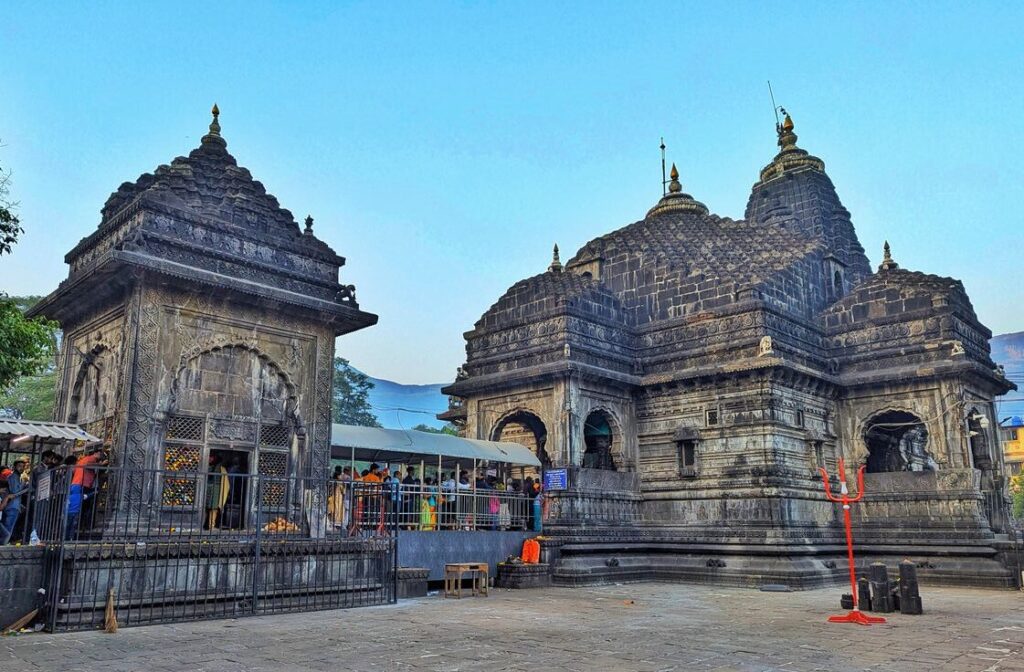
The Three-Faced Lingam: A Cosmic Revelation
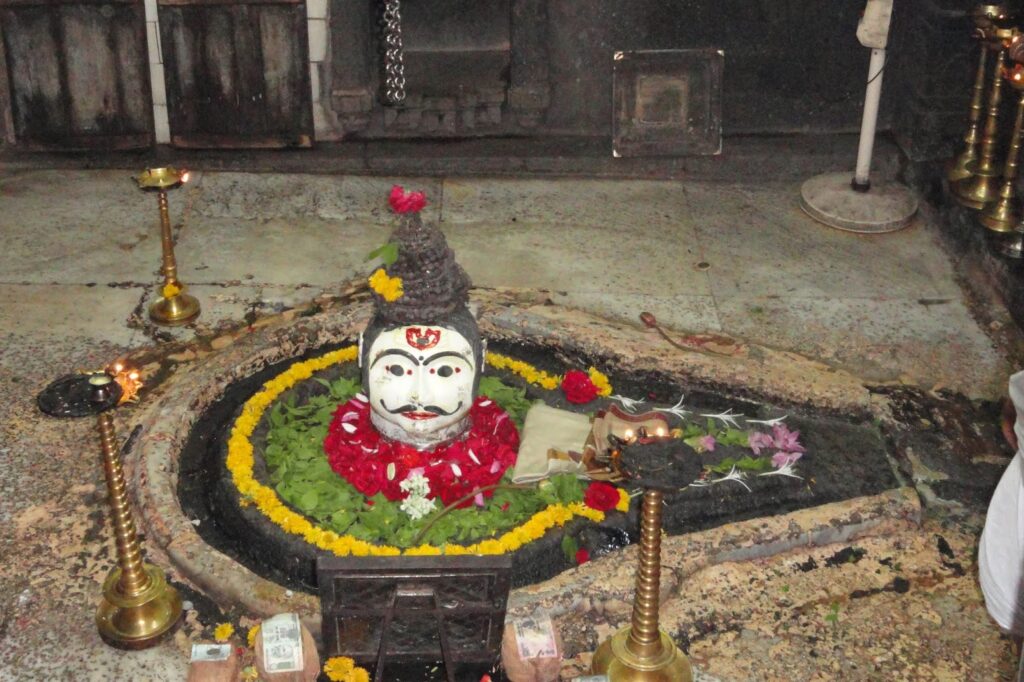
What makes Tryambakeshwar unique among the twelve Jyotirlinga temples is its three-faced lingam. Unlike the single-faced lingams at other Jyotirlingas, this manifestation shows Shiva in three aspects:
- Brahma face (creative aspect) facing east
- Vishnu face (preserving aspect) facing south
- Rudra face (transformative aspect) facing west
This triune form represents the Trimurti—the three primary aspects of the divine in Hindu cosmology. Standing before the lingam during darshan, you can see how the oil lamps reflect differently off each face, creating a visual representation of the different energies.
The head priest explained that this form of Shiva is called Tryambaka—”the three-eyed one”—hence the temple’s name. What’s remarkable is how the three faces aren’t carved but appear naturally in the stone, as if the lingam itself chose to reveal these aspects to the world.
During my visit, I watched as priests performed the ritual bathing of the lingam with water from the nearby Godavari. The water flowed differently over each face, as if acknowledging the distinct energy of each aspect. In that moment, the abstract concept of the Trimurti became tangible—a living truth you could see and feel.
The Godavari: More Than Just a River
Most people think of rivers as natural features, but at Tryambakeshwar, the Godavari is a living deity. Unlike other famous temples where rivers are nearby, here the river is part of the temple’s very identity—it flows from Shiva’s locks, making it sacred from its very source.
The river begins as a small spring near the temple complex, barely more than a trickle, yet it carries the weight of divinity. Watching the water emerge from the earth, you understand why this spot is considered so special—the moment where the celestial becomes earthly.
What most visitors miss is how the river changes as it flows through the temple complex:
- At its source: Clear, cold water emerging from the earth
- In the Kushavarta Kund: Calm, still waters perfect for ritual bathing
- As it leaves the complex: Beginning its journey as the mighty Godavari
During my visit, I joined the early morning ritual of collecting river water for the temple’s daily ceremonies. The water collectors moved with practiced precision, using specially shaped copper pots that resonated with the river’s frequency. As they dipped the pots into the water, the sound created a harmonic that seemed to match the river’s natural rhythm. “The river speaks,” one collector explained. “We just learn to listen and respond.”
The Kushawrat Kund: Where Ritual Meets Reality
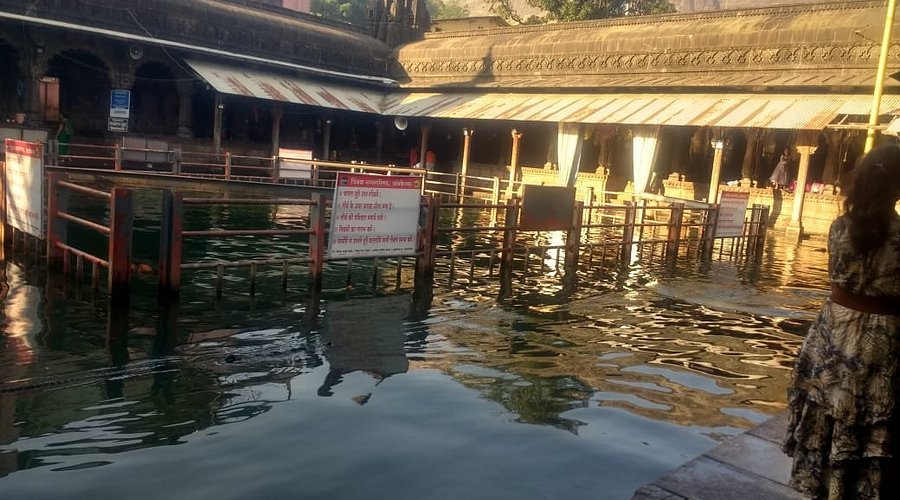
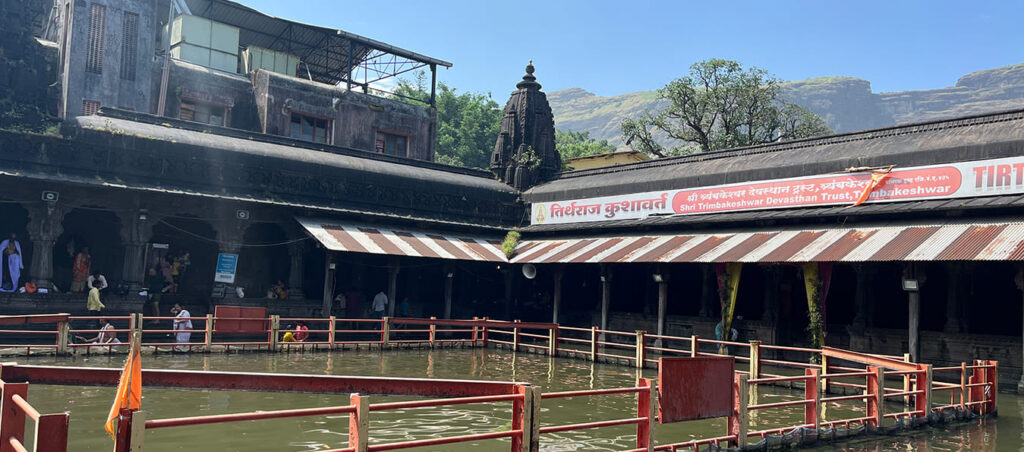
The Kushawrat Kund isn’t just a tank of water—it’s the spiritual heart of Tryambakeshwar. This large rectangular pond, built with black stone, is where Gautama is said to have created his original lake through penance. Today, it serves as the primary site for ritual bathing before entering the main temple.
What makes this kund special:
- It’s considered the starting point of the Godavari River
- The water is believed to have healing properties
- Specific bathing rituals are performed at precise times
- The stone steps create natural amphitheaters for chanting
- The water level changes with the seasons, affecting ritual timing
One morning, I joined the pre-dawn bathing ritual. As the first light filtered through the temple windows, hundreds of devotees moved through the kund in a carefully choreographed pattern. The water was cool but not cold, and the gentle splashing created a natural rhythm that matched the soft chanting.
An elderly devotee noticed my curiosity and explained the significance of each step: “First we wash the left foot—representing the past. Then the right foot—the future. Finally, we pour water over the head—the present moment where Shiva resides.” In that simple ritual, the entire philosophy of living mindfully was contained.
The Hidden Caves: Where Sadhus Still Meditate
Behind the main temple complex lie caves that most visitors never see—natural rock formations where sadhus have meditated for centuries. I discovered them by accident when I followed the sound of water to what appeared to be a dead end.
An elderly caretaker was tending to the area, his hands moving gently among the rocks. “These aren’t just caves,” he explained as he showed me around. “They’re living meditation chambers.” He pointed to different areas: “This one is where Adi Shankaracharya is said to have meditated for 40 days. That overhang marks where the river first emerged from Shiva’s locks.”
As we walked among the caves, he shared stories that connected each space to Hindu mythology. “This natural spring,” he said, placing his hand on the damp rock, “is believed to have healing properties for specific ailments.” He then showed me a particular formation that only appears during the monsoon: “This is the ‘river’s pulse’—it swells with the Godavari’s flow, even when there’s no visible water.”
What moved me most was learning how the temple’s rituals incorporate these caves. Specific ceremonies happen only in certain caves at precise times of year, following patterns established centuries ago. “We don’t just worship Shiva here,” the caretaker said. “We live with him in every drop of water and every stone.”
The Night I Spent in the Temple Courtyard
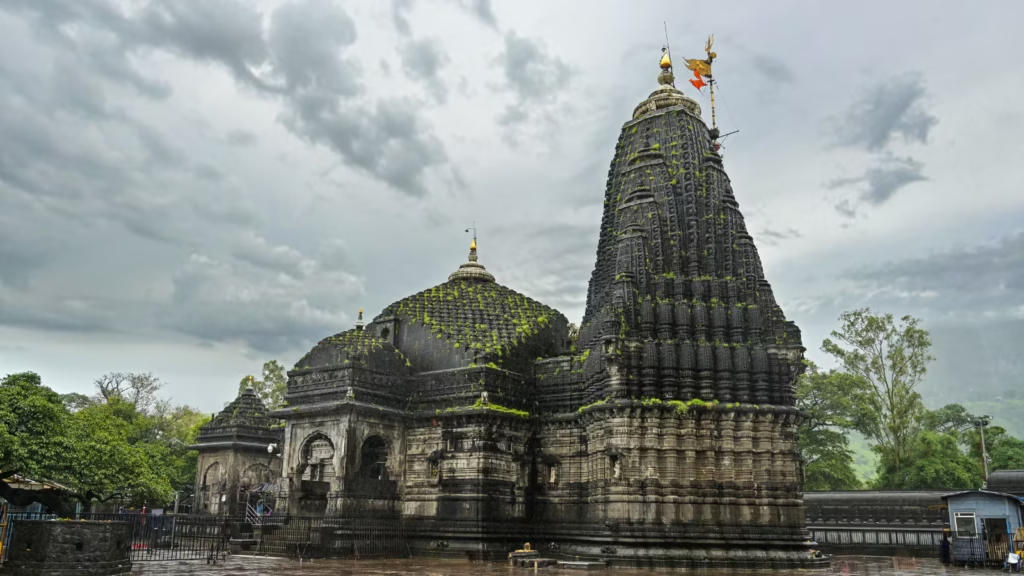
Most visitors leave by sunset, but I decided to stay. The temple provides simple accommodations for pilgrims who wish to experience the temple after the crowds depart. As the last tourists filed out, the temple transformed. The harsh fluorescent lights were turned off, replaced by traditional oil lamps that cast dancing shadows on the ancient walls.
Around 9 PM, I joined a group of sadhus for an informal discussion in the courtyard. One of them noticed my camera and said, “Put it away. The real experience happens when you stop trying to capture it.” He was right. Without the distraction of documenting everything, I began to notice details I’d missed during the day: the way the moonlight highlighted specific carvings, the different sounds of the river at night versus day, the subtle shift in the scent of incense as the temperature dropped.
As midnight approached, the head priest invited us to witness the rare “Ratri Puja” (night worship). In the dim light of the sanctum, the rituals took on a different quality—more intimate, more personal. The priest explained that night worship connects to Shiva’s aspect as the destroyer of darkness, both literal and metaphorical.
Lying on my thin mat in the temple courtyard that night, listening to the river below and the occasional bell from the sanctum, I understood why people come here seeking transformation. The temple isn’t just a place to visit—it’s a space that changes you if you let it.
The Food That Feeds the Soul
Temple food in India varies widely, but the langar (community kitchen) at Tryambakeshwar has a special character. What surprised me most was how the food connects to the river’s rhythms.
I spent a morning with the kitchen staff, who welcomed me despite my clumsy attempts to help. The head cook explained that everything served here comes from the surrounding area: rice grown in the Godavari valley, vegetables from local farms, and milk from nearby villages.
“The food isn’t just nourishment,” she said as she stirred a massive pot of rice. “It’s prasad that carries the energy of this place.” She showed me how they prepare the special “Godavari Bhaat” (river rice) that’s unique to this temple—using water directly from the river and special herbs that grow only along its banks.
What moved me most was learning about the “Anna Daan” (food donation) tradition. Every day, the kitchen prepares extra food specifically for the sadhus and wandering seekers who have nothing. “Shiva is everyone’s god,” the cook explained. “Not just those who can afford to visit the temple.”
During my stay, I shared a meal with a group of pilgrims from different parts of India. As we ate with our hands (as is tradition), someone shared a story about how the temple’s food had sustained them during difficult times. “This isn’t just food,” they said. “It’s love made edible.”
Practical Wisdom for Your Pilgrimage
Visiting Tryambakeshwar requires more than just showing up—it’s an experience that demands preparation and respect:
Best Times to Visit
- Pre-dawn (3-5 AM): For the special river rituals
- Late morning (10 AM-12 PM): When the temple is less crowded
- Evening (5-7 PM): For the regular aarti ceremony
- During Shravan month: For special rituals and festivals
What to Wear
- Traditional Indian clothing is preferred (dhoti/kurta for men, saree/salwar kameez for women)
- Shoulders and knees must be covered
- Remove all leather items (belts, wallets, etc.)
- Go barefoot inside the temple complex
Ritual Etiquette
- Silence is expected in the inner sanctum
- Photography is prohibited in many areas
- Offerings should be purchased from temple-approved vendors
- Follow the clockwise movement around the sanctum
Hidden Gems
- The early morning river ritual at dawn (5 AM)
- The sunset viewpoint behind the temple that most tourists miss
- The weekly market on Thursdays where you can meet local communities
- The sound garden near the Kushavarta Kund is most active in the early morning
What NOT to Do
- Don’t try to negotiate with sadhus (they don’t accept money for blessings)
- Don’t eat non-vegetarian food within 5 km of the temple (it’s considered disrespectful)
- Don’t rush through rituals—observe quietly before participating
- Don’t assume all areas are open (some shrines have restricted access during certain rituals)
The Real Miracle of Tryambakeshwar
After three days at Tryambakeshwar, I realized something profound: the real miracle isn’t the ancient architecture or the dramatic location—it’s the living tradition that connects people across generations and backgrounds.
On my last evening, I sat with a group of pilgrims from different parts of India. There was a businessman from Mumbai, a farmer from Tamil Nadu, a student from Delhi, and an elderly couple who had been coming here for 50 years. Despite their different backgrounds, they shared a common language of devotion that needed no translation.
The businessman told me, “I come here every year to reset my priorities. In the city, I measure success by money and power. Here, success is measured by how quietly you can sit and listen.”
As we watched the evening aarti (prayer ceremony), with oil lamps reflecting on the ancient stone walls, I understood what makes Tryambakeshwar special. It’s not just a Jyotirlinga—it’s a living community where ancient traditions breathe through modern lives.
The head priest found me packing my bag the next morning. “You’re taking something with you,” he said, not as a question but as a statement. I thought he meant a souvenir, but he shook his head. “The river gives something to everyone who listens. What did it give you?”
I struggled to find words until I realized: Tryambakeshwar had given me the understanding that true spirituality isn’t about grand gestures, but about attention to the present moment—the way the light hits a stone carving, the sound of water on stone, the feeling of cool marble under bare feet.
As I walked down the path to the bus stop, I glanced back one last time. The temple glowed softly in the morning light, not as a monument to the past, but as a living presence connecting past, present, and future. The river’s whisper had become part of me, and I knew I’d carry it long after the journey ended.
Why Tryambakeshwar Belongs on Your Spiritual Journey
If you’re planning a pilgrimage in India, Tryambakeshwar might not be the first name that comes to mind. Most people head straight for the more famous temples like Kedarnath or Somnath. But here’s why you should consider adding this hidden gem to your spiritual journey:
- It’s accessible: Unlike Himalayan Jyotirlinga temples that require difficult treks, Tryambakeshwar is reachable by road from major cities
- It’s peaceful: Without the massive crowds of more famous temples, you can actually experience the spiritual energy
- It’s immersive: The river setting creates a multi-sensory experience that engages more than just your eyes
- It’s authentic: The rituals here feel less commercialized, more connected to genuine spiritual practice
- It’s transformative: The combination of natural beauty and sacred space creates a powerful environment for reflection
During my visit, I met a young woman who was traveling alone on her first spiritual journey. “I almost skipped this place,” she admitted. “But now I understand why it’s special. It’s not about checking off a list of famous temples—it’s about finding the place that speaks to you.”
FAQs on Tryambakeshwar Temple
Q1. Where is Tryambakeshwar Temple located?
It is situated in Nashik, Maharashtra, near the Brahmagiri hills.
Q2. Why is Tryambakeshwar Temple famous?
It is one of the 12 Jyotirlingas of Lord Shiva and holds great spiritual significance.
Q3. What is the best time to visit Tryambakeshwar Temple?
The winter months (October to March) are considered best for pilgrimage.
Q4. What rituals are performed at Tryambakeshwar Temple?
Special pujas like Rudrabhishek, Narayan Nagbali, and Kalsarpa Shanti are performed here.
Q5. Is photography allowed inside the temple?
No, photography and videography are strictly prohibited inside the temple premises.
Q6. How can I reach Tryambakeshwar Temple?
The temple is about 30 km from Nashik and can be reached by road, with Nashik Road railway station being the nearest railhead.
Q7. What are the temple timings?
Generally, the temple remains open from 5:30 AM to 9:00 PM daily.
Q8. Are there any accommodations near the temple?
Yes, several dharamshalas, guest houses, and hotels are available in Nashik and near the temple.
Q9. Can women perform rituals at Tryambakeshwar Temple?
Yes, but certain rituals like Narayan Nagbali are performed only by male family members.
Q10. Is Tryambakeshwar connected to the origin of Godavari River?
Yes, the temple is located at the source of the holy Godavari River, which adds to its sanctity.

One thought on “Tryambakeshwar Temple Nashik – Jyotirlinga in Maharashtra”