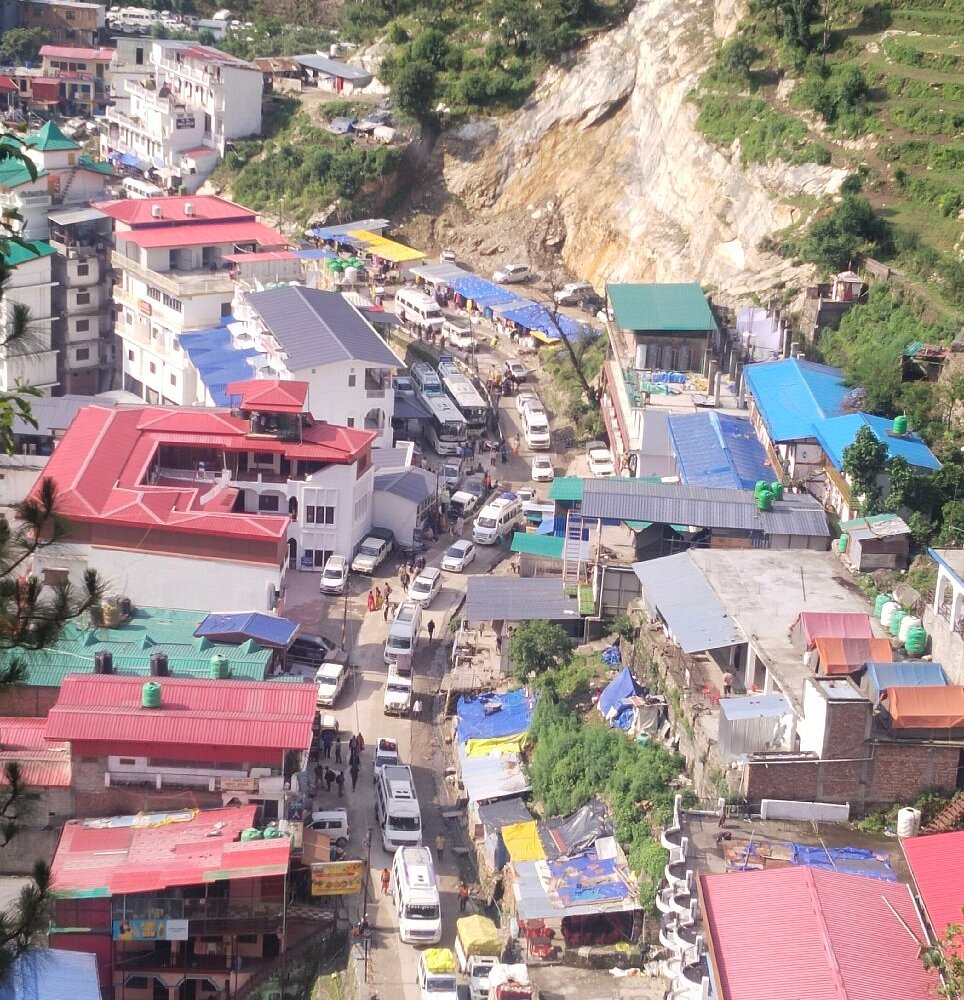
Sonprayag Uttarakhand, a picturesque hamlet nestled in the Rudraprayag district of Uttarakhand, holds an inestimable place in the spiritual and geographical tapestry of the Garhwal Himalayas. Far more than a mere transit point, it is a spiritual threshold, the final motorable point before the arduous yet deeply fulfilling pilgrimage to the revered Kedarnath Temple.
Situated at an elevation of approximately 1,829 meters (6,000 feet) above sea level, Sonprayag is where the journey transitions from road travel to the sacred trek, marking the commencement of the last leg of the Kedarnath Yatra.
Location and Geographical Significance Sonprayag Uttarakhand
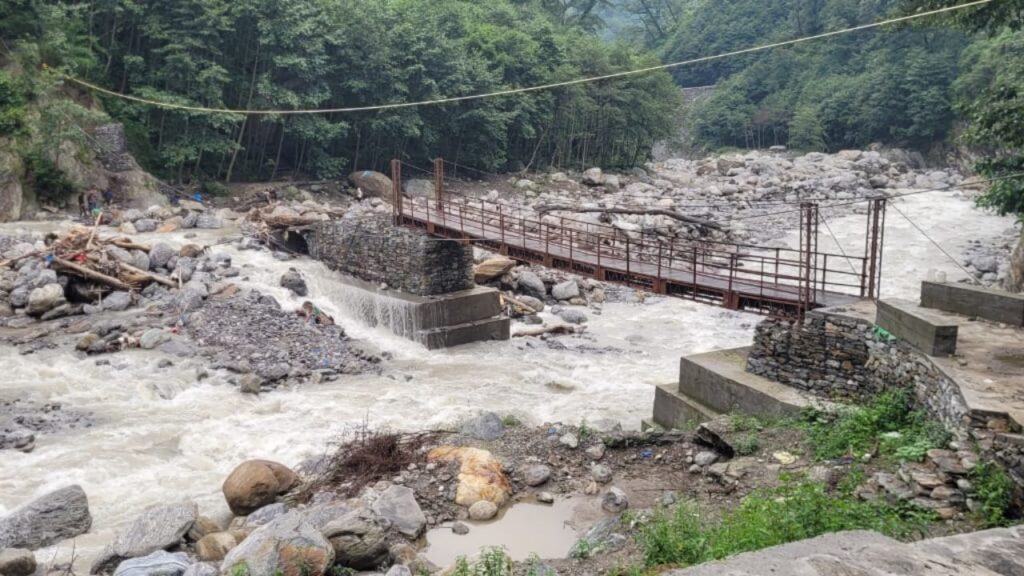
Sonprayag’s location is a study in natural and spiritual confluence, giving the village its profound name. The term ‘Prayag’ in Hindu tradition signifies a confluence of rivers, and Sonprayag is the sacred meeting point of the River Mandakini and the River Basuki (or Son Ganga).
This confluence, or ‘Sangam,’ is regarded as extremely holy, with pilgrims often taking a ritual dip in the chilling waters, believing it purifies the soul and grants ‘Moksha’ (liberation from the cycle of life and death). The name ‘Sonprayag’ itself is sometimes associated with the word ‘Sona’ (gold), perhaps alluding to the golden quality of the surrounding natural beauty or a mythological reference to the confluence’s immense spiritual value.
Geographically, the village is strategically positioned in the Mandakini river valley, flanked by majestic, snow-capped peaks and lush Himalayan forests.
- District: Rudraprayag District, Uttarakhand.
- Altitude: ∼1,829 meters (6,000 feet).
- Distance from Key Points:
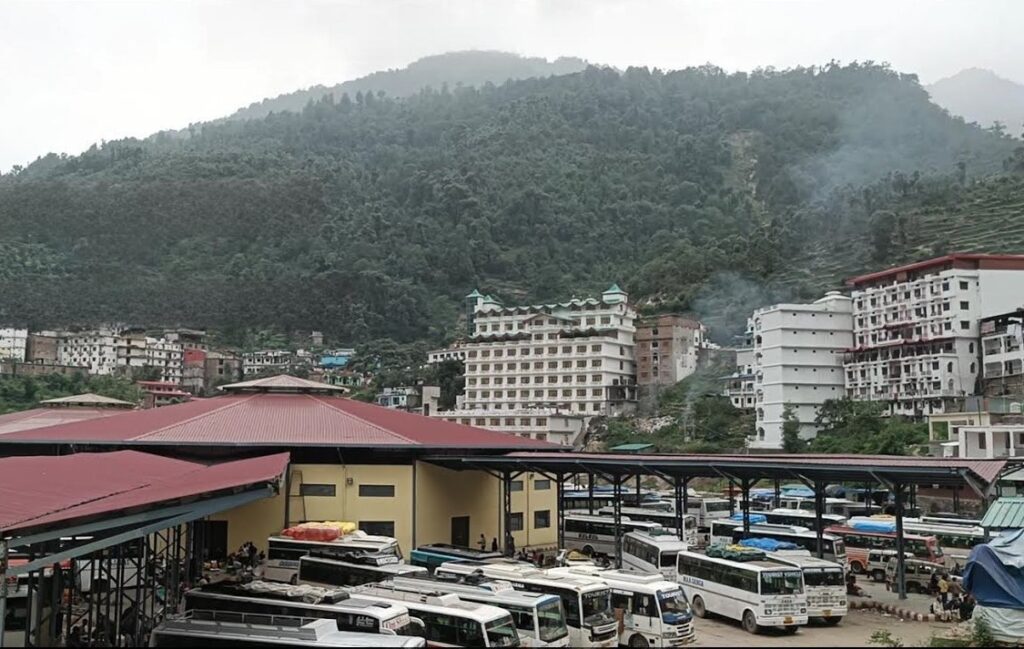
Sonprayag is the indispensable hub for the Kedarnath pilgrimage, providing a nexus for transport, accommodation, and essential services before pilgrims embark on the final ascent. Its significance as the last point accessible by private vehicles necessitates a massive parking infrastructure and the efficient management of the local shared taxi system to Gaurikund, ensuring the smooth flow of the hundreds of thousands of pilgrims who visit annually during the Char Dham Yatra season.
The Spiritual and Mythological Essence
The spiritual aura of Sonprayag is intrinsically linked to the legendary tales of Lord Shiva and Goddess Parvati, which are deeply rooted in the Garhwal region.
The Confluence for Moksha
The most immediate religious significance stems from the confluence of the Mandakini and Basuki rivers. The Mandakini, born from the Chorabari Glacier near Kedarnath, is a fiercely revered river, mentioned in ancient scriptures. Taking a holy bath at the Sangam is a ritualistic act of purification, intended to cleanse one of sins before they proceed to seek the blessings of Lord Shiva at Kedarnath. This act is considered a vital preparation for the final, spiritual climb.
The Divine Marriage of Shiva and Parvati
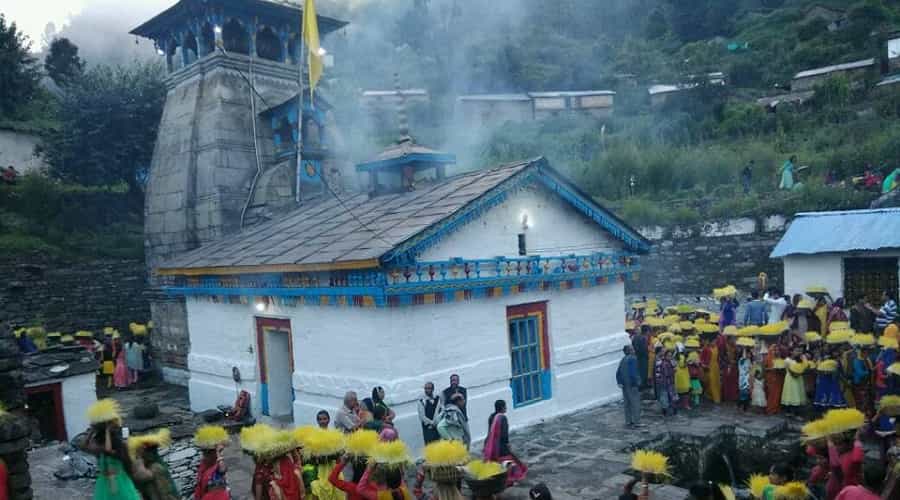
A few kilometers from Sonprayag lies the village of Triyuginarayan, home to the ancient Triyuginarayan Temple. This temple is perhaps the most profound mythological anchor for the entire region. Legend holds that this is the very spot where Lord Shiva and Goddess Parvati were united in holy matrimony. Lord Vishnu acted as Parvati’s brother, and Lord Brahma performed the priestly duties.
The most striking element of the temple is the “Akhand Dhuni” or “eternal flame,” a sacred fire that is believed to have been burning continuously since the time of the divine wedding, spanning three yugas (epochs). Pilgrims carry ash from this eternal flame as a blessing for marital bliss and a symbol of the enduring divine union. Sonprayag, being the nearest roadhead to Triyuginarayan, serves as the primary base for visitors to this historically and mythologically crucial site.
The Gateway to the Lord
Beyond local legends, Sonprayag’s chief importance is its role as the definitive Gateway to Kedarnath Dham, one of the twelve Jyotirlingas and the most revered of the Panch Kedar shrines dedicated to Lord Shiva. For pilgrims, crossing from Sonprayag to Gaurikund marks a commitment to the divine journey, a transition from worldly travel to spiritual exertion. It is the point where the roads end and the devotion of the heart takes over, carried forward by one’s own feet, on a pony, or in a palki (palanquin).
Route and Accessibility: How to Reach Sonprayag
Sonprayag is well-connected by motorable roads despite its high-altitude Himalayan location, serving as the essential terminal for all road transport to the Kedarnath region.
By Road (The Most Common Route)
The journey by road to Sonprayag is an adventure in itself, passing through scenic valleys and the confluence points of other holy rivers.
Key Route (From Delhi/Haridwar/Rishikesh):
- Delhi / Haridwar / Rishikesh to Rudraprayag: The journey begins from major transport hubs. The most popular and direct route follows NH 7 (old NH 58) through towns like Devprayag (confluence of Alaknanda and Bhagirathi), Srinagar, and then reaches Rudraprayag (confluence of Alaknanda and Mandakini).
- Distance from Haridwar: ∼222 km.
- Travel Time: ∼8−9 hours.
- Rudraprayag to Guptkashi: From Rudraprayag, the road follows the Mandakini River upstream, mostly along NH 107 (old NH 109), passing towns like Agastyamuni and Kund, before reaching Guptkashi.
- Distance from Rudraprayag: ∼73 km.
- Guptkashi to Sonprayag: The final leg of the motorable journey continues to Sitapur and then Sonprayag.
- Distance from Guptkashi: ∼30 km.
Vehicle Regulations: A critical point of travel information is that all private and commercial vehicles from outside the region must stop at Sonprayag. No vehicular movement is permitted beyond this point, except for the local, government-regulated shared taxis/shuttles that ply the final 5-kilometer stretch to Gaurikund. Parking facilities are available in Sonprayag for pilgrims’ vehicles.
By Air (Nearest Airport)
The nearest airport is the Jolly Grant Airport (DED), Dehradun, located approximately 230-250 km from Sonprayag.
- From the airport, one can hire a pre-booked taxi or take a bus/shared taxi to Rishikesh/Haridwar and then continue the journey to Sonprayag. The road trip from Dehradun to Sonprayag takes approximately 8-10 hours, depending on road conditions and traffic.
By Rail (Nearest Railway Stations)
The nearest major railway stations are:
- Rishikesh Railway Station (RKSH): ∼210 km.
- Haridwar Railway Station (HW): ∼230 km. These stations are well-connected to major Indian cities. From either station, pilgrims must complete the rest of the journey by road (bus or taxi).
The Final Link: Sonprayag to Gaurikund
Upon reaching Sonprayag, pilgrims must park their vehicles (if driving) or disembark from buses/taxis and then utilize the dedicated shared taxi/shuttle service to cover the ∼5 km stretch to Gaurikund. Gaurikund is the actual base and the starting point for the Kedarnath Trek. The local shared taxis operate throughout the day during the Yatra season, ensuring efficient movement of pilgrims.
The Kedarnath Trek: Starting from Sonprayag’s Periphery
While the trek officially begins at Gaurikund, Sonprayag is the de facto staging point. The journey is broken down as follows:
- Sonprayag to Gaurikund: ∼5 km by local shared taxi/shuttle.
- Importance: Gaurikund is significant for the Gauri Temple and the presence of hot water springs (though the main spring pool has been affected over time), where Goddess Parvati is believed to have performed penance to win Lord Shiva. It is also the spot for the mandatory Char Dham Yatra Registration and Permit Check.
- Gaurikund to Kedarnath: ∼16 to ∼20 km trek (depending on the exact route taken and post-2013 changes).
- Route Highlights: The well-paved and railed trek route passes through scenic points like Jungle Chatti, Bheembali, and Lincholi, running alongside the Mandakini River.
- Trek Options: Pilgrims have several options for the ascent:
- On Foot: The most traditional and spiritually rewarding, typically taking 6-8 hours for fit individuals.
- Pony/Mule Services: Available for hire at Gaurikund for a quicker journey.
- Palki/Doli (Palanquin): Suitable for the elderly, disabled, or those unable to walk.
- Helicopter Services: Available from nearby helipads like Phata, Guptkashi, and Sersi for a rapid journey to Kedarnath.
Tourism and Local Attractions
While its identity is primarily defined by its role as the Kedarnath base, Sonprayag and its vicinity offer several attractions that make it a worthy stop for both pilgrims and tourists.
The Sangam of Mandakini and Basuki
The holy confluence itself is a primary attraction. The sight of the two rivers meeting, framed by the majestic mountain landscape, is both spiritually moving and visually stunning. The Sonprayag Ghat provides a clean and serene space for meditation, prayer, and the ritualistic dip.
Triyuginarayan Temple (The Wedding Site)
Located about 12-14 km by road from Sonprayag, this temple is a major side excursion. Visitors flock here to witness the Akhand Dhuni and the surrounding scenic beauty. The walk or drive up to Triyuginarayan offers magnificent panoramic views of the valley.
Gaurikund
The official starting point of the trek, Gaurikund, ∼5 km from Sonprayag, houses the Gauri Temple, dedicated to Goddess Parvati, and is a significant religious stop.
Guptkashi (The Hidden Kashi)
Located approximately 30 km before Sonprayag, Guptkashi is a significant town with its own mythological importance. It is home to the ancient Vishwanath Temple (a replica of the Kedarnath temple) and the Ardh Narishwar Temple (half man, half woman form of Shiva and Parvati). Guptkashi is also a major overnight stop for many pilgrims and is one of the helipad sites for the Kedarnath flight service.
Travel and Accommodation Information
As a key pilgrimage hub, Sonprayag is equipped with the necessary infrastructure to manage the huge influx of seasonal visitors.
Best Time to Visit
The best time to visit Sonprayag, coinciding with the opening of the Kedarnath Temple Kapat (doors), is:
- Summer (May – June): Pleasant weather, temperatures ranging from 15∘C to 30∘C. This is the peak season, meaning heavy crowds.
- Autumn (September – October): Crisp, clear weather, offering the best views of the Himalayan peaks. Temperatures are colder, but the crowd is generally less intense than in May/June.
Time to Avoid:
- Monsoon (July – August): Heavy rainfall increases the risk of landslides and road blockages, making travel hazardous and uncertain.
- Winter (November – April): The Kedarnath Temple closes, and Sonprayag experiences intense cold and heavy snowfall, often making the area inaccessible.
Accommodation and Facilities
Sonprayag offers a range of lodging options, primarily catering to the budget and needs of pilgrims.
- Hotels and Lodges: Numerous budget hotels, guest houses, and dharamshalas (charitable rest houses) are available, especially in Sonprayag and the nearby Sitapur/Guptkashi area. Booking in advance is highly recommended during the peak season.
- Food: Local eateries (dhabas) serve simple, affordable, and predominantly vegetarian North Indian and local Garhwali cuisine, keeping with the sanctity of the pilgrimage route. Non-vegetarian food and alcohol are strictly prohibited in the area.
- Essential Services: Basic medical facilities, small shops for necessities (like water, snacks, warm clothing), and pony/palki booking counters (for Gaurikund) are available. ATM and banking facilities are limited; it is advisable to carry sufficient cash.
Essential Travel Tips for Pilgrims
- Mandatory Registration: Char Dham Yatra registration is mandatory for all pilgrims. This can often be done online or at registration counters in cities like Haridwar, Rishikesh, or at the check post in Sonprayag/Gaurikund.
- Clothing: Due to the altitude, temperatures can drop suddenly, even in summer. Always carry layered woolen clothing, including thermal wear, gloves, and caps. A rain-proof jacket/poncho is essential for the trek.
- Footwear: Sturdy, waterproof, and comfortable trekking shoes with a good grip are a must for the Gaurikund to Kedarnath trek.
- Health: Acute Mountain Sickness (AMS) is a risk. Acclimatize by spending a night in Sonprayag or Guptkashi. Walk slowly on the trek, stay hydrated, and carry basic medication.
- Safety: Always follow the designated routes and official guidelines. Respect the local customs and traditions.
In conclusion, Sonprayag is the vital intersection where the human-engineered road meets the divine trail. It is a place of profound spiritual cleansing, where pilgrims pause to draw breath, reflect on their faith, and prepare for the ultimate ascent to the abode of Lord Shiva. Its significance is rooted in its role as a geographical nexus, a mythological treasure, and the indispensable logistical base for one of India’s most important and challenging pilgrimages. A visit to Sonprayag is not just a stopover; it is a sacred, symbolic, and necessary step on the journey to Kedarnath.