Uttarakhand, the “Devbhoomi” or Land of the Gods, is home to countless temples and sacred sites. Among them, the Panch Badri temples hold a special place in Hindu devotion. These five shrines are dedicated to Lord Vishnu and are spread across the picturesque Garhwal Himalayas. One of the most prominent temples in this group is adi Badri, a site that combines spirituality, history, mythology, and natural beauty of adi badri uttarakhand.
Situated around 17 kilometers from Karnaprayag in Chamoli district, adi Badri is not just a temple but a cluster of temples, often believed to have been established during the Gupta period. The temple complex exudes serenity, taking visitors back in time while offering a profound spiritual experience. Unlike the more crowded Badrinath Temple, adi Badri is quieter and allows for reflection in a peaceful environment.
In this blog, we will explore the history, mythology, architecture, spiritual importance, and travel aspects of adi Badri in detail.
Historical Background of adi Badri
The origins of adi Badri date back to the Gupta dynasty (5th to 8th century CE), one of the golden eras of Indian history. The temple complex is believed to have been commissioned under the influence of Adi Guru Shankaracharya, who revived Hinduism and established several pilgrimage centers across India.
The Gupta Period – The Golden Age of adi Badri
Historians trace the construction of the adi Badri complex to the Gupta dynasty (4th to 8th century CE). The Gupta era is often described as the Golden Age of India, marked by advances in art, literature, science, and religion.
- The temples were likely commissioned to promote Vaishnavism, the worship of Lord Vishnu, which gained prominence during this time.
- The architectural style of adi Badri reflects Nagarxa design, with shikhara-style spires and simple stone carvings.
- Inscriptions and patterns seen on the temples match those found in other Gupta-era monuments, suggesting a common artistic lineage.
The Guptas were great patrons of temple building, and adi Badri was part of a broader movement to establish Hindu sacred spaces across northern India.
Role of Adi Shankaracharya
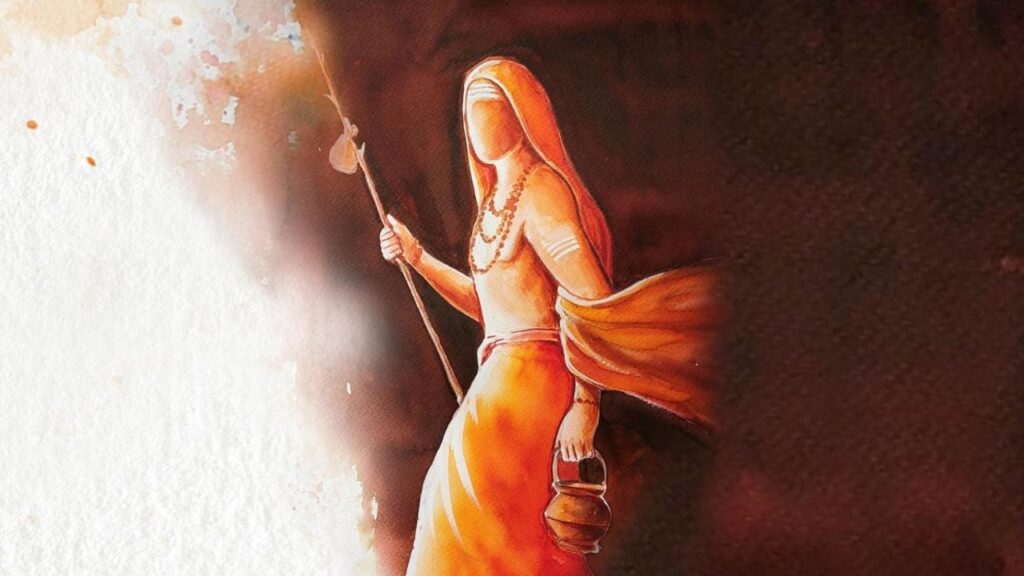
Another important chapter in the history of adi Badri is its connection with Adi Guru Shankaracharya (8th century CE).
- Shankaracharya is credited with reviving Hinduism during a time when it was facing decline due to the rise of Buddhism and Jainism.
- He established pilgrimage circuits across India, including the Char Dham Yatra, and promoted the Panch Badri shrines in Uttarakhand.
- According to tradition, he emphasized adi Badri as the “original abode of Vishnu”, before the deity shifted to Badrinath.
His influence ensured that the temple remained part of spiritual journeys in the Himalayas, preserving its importance for centuries to come.
Connection with the Mahabharata and Ancient Epics
While historical evidence ties adi Badri to the Gupta era, mythology pushes its origins further back into epic times.
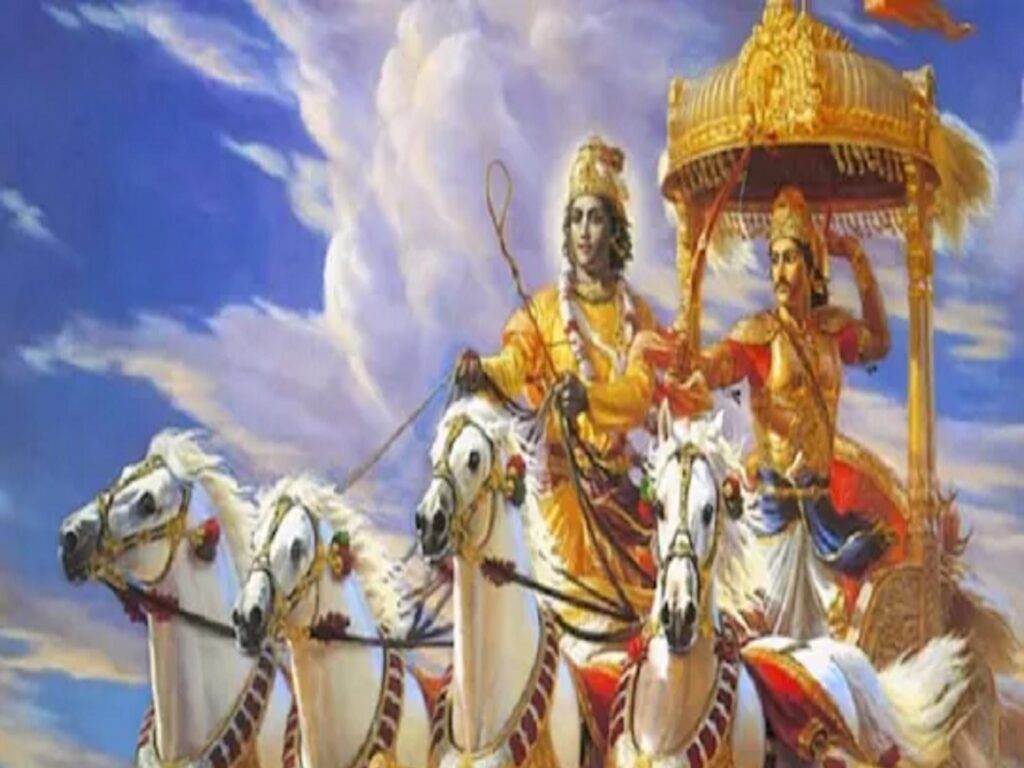
- Legends state that the Pandavas visited adi Badri on their way to the Himalayas after the Kurukshetra war.
- The temple is also associated with sages who meditated in its serene surroundings, strengthening its image as a spiritual retreat since ancient times.
- The name “adi” (first/original) reflects the belief that adi Badri predates Badrinath as Vishnu’s Himalayan seat.
These stories, though not historically verifiable, add layers of cultural richness to its background.
Medieval Period – Sustaining the Temple Tradition
After the Gupta dynasty, the temple likely underwent several phases of neglect and revival, as political power shifted in the Himalayan region.
- During medieval times, local rulers and dynasties took responsibility for maintaining the temple.
- adi Badri continued to attract pilgrims, though it never reached the scale of Badrinath.
- The temple complex also served as a community hub, where local villagers gathered during festivals and fairs.
Its survival through turbulent centuries demonstrates the resilience of faith and tradition in this part of Uttarakhand.
Archaeological Findings
Archaeologists studying adi Badri have highlighted features that confirm its antiquity.
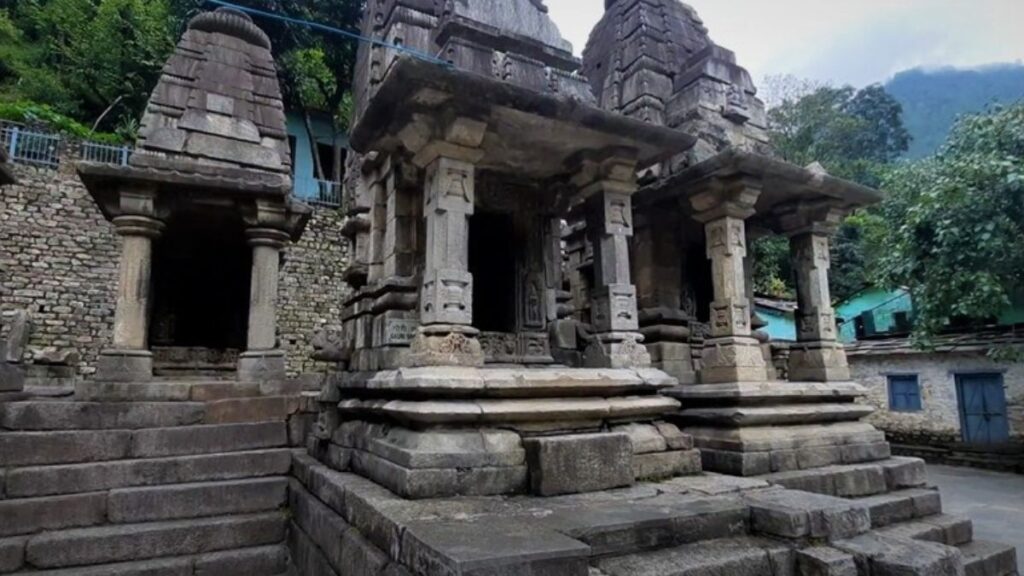
- The layout of 16 temples resembles early temple clusters seen in other parts of India during the Gupta period.
- The use of local stone, basic masonry, and lack of elaborate ornamentation indicate that the temples were designed for endurance and simplicity.
- Some remains suggest that the temples might have been part of a larger settlement or learning center, possibly frequented by saints and scholars.
While not much excavation has been done here compared to famous sites, the findings so far underscore its role as an ancient cultural landmark.
Colonial and Modern Times
During British colonial rule, the Himalayan temples did not receive the same recognition as grander sites in central and southern India. adi Badri remained relatively unknown to the outside world, visited mostly by local devotees and wandering ascetics.
However, in the post-independence era, with the rise of pilgrimage tourism in Uttarakhand, adi Badri regained attention:
- Efforts by the Archaeological Survey of India (ASI) have helped protect the temple complex.
- It has been included in the Panch Badri circuit, making it a part of popular spiritual tours.
- Improved connectivity to Karnaprayag has made it easier for pilgrims and tourists to visit.
Today, it is recognized as both a historical monument and a living place of worship.
adi Badri as the “First Vishnu Temple” in Uttarakhand
What makes adi Badri historically significant is its title as the “first Badri”. Many scholars believe that before Badrinath gained prominence, Vishnu worship in the region began here.
- This aligns with its name, “adi” meaning beginning/original.
- The temple’s smaller size compared to Badrinath suggests that it was an early prototype, later expanded in grandeur at Badrinath.
- Devotees still believe that worship at adi Badri completes the spiritual cycle of the Panch Badri pilgrimage.
Thus, historically and spiritually, adi Badri marks the starting point of Vishnu devotion in the Himalayas.
Cultural Legacy
The historical significance of adi Badri goes beyond stone and inscriptions. It represents the living continuity of Indian traditions.
- The site reflects how ancient rulers blended politics with religion, building temples to legitimize their power.
- It demonstrates how mythology and history intertwine, creating narratives that continue to inspire devotees.
- For locals, it remains not just a temple but a heritage landmark, woven into their identity and daily life.
Even today, festivals celebrated here echo traditions that may have been followed centuries ago, linking past and present.
Mythological Significance of adi Badri
Like most temples in the Garhwal Himalayas, adi Badri is deeply rooted in mythology. The name itself — “adi” meaning “first” and “Badri” referring to Lord Vishnu as Badri Narayan — signifies its importance.
Key Legends Associated with adi Badri
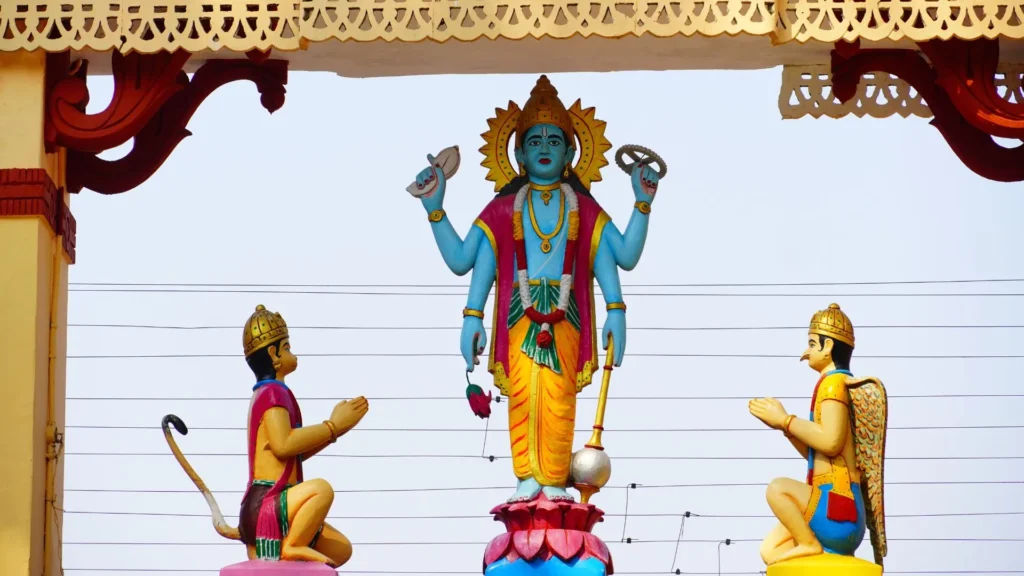
- First Abode of Lord Vishnu
Devotees believe that before Lord Vishnu moved to the Badrinath Temple, he resided in adi Badri. This gives the temple its name as the “original Badri.” - Connection with the Mahabharata
According to some beliefs, the Pandavas visited adi Badri before their journey to the Himalayas and the ultimate ascent to heaven. They are said to have performed rituals here to seek Lord Vishnu’s blessings. - Adi Shankaracharya’s Role
It is also believed that Adi Shankaracharya included adi Badri in the Panch Badri circuit to ensure that Lord Vishnu’s worship remained widespread across Uttarakhand. - Sacred Confluence Nearby
The temple’s location near the confluence of rivers adds another layer of mythological importance. Water bodies in Hinduism symbolize purity and divine connection, making adi Badri a spiritually charged place.
These legends make the temple a revered site, not just for pilgrims but also for anyone who loves India’s mythological tales.
Architectural Beauty of adi Badri
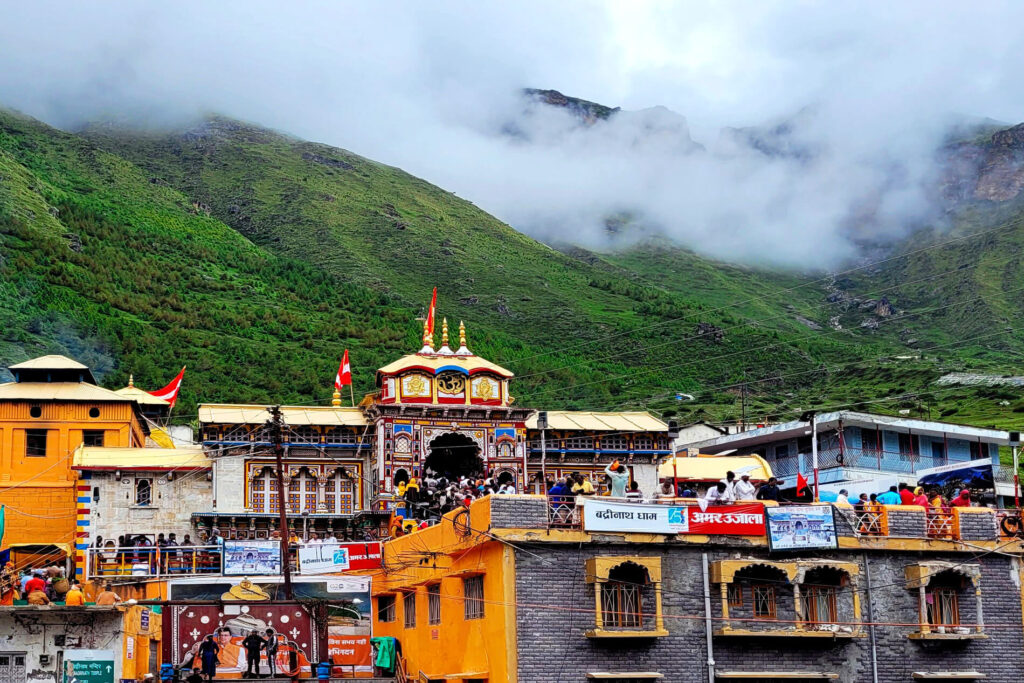
The architecture of adi Badri is simple yet spiritually uplifting. Unlike grand temples with massive courtyards, adi Badri has a more modest design, reflecting the style of the Gupta era.
Layout of the Temple Complex
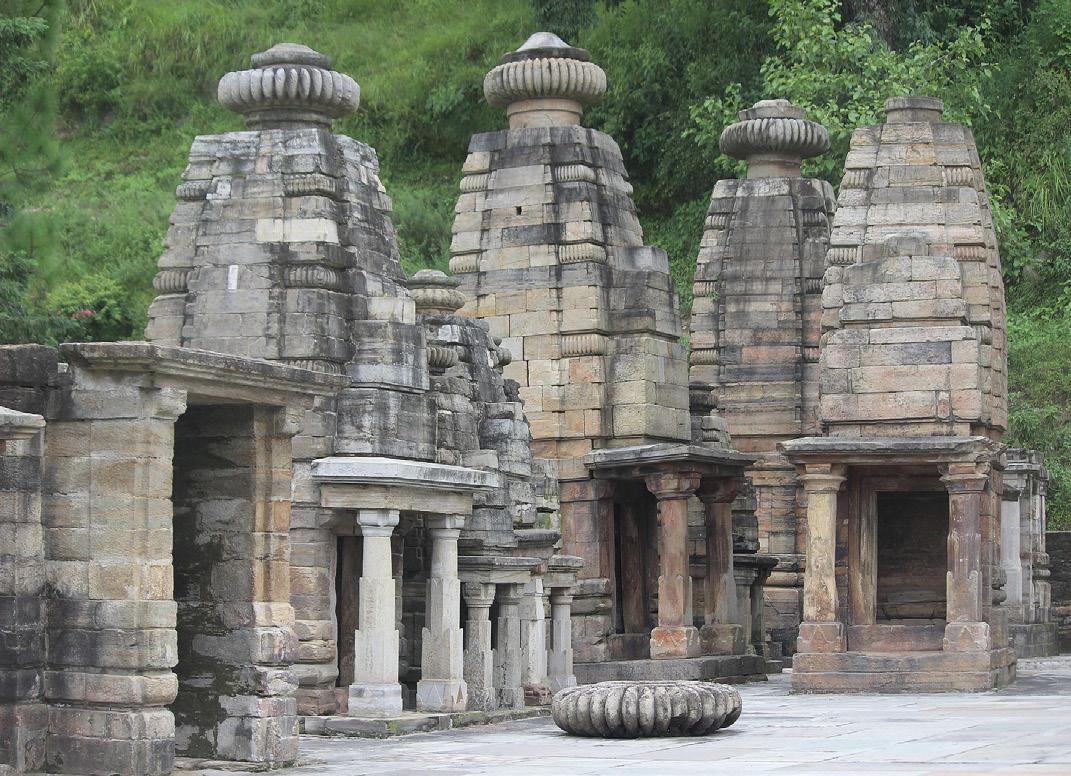
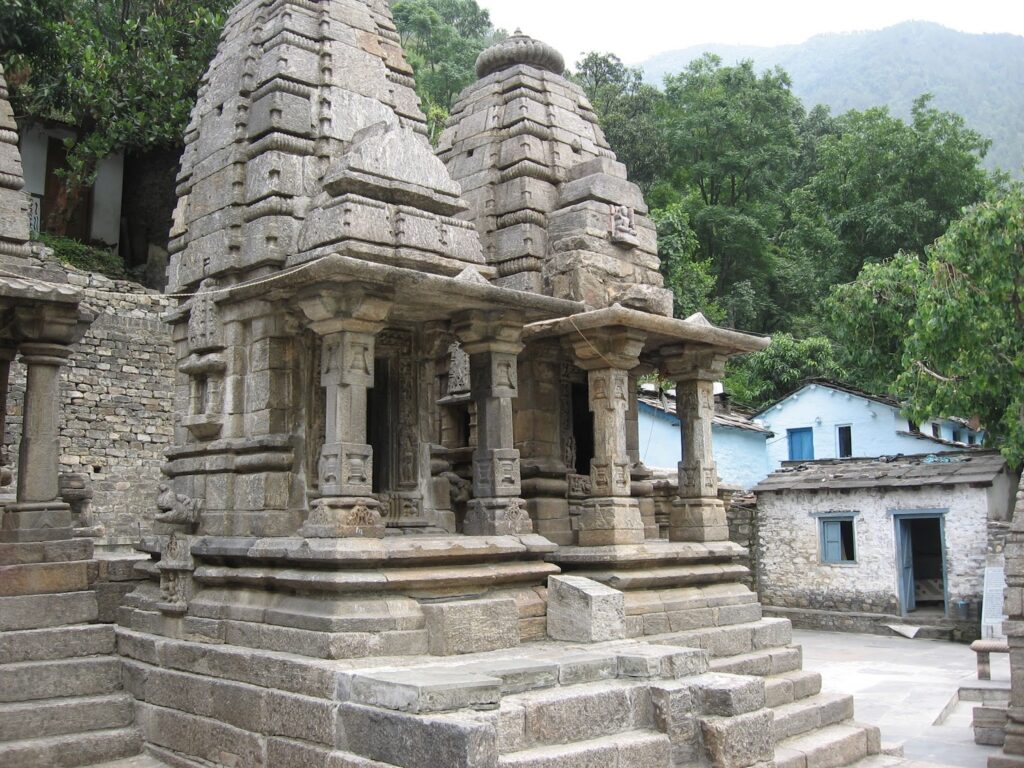
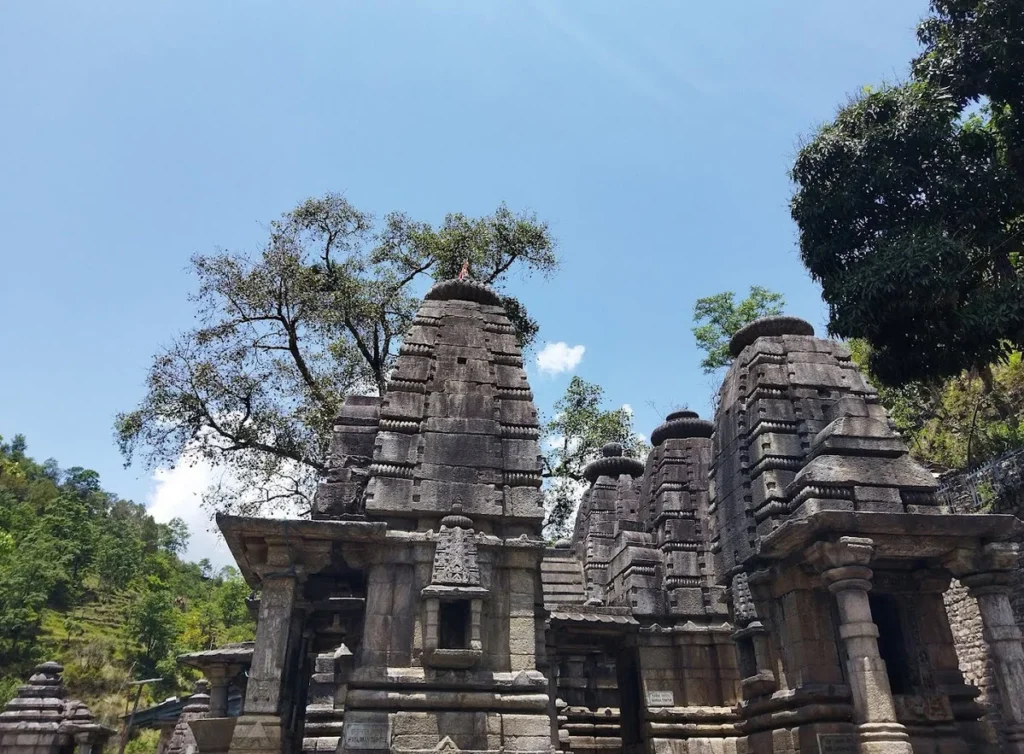
The adi Badri complex is not a single temple but a group of shrines, most of which are aligned in a row, giving the impression of an ancient spiritual settlement.
- The main shrine is dedicated to Lord Vishnu and stands out because of its taller shikhara (spire).
- The smaller shrines, arranged around the main temple, create a sacred enclosure that feels both intimate and powerful.
- The layout suggests a deliberate plan to establish a pilgrimage site that emphasizes community worship as much as personal devotion.
The cluster’s compact arrangement gives the complex a sense of unity, reflecting the belief that different forms of divinity coexist in harmony.
Shikhara Style Architecture
The most striking feature of adi Badri is its shikhara-style architecture. The shikhara is the rising tower or spire that marks the sanctum (garbhagriha) of the temple.
- At adi Badri, the shikhara rises in a curvilinear form, typical of the Nagara style prevalent during the Gupta period.
- The tower narrows gracefully as it ascends, symbolizing the soul’s journey toward liberation.
- Even though the spires are not very tall, their elegant shape reflects balance and proportion.
The main shrine’s shikhara is comparatively higher and more decorated, distinguishing it as the central point of worship.
Stonework and Carvings
adi Badri’s temples are primarily made of stone, with surfaces that have aged beautifully over centuries. Unlike the intricate carvings of Khajuraho or Konark, the carvings here are modest but meaningful.
- Motifs and Symbols – Lotus designs, simple geometric patterns, and depictions of divine symbols such as chakras and conches can be found on some of the shrines.
- Minimalism with Depth – The carvings are not excessive, reflecting the belief that the focus should remain on the deity rather than the structure.
- Weathered Charm – Time has worn down some of the carvings, but this erosion only adds to the temple’s character, making it look like a living monument.
The stone used gives the temples an earthy tone, blending seamlessly with the surrounding landscape.
The Sanctum (Garbhagriha)
At the heart of the main temple lies the garbhagriha, the innermost sanctum where Lord Vishnu is enshrined.
- The sanctum is small and intimate, encouraging personal connection between devotee and deity.
- The black stone idol of Vishnu is placed in a meditative posture, radiating calm and serenity.
- The chamber is usually dimly lit, with oil lamps casting a golden glow that enhances the spiritual ambiance.
The design ensures that the worshipper’s attention remains entirely on the deity, symbolizing the soul’s inward journey.
Integration with the Natural Setting
One of the unique aspects of adi Badri’s architecture is its relationship with nature. The temple complex is not designed to dominate its surroundings but to merge with them.
- The temples rise gently against a backdrop of hills, appearing like natural extensions of the terrain.
- The open courtyards allow sunlight to fall directly on the shrines, creating a divine atmosphere during different times of the day.
- The use of locally available stone materials ensures the temples blend seamlessly with the earth and rocks around them.
This integration shows the ancient builders’ awareness of ecological balance and their desire to create harmony between the sacred and the natural.
Symbolism in the Design
Every element of adi Badri’s architecture carries symbolic meaning rooted in Hindu philosophy.
- Cluster of Temples – The 16 shrines together signify the many forms of divinity converging in one sacred space.
- Shikhara Towers – Their upward tapering design represents the human soul’s aspiration for moksha (liberation).
- Simplistic Interiors – Reflect the belief that devotion is more important than external display.
- Orientation – The main shrine faces east, aligning with the rising sun, symbolizing rebirth and divine energy.
The architecture is not just about construction but about storytelling through form, proportion, and symbolism.
Comparison with Other Panch Badri Temples
While all Panch Badri temples are dedicated to Lord Vishnu, adi Badri’s architecture has unique elements that set it apart.
- Badrinath Temple – Known for grandeur and ornamentation, unlike adi Badri’s simplicity.
- Bhavishya Badri – Built in a remote setting with a more rugged architectural style.
- Vridha Badri – Smaller in scale, symbolizing the aged form of Vishnu.
- Yogadhyan Badri – Reflects meditative symbolism similar to adi Badri but with different structural features.
adi Badri, therefore, represents the earliest phase of Vishnu worship in this region, blending modest scale with spiritual depth.
Preservation and Challenges
Like many ancient monuments, adi Badri’s architecture faces the test of time.
- Weather Impact – Rain, snow, and wind gradually erode stone carvings.
- Tourist Footfall – While fewer visitors come compared to Badrinath, unregulated tourism can still affect the site.
- Need for Conservation – Archaeological departments and local authorities are working to preserve the shrines, but natural decay remains inevitable.
Despite these challenges, the temples stand strong, a silent testimony to centuries of devotion.
Experience for Visitors
Visitors to adi Badri often remark on the simplicity and peace of the temple complex. Unlike crowded shrines where architecture is overshadowed by rituals, here one can take time to observe:
- The delicate carvings that whisper stories of faith.
- The way light falls on the shikhara at sunrise.
- The earthy feel of ancient stone walls that have seen generations of pilgrims.
The architecture is not just to be admired but to be experienced as a journey of the senses — sight, sound, touch, and spirit all coming together.
Spiritual Importance of adi Badri
Pilgrimage in Uttarakhand is often considered incomplete without visiting adi Badri. The temple’s importance is not only religious but also symbolic of India’s spiritual continuity.
- Part of Panch Badri – adi Badri is one of the five sacred Vishnu shrines, making it an integral stop for devotees on the Panch Badri pilgrimage.
- Peaceful Worship – Unlike Badrinath, which sees heavy footfall, adi Badri allows devotees to meditate and pray in silence.
- Eternal Connection with Vishnu – Worshiping Lord Vishnu here is believed to bring blessings of protection, prosperity, and peace.
- Spiritual Learning – The site is often associated with Adi Shankaracharya’s teachings, making it a hub for seekers of knowledge.
Festivals and Rituals at adi Badri
Major Festivals Celebrated
- Makar Sankranti
Pilgrims gather to celebrate the change of the sun’s movement. Ritual baths and offerings to Vishnu are performed here. - Janmashtami
The birth of Lord Krishna, an avatar of Vishnu, is celebrated with devotion and cultural performances. - Annual Fairs
Local fairs are held around the temple complex, blending spiritual practices with cultural traditions of the Garhwal region.
These celebrations bring the temple to life, uniting locals and pilgrims in devotion.
Natural Beauty Around adi Badri
One of the most striking aspects of adi Badri is its natural setting. Located at an altitude of about 3,135 feet, the temple complex offers breathtaking views of valleys, forests, and streams.
- Rivers and Streams – The confluence of Alaknanda and other streams creates a soothing ambiance.
- Lush Greenery – The dense forests surrounding the temple are home to diverse flora and fauna.
- Himalayan Views – On clear days, the snow-covered Himalayan peaks are visible in the distance, making the visit unforgettable.
FAQs for adi Badri
Where is adi Badri located?
adi Badri is situated in Chamoli district of Uttarakhand, about 17 km from Karnaprayag.
Why is adi Badri famous?
It is known for its group of ancient temples dedicated to Lord Vishnu, believed to have been established by Adi Shankaracharya.
How many temples are in adi Badri?
The complex has 16 small temples, the main one dedicated to Lord Vishnu.
What is the historical significance of adi Badri?
It dates back to the Gupta period and is considered one of the Sapta Badri shrines in Uttarakhand.
Is adi Badri part of Sapta Badri?
Yes, it is one of the seven holy shrines dedicated to Lord Vishnu.
What legends are associated with adi Badri?
It is believed Adi Shankaracharya chose this site to spread Hinduism in the Himalayan region.
What is the best time to visit adi Badri?
The best months are April to June and September to November for clear weather and temple visits.
How to reach adi Badri?
It is accessible by road via Rishikesh–Chamoli route. Nearest railway station is Rishikesh, and nearest airport is Jolly Grant, Dehradun.
Is adi Badri connected to Badrinath Dham?
Yes, it is considered a part of the Badrinath pilgrimage circuit and often visited together with other Badri temples.
What can tourists do at adi Badri?
Tourists can explore the temple architecture, enjoy riverside views, and connect with the region’s spiritual history.