
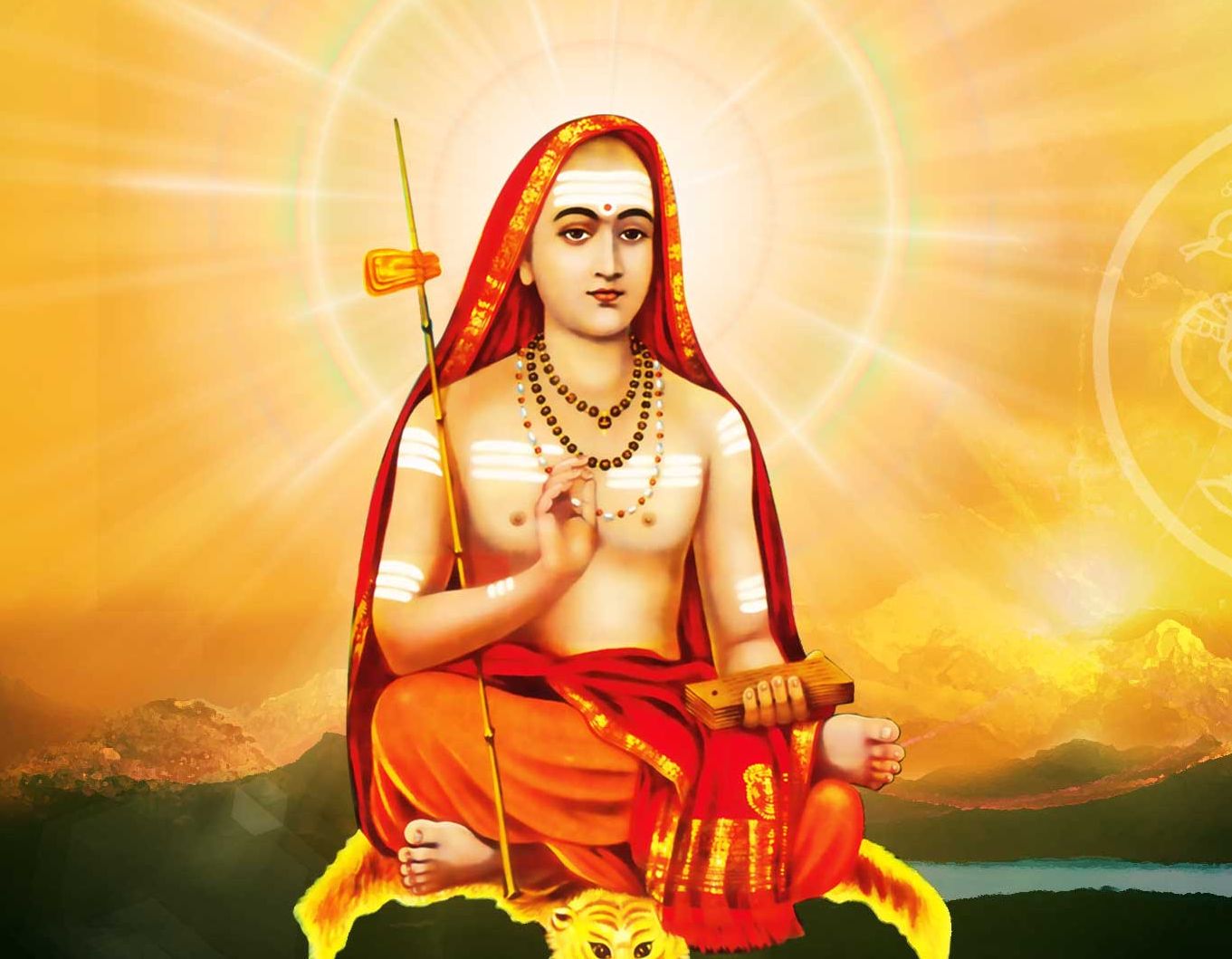
The 8th century CE Indian subcontinent was a crucible of philosophical fire. Ancient Vedic thought, the bedrock of a civilization, was fracturing under the weight of myriad schools, sectarian conflicts, and the compelling, if sometimes nihilistic, ascetism of influential traditions like Buddhism and Jainism. Ritualism had become a labyrinth, devotion a commodity, and the profound, unifying wisdom of the Upanishads was being lost in translation.
Into this world, precisely when the spiritual operating system of India was most vulnerable, stepped a young Nambudiri Brahmin from Kalady, Kerala, a prodigious mind known simply as adi shankaracharya. He lived a staggeringly brief life barely 32 years yet his impact wasn’t just a ripple; it was a tectonic shift. He didn’t merely reform Hinduism; he re-engineered its very foundation, providing a logical, unassailable, and profoundly humanistic philosophical framework that survives as a cornerstone of Indian thought today: Advaita Vedanta, the philosophy of non-duality.

To call Adi Shankara a philosopher or theologian is to use too small a canvas. He was a spiritual hacker, one who exposed the core vulnerability in human perception: the belief in separation. His message, crystallized in the phrase “Brahman Satyam, Jagat Mithya, Jivo Brahmaiva Na Aparah” (Brahman alone is real, the world is illusory, and the individual soul is non-different from Brahman), wasn’t just an abstract theory. It was an experiential code designed to crash the ego-mind and boot up a unified, liberated consciousness. Our aim is to peel back the layers of hagiography and historical debate to uncover the enduring relevance of this 32-year spiritual revolution.
The Core Code of Advaita: Unveiling the Illusion
Shankara’s true genius lies in his systematic, almost surgical, commentary on the three pillars of Vedanta, the Prasthanatrayi: the Upanishads, the Brahma Sutras, and the Bhagavad Gita. He did not invent Advaita; he formalized it, clarified it, and fiercely defended it against every intellectual challenge of his era, giving it the structure and logical force that has made it eternal.
Brahman and the ‘Neti-Neti’ Protocol
The ultimate reality, according to Shankara, is Brahman: the absolute, formless, unchangeable, and universal consciousness (Sat-Chit-Ananda Existence-Consciousness-Bliss). The most powerful tool he used to define this ultimate reality was the Upanishadic process of negation: Neti, Neti (Not this, Not that). Brahman cannot be described by any attribute we observe in the phenomenal world, precisely because it is the substratum of those attributes. This philosophical move is a masterstroke: by transcending all mental concepts, Shankara forces the seeker back upon the very act of knowing, the pure, untainted Self the Atman.
The Matrix of Māyā (Illusion)
If Brahman is the only reality, then what is this vibrant, painful, glorious, and undeniable world we inhabit? Shankara’s answer is Māyā. Often misinterpreted as simply ‘illusion’ or ‘delusion,’ Māyā is far more subtle and profound.
Think of it as a powerful, universal projection mechanism the cosmic software that makes the One appear as the Many. It has two primary functions:
- Avarana-Shakti (The Veiling Power): It conceals the true nature of Brahman (the rope is concealed).
- Vikshepa-Shakti (The Projecting Power): It projects the world of names and forms onto Brahman (the rope is mistaken for a snake).
Crucially, Māyā is not unreal; it is less-than-real (Mithya). It has an empirical reality (Vyavaharika Satya) you cannot walk through a wall but it lacks ultimate reality (Paramarthika Satya). It is like the dream you experience: intensely real while it lasts, but proven unreal the moment you awaken. Shankara’s teaching is the alarm clock: realize that the individual ‘I’ (the Atman) is non-different from the Absolute (Brahman), and the Māyā matrix dissolves, not the world itself, but your false identification with it.
The Path of Liberation: Jñāna Yoga and the Unbreakable Chain
The path to breaking the illusion is not through blind faith or endless ritual, but through Jñāna Yoga the Yoga of Knowledge. This is another area where Shankara’s systematic approach offers a powerful, modern, intellectual discipline.
This is the section you will expand to about 500-600 words.
The Fourfold Discipline (Sadhana Chatushtaya)
- Viveka (Discrimination): The ability to distinguish the Real (Brahman) from the unreal (the phenomenal world).
- Vairagya (Dispassion/Detachment): The renunciation of the enjoyment of the fruits of actions, both here and hereafter.
- Shat-Sampat (The Six Virtues): Tranquility (Shama), self-control (Dama), cessation (Uparati), endurance (Titiksha), faith (Shraddha), and concentration (Samadhana).
- Mumukshutva (Desire for Liberation): An intense, burning desire to be free from the cycle of suffering.
The Three Steps to Realization
- Sravana (Hearing): Attentive listening to the teachings of the Upanishads and the guru.
- Manana (Reflection): Intellectual contemplation and critical analysis of the teachings to remove all doubts.
- Nididhyasana (Deep Meditation/Contemplation): An unbroken stream of thought on the non-dual truth, leading to direct experience (Anubhava).
(Expand on how this systematic, disciplined, and intellectual approach makes Advaita uniquely appealing to the modern, rational mind, contrasting it with blind faith.)
The Man Who Walked Bharat: Unification Beyond Philosophy
Shankara’s legacy extends far beyond his dense philosophical commentaries. He was an organizational genius and a cultural unifier who used his philosophy to solidify the spiritual geography of India.
This is the section you will expand to about 500-600 words.
The Four Mathas (Monastic Seats)
- Fresh Angle: Discuss how these four seats, each assigned a Veda and a Mahavakya (Great Utterance e.g., Aham Brahmasmi), became a permanent, decentralized spiritual infrastructure, guaranteeing the continuation and spread of Advaita across a subcontinent fragmented by distance and culture.
The Unifying Shanmata (Sixfold Worship)
- The Problem: In Shankara’s time, extreme sectarianism (Shaivas, Vaishnavas, Shaktas, etc.) led to conflict and intellectual stagnation.
- Shankara’s Solution: The Panchayatana Puja (or Shanmata, incorporating six deities: Shiva, Vishnu, Shakti, Surya, Ganesha, and Skanda/Kumara).
- The Deep Message: The practice asserts that all these personal deities (Ishvara) are merely different facets, or forms, of the one, formless Brahman. This single, elegant concept ended sectarian wars and solidified a cohesive, inclusive identity for Hinduism.
The Dashanami Sampradaya (The Ten-Name Order)
- Detail the monastic order (Puri, Bharati, Saraswati, Tirtha, etc.) and how it established a mobile, disciplined force of renunciates committed to learning and teaching.
- Fresh Angle: Emphasize this as the world’s first successful, large-scale, intellectual and spiritual organization structure designed for continental-scale propagation of an idea.
(Expand on the political and cultural significance of unifying a fragmented land through a spiritual pilgrimage route and a unified system of worship.)
Timeless Wisdom: The Modern Relevance of a 1200-Year-Old Code
Shankara’s work is not a historical artifact; it is a live operating system perfectly suited to the anxieties and paradoxes of the 21st century.
This is the section you will expand to about 500-600 words.
Advaita as the Antidote to Existential Crisis
- In a world dominated by hyper-materialism and a search for identity through consumption, Advaita offers the ultimate shift: identity is not what you have or what you do, but what you are pure, non-dual consciousness.
- The concept of Atman as pure subject, never object, offers profound solace against the constant commodification of the self on social media.
The Philosophy of ‘Ecology of Consciousness’
- If Jiva (individual soul) and Brahman are non-different, then the perceived separation between self and world is merely ignorance (Avidya).
- Fresh Angle: Apply this to modern environmentalism, social justice, and empathy. The non-duality doctrine implies a radical, inescapable interconnectedness. Harming the other is literally harming the Self.
The Science of Consciousness
- Discuss the parallels between Advaita and modern physics (e.g., the observer-observed problem) and cognitive science (e.g., the hard problem of consciousness).
- Highlight that Shankara, through logic and introspection, arrived at the same conclusion modern science hints at: the foundational nature of reality is consciousness, not matter.
Conclusion: The Unbroken Thread
Shankara’s life was a comet streaking across the intellectual sky of India a blaze of brilliance that lasted only 32 years. Yet, in that short span, he authored a philosophy so complete, so logically rigorous, and so experientially profound that it continues to challenge, comfort, and guide humanity. The man may be a myth, clouded by centuries of devotion, but his code the elegant, unifying principle of Advaita Vedanta is the ultimate reality check. It is the single, unbroken thread that ties the cosmos, the consciousness, and the individual soul into a singular, irreducible truth: You are the Absolute.
Frequently Asked Question (FAQ)
Who was Adi Shankaracharya?
Adi Shankaracharya was an 8th-century Indian philosopher and saint who consolidated the doctrine of Advaita Vedanta.
Where was Adi Shankaracharya born?
He was born in Kalady, Kerala, around 788 CE.
What is Shankaracharya known for?
He is known for reviving Hinduism, writing commentaries on Upanishads, Bhagavad Gita, and Brahmasutras, and establishing four mathas across India.
What is Advaita Vedanta?
Advaita Vedanta is a philosophy that emphasizes non-duality, teaching that the individual soul (Atman) and the universal soul (Brahman) are one.
Where did Adi Shankaracharya attain samadhi?
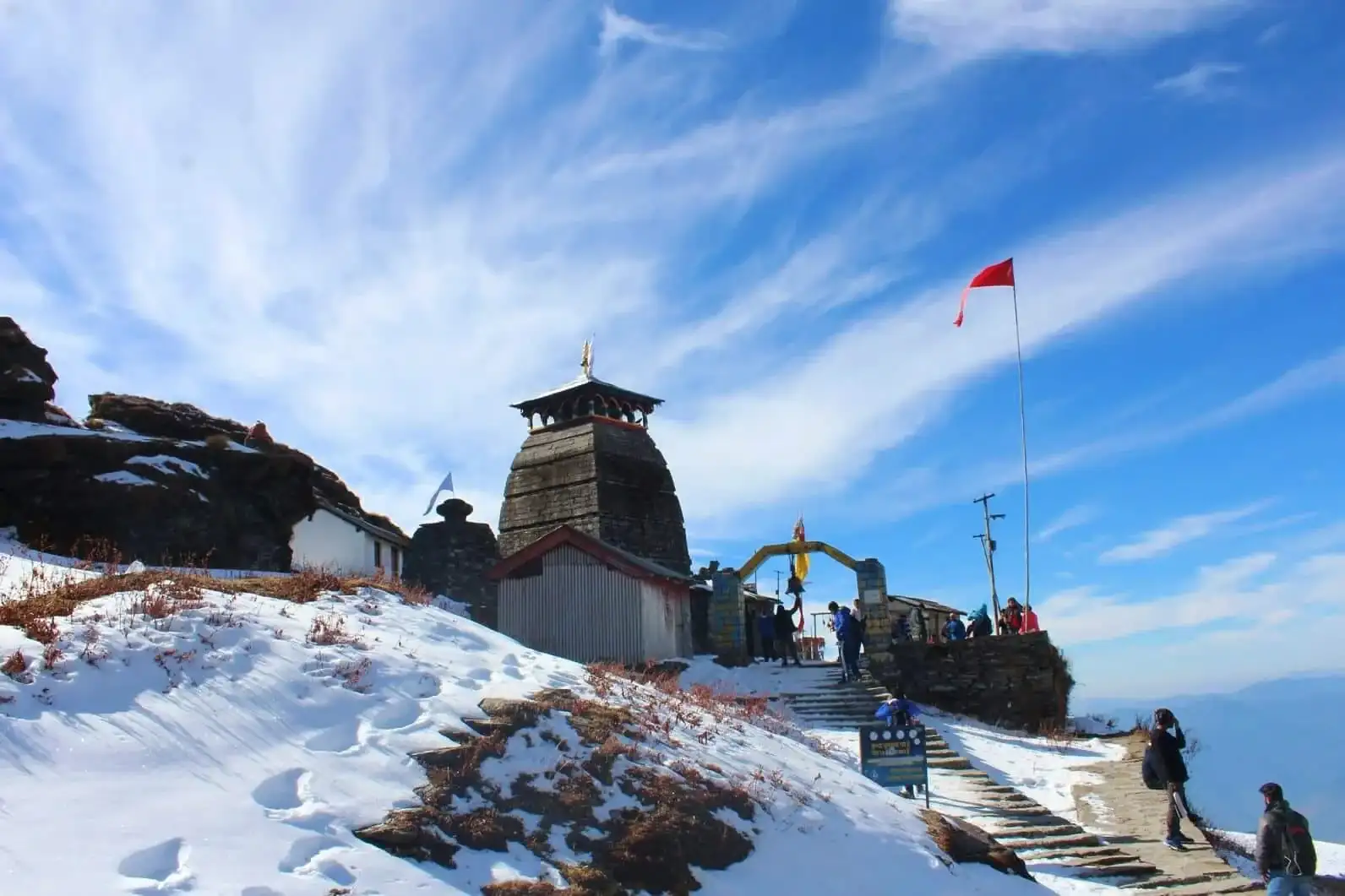
He attained samadhi in Kedarnath, Uttarakhand, where a statue and memorial now stand in his honor.
What are the four mathas established by Adi Shankaracharya?
The four mathas are in Sringeri (South), Dwarka (West), Puri (East), and Badrinath (North).
Why is Shankaracharya important to Char Dham Yatra?
Adi Shankaracharya established Badrinath as part of the Char Dham pilgrimage and played a key role in shaping its spiritual significance.

One thought on “Adi Shankaracharya – Life, Teachings & Spiritual Legacy”