

The Tripurmalini Shakti Peeth, popularly known as the Devi Talab Mandir, is a profoundly sacred Hindu temple located in Jalandhar, Punjab. It holds a significant place as one of the 51 Shakti Peethas—venerated sites where parts of the Goddess Sati’s body are believed to have fallen during Lord Shiva’s mournful dance (Tandava) of destruction.
This temple is an eternal testament to the power of the divine feminine, known as Shakti, and attracts countless devotees who seek the blessings of the Mother Goddess.

Mythology and Spiritual Significance
The Legend of Sati and the Shakti Peethas
The story of the Shakti Peethas is one of the most poignant narratives in Hindu mythology, embodying themes of love, loss, rage, and the reconstitution of cosmic energy.
Goddess Sati, the daughter of Prajapati Daksha, married Lord Shiva against her father’s wishes. To insult Shiva, Daksha organized a massive Yagna (Vedic sacrifice) but deliberately failed to invite the couple. Deeply humiliated by her father’s disrespect toward her husband, Sati couldn’t bear the insult to the cosmic being she loved. Unable to change her father’s mind, she immolated herself in the sacrificial fire.
Devastated and enraged, Lord Shiva assumed the terrifying form of Virabhadra, destroyed the Yagna, and then picked up Sati’s lifeless body, beginning his furious, cosmic dance—the Tandava. To save the universe from the dance’s destructive energy, Lord Vishnu intervened, using his Sudarshan Chakra to dismember Sati’s body. The places where her body parts or ornaments fell became the sacred Shakti Peethas.
The Significance of Tripurmalini
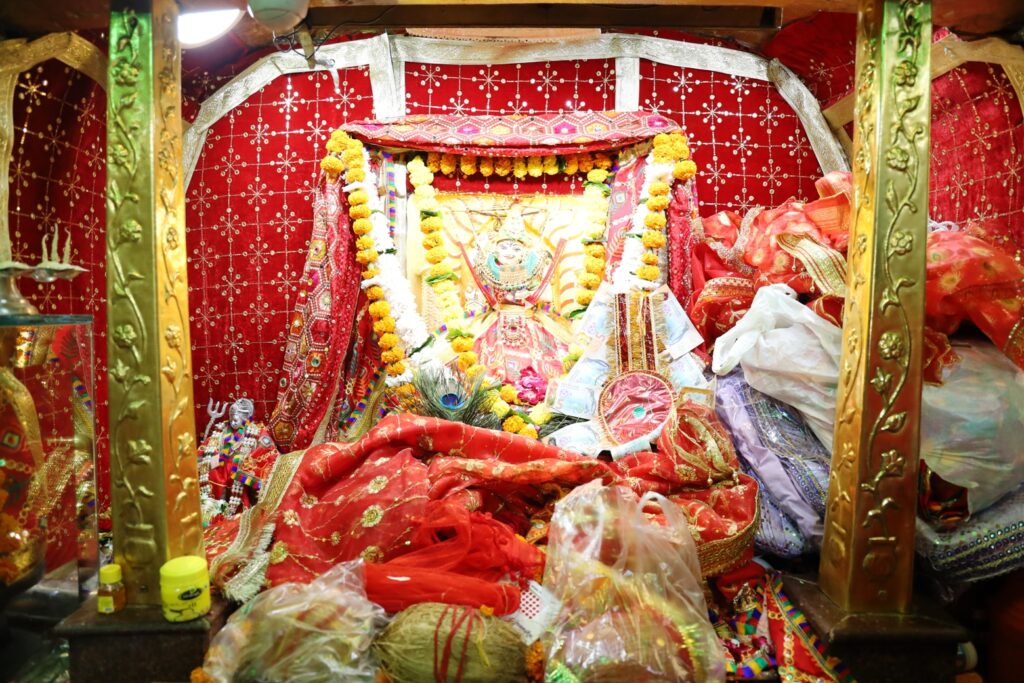
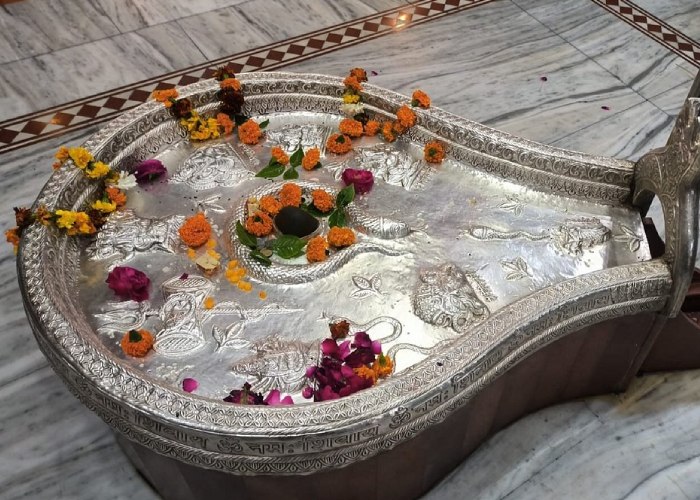
The Tripurmalini Shakti Peeth is the sacred spot where the Left Breast of Goddess Sati is believed to have fallen. Due to this specific part, the temple is also reverently called Stanpeeth (Stan means ‘breast’).
- The Goddess: Here, Sati is worshipped as Tripurmalini. The name ‘Tripurmalini’ is derived from ‘Tri’ (three), ‘Pur’ (fortress/world), and ‘Malini’ (garland-wearer or conqueror), symbolizing the one who conquers or adorns the three worlds (heaven, earth, and the netherworld) and the three human qualities (gunas). This form of the Goddess represents sustenance, nourishment, and fierce, maternal compassion. She is believed to possess the combined spiritual power of Mata Vaishno Devi, Maa Lakshmi, and Maa Saraswati.
- The Bhairava: The male counterpart of the Goddess, Lord Shiva, is worshipped here as Bhishan Bhairav (also sometimes called Bhishan or Tripurantaka), who is the protector of the shrine. The dual presence of Tripurmalini and Bhishan symbolizes the creative and destructive forces necessary for the maintenance of the universe.
As with all Shakti Peethas, a sacred Diya (lamp) is kept continuously burning to symbolize the eternal flame of divine Shakti. Devotees believe that worshipping here can bring prosperity, remove obstacles, and grant spiritual enlightenment.
Temple Architecture and Unique Features
While the original structure of the Tripurmalini Shakti Peeth is over 200 years old, it has undergone significant renovation and modernization, yet it retains a deep sense of antiquity and holiness.
The Sacred Talab
The temple complex is named Devi Talab Mandir because of its most distinctive feature: a large, ancient sacred water tank (talab or kund) located adjacent to the main shrine. This tank is considered as old as the main temple itself, and pilgrims often take a holy dip here, believing the waters to be divine and purificatory.

Architectural Highlights
The architecture is a blend of traditional Hindu temple design and modern additions:
- Main Shrine: The central shrine houses the idol of Goddess Tripurmalini, revered as the embodiment of Shakti.
- Other Shrines: Within the sprawling temple grounds, there are separate shrines dedicated to Goddess Kali (another fierce form of the Divine Mother) and Lord Shiva.
- Amarnath Cave Replica: A major addition to the modern complex is a structure resembling the famous Amarnath Cave Temple from Kashmir, allowing devotees to experience a similar pilgrimage within the Jalandhar complex.
- Gopuram and Courtyards: The temple complex features spacious courtyards for gatherings and meditation, along with a grand entrance gate (gopuram) adorned with detailed sculptures, a common feature in temple architecture.
A Pilgrim’s Guide to Tripurmalini Shakti Peeth
Visiting this sacred site is a spiritually enriching experience. Here is a guide to planning your pilgrimage:
Best Time to Visit
The most auspicious time to visit is during the Navaratri festival, celebrated twice a year (usually in March-April and September-October), when special ceremonies and rituals are performed, and the temple is decorated grandly. The weather in Jalandhar is generally most pleasant from October to December.
Temple Timings
The temple is generally open for worship from approximately 7:00 AM to 8:00 PM, though timings may vary slightly and are often extended during major festivals.
Daily Rituals and Worship
- Darshan: The primary act of worship is having a vision (darshan) of the main deity, Tripurmalini, and offering prayers.
- Aarti: The waving of lamps accompanied by devotional songs is performed daily, usually in the morning and evening.
- Pradakshina (Circumambulation): Devotees typically walk clockwise around the main shrine.
- Offerings: Common offerings include flowers, fruits, sweets, and chunri (a sacred cloth) to the Goddess.
Dress Code and Etiquette
Visitors are advised to dress modestly. It is customary for both men and women to cover their shoulders and knees. Shoes must be removed before entering the temple premises. The temple is open to people of all faiths, but respect for the religious environment and adherence to temple rules is expected.
Local Festival
The temple is famously associated with the annual Harballabh Sangeet Sammelan, a classical music festival held in Jalandhar every December. The event is a unique tradition where musicians and devotees honor the divine through vocal and instrumental music, particularly praising Goddess Durga.
How to Reach
The Tripurmalini Shakti Peeth (Devi Talab Mandir) is conveniently located in the heart of Jalandhar city, Punjab.
- By Rail: The nearest station is Jalandhar City Railway Station, located approximately 1 to 2 km away. Local transport (auto-rickshaws, taxis) is readily available.
- By Road: Jalandhar is well-connected by an extensive network of national highways. State and private buses, as well as private vehicles, provide easy access.
- By Air: The nearest major airport is Sri Guru Ram Dass Jee International Airport in Amritsar (about 90-100 km away).
The spiritual journey to Tripurmalini Shakti Peeth is a pilgrimage to the source of divine, nurturing power, an opportunity to connect with the timeless energy of the Mother Goddess, and a reminder of the foundational myths that sustain the Hindu faith.
FAQs
What is Tripurmalini Shakti Peeth?
Tripurmalini Shakti Peeth is a sacred Hindu temple in Jalandhar, where the left breast of Goddess Sati is believed to have fallen.
Where is Tripurmalini Shakti Peeth located?
It is located in Jalandhar, Punjab, India, and is a prominent pilgrimage site for devotees of Goddess Shakti.
What are the temple timings?
The temple is usually open from early morning around 6:00 AM to evening 8:00 PM. Timings may vary on festivals.
Which part of Goddess Sati is associated with this temple?
The temple is associated with the left breast of Goddess Sati, making it a significant Shakti Peeth.
Is there any special festival celebrated here?
Major festivals include Navratri, during which devotees throng the temple to seek blessings.
How can one reach Tripurmalini Shakti Peeth?
It is well-connected by road and rail. Jalandhar city is the nearest hub for buses and trains.
Are there any accommodation options nearby?
Yes, there are hotels and guest houses in Jalandhar city for pilgrims and tourists.
What should devotees know before visiting?
Devotees should maintain decorum, follow temple rules, and preferably visit during non-peak hours for a peaceful darshan.

One thought on “Tripurmalini Shakti Peeth Jalandhar – Ma Shakti Temple Guide”