

The Tara tarini Temple, nestled on the verdant Kumari Hills in the Ganjam district of Odisha, stands as one of India’s most revered and ancient shrines dedicated to the Mother Goddess. It is far more than a simple temple; it is a profound seat of Shakti worship, an amalgamation of history, mythology, tantric tradition, and breathtaking natural beauty. Located approximately 30 kilometers north of the major city of Brahmapur (Berhampur), the temple offers a unique blend of spiritual fervor and a tranquil escape, overlooking the meandering Rushikulya River.
This comprehensive guide delves into the essence of the Taratarini Temple, its rich content steeped in genuine historical and spiritual significance, and provides a practical guide for every pilgrim and visitor.

The Sanctity of the Shakti Peetha: History and Mythology
The paramount importance of the Taratarini Temple lies in its recognition as one of the four principal Adi Shakti Peethas—the original and most potent seats of the Divine Mother—in India, alongside Kalighat (Kolkata), Kamakhya (Assam), and Vimala Temple (Puri).
The Legend of Sati and the “Breast Shrine” (Stana Peetha)
The legend of the Shakti Peethas is central to Hindu cosmology and is intrinsically linked to the tragic tale of Sati, the first consort of Lord Shiva. According to the Puranas, Sati self-immolated at the Yagna (sacrificial ceremony) of her father, Daksha Prajapati, as she could not bear the insult to her husband. A heartbroken Shiva carried her corpse across the universe in a frenzy of grief, performing the Tandava, the cosmic dance of destruction. To restore order, Lord Vishnu used his Sudarshan Chakra to dismember Sati’s body. The places where her body parts fell became the sacred Shakti Peethas.
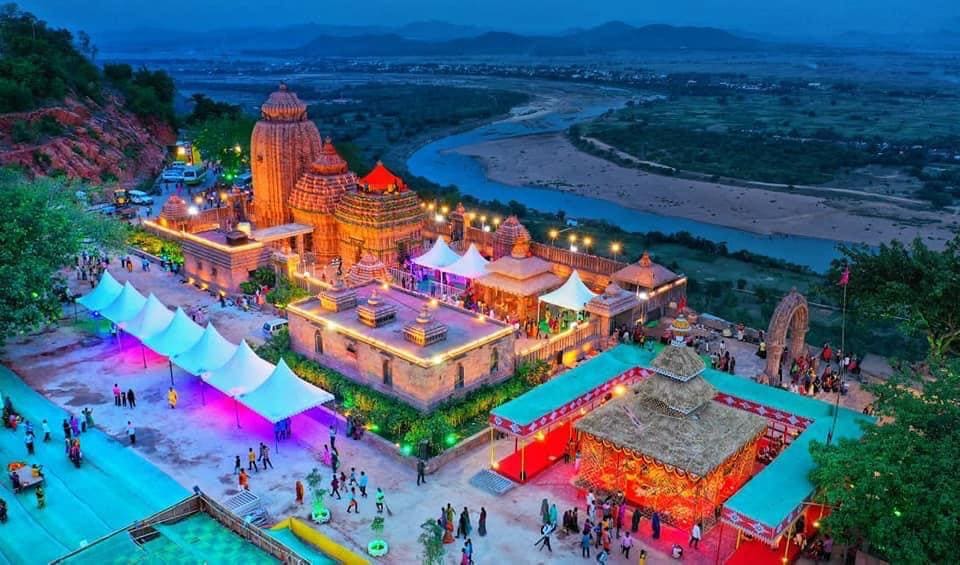
It is devoutly believed that the breasts (Stana) of Sati fell upon the Kumari Hills, thus establishing the site as the Stana Peetha or Breast Shrine. This location is considered an incredibly powerful nexus of fertility, life-giving energy, and protection, attributes strongly associated with the twin goddesses.
The Twin Goddesses: Tara and Tarini
The temple is dedicated to Maa Tara and Maa Tarini, who are worshipped as the embodiment of one unified Shakti. Their names, deeply rooted in Hindu and Buddhist tantric traditions, suggest a confluence of different spiritual currents:
- Maa Tara: Often associated with the Mahayana Buddhist deity of the same name, she symbolizes compassion, cosmic knowledge, and the power to overcome obstacles.
- Maa Tarini: Her name means “the one who delivers” or “the one who saves,” reflecting her power to ferry her devotees across the ocean of worldly suffering (Bhavasagar).
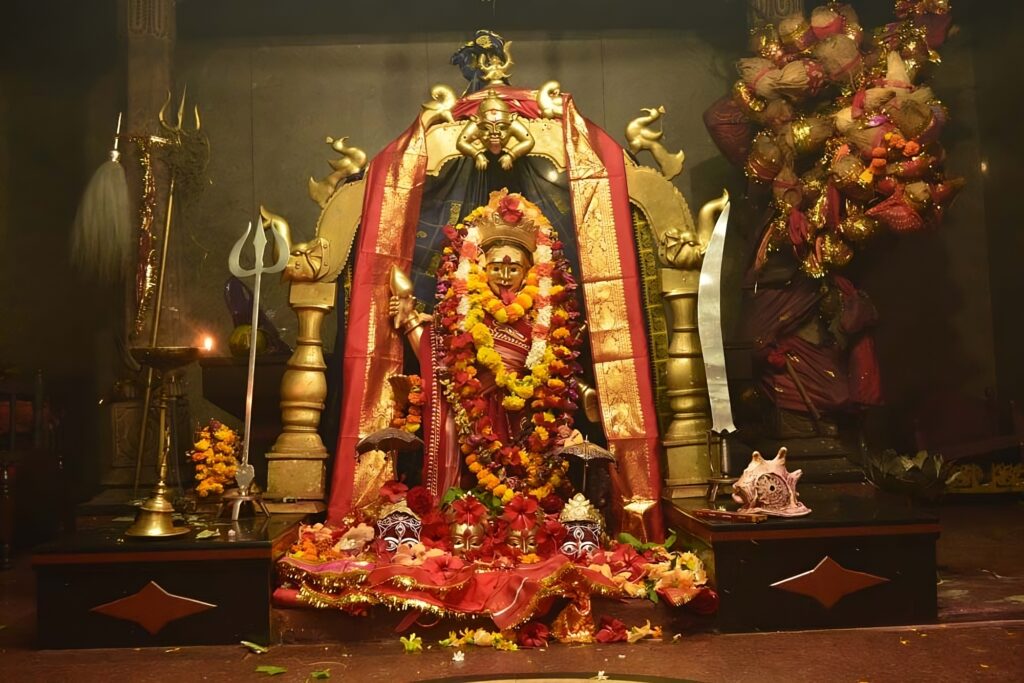
The primary deities within the sanctum are not conventional sculpted idols but rather two ancient stone formations, approximately 10 feet high, that are anthropomorphized with the addition of gold and silver ornaments and stylized human faces, particularly striking silver eyes. Between these two primary stones, the Chalanti Pratima (ceremonial or living image) of the goddesses, usually made of brass, is placed for ritual purposes.
The Legend of Basu Praharaj
Another compelling local legend concerns a learned Brahmin, Basu Praharaj, who lived in the nearby village. Being childless, he was a staunch devotee of the Mother Goddess. One night, the twin goddesses appeared to him in a dream, manifesting as two beautiful sisters who later came to live in his house, growing up as his foster daughters.
When it was time for their wedding, the sisters mysteriously disappeared, later revealing themselves to Praharaj in another dream. They instructed him to enshrine them on the Purnagiri (Kumari) hill, thus establishing the site as their eternal abode and the center of their worship. This legend underscores the goddesses’ role as the Ista-Devi (presiding or tutelary deity) of countless households, especially across Southern Odisha.
Architectural Majesty and Temple Layout
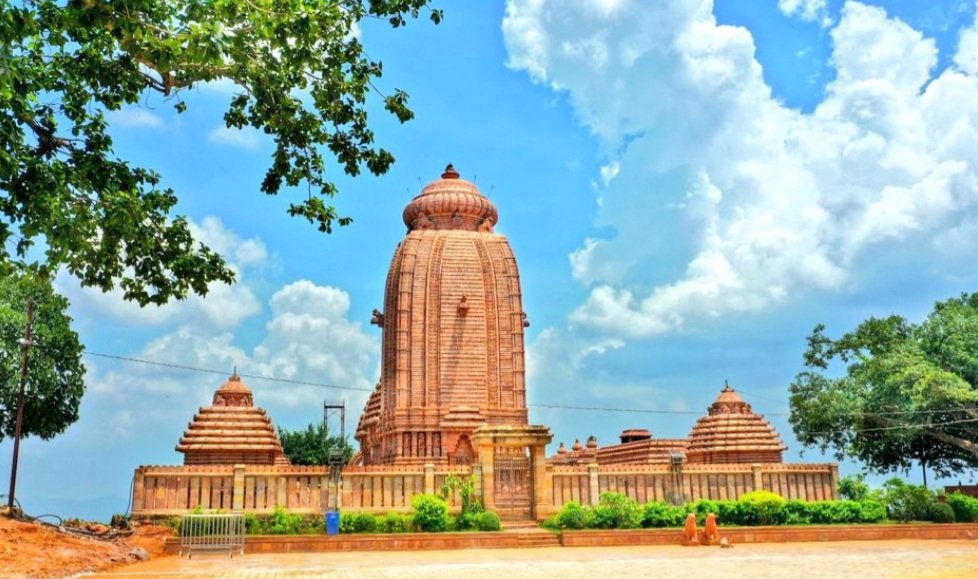
The current structure of the Taratarini Temple, though undergoing various renovations over the centuries, largely adheres to the majestic Kalinga style of architecture, characterized by its soaring curved spire (deula) and intricate carvings. The temple stands atop the 708-foot-high Kumari Hill, offering a spectacular panoramic view of the surrounding lush greenery and the serpentine Rushikulya River below.
The Hilltop Complex
The temple complex itself is situated on a broad, flat expanse on the hill’s summit. Key elements include:
- The Main Temple: A stone structure housing the garbhagriha (sanctum sanctorum) of Tara and Tarini. The intricate work on the walls depicts scenes from Hindu mythology.
- Surrounding Shrines: Smaller temples dedicated to other deities, including Lord Shiva, Lord Ganesha, and others, dot the courtyard, indicating the harmonious blend of Shaivism and Shaktism.
- The Archway: A majestic entrance gate, often compared to the decorative arch of the Mukteswar Temple in Bhubaneswar, welcomes pilgrims to the holy site.
- The Ropeway: A modern addition to the complex, the ropeway provides easy and scenic access to the temple top for those unable or unwilling to take the stairs.
- Mandapas: Dedicated halls for assemblies, offerings (Bhogamandapa), and ceremonies are part of the developed complex.
A Pilgrim’s Guide to the Taratarini Temple
The journey to the Taratarini Temple is as much a part of the pilgrimage as the darshan (viewing) of the goddesses themselves.
How to Reach
The temple is located near the town of Purushottampur in the Ganjam district, Odisha.
- By Air: The nearest airport is Biju Patnaik International Airport (BBI) in Bhubaneswar, approximately 174 km away. From Bhubaneswar, one can hire a taxi or take a train to Brahmapur.
- By Rail: The closest major railhead is Brahmapur Railway Station (BAM), about 32 km from the temple. Brahmapur is a major junction on the East Coast Railway and is well-connected to all major Indian cities. Taxis and local buses are readily available from the station to the temple.
- By Road: The temple is well-connected by road from Brahmapur and the National Highways. State-run and private buses ply regularly to Purushottampur, from where local transport takes you to the hill foot.
Accessing the Hilltop
Pilgrims have three primary ways to reach the temple at the summit:
- The 999 Steps: The traditional and most devotional path is the ascent via 999 well-maintained stone steps on the eastern side of the hill. This climb is considered an act of penance and a profound display of faith. It takes approximately 30-45 minutes, depending on one’s pace.
- The Motorable Road: A smooth, paved road winds up the backside of the hill, allowing cars and buses to reach almost the very top, making it accessible for the elderly and differently-abled.
- The Ropeway (Cable Car): Offering a quick, comfortable, and spectacularly scenic ride, the ropeway service is highly recommended for all visitors. It provides a breathtaking aerial view of the surrounding hills, the Rushikulya River, and the Ganjam plains.
Temple Timings and Rituals
- Temple Opening Hours: Generally, the temple is open from 6:30 AM to 12:30 PM and then re-opens from 2:00 PM to 5:30 PM, followed by the evening session from 6:30 PM to 8:30 PM. However, timings are subject to change, especially during major festivals.
- Daily Rituals: The day begins with the Mangala Aarti and Abhishekam (ritual bathing), followed by various pujas and aartis throughout the day.
- Offerings: Devotees commonly offer coconuts, flowers, prasad (sanctified food), and sindoor (vermilion) to the goddesses.
- Mundan Ceremony (Tonsure): This is one of the temple’s most significant and widely practiced rituals. Devotees offer the first haircut (tonsure) of their newborn or young children to the goddesses as an act of gratitude and to seek divine protection for the child’s health and prosperity. Licensed barbers are available on the hill for this ceremony.
- Vehicle Puja: Blessings for new vehicles are also a popular practice here.
Major Festivals: Chaitra Mela and Beyond
The temple calendar is punctuated by vibrant festivals, drawing hundreds of thousands of pilgrims from across Odisha, Andhra Pradesh, and other parts of India.
- Chaitra Mela (Chaitra Yatra/Parba): This is the most important festival of the temple. It is a month-long celebration held during the Hindu month of Chaitra (March-April). The four Tuesdays of this month are considered exceptionally auspicious. On these days, the number of pilgrims swells dramatically, with huge fairs and special rituals taking place. The Mundan ceremony is performed en masse during this period.
- Durga Puja and Navratri: The nine nights dedicated to the Mother Goddess are celebrated with immense fervor, special pujas, and devotional performances.
- Makar Sankranti and Maha Shivaratri are also observed with traditional rituals, cementing the blend of Shaktism and other Hindu traditions.
The Taratarini Experience
Visiting the Taratarini Temple is a truly enriching experience that transcends mere religious observation.
- Spiritual Energy: As an ancient Tantra Peetha and Shakti Peetha, the site exudes a palpable sense of spiritual energy and peace. Many devotees attest to feeling a deep connection and fulfillment here.
- Scenic Beauty: The temple’s location atop the Kumari Hills, overlooking the serpentine Rushikulya River, provides stunning, picturesque views. The natural environment is calm and rejuvenating, a perfect backdrop for contemplation.
- Cultural Immersion: The vibrant crowd during the Chaitra Mela and the everyday practices offer a deep insight into the regional culture, traditions, and the profound faith of the people of Odisha.
Frequently Asked Questions (FAQ)
Where is Tara Tarini Temple located?
It is located on the Kumari Hills near Brahmapur in the Ganjam district of Odisha, beside the Rushikulya River.
Why is Tara Tarini Temple famous?
It is one of the 51 Shakti Peethas, where Goddess Sati’s breasts are believed to have fallen, making it a major site of Shakti worship.
How can visitors reach Tara Tarini Temple?
The temple is about 30 km from Brahmapur, accessible by road, with options to climb stairs, drive, or use a ropeway to reach the top.
When is the best time to visit Tara Tarini Temple?
The ideal time is during Chaitra Yatra (March–April) or between October to February for pleasant weather.
What are nearby attractions?
Nearby attractions include Gopalpur Beach, Rushikulya River, and Mahuri Kalua Temple, offering a mix of spirituality and scenic beauty.

One thought on “Tara Tarini Temple Brahmapur – Ma Shakti Peetha Odisha”