
I’ll never forget the moment the Narmada River began speaking to me. It wasn’t in words, but in the rhythm of the boat cutting through the water, the gentle lap against the hull, the way the current seemed to guide us toward something sacred. As we approached Mandhata Island the place where the Narmada splits around land shaped like the sacred “Om” symbol I felt the ordinary world fall away. This wasn’t just another temple visit; it was stepping into a living mandala, where geography itself becomes devotion.
Most people visit Omkareshwar Temple for the Jyotirlinga, and that’s certainly powerful. But what transformed me wasn’t just the stone manifestation of Shiva—it was the entire island, the river’s embrace, and the way time slows down when you’re surrounded by water flowing in a divine shape. This is the story of how Omkareshwar rewired my understanding of sacred spaces—not as buildings, but as living landscapes that breathe with spiritual energy.

The Island That Spells Om
The first thing that hits you about Omkareshwar isn’t the temple itself, but the island’s shape. From space, Mandhata Island forms the sacred “Om” symbol—a fact confirmed by satellite imagery but known to locals for centuries through oral tradition. Standing on the boat as we approached, I could see how the Narmada River splits into two channels that flow around the land in the precise curves of the ancient symbol.
What most guidebooks don’t tell you is how this shape affects the energy of the place. The river doesn’t just flow around the island—it moves in a specific pattern that creates subtle whirlpools at key points, places where priests perform special rituals. During my visit, a local boatman named Raju noticed my fascination and took me to one such spot. “Feel the water,” he said, guiding my hand over the side. The current swirled in a perfect circle, gentle but insistent, like a heartbeat. “This is where the island breathes,” he explained. “The Om isn’t just shape—it’s sound, it’s movement, it’s life.”
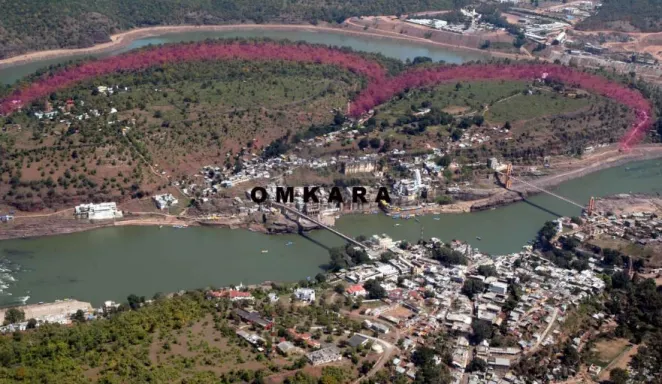
I spent hours walking the island’s perimeter, tracing the curves of the “Om” with my footsteps. At certain points, the river’s flow creates natural amphitheaters where sound carries differently—chanting from one side of the island echoes perfectly on the other. It’s no accident that this is considered one of the most powerful places for mantra practice in India. The geography itself amplifies devotion.
The Twin Temples: Omkareshwar and Mamaleshwar
Most visitors head straight for Omkareshwar Temple, the Jyotirlinga site, but I discovered something profound by visiting both temples in sequence. The island actually houses two ancient Shiva temples: Omkareshwar (facing north) and Mamaleshwar (facing south), positioned at opposite ends of the “Om” shape.
What makes this arrangement special:
- They represent the dual aspects of Shiva—creative and destructive
- The distance between them forms a natural parikrama (circumambulation) path
- Each has its own energy field that complements the other
- Rituals performed at one temple affect the energy of the other
- The space between them creates a powerful energy channel
During my visit, I followed the advice of an elderly priest and visited Mamaleshwar first. The smaller temple felt intimate, almost secretive, with a natural spring feeding the sanctum. “Mamaleshwar is Shiva as the gentle mother,” the priest explained. “Omkareshwar is Shiva as the cosmic lord. You must meet the mother before the king.”
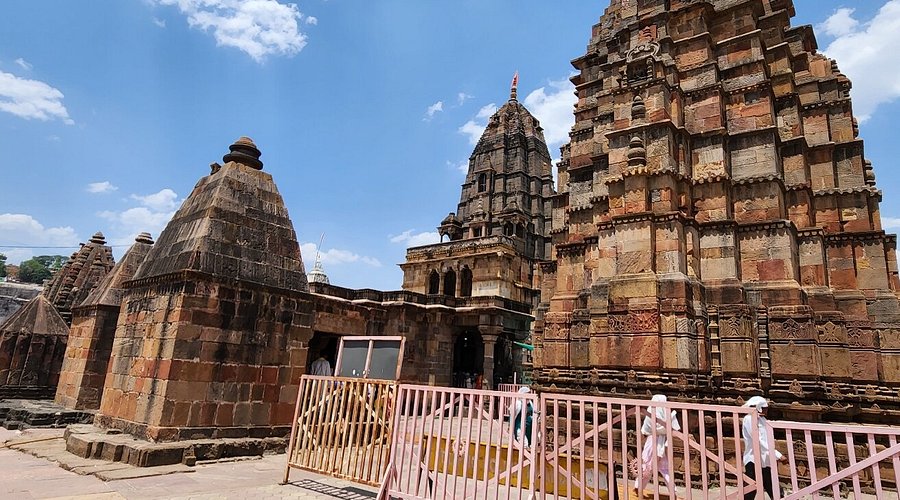
Walking the path between the temples, I noticed how the landscape changes—gradually rising from Mamaleshwar to Omkareshwar, creating a natural ascent toward the main Jyotirlinga. The path is lined with ancient banyan trees that form natural archways, their roots creating patterns that echo the “Om” shape above. At certain points, the river becomes visible through the trees, reminding you of the sacred geometry surrounding you.
The Living Jyotirlinga
Most Jyotirlingas are housed in grand structures, but Omkareshwar’s sanctum feels different—more organic, more alive. The temple itself is relatively modest compared to some of the other Jyotirlinga sites, but what it lacks in size it makes up for in spiritual intensity.
As I removed my shoes at the entrance, the cool marble floor felt different beneath my feet—slightly uneven, as if shaped by time rather than chisel. The air carried multiple scents: sandalwood from the incense, the earthy smell of the river, and something I couldn’t identify at first (later I learned it was the special clay used in rituals).

What struck me most was how the Jyotirlinga itself seems to breathe. Unlike the static stone lingams I’d seen elsewhere, Omkareshwar’s manifestation appears to shift in the flickering lamplight, as if it’s not just stone but living energy made visible. During my darshan, I noticed how the oil lamps reflected off the lingam in patterns that seemed to form the “Om” symbol—a phenomenon I later learned is common but rarely discussed.
The head priest noticed my fascination and shared something few visitors hear: “This isn’t just a Jyotirlinga—it’s a living connection to the river. The water level in the Narmada affects the energy here. When the river swells, the lingam seems to glow with inner light.” He explained that the temple’s rituals are timed not just to the clock, but to the river’s flow—certain ceremonies happen only when the water reaches specific levels.
The River’s Rituals
The Narmada isn’t just a river here—it’s an active participant in the temple’s spiritual life. What most visitors miss is how deeply the rituals are connected to the river’s rhythms.
During my stay, I witnessed the daily ritual of collecting river water for the abhishekam (ritual bathing of the lingam). But this wasn’t just scooping water into pots—the process followed precise patterns based on the river’s flow:
- Water is collected from specific points where the current forms natural whirlpools
- The collection happens at specific times corresponding to the river’s tidal patterns
- Different parts of the river provide water for different rituals
- The temperature and clarity of the water determine which rituals can be performed

One morning, I joined the water collectors as they performed their pre-dawn ritual. They didn’t use ordinary vessels—they carried specially shaped copper pots that resonated with the river’s frequency. As they dipped the pots into the water, the sound created a harmonic that seemed to match the river’s natural rhythm. “The river speaks,” one collector explained. “We just learn to listen and respond.”
Later that day, I learned about the annual “Narmada Jayanti” festival, when the entire community celebrates the river’s birthday. For three days, priests perform rituals along the entire island perimeter, creating a continuous energy circuit that connects the river to the temples. During this time, the water is believed to carry special healing properties, and thousands come to take the sacred dip.
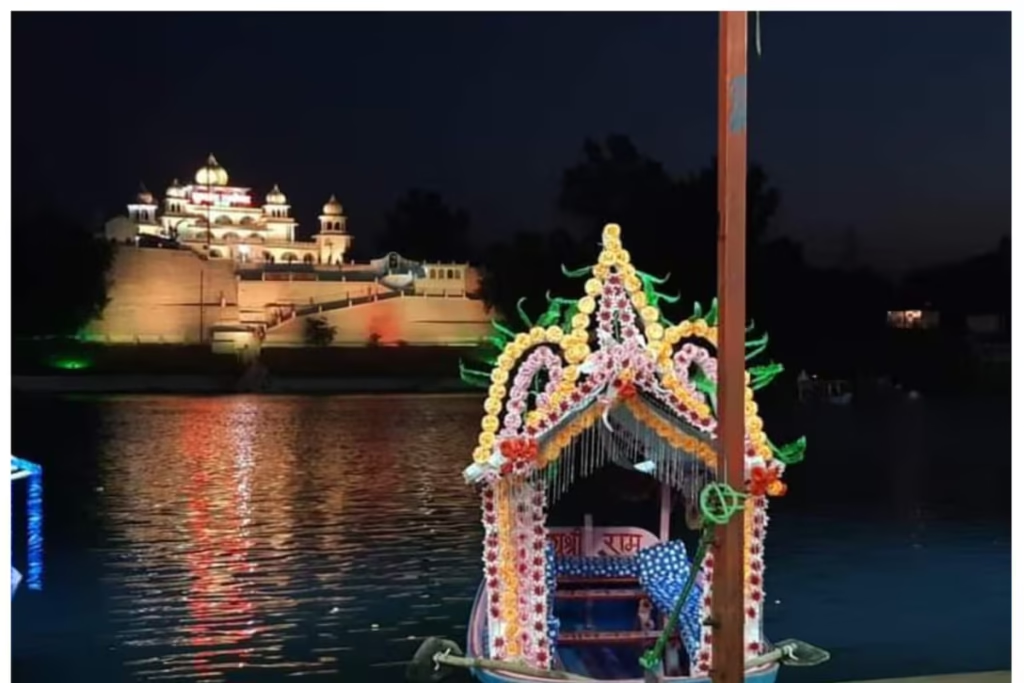
The Hidden Courtyard: Where Time Slows Down
Behind the main temple complex lies a courtyard most visitors never see—a quiet space where time seems to slow down. I discovered it by accident when I followed the sound of water to what appeared to be a dead end.
An elderly caretaker named Ramesh was tending to the plants, his hands moving gently among the leaves. “This isn’t just a garden,” he explained as he showed me around. “It’s a living clock.” He pointed to different plants: “This lotus opens at dawn, this jasmine at noon, this night-blooming cereus at midnight.”
As we walked among the plants, Ramesh shared stories that connected each plant to Hindu mythology. “This banyan tree,” he said, placing his hand on the rough bark, “is where Adi Shankaracharya is said to have meditated for 40 days.” He then showed me a particular vine that grows only here: “This is the ‘river’s pulse’ plant. It sways with the Narmada’s flow, even when there’s no wind.”

What moved me most was learning how the temple’s rituals incorporate these plants. The priest uses specific herbs in different ceremonies based on their blooming cycles. “We don’t just worship Shiva here,” Ramesh said. “We live with him in every leaf and petal.”
The Night I Spent on the Riverbank
Most visitors leave by sunset, but I decided to stay. The temple provides simple accommodations for pilgrims who wish to experience the temple after the crowds depart. As the last tourists filed out, the temple transformed. The harsh fluorescent lights were turned off, replaced by traditional oil lamps that cast dancing shadows on the ancient walls.
Around 9 PM, I joined a group of sadhus for an informal discussion on the riverbank. One of them noticed my camera and said, “Put it away. The real experience happens when you stop trying to capture it.” He was right. Without the distraction of documenting everything, I began to notice details I’d missed during the day: the way the moonlight highlighted specific carvings, the different sounds of the river at night versus day, the subtle shift in the scent of incense as the temperature dropped.
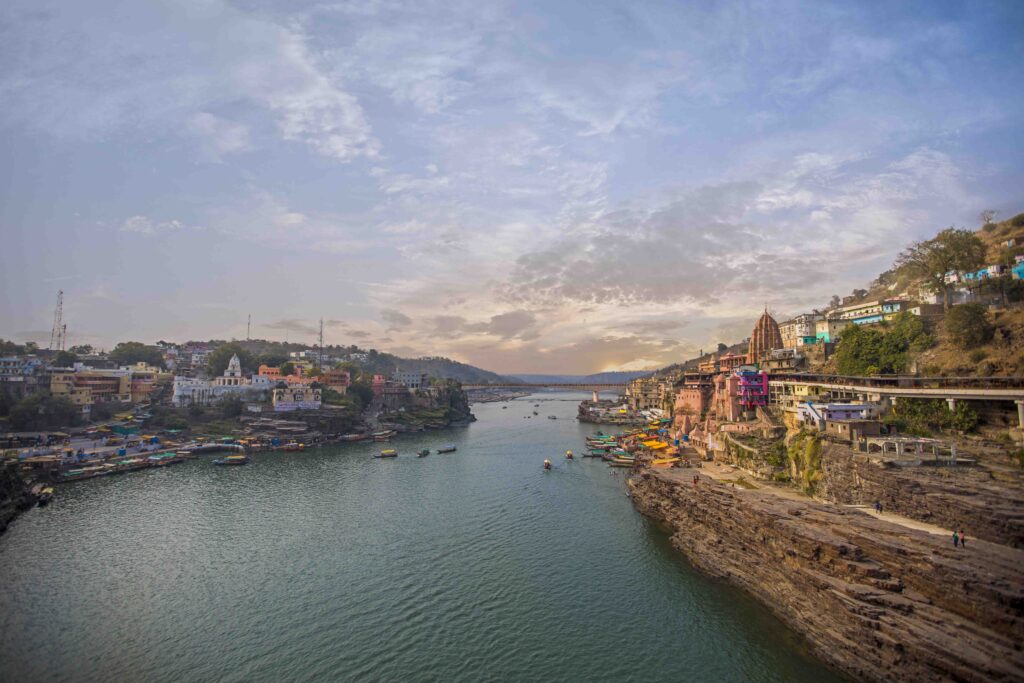
As midnight approached, the head priest invited us to witness the rare “Ratri Puja” (night worship). In the dim light of the sanctum, the rituals took on a different quality—more intimate, more personal. The priest explained that night worship connects to Shiva’s aspect as the destroyer of darkness, both literal and metaphorical.
Lying on my thin mat that night, listening to the river below and the occasional bell from the sanctum, I understood why people come here seeking transformation. The temple isn’t just a place to visit—it’s a space that changes you if you let it.
The Food That Feeds the Soul
Temple food in India varies widely, but the langar (community kitchen) at Omkareshwar has a special character. What surprised me most was how the food connects to the river’s rhythms.
I spent a morning with the kitchen staff, who welcomed me despite my clumsy attempts to help. The head cook explained that everything served here comes from the island or nearby riverbanks: rice grown in the river silt, vegetables from island gardens, and milk from local cows that graze on riverbank herbs.
“The food isn’t just nourishment,” she said as she stirred a massive pot of rice. “It’s prasad that carries the energy of this place.” She showed me how they prepare the special “Narmadiya Bhaat” (river rice) that’s unique to this temple—using rice cooked with river water and special herbs that grow only along the Narmada.

What moved me most was learning about the “Anna Daan” (food donation) tradition. Every day, the kitchen prepares extra food specifically for the river dwellers and tribal communities who live along the Narmada. “Shiva is everyone’s god,” the cook explained. “Not just those who can climb the hill to worship.”
During my stay, I was invited to share a meal with a group of tribal devotees who had walked for two days to reach the temple. Their simple offering of rice and lentils, cooked over an open fire, was the most meaningful meal I’ve ever eaten. As we ate with our hands (as is tradition), one elder shared stories of how his community has worshipped here for generations, long before the stone temple was built.
The Living History: Layers Upon Layers
Most guidebooks focus on Omkareshwar’s religious significance, but its historical layers run deep. I discovered this when I met a retired history professor who volunteers as a temple guide.
Over chai at a small shop near the temple, he shared stories that aren’t in official histories. “The current temple structure dates to the 18th century,” he explained, “but worship here goes back to at least the 3rd century BCE.” He showed me carvings most visitors overlook—subtle symbols that reveal the temple’s evolution through different ruling dynasties.

What fascinated me most was learning about the temple’s role during the Parmara dynasty (9th-13th century). “This wasn’t just a religious center,” he said. “It was a hub of learning, medicine, and even early forms of water management.” He took me to a rarely visited section of the temple where ancient inscriptions detail community decisions made here.
One afternoon, he introduced me to a manuscript conservator who works with the temple’s ancient texts. In a small, climate-controlled room, she showed me palm-leaf manuscripts that detail everything from temple rituals to medical treatments used centuries ago. “This knowledge wasn’t hoarded by priests,” she explained. “It was shared with anyone who came seeking healing.”
As I examined the delicate manuscripts, she shared a story that isn’t in any history book: during the 14th century, when the region faced a devastating drought, the temple became a center for water conservation techniques that saved countless lives. “Devotion here has always been practical,” she said. “Not just theoretical.”

The Mist That Changed Everything
My last morning at Omkareshwar began with an unexpected gift—a thick mist that rolled in from the river, enveloping the entire island. What could have been a disappointment (no mountain views) turned into the most profound experience of my visit.
As the mist settled, the temple transformed. Sounds became magnified—the dripping of water from the temple spire, the distant chanting, the rustle of leaves. Without visual distractions, my other senses heightened. I found myself noticing details I’d missed during clear days: the texture of the stone under my fingers, the subtle shifts in temperature as I moved between shaded and sunny areas, the complex layers of scent in the air.
An elderly sadhu noticed me standing quietly in the courtyard and joined me. “The mist is Shiva’s blessing,” he said. “When you can’t see the island, you must feel it instead.” He led me on a silent walk through the temple complex, guiding my hands to touch carvings I’d only looked at before.
As we moved from shrine to shrine, he described each one in detail, helping me “see” with my hands what I’d previously only seen with my eyes. The experience was humbling and transformative—like discovering a whole new dimension of the temple I thought I knew.
When the mist finally lifted around noon, revealing the stunning view of the Narmada River flowing around the “Om” shaped island, I realized something profound: I appreciated the view more because I’d experienced the temple without it. True understanding, I realized, comes not just from seeing, but from feeling, listening, and connecting.
Practical Wisdom from My Mistakes
My journey to Omkareshwar wasn’t without its hiccups—plenty of which could have been avoided with better preparation. Here’s what I learned the hard way, so you don’t have to:
Getting There:
- The Omkareshwar Road railway station is closer than expected (just 12 km)
- Shared jeeps from the station are cheaper than private taxis
- The best time to arrive is early morning to avoid the heat and crowds
- If coming by boat from Maheshwar, check the river conditions first
What to Bring:
- A lightweight rain jacket even in winter (the river weather changes fast)
- Soft-soled shoes for the temple complex (the marble is slippery when wet)
- A small notebook for taking notes (photography is restricted in many areas)
- Small denomination rupees for offerings and donations (they don’t take cards)
Temple Etiquette:
- Women should wear traditional Indian clothing (salwar kameez or saree) for inner sanctum access
- Men must remove shirts before entering the main shrine (bring a spare t-shirt)
- Silence isn’t just requested—it’s expected in many areas (my phone ringing earned me stern looks)
- Offerings should be purchased from temple-approved vendors (outside flowers aren’t accepted)
Hidden Gems:
- The “Sound Garden” behind the main temple where wind chimes create natural music
- The early morning milk offering ritual at the Mamaleshwar shrine (5 AM)
- The sunset viewpoint on the western side of the island that most tourists miss
- The weekly tribal market on Tuesdays where you can meet local communities
What NOT to Do:
- Don’t try to negotiate with sadhus (they don’t accept money for blessings)
- Don’t eat non-vegetarian food within 5 km of the temple (it’s considered disrespectful)
- Don’t rush through rituals—observe quietly before participating
- Don’t assume all areas are open (some shrines have closed during certain rituals)
The Real Miracle of Omkareshwar
After five days at Omkareshwar, I realized something profound: the real miracle isn’t the ancient architecture or the dramatic location—it’s the living tradition that connects people across generations and backgrounds.
On my last evening, I sat with a group of pilgrims from different parts of India. There was a businessman from Mumbai, a farmer from Tamil Nadu, a student from Delhi, and an elderly couple who had been coming here for 50 years. Despite their different backgrounds, they shared a common language of devotion that needed no translation.
As we watched the evening aarti (prayer ceremony), with oil lamps reflecting on the ancient stone walls, I understood what makes Omkareshwar special. It’s not just a Jyotirlinga—it’s a living community where ancient traditions breathe through modern lives.
The head priest found me packing my bag the next morning. “You’re taking something with you,” he said, not as a question but as a statement. I thought he meant a souvenir, but he shook his head. “The river gives something to everyone who listens. What did it give you?”
I struggled to find words until I realized: Omkareshwar had given me the understanding that true spirituality isn’t about grand gestures, but about attention to the present moment—the way the light hits a stone carving, the sound of water on stone, the feeling of cool marble under bare feet.
As I walked down the path to the boat landing, I glanced back one last time. The temple glowed softly in the morning light, not as a monument to the past, but as a living presence connecting past, present, and future. The river’s whisper had become part of me, and I knew I’d carry it long after the journey ended.
The Island That Lives Within You
Leaving Omkareshwar isn’t like leaving other places. The island doesn’t stay behind as a memory—it becomes part of you. The rhythm of the river continues in your heart, the cool marble beneath your feet lingers in your bones, and the scent of incense remains in your clothes long after you’ve left.
What stays with you isn’t just the beauty of the architecture or the intensity of the rituals, but a deeper understanding: that sacred spaces aren’t just locations on a map, but living landscapes that shape how we experience the divine. Omkareshwar teaches that spirituality isn’t confined to temples—it flows through rivers, shapes land, and pulses in the rhythm of daily life.
As the boat carried me away from Mandhata Island, I thought about the river’s constant movement. The Narmada never stops flowing, just as spiritual growth never truly ends. The island shaped like “Om” isn’t just a geographical curiosity—it’s a reminder that the sacred symbol isn’t just written in books, but woven into the very fabric of the world.
The real pilgrimage doesn’t end when you leave Omkareshwar. It begins when you return to your everyday life, carrying the river’s rhythm in your heart, seeing the divine not just in temples, but in the flow of ordinary moments. The island that spells “Om” becomes the “Om” that spells your life—a continuous cycle of creation, preservation, and transformation that flows through everything.
Final Thoughts for Future Pilgrims
If you’re planning to visit Omkareshwar, here’s my heartfelt advice:
Come with empty hands and an open heart. This isn’t a tourist destination—it’s a living spiritual ecosystem. Don’t try to see everything in one day; instead, choose one ritual or area to focus on deeply. Talk to the people, not just about the temple, but about their lives. Eat the temple food with gratitude. Sit quietly and listen—sometimes the most important teachings come in silence.
Most importantly, leave your expectations at the door. Omkareshwar isn’t what’s in the guidebooks or on Instagram. It’s something you discover through patient presence, one step, one breath, one moment at a time.
FAQs on Omkareshwar Temple
1. Where is Omkareshwar Temple located?
It is situated on Mandhata Island in the Narmada River, Madhya Pradesh.
2. Why is Omkareshwar Temple famous?
It is one of the 12 Jyotirlingas of Lord Shiva and the island itself is shaped like the holy symbol “Om.”
3. What is the significance of the Omkareshwar Jyotirlinga?
It represents Lord Shiva’s infinite power and presence, and is considered highly auspicious for spiritual seekers.
4. What are the temple timings?
Generally, the temple is open from 5:00 AM to 10:00 PM, with morning and evening aarti performed daily.
5. How can devotees reach Omkareshwar Temple?
The nearest railway station is Omkareshwar Road (12 km away) and the closest airport is Indore, about 77 km from the temple.
6. What is the best time to visit Omkareshwar?
The best season is October to March, though festivals like Maha Shivaratri and Shravan month attract maximum devotees.
7. Are there any other important temples nearby?
Yes, apart from Omkareshwar, devotees also visit Mamleshwar Temple, located just across the river.
8. Is boating available to reach the temple?
Yes, boats are available on the Narmada River, offering a scenic and spiritual ride to the temple.
9. Are accommodations available near Omkareshwar Temple?
Yes, Dharamshalas, guest houses, and hotels are available for pilgrims in and around the temple area.
10. Can non-Hindus visit Omkareshwar Temple?
Yes, the temple complex is open to all visitors, though certain rituals are restricted to Hindu devotees.

One thought on “Omkareshwar Temple Madhya Pradesh – Jyotirlinga Darshan, Timings & Travel Guide”