It began with a simple question: Where does one find Shiv? Not in books or philosophies, but in the living pulse of devotion that has flowed through India for millennia. What followed was a pilgrimage that transformed my understanding of spirituality—not as a distant concept, but as something you can feel in the stone beneath your feet, hear in the chanting of ancient mantras, and taste in the prasad offered with hands that have performed the same ritual for generations.
This isn’t a tourist’s checklist. These temples aren’t just destinations—they are living entities with their own breath, rhythm, and stories. I’ve walked barefoot on the same stones that countless pilgrims have touched before me, each step connecting me to something larger than myself.
And it is through this journey that I invite you to explore the 50 Most Famous Shiva Temples in India —sacred spaces where history, devotion, and divinity converge, offering seekers not just a place to worship, but an experience that lingers in the soul.
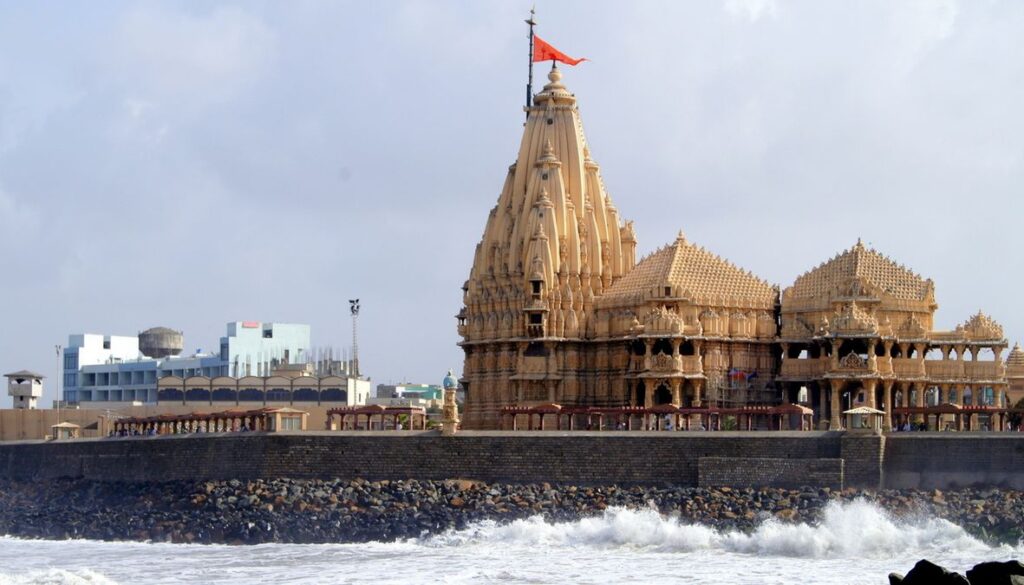
1. Somnath Temple – Veraval, Gujarat
The sea air carried the scent of salt and incense as I approached Somnath at dawn. This temple has been destroyed and rebuilt seven times, yet devotion never wavered. As I walked barefoot on the cool marble, I traced my fingers over the ancient stones that have witnessed centuries of devotion and destruction.
Why Somnath captures the soul:
- The only Jyotirlinga facing west, toward the setting sun
- The rhythmic sound of the Arabian Sea merging with temple bells
- The haunting beauty of the night aarti with lamps reflecting on the water
- The palpable sense of resilience—each reconstruction stronger than the last
- The legend of the moon god regaining his luster here after a curse
One evening, as the priest lit the giant lamp during aarti, the sound of “Har Har Mahadev” echoed across the water, blending with the crashing waves. In that moment, I understood why this temple has drawn pilgrims for millennia despite repeated destruction—it’s not just a building, but a testament to the indestructible nature of faith itself.
Practical insight: Visit during Shravan month (July-August) for the most powerful spiritual energy, but go at dawn when the temple is empty and the sea breeze carries the scent of incense. Don’t miss the sound and light show that narrates the temple’s turbulent history—stand at the back for the best acoustics as the story echoes off the ancient walls.
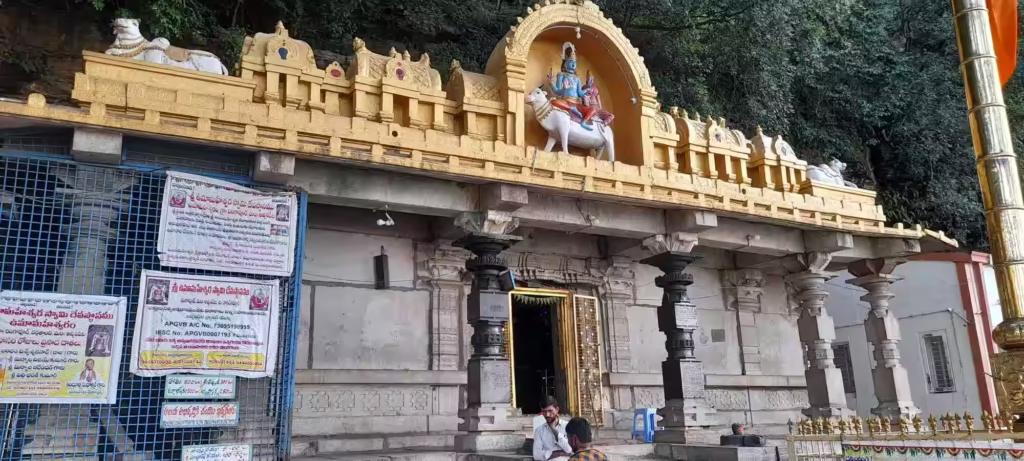
2. Mallikarjuna Temple – Srisailam, Andhra Pradesh
The climb to Srisailam felt like ascending into another world. As the switchbacks wound higher into the Nallamala Hills, the air grew cooler and the forest denser. At the temple entrance, I removed my shoes and felt the cool stone beneath my feet—a welcome relief after the climb.
Mallikarjuna’s mountain presence:
- The dramatic setting atop a hill overlooking the Krishna River
- The twin shrines of Mallikarjuna (Shiva) and Bhramaramba (Parvati)
- The ancient rock-cut architecture blending with natural formations
- The powerful energy field that intensifies as you approach the sanctum
- The legend of Shiva and Parvati’s eternal union here after the death of Sati
What struck me most was the temple’s connection to nature. During my visit, I watched as a king cobra slithered across the courtyard—a sacred sight that locals took in stride, continuing their prayers without disturbance. The priest explained that snakes are considered manifestations of Shiva here, and harming them is strictly forbidden.
Practical insight: Visit between October and March for comfortable temperatures. Stay overnight in the temple guesthouse to experience the morning rituals when the first light hits the sanctum. Don’t miss the Pathala Ganga nearby—a sacred river believed to flow underground from the Himalayas.
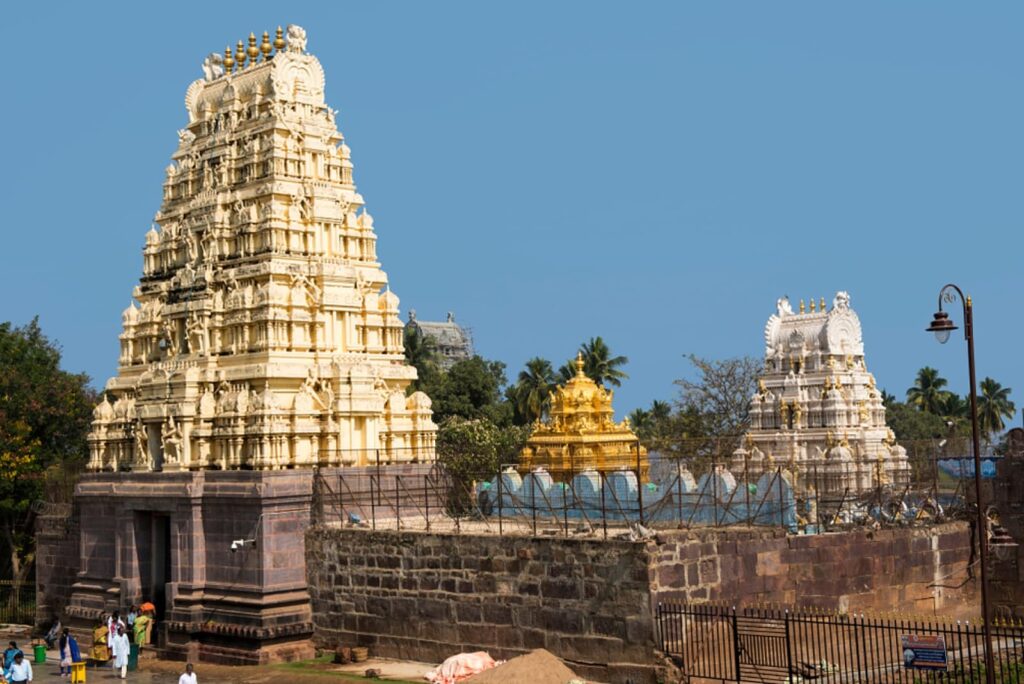
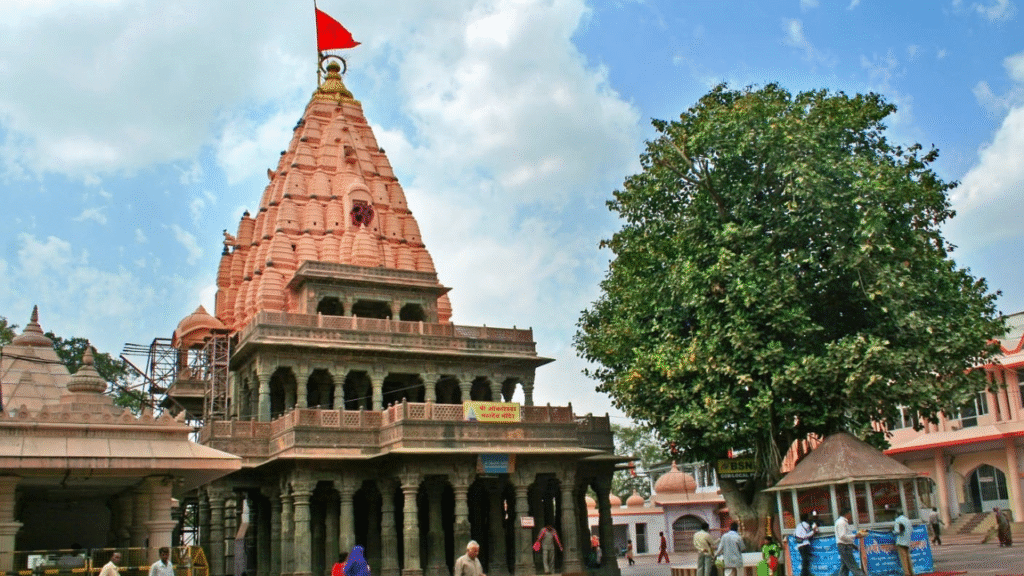
3. Mahakaleshwar Temple – Ujjain, Madhya Pradesh
Ujjain pulsed with energy even before I reached the Mahakal temple. The narrow lanes of the old city buzzed with activity—vendors selling marigolds, priests chanting, pilgrims streaming toward the sacred site. But crossing the threshold into the temple complex was like entering another dimension. The air itself felt charged, heavy with centuries of devotion.
Mahakaleshwar’s transformative power:
- The only Jyotirlinga that is a “Swayambhu” (self-manifested) lingam
- The unique Bhasma Aarti performed at 4 AM using sacred ash
- The underground sanctum where the lingam appears to emerge from the earth
- The powerful sense of Shiva as “Mahakal” (Lord of Time) that permeates the temple
- The legend of Shiva saving King Chandrasena from death
During the pre-dawn Bhasma Aarti, I stood among hundreds of devotees in complete darkness. As the first rays of light began to filter in, priests anointed the lingam with sacred ash while chanting ancient mantras. In that moment of transition between night and day, I understood why this is considered one of the most powerful Jyotirlingas—it confronts you with the reality of time and mortality in the most direct way.
Practical insight: Book a spot for the Bhasma Aarti well in advance—it’s a deeply moving experience but space is limited. Visit during Maha Shivaratri when the temple stays open all night, but be prepared for massive crowds. Don’t miss the nearby Ram Mandir for panoramic views of the city and Shipra River.
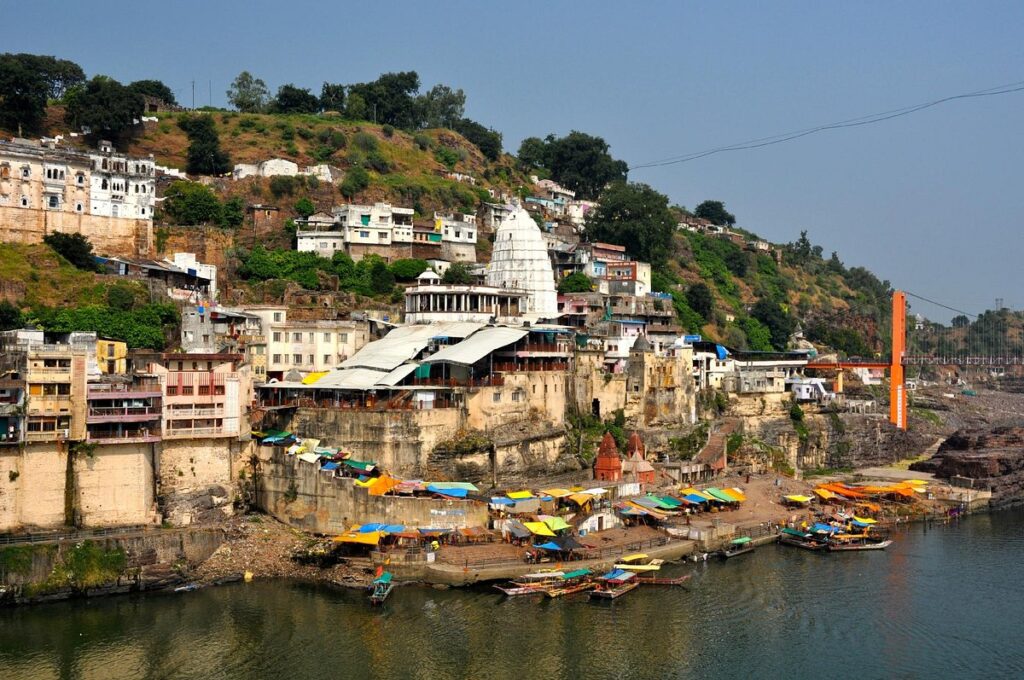
4. Omkareshwar Temple – Madhya Pradesh
The journey to Omkareshwar felt like traveling back in time. After crossing the Narmada River by boat, I stepped onto Mandhata Island, shaped like the sacred “Om” symbol. The temple complex perched on a hilltop, overlooking the confluence of two rivers that form this divine shape.
Omkareshwar’s cosmic significance:
- The island’s unique “Om” shape visible from space
- The twin temples of Omkareshwar (Shiva) and Mamaleshwar (Shiva)
- The dramatic cliffside location with panoramic river views
- The legend of King Mandhata’s penance that created the island
- The powerful energy of the Narmada River’s sacred confluence
One afternoon, I joined local pilgrims performing “parikrama” (circumambulation) around the island. As we walked, an elderly sadhu shared stories of how the river’s flow changes with the seasons, revealing different sacred sites along the banks. Later, sitting by the river at sunset, I watched as the water turned gold, understanding why the Narmada is considered the “Lifeblood of India.”
Practical insight: Visit between October and March for ideal weather. Stay in a riverside guesthouse to experience the morning aarti when the first light hits the temple. Don’t miss the opportunity to take a boat ride along the Narmada to see the “Om” shape from the water.
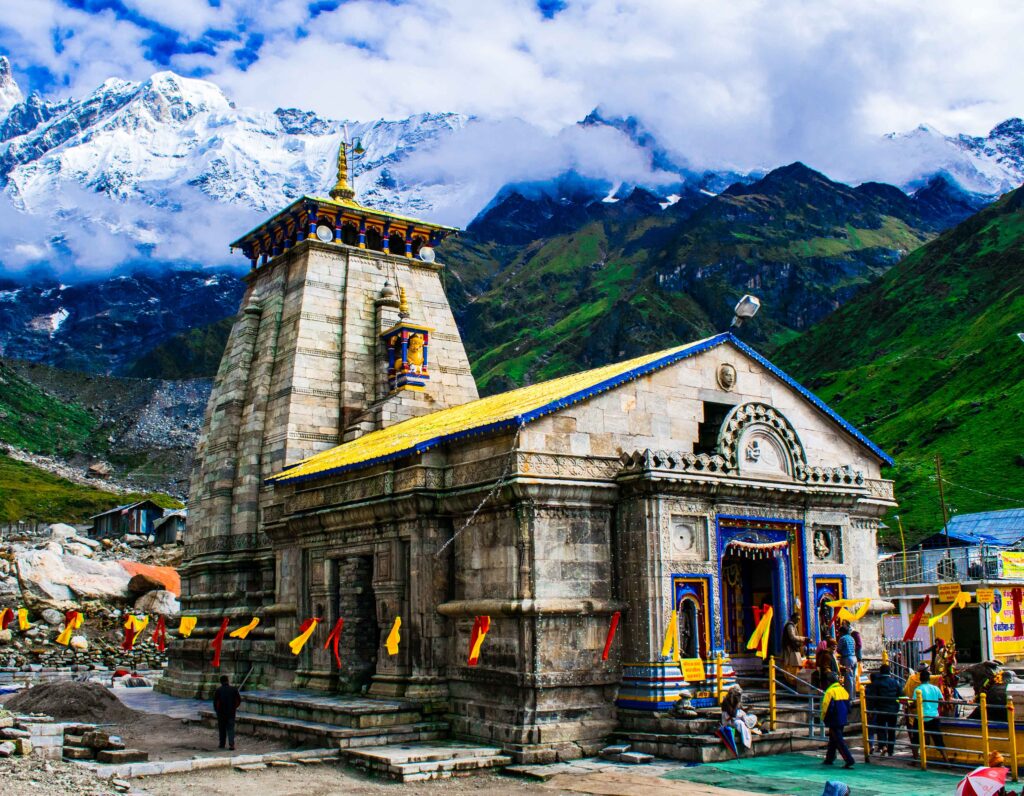
5. Kedarnath Temple – Uttarakhand
The final stretch to Kedarnath tested everything I thought I knew about devotion. For eight hours, my legs burned as I climbed through pine forests and rocky paths, my breath coming in short gasps at 11,755 feet. But when the temple came into view, everything changed. The air itself felt charged, as if the mountain was holding its breath.
Kedarnath’s profound presence:
- The challenging pilgrimage path that transforms the journey into meditation
- The ancient stone structure that seems to grow from the mountain itself
- The morning chants echoing through the valley like a heartbeat
- The rare sight of the Shiva lingam covered in natural ice formations
- The powerful energy that makes even non-believers feel something indescribable
During my darshan, I noticed how the lingam appeared to be made of natural stone rather than sculpted—jagged and irregular, as if it had simply emerged from the earth. The priest explained that this is considered one of the most ancient Jyotirlingas, with the lingam forming naturally from the mountain’s minerals. As I left the sanctum, an elderly pilgrim grasped my hand and said, “This isn’t a temple you visit; it’s a temple that visits you.”
Practical insight: Visit between May and October when the temple is open. Hire a local guide who knows the hidden viewpoints along the trek—there’s a spot halfway up where you can see the entire valley spread out below like a living map. After darshan, sit quietly by the Mandakini River and let the mountain’s silence sink into your bones.
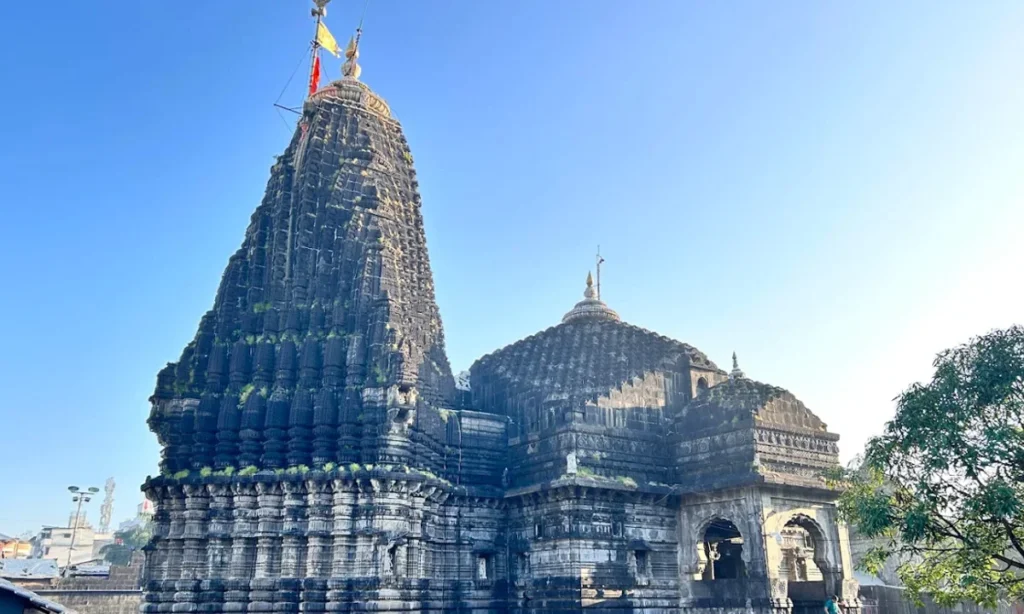
6. Bhimashankar Temple – Maharashtra
Nestled in the Western Ghats, Bhimashankar felt less like a temple and more like a living part of the forest. The journey through dense jungle, with the calls of birds and rustling of leaves as my only companions, prepared me for what awaited. Unlike the grand urban temples, this one felt wilder, more primal.
Bhimashankar’s forest energy:
- The temple’s location in a protected wildlife sanctuary
- The dramatic architecture blending with the natural landscape
- The source of the Bhima River that flows from the temple complex
- The legend of Shiva defeating the demon Tripurasura here
- The powerful connection to nature that makes the divine feel immediate
What moved me most was witnessing a group of Adivasi (tribal) devotees performing their own rituals in a corner of the temple complex. Their worship involved offerings of wild fruits and leaves, accompanied by chants in their native language—a tradition unchanged for centuries. The head priest told me they’ve been coming here since before the temple was built, recognizing this as sacred ground long before stone was laid.
Practical insight: Visit between June and October during the monsoon when the surrounding forest is at its most lush. Stay in the temple guesthouse to experience the morning rituals before tourists arrive. Don’t miss the opportunity to hike to the source of the Bhima River—a short but steep climb through the jungle.
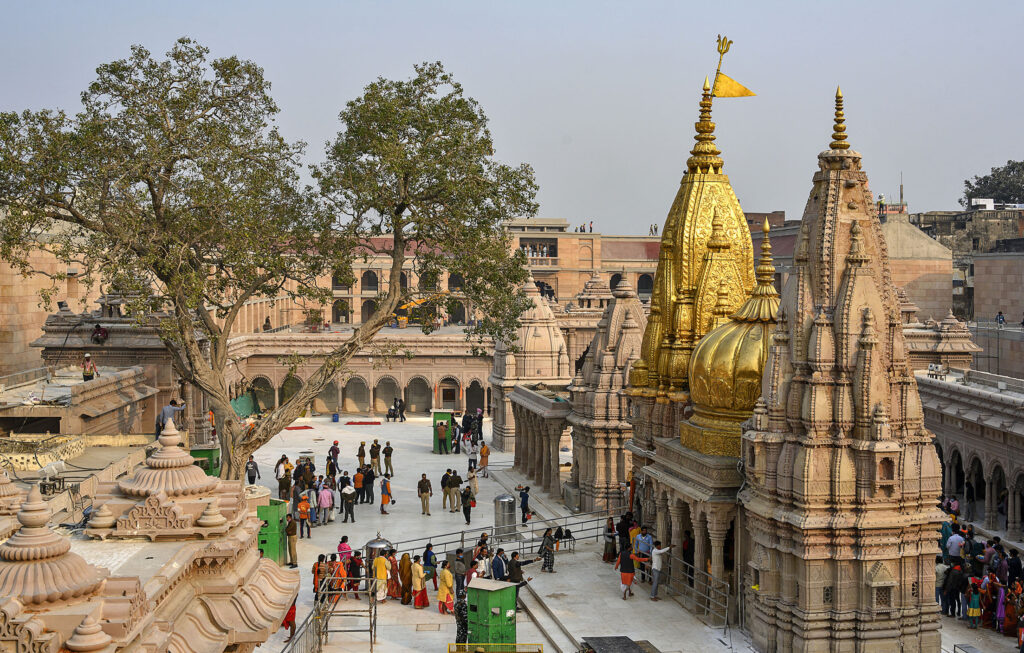
7. Kashi Vishwanath Temple – Varanasi
In Varanasi, time doesn’t flow—it swirls. At Kashi Vishwanath, I joined the river of humanity moving through narrow lanes fragrant with marigolds and incense. The temple itself is unassuming from the outside, but inside, the air vibrates with devotion. During the evening aarti, I watched as priests moved with practiced precision, their faces illuminated by the flickering lamps, while devotees wept openly in the presence of Shiva.
What makes Kashi unique:
- The temple’s location on the sacred Dashashwamedh Ghat
- The constant stream of pilgrims creating a living river of devotion
- The intricate silver corridor leading to the sanctum
- The sound of bells and chants that never stops, day or night
- The belief that dying in Kashi guarantees liberation from the cycle of rebirth
One morning, I arrived before dawn to find the temple already alive with activity. As the first rays of light hit the golden spire, an elderly sadhu sitting near me whispered, “This isn’t just a temple; it’s the axis around which the universe turns.” Later, floating on a boat on the Ganges at sunrise, I saw the temple illuminated against the rising sun—a sight that will stay with me forever.
Practical insight: Visit early morning to experience the temple without crowds. Book a boat on the Ganges at dawn to see the temple illuminated against the rising sun. Don’t miss the Vishwanath corridor recently opened, which provides a more dignified approach to the temple.
8. Tryambakeshwar Temple – Nashik, Maharashtra
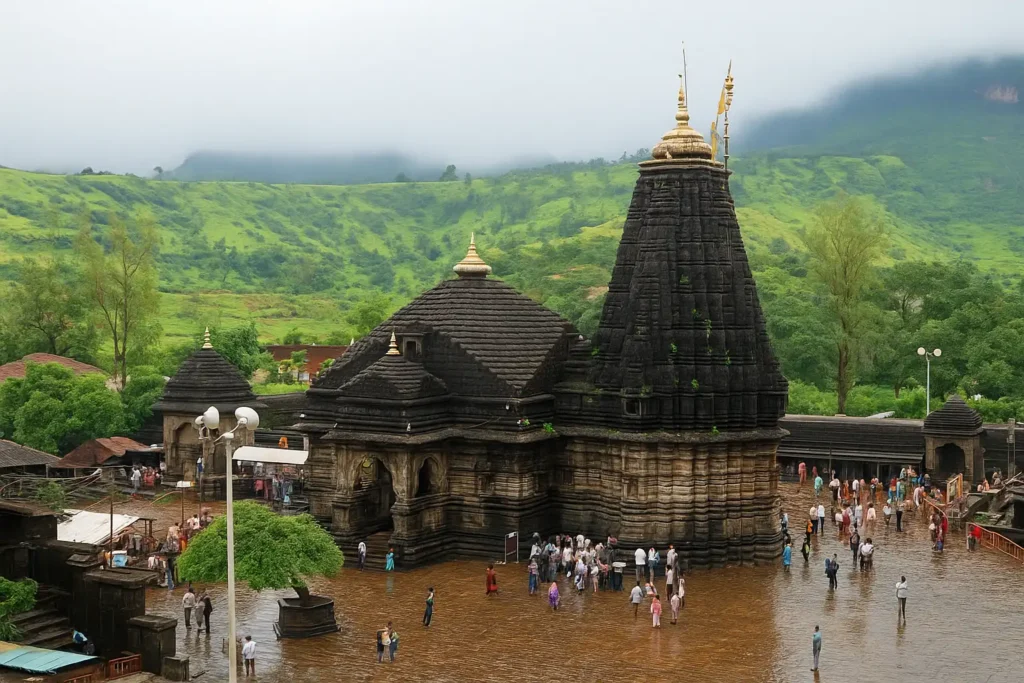
The journey to Tryambakeshwar felt like traveling through layers of time. As I approached the temple complex, the sound of the Gautami River grew louder, mingling with temple bells and chants. Unlike other Jyotirlingas, this one sits in a spacious courtyard rather than a confined sanctum, giving the divine presence an expansive quality.
Tryambakeshwar’s river connection:
- The source of the sacred Godavari River flowing through the temple complex
- The unique three-faced Shiva lingam representing Brahma, Vishnu, and Shiva
- The massive temple complex with multiple shrines and water tanks
- The legend of the sage Gautama’s penance that brought the Godavari here
- The powerful energy that intensifies during the Kumbh Mela
During my visit, I participated in the ritual of filling a copper pot with water from the Kushavarta Kund (holy tank) to offer to the lingam. As I carried the heavy pot through the crowded courtyard, an elderly woman stopped me and adjusted my grip, saying, “The water carries your devotion; carry it with respect.” In that simple moment, I understood how every action in this temple is transformed into worship.
Practical insight: Visit between October and March for ideal weather. Participate in the ritual of offering river water to the lingam—it’s a deeply personal experience. Don’t miss the opportunity to visit the nearby caves where sages are said to have meditated for centuries.
9. Vaidyanath Temple – Deoghar, Jharkhand
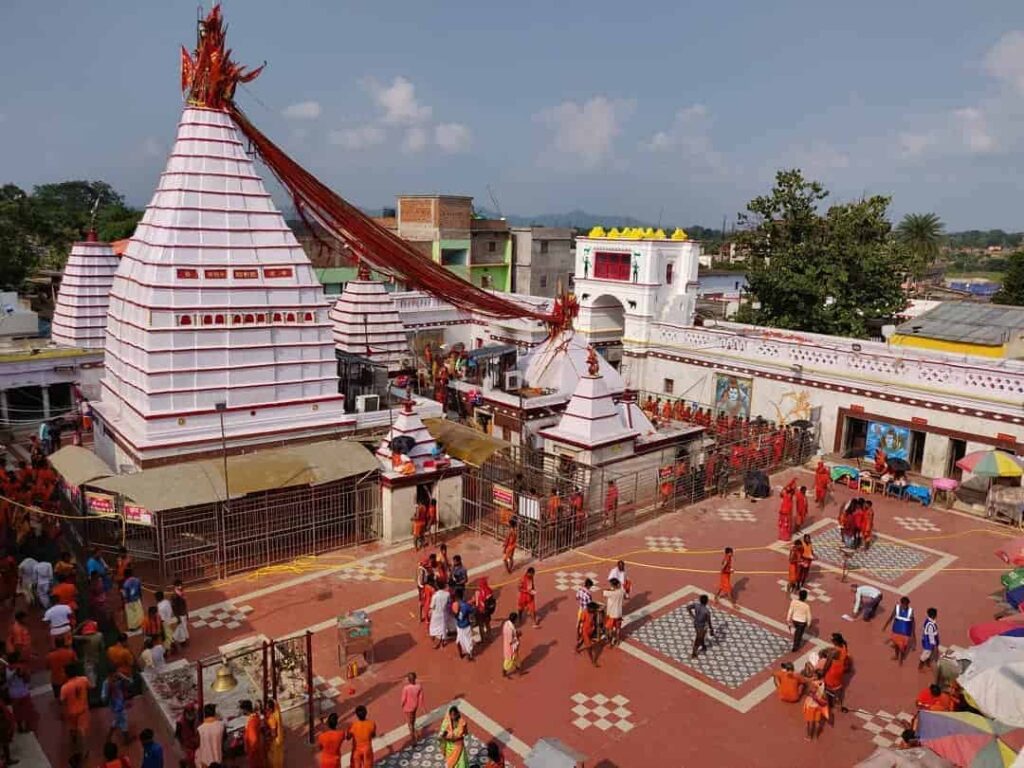
Deoghar pulsed with a different energy than other Jyotirlingas. Known as “Baidyanath Dham,” this temple is renowned as a place of healing—both physical and spiritual. As I joined the stream of pilgrims walking the 22-kilometer route from Satsang Ghat to the temple, I noticed many carrying pots of Ganges water on their heads, some with visible disabilities or illnesses.
Vaidyanath’s healing presence:
- The tradition of “Kanwariya” pilgrims carrying Ganges water on foot
- The massive temple complex with its distinctive North Indian architecture
- The belief in Shiva as “Vaidyanath” (Lord of Healing)
- The powerful energy that devotees say cures both physical and spiritual ailments
- The legend of Ravana’s devotion that earned him the lingam
What moved me most was witnessing a group of Kanwariya pilgrims completing their journey. Exhausted but radiant, they poured the Ganges water they’d carried for days over the lingam, their faces transformed by devotion. Later, a priest explained how the temple runs free medical clinics, continuing Shiva’s role as healer in practical ways.
Practical insight: Visit during Shravan month (July-August) when thousands of Kanwariya pilgrims make the journey. Stay in the temple guesthouse to experience the morning rituals. Don’t miss the opportunity to walk a portion of the Kanwariya route to understand the physical devotion involved.
10. Nageshwar Temple – Dwarka, Gujarat
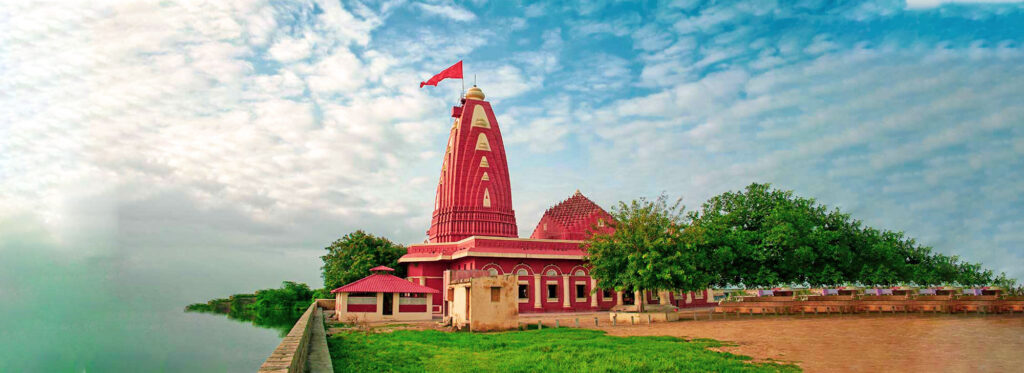
Nageshwar surprised me with its coastal setting. Unlike the inland Jyotirlingas, this one faces the Arabian Sea, creating a unique blend of mountain and ocean energy. The temple complex sat slightly elevated, with the sound of waves providing a constant backdrop to temple bells.
Nageshwar’s serpentine connection:
- The association with Shiva as the lord of serpents (Naga)
- The dramatic coastal location with ocean views from the temple courtyard
- The legend of the demon Daruka and the devotee Supriya
- The powerful energy that devotees say protects against snake bites and poison
- The nearby beach where devotees perform rituals for departed ancestors
During my visit, I noticed many pilgrims wearing silver snake amulets or carrying images of cobras. A local devotee explained that people come here seeking protection from snake bites, especially during monsoon season when snakes are most active. Later, I joined a group performing “tarpan” (water offerings) for ancestors on the beach—a practice that connected the Jyotirlinga to the cycle of life and death.
Practical insight: Visit between October and March for ideal weather. Combine your visit with Dwarkadhish Temple for a complete spiritual experience. Don’t miss the opportunity to walk along the beach at sunset when the temple glows golden in the fading light.
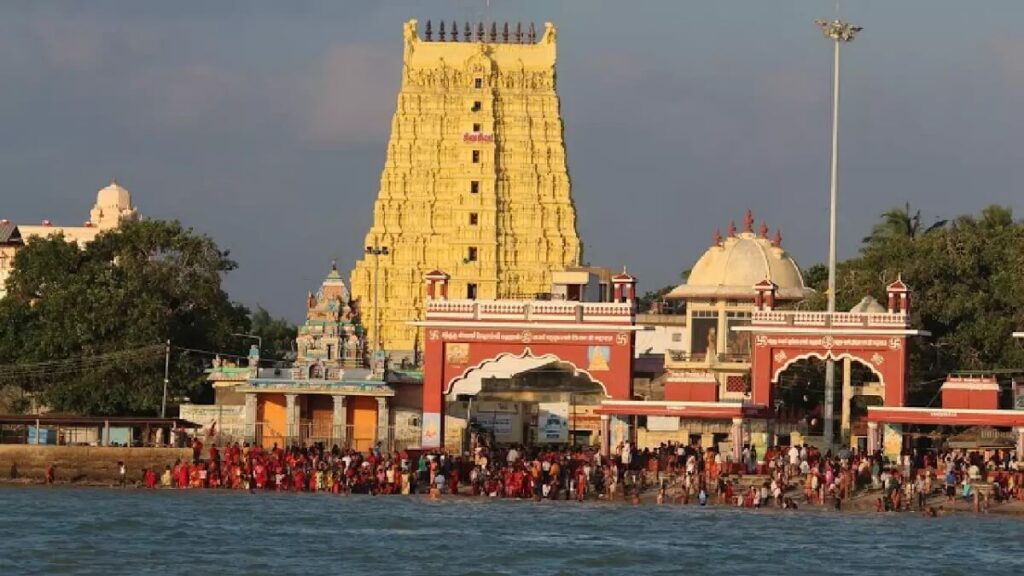
11. Rameshwaram Temple – Tamil Nadu
Rameshwaram hit me with its scale and complexity. The temple complex felt like a city unto itself, with towering gopurams (gateway towers) and corridors stretching as far as the eye could see. As I removed my shoes and stepped onto the cool stone floor, I joined a river of pilgrims moving through the sacred space.
Rameshwaram’s epic significance:
- The longest corridor of any temple in India (1,200 pillars)
- The association with Lord Rama’s legend in the Ramayana
- The 22 sacred wells (theerthams) with different medicinal properties
- The belief that visiting Rameshwaram completes the pilgrimage circuit
- The powerful energy that combines Shaivism with Vaishnavism
What moved me most was participating in the ritual of bathing in all 22 theerthams. Each well had water with a slightly different temperature and taste, and priests explained how each one cured specific ailments. An elderly pilgrim walking beside me shared that he’d been coming here for 50 years, bathing in the same sequence each time—a ritual that had become part of his identity.
Practical insight: Allow at least two days to properly experience the temple complex. Start early in the morning to avoid crowds and heat. Don’t miss the opportunity to participate in the theertham ritual—hire a local guide to ensure you follow the proper sequence.
12. Grishneshwar Temple – Ellora, Maharashtra
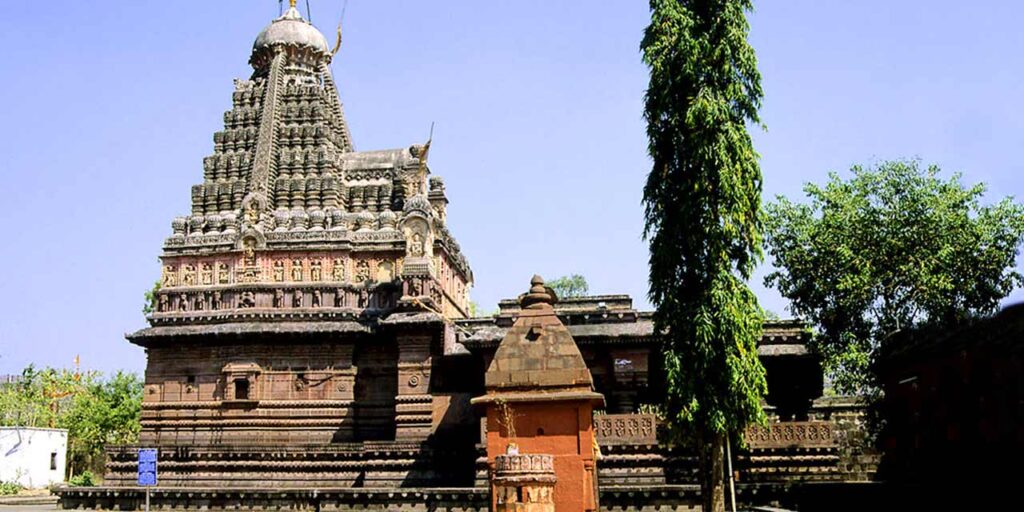
Grishneshwar surprised me with its location—just a short walk from the famous Ellora Caves. While visitors flocked to the caves, the temple maintained a peaceful atmosphere, as if it existed in its own time bubble. The structure itself was deceptively simple from the outside, but the inner courtyard revealed intricate carvings and a palpable spiritual energy.
Grishneshwar’s artistic fusion:
- The proximity to the Ellora Caves, creating a spiritual-artistic complex
- The intricate Maratha-style architecture with detailed carvings
- The legend of the devotee Kusuma and her unwavering faith
- The powerful energy that devotees say fulfills sincere prayers
- The unique blend of Shaivism with the artistic heritage of Ellora
During my visit, I spent hours watching artisans restoring sections of the temple, using techniques unchanged for centuries. One craftsman explained that they work only on auspicious days, beginning each session with prayer. Later, I climbed to a viewpoint near the caves and watched as the setting sun illuminated both the ancient rock-cut temples and Grishneshwar in golden light—a visual metaphor for the continuity of spiritual tradition.
Practical insight: Visit between October and March for ideal weather. Combine your temple visit with the Ellora Caves for a complete experience. Don’t miss the opportunity to attend the evening aarti when the temple is illuminated with oil lamps.
13. Tungnath: The Highest Abode
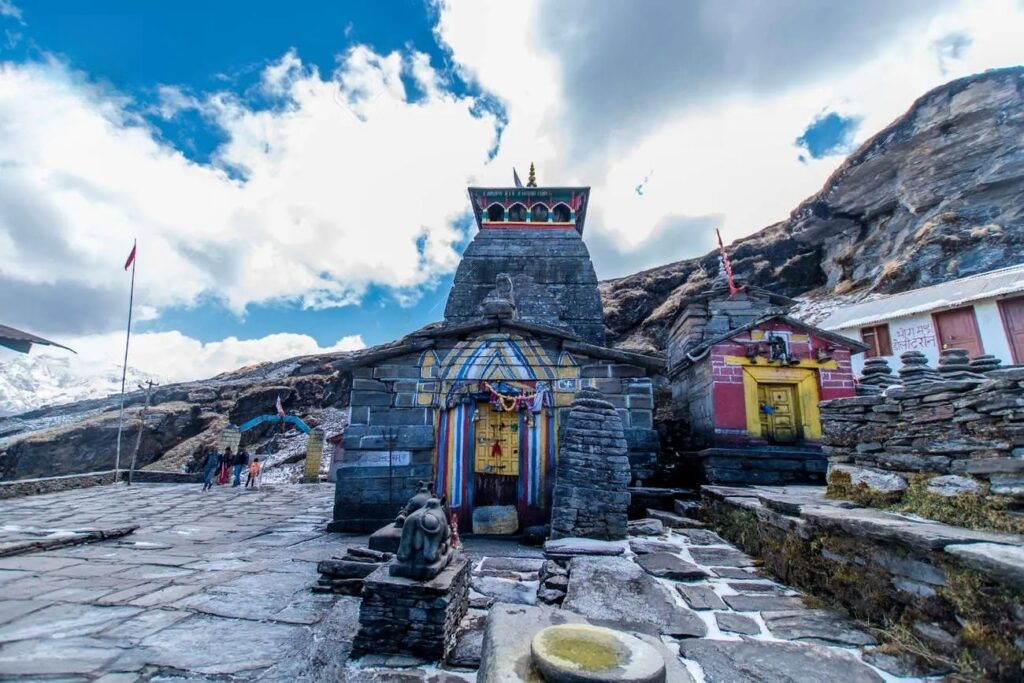
The trek to Tungnath felt like walking through a myth. As I climbed through rhododendron forests, my guide shared stories of how Shiva’s hump appeared at this spot after his transformation into a bull. The final stretch tested my resolve—each step higher seemed to thin the air more, until at 3,680 meters, I stood before the ancient stone structure that feels less like a temple and more like a natural extension of the mountain itself.
Tungnath’s mountain magic:
- The breathtaking view of Chandrashila peak from the temple courtyard
- The ancient stone architecture that seems to grow from the mountain
- The rare peace of being among the few pilgrims who make the trek
- The powerful energy that intensifies as you approach the sanctum
- The traditional offerings of wild mountain flowers instead of conventional puja items
What struck me most was the simplicity. Unlike grand urban temples, Tungnath is unadorned—a small stone structure with a modest lingam that seems to emerge from the earth. During my darshan, an elderly priest explained that this is where Shiva’s physical presence is most direct, unmediated by elaborate rituals. As I sat quietly after the ritual, watching the clouds part to reveal Nanda Devi’s snow-capped peak, I understood why this is considered the highest Shiva temple in the world—not just in altitude, but in spiritual significance.
Practical insight: Visit between May and November. Stay overnight in the temple guesthouse to experience the temple after sunset when it’s empty except for the priests. Don’t miss the Chandrashila peak hike from Tungnath—a 1.5-hour climb that rewards you with 360-degree Himalayan views. Bring warm clothing even in summer; temperatures can drop below freezing at night.
14. Rudranath: The Hidden Sanctuary
Rudranath tested my commitment like no other temple. Unlike the other Panch Kedar sites, this one requires a challenging 19-kilometer trek through dense forests with no road access. For hours, I followed a narrow path through rhododendron and oak forests, my legs burning with each uphill step. When I finally arrived, breathless and covered in sweat, I understood why—it’s hidden, just as Shiva intended.
Rudranath’s wild beauty:
- The sense of discovery after the demanding trek through untouched forests
- The natural rock Shiva lingam that appears to emerge from the earth
- The wildflowers that carpet the meadow in summer
- The absence of crowds—this temple remains truly off the beaten path
- The powerful connection to nature that makes the divine feel immediate
The temple sits in a high meadow surrounded by snow-capped peaks, with no grand architecture to distract from the raw presence of the deity. The lingam itself is a natural rock formation, uncarved and unadorned, with water continuously dripping on it from the mountain above. During my visit, I witnessed a group of local shepherds performing their own simple puja with milk and wildflowers—a tradition unchanged for centuries.
What moved me most was the silence. No loud chants or elaborate rituals—just the sound of wind through the pines and the occasional call of a Himalayan bird. As I sat quietly in the temple courtyard, an elderly local explained that Rudranath is where Shiva reveals himself in his most primal form—not as a king or healer, but as the wild essence of the mountains themselves.
Practical insight: Visit between June and September. Bring your own offerings—this temple is too remote for commercial puja items. Stay with local villagers in Sagar village the night before your trek for authentic hospitality and guidance. Don’t attempt the trek alone; hire a local guide who knows the path through the dense forest.
15. Madhyamaheshwar: The Heart Temple
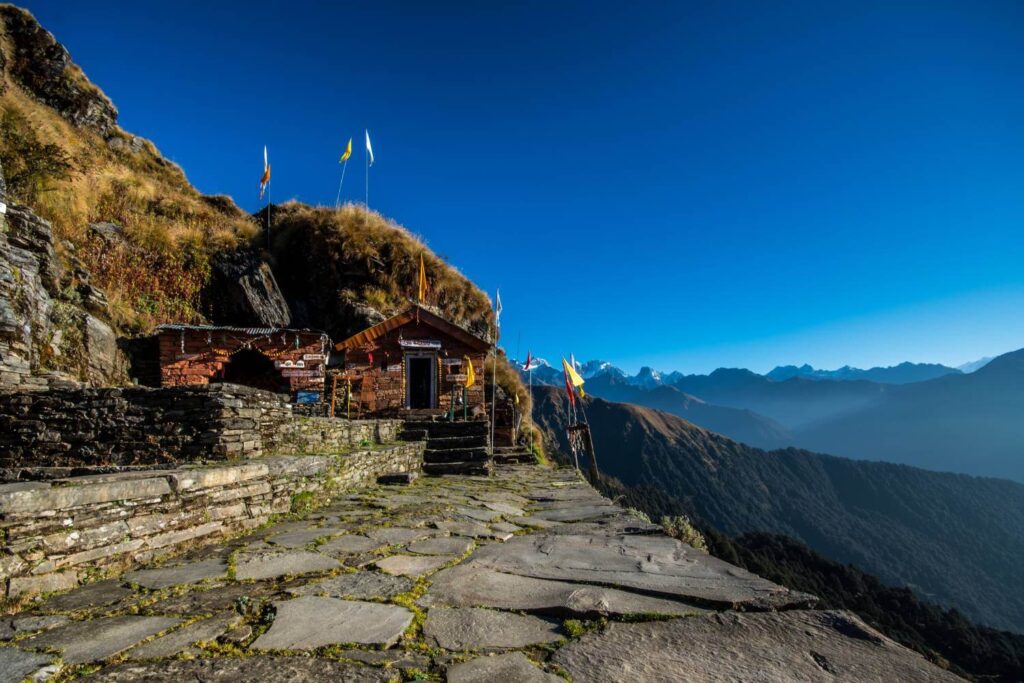
Madhyamaheshwar surprised me with its gentle energy. After the challenging treks to Tungnath and Rudranath, this temple felt like a welcome embrace. The final approach took me through terraced fields where local farmers worked with traditional tools, their movements a dance perfected over generations. As I rounded the last bend, the temple came into view—a modest structure nestled in a valley with panoramic Himalayan views.
Madhyamaheshwar’s heart-centered energy:
- The temple’s location in a peaceful valley surrounded by mountains
- The natural stone lingam with water continuously dripping from above
- The legend of Shiva’s navel appearing at this spot
- The strong connection to local farming communities
- The gentle spiritual energy that feels welcoming to all
What made Madhyamaheshwar unique was its integration with daily life. Unlike temples that exist apart from the community, this one is woven into the fabric of village life. During my visit, I watched as farmers stopped to offer prayers before heading to their fields, and children played in the temple courtyard after school. The priest explained that the temple’s rituals align with the agricultural calendar—prayers for rain during planting season, thanksgiving after harvest.
One afternoon, I joined local women preparing offerings of fresh milk and seasonal fruits. As we worked, they shared stories of how the temple has been their spiritual anchor through droughts and floods. Later, sitting by the temple’s natural spring, I understood why this is called the “heart temple”—it beats in rhythm with the community it serves.
Practical insight: Visit between May and October. Stay in a village homestay to experience the temple’s role in daily life. Don’t miss the opportunity to join the morning milk offering ritual—it connects you to the agricultural cycle that sustains the region. Bring warm clothing; nights can be surprisingly cold even in summer.
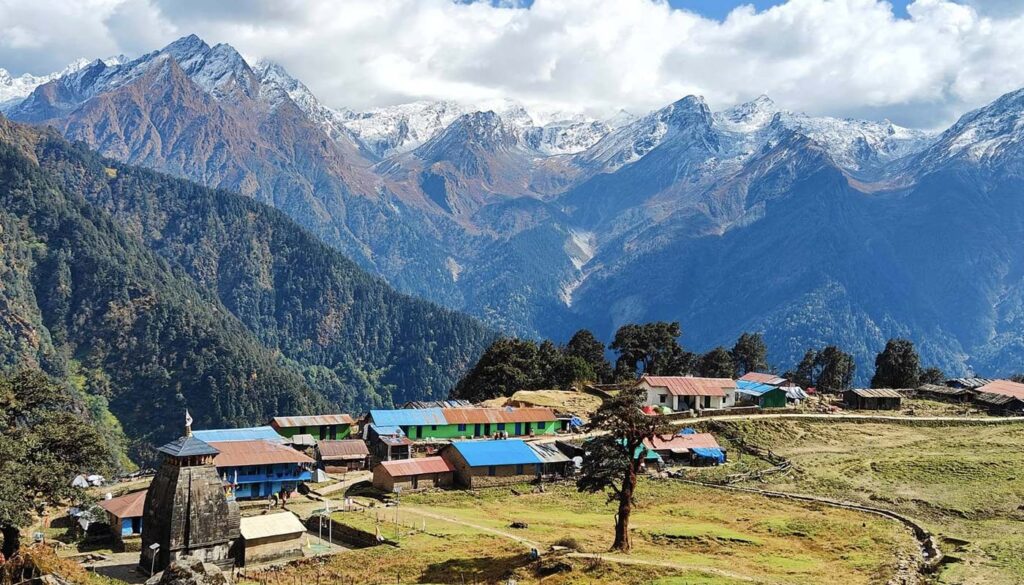
16. Kalpeshwar: The Cave Temple
Kalpeshwar tested my spirit in ways I hadn’t anticipated. The final stretch to this temple involved navigating narrow paths along steep cliffs, with the sound of the Alaknanda River far below. Unlike the other Kedars, Kalpeshwar isn’t a traditional temple building but a cave sanctuary hidden in the Garhwal Himalayas. When I finally entered the dimly lit cave, the air felt charged with centuries of devotion.
Kalpeshwar’s cave energy:
- The natural cave setting that creates an intimate, womb-like atmosphere
- The hanging jata (matted locks) of Shiva represented by natural rock formations
- The continuous dripping of water from the cave ceiling onto the lingam
- The powerful sense of Shiva as the ascetic yogi
- The relative isolation that makes darshan feel deeply personal
The temple is small—barely large enough for a few people to stand comfortably—and the lingam appears to emerge from the cave wall, with water continuously dripping on it from above. What moved me most was seeing the natural rock formations that resemble Shiva’s matted locks hanging from the cave ceiling—a detail that gives Kalpeshwar its name (“Lord of the Hair”).
During my visit, I met a group of sadhus who had been meditating in the cave for weeks. One elder explained that Kalpeshwar represents Shiva in his most austere form—the wandering yogi who owns nothing but his matted locks. As I sat quietly in the cave’s cool darkness, listening to the steady drip of water on stone, I understood why this is considered the most spiritually intense of the Panch Kedar temples.
Practical insight: Visit between May and November. Prepare for a challenging trek—this is the most difficult of the four Kedars to reach. Don’t attempt the journey during monsoon season (July-August) when landslides are common. Bring a flashlight for the cave interior, and be prepared for cool temperatures even in summer. Most importantly, approach with humility; this temple demands respect for its wild, untamed energy.
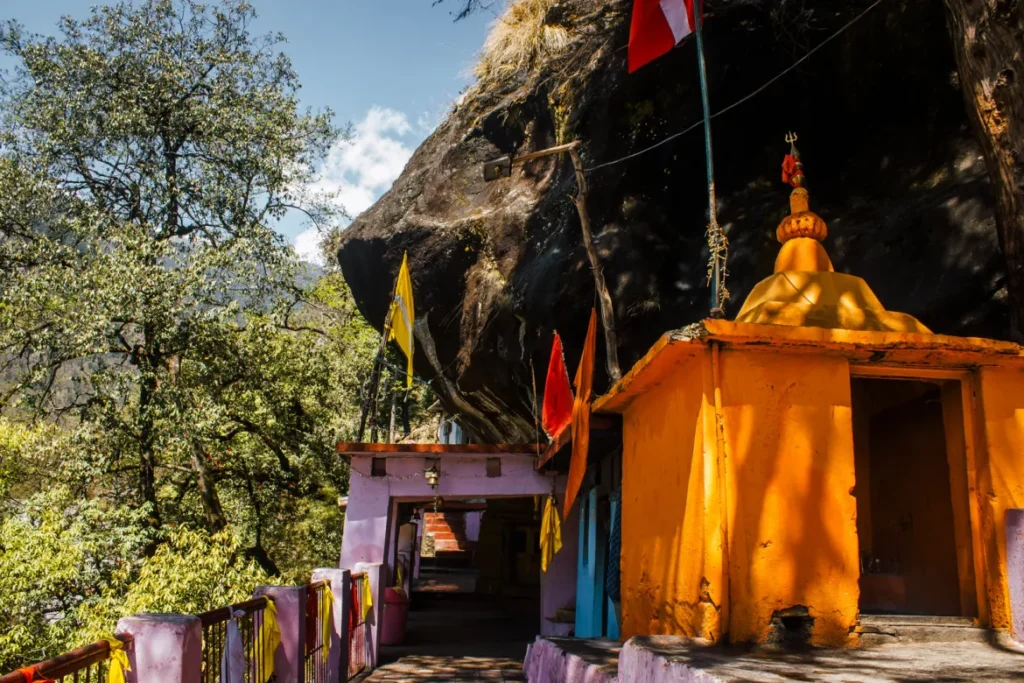
17. Trijuginarayan: Where Time Stood Still
The road to Trijuginarayan felt like traveling through layers of time. As my jeep navigated the switchbacks of Rudraprayag district, the air grew cooler and the forest denser. What surprised me most was how the landscape changed with each turn—lush green valleys giving way to rocky outcrops, then back to dense rhododendron forests.
Trijuginarayan’s timeless presence:
- The sacred pond where Vishnu is said to have performed Shiva’s wedding ceremony
- The ancient stone temple with intricate carvings depicting the divine wedding
- The three-faced Shiva lingam representing past, present, and future
- The powerful energy field that intensifies at sunrise
- The legend of Shiva’s marriage to Parvati witnessed by the trinity of gods
When I arrived, the morning mist was still clinging to the hillsides. The temple itself is deceptively simple—a small stone structure surrounded by ancient trees—but the air hummed with a palpable energy. As I walked around the sacred pond, an elderly priest explained that this is where time itself bends; devotees often report losing track of hours while sitting by the water.
What moved me most was witnessing a local wedding ceremony. Unlike the elaborate urban weddings I’d seen, this one followed ancient Vedic rituals unchanged for centuries. The groom wore a simple dhoti, the bride’s hands were adorned with natural henna, and their vows were spoken in Sanskrit that echoed through the valley. Afterward, the priest shared prasad with everyone present—strangers became family in that sacred space.
Practical insight: Visit between April and June or September and November for ideal weather. Stay in the temple guesthouse to experience the morning rituals when the mist clears from the hills. Don’t miss the opportunity to sit by the sacred pond at dawn when the first light hits the water—it’s said to reveal visions of the divine wedding.
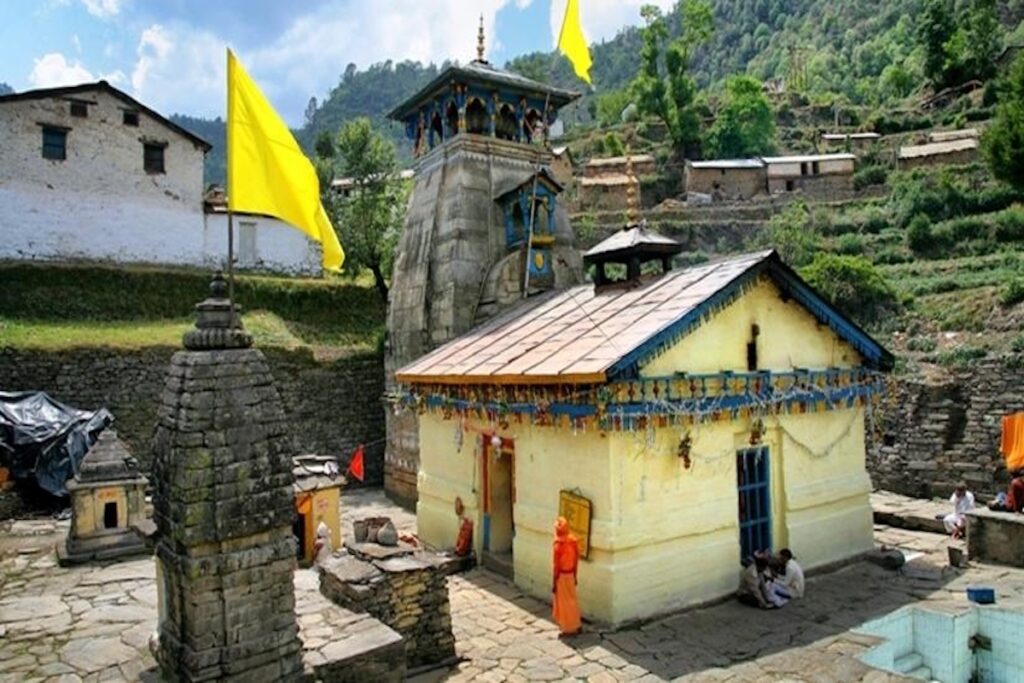
18. Binsar Mahadev (Thailisain): The Forest Sanctuary
The trek to Binsar Mahadev at Thailisain tested my resolve. Unlike the well-marked paths to popular temples, this one required following a narrow trail through dense forest, often marked only by bits of cloth tied to branches by previous pilgrims. For hours, I walked through sal and deodar forests, the only sounds being birdsong and the crunch of leaves underfoot.
Thailisain’s forest magic:
- The temple’s location deep within a protected forest reserve
- The natural rock Shiva lingam covered in wild vines
- The ancient stone structure that blends seamlessly with the landscape
- The powerful connection to local tribal communities
- The legend of Shiva appearing to protect the forest from destruction
When I finally arrived, breathless and covered in sweat, I found the temple almost hidden by vegetation—a small stone structure barely visible through the trees. What struck me was the complete absence of commercialization; no shops, no loud chants, just the quiet presence of the deity. As I sat quietly in the courtyard, a group of Khasi tribal people arrived for their weekly puja, bringing offerings of wild fruits and honey.
The priest, who lived in a small hut nearby, explained that this temple has been maintained by local tribes for centuries. “Shiva protects this forest,” he said, “and the forest protects Shiva.” Later, as I prepared to leave, he gave me a small pouch of forest herbs, explaining they were for protection on my journey—a gesture that felt deeply personal in a world of mass tourism.
Practical insight: Visit between March and June or September and November for ideal weather. Hire a local guide from the nearest village—this temple is easy to miss without proper guidance. Don’t bring plastic or packaged items; the temple community is committed to preserving the forest’s purity. Most importantly, approach with respect; this is a living part of the tribal community’s spiritual life.
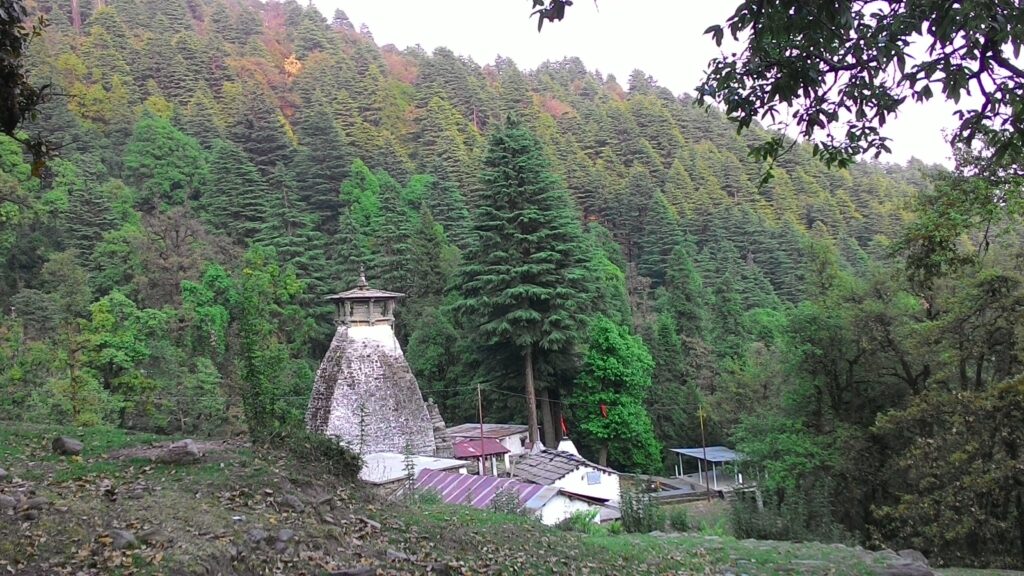
19. Binsar Mahadev (Kumaon Almora): The Mountain Vista
Tucked away in the Kumaon hills, Binsar Mahadev at Almora remains one of Uttarakhand’s best-kept secrets. Unlike the crowded Kedarnath, this temple feels like stepping into a living postcard. The stone structure sits atop a hill surrounded by deodar forests, with panoramic views of the Himalayas stretching to Nanda Devi.
Almora’s panoramic majesty:
- The stunning 360-degree view of the Himalayas from the temple courtyard
- The ancient stone architecture that blends seamlessly with the landscape
- The peaceful atmosphere with few tourists but genuine local devotion
- The traditional offerings of local honey and wildflowers
- The surrounding forest where deer often visit the temple grounds
What surprised me most was the temple’s dual nature—it felt simultaneously ancient and immediate. The stone structure showed signs of centuries of weathering, yet the rituals performed there felt fresh and vital. During my visit, I joined local villagers for the evening aarti, watching as the setting sun illuminated the temple in golden light while the first stars appeared in the sky.
One afternoon, an elderly priest shared stories passed down through generations about how Shiva appeared here to bless a local king. As he spoke, a family of deer emerged from the forest to drink from the temple’s water tank—a regular occurrence, he explained, that locals consider a blessing from the deity.
Practical insight: Visit between March and June or September and November for ideal weather. Stay in one of the forest rest houses nearby to experience the temple at dawn when the first light hits the Himalayas. Don’t miss the opportunity to join the evening aarti when the setting sun illuminates the temple in golden light. Bring warm clothing even in summer; nights can be surprisingly cold at this altitude.
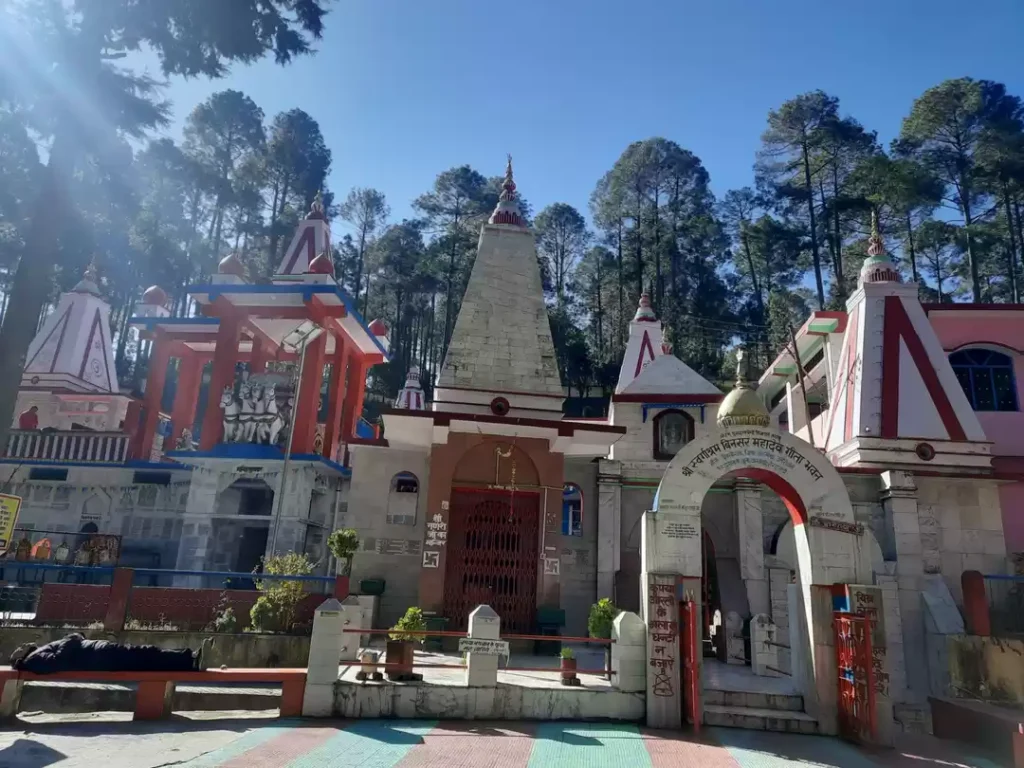
20. Mahabaleshwar: The Ancient Stone
Gokarna’s Mahabaleshwar Temple surprised me with its raw power. Unlike the ornate temples of South India, this one felt primal—a simple stone structure housing one of the few naturally formed Atmalingas (self-manifested lingams) in India. The journey through Gokarna’s narrow lanes, fragrant with jasmine and incense, prepared me for what awaited.
Mahabaleshwar’s ancient energy:
- The naturally formed Atmalinga that predates human construction
- The underground sanctum where the lingam appears to emerge from the earth
- The powerful connection to the Mahabharata legend of Ganesha
- The tradition of offering water directly onto the lingam from copper pots
- The palpable sense of timelessness that makes modern concerns dissolve
What struck me most was the contrast between the temple’s exterior simplicity and its interior power. The outer structure is modest, but descending into the underground sanctum felt like entering another dimension. The air grew cooler, the sounds of the street faded, and the only light came from oil lamps illuminating the ancient stone.
During my darshan, I noticed how the lingam seemed to glow with an inner light, as if it were generating its own energy. The priest explained that this is considered one of the most ancient Shiva manifestations in India, with the lingam forming naturally over millennia. As I left the sanctum, an elderly devotee grasped my hand and said, “This isn’t a temple you visit; it’s a temple that visits you.”
Practical insight: Visit between October and March for ideal weather. Go early in the morning to experience the temple without crowds. Don’t miss the opportunity to witness the ritual of offering water to the lingam—it’s a deeply personal experience that connects you to centuries of tradition. Combine your visit with a walk along Gokarna’s beaches for a complete spiritual experience.
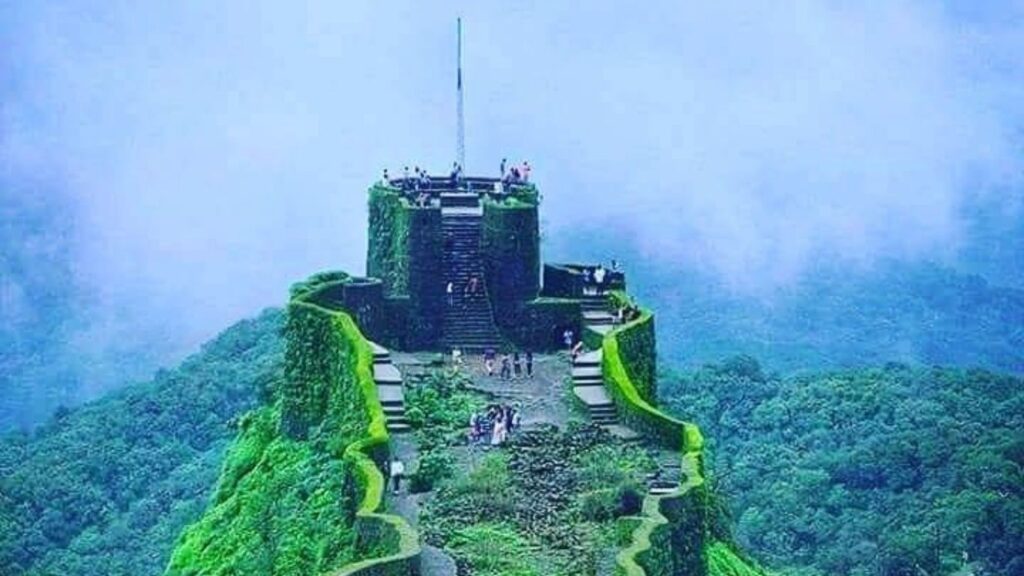
21. Pashupatinath: The Living River of Devotion
Kathmandu’s Pashupatinath hit me with its energy before I even entered the complex. The air hummed with the rhythm of chanting, and the Bagmati River carried the scent of incense and sandalwood. Unlike Indian temples with their enclosed courtyards, Pashupatinath flows into the city itself, with devotees performing rituals right along the riverbanks.
Pashupatinath’s living energy:
- The sacred ghats where life, death, and rebirth unfold daily
- The morning aarti ceremonies with floating lamps and devotional songs
- The cremation ghats where funeral pyres burn continuously
- The diverse community of sadhus representing different spiritual traditions
- The powerful sense of Shiva as both creator and destroyer
What moved me most was witnessing the seamless integration of life and death. While one family celebrated a wedding on the riverbank, another performed last rites for a departed loved one—both rituals happening simultaneously, both considered sacred. During my visit, I joined a group of sadhus for tea on the ghats, where they explained how death here isn’t feared but celebrated as a return to Shiva.
One evening, as the setting sun turned the river gold, I watched a young boy release floating lamps into the water while an elderly woman performed her daily puja. In that moment, I understood why Pashupatinath is considered one of the most powerful Shiva temples outside India—it’s not just a place of worship, but a living testament to the continuous cycle of existence.
Practical insight: Visit between September and April for ideal weather. Book a room with a river view to experience the morning and evening aartis from your window. Don’t miss the opportunity to attend the evening aarti at the main temple—arrive early for a good spot. Be respectful at the cremation ghats; photography is prohibited, and this is a sacred space for mourning families.
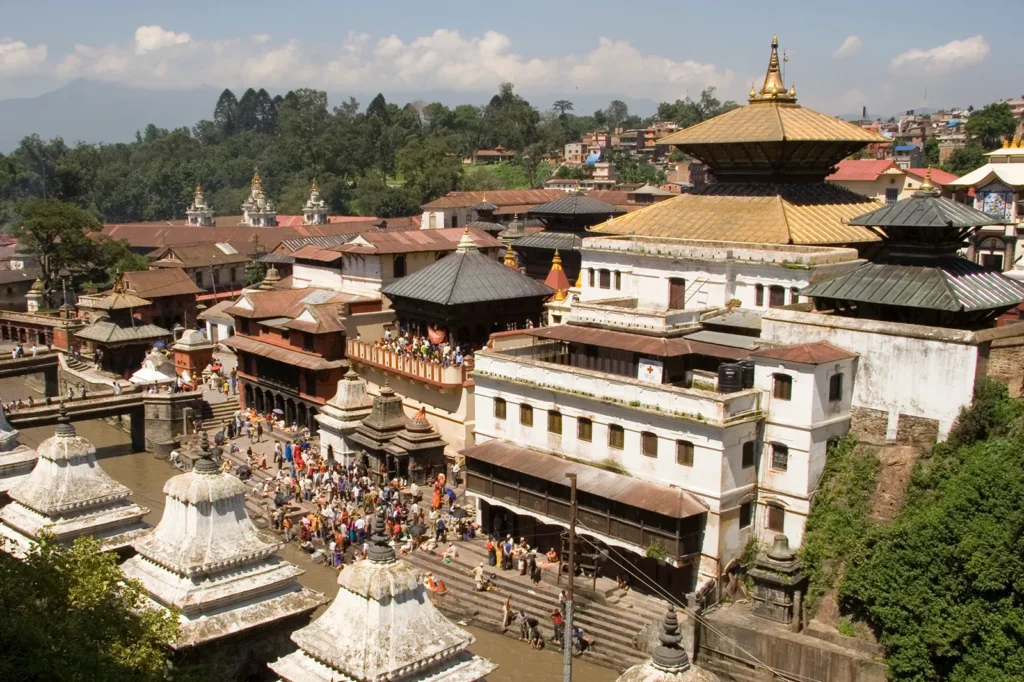
22. Amarnath
The Amarnath Yatra tested my physical and spiritual limits. For three days, I walked through high mountain passes, my lungs burning in the thin air, surrounded by fellow pilgrims chanting “Bam Bam Bholenath.” When I finally entered the cave, the sight took my breath away—the natural ice Shiva lingam glowing in the dim light, formed by dripping water from the cave ceiling.
Amarnath’s icy wonder:
- The naturally formed ice Shiva lingam that grows and shrinks with the moon
- The challenging pilgrimage through some of the Himalayas’ most dramatic landscapes
- The sense of community among pilgrims sharing the difficult journey
- The ancient tradition of offering milk and water directly onto the ice lingam
- The powerful silence of the cave, broken only by chanting and dripping water
What surprised me most was the cave’s intimate atmosphere. Despite the thousands of pilgrims who visit each season, the space inside feels personal and sacred. The lingam itself appears almost alive, with water continuously dripping on it from the cave ceiling, causing it to grow and shrink with the lunar cycle.
During my darshan, I noticed how the ice lingam seemed to pulse with a soft light, as if it were breathing. The priest explained that this is considered one of the most ancient manifestations of Shiva, with the ice forming naturally over millennia. As I left the cave, a fellow pilgrim shared a piece of prasad with me—a simple gesture that felt deeply meaningful after the shared struggle of the journey.
Practical insight: Visit during the annual pilgrimage season (July-August) when the ice lingam is at its largest. Prepare physically for the trek—acclimate in Pahalgam for two days before starting. Don’t rush the experience; spend time in the cave absorbing its energy rather than just taking photos. Most importantly, approach with humility; this is a sacred space where the divine reveals itself in the most elemental form.
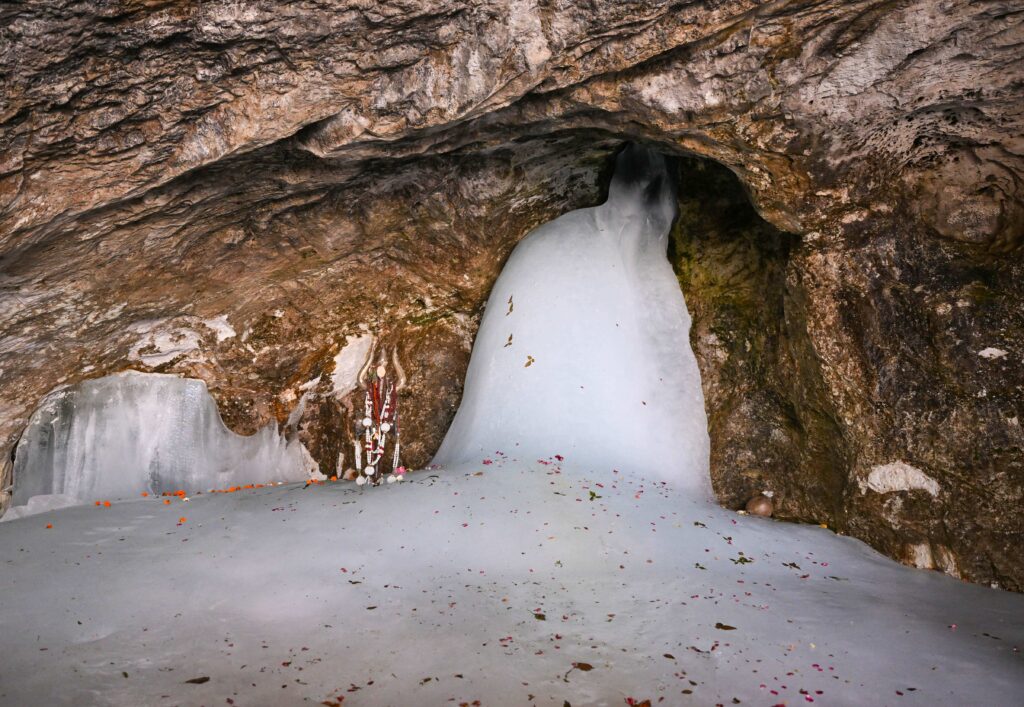
23. Neelkanth Mahadev: The Blue-Throated One
The road to Neelkanth felt like traveling back in time. As my jeep wound its way through the Garhwal hills, the air grew cooler and the forest denser. What surprised me most was how the landscape changed with each turn—lush green valleys giving way to rocky outcrops, then back to dense rhododendron forests. When I finally arrived, the temple complex sat nestled in a valley surrounded by seven mountain peaks, each representing one of the seven sages who witnessed Shiva drinking the cosmic poison.
Why Neelkanth captivates:
- The seven mountain peaks encircling the temple, representing the Saptarishi
- The natural spring that flows from the temple’s foundation, believed to be the tears of Parvati
- The ancient stone carvings depicting the Samudra Manthan (churning of the ocean) legend
- The powerful energy field that intensifies during eclipses
- The legend of Shiva drinking the cosmic poison, turning his throat blue
What struck me most was the temple’s connection to the Neelkanth peak visible in the distance—the mountain shaped like Shiva’s throat. During my visit, I joined local villagers for the morning ritual of offering milk to the natural spring that flows from the temple’s foundation. An elderly priest explained that this water carries the cooling energy of the Himalayas, counterbalancing the poison Shiva consumed.
One afternoon, as I sat quietly in the temple courtyard, a group of sadhus arrived for their weekly meditation session. They didn’t bring elaborate offerings—just simple copper pots of water from the sacred spring. As they chanted, I noticed how the sound resonated with the mountain itself, creating a vibration that could be felt in the bones.
Practical insight: Visit between April and June or September and November for ideal weather. Stay in the temple guesthouse to experience the morning rituals when the mist clears from the surrounding peaks. Don’t miss the opportunity to walk the short path to the natural spring—locals believe drinking its water purifies the body and mind. Bring warm clothing even in summer; nights can be surprisingly cold at this altitude.
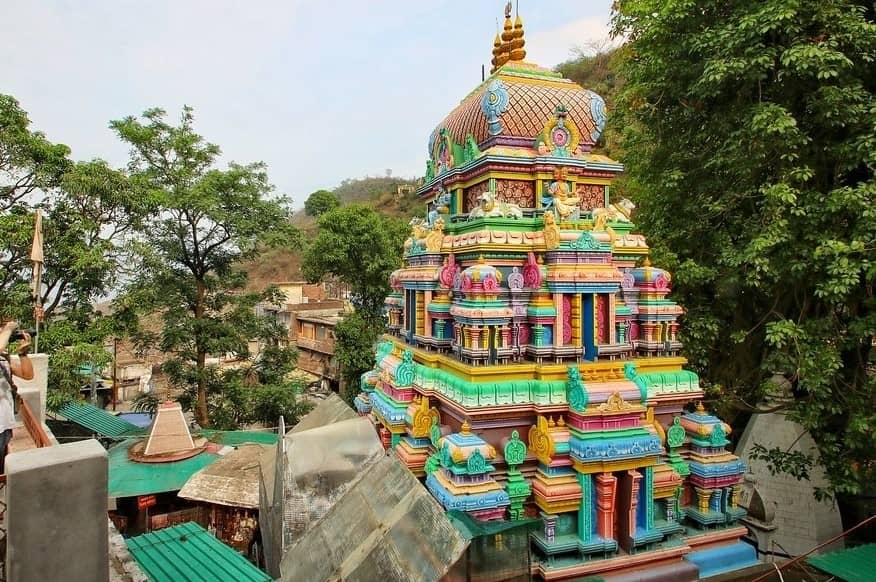
24. Baijnath Mahadev: The Healing Temple
Baijnath surprised me with its quiet dignity. Unlike the grand urban temples, this one felt more like a living part of the Kangra Valley’s landscape. The journey through narrow lanes fragrant with marigolds and incense prepared me for what awaited. The temple itself is deceptively simple from the outside, but inside, the air vibrated with centuries of healing energy.
Why Baijnath captivates:
- The ancient stone structure built in the North Indian Nagara style
- The intricate carvings depicting medicinal plants and healing rituals
- The natural spring believed to have curative properties
- The powerful connection to Ayurvedic traditions
- The legend of Shiva appearing as Vaidyanath (Lord of Healing)
What moved me most was witnessing a group of local healers performing their morning rituals. Unlike the elaborate ceremonies at other temples, their worship involved simple offerings of medicinal herbs and water from the sacred spring. An elderly healer explained that each herb they offered corresponded to a specific ailment, and that the temple’s energy amplified their healing properties.
During my darshan, I noticed how the lingam appeared to be made of natural stone rather than sculpted—jagged and irregular, as if it had simply emerged from the earth. The priest explained that this is considered one of the most ancient healing temples in North India, with the lingam forming naturally from the mountain’s minerals. As I left the sanctum, a local woman handed me a small pouch of medicinal herbs, explaining they were for protection on my journey—a gesture that felt deeply personal.
Practical insight: Visit between October and March for ideal weather. Go early in the morning to experience the temple without crowds. Don’t miss the opportunity to witness the ritual of offering medicinal herbs to the lingam—it’s a deeply personal experience that connects you to ancient healing traditions. Combine your visit with a walk along the Baner River for a complete spiritual experience.
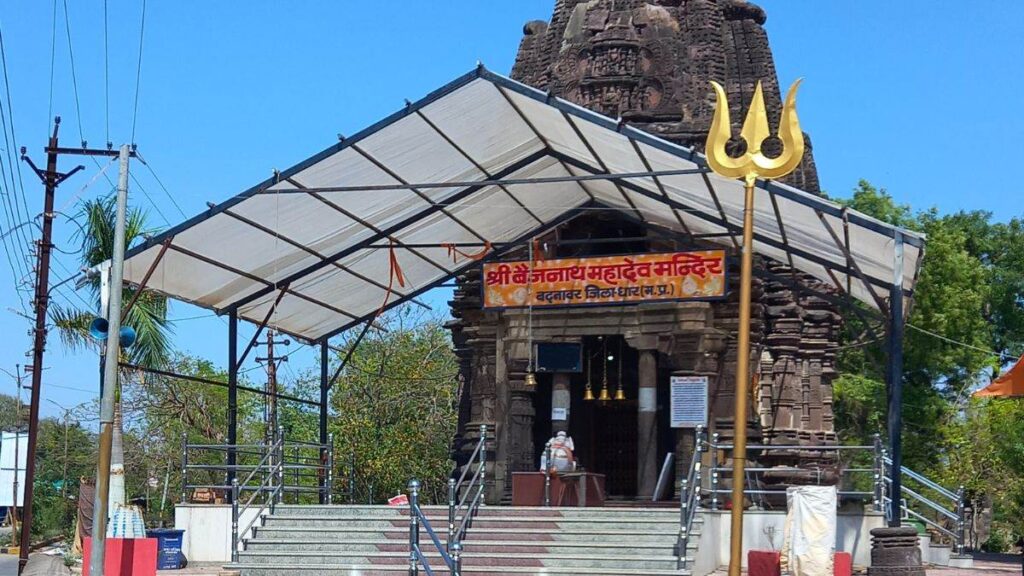
25. Shrikhand Kailash: The Ascent to Consciousness
Shrikhand Kailash tested my physical and spiritual limits. For two days, I walked through high mountain passes, my lungs burning in the thin air, surrounded by fellow pilgrims chanting “Har Har Mahadev.” What made this journey unique was the absence of a defined path—just bits of cloth tied to branches by previous pilgrims marking the way through dense forests.
Why Shrikhand captivates:
- The challenging pilgrimage through some of the Himalayas’ most dramatic landscapes
- The natural rock formation resembling Shiva’s face visible from the summit
- The powerful energy field that intensifies at sunrise
- The legend of Shiva meditating here after the churning of the ocean
- The sacred lake at the summit where Shiva’s tears are said to have formed
When I finally reached the summit after two grueling days, the sight took my breath away. The natural rock formation resembling Shiva’s face emerged from the mountain itself, illuminated by the first rays of sunlight. What surprised me most was the small lake at the summit—crystal clear water reflecting the surrounding peaks like a mirror.
During my visit, I joined a group of sadhus for their morning meditation session. Unlike the elaborate rituals at other temples, their practice involved simple breathing exercises and silent contemplation. One elder explained that Shrikhand Kailash represents the highest state of consciousness—that which exists beyond words and rituals.
Practical insight: Visit between May and September for ideal weather. Prepare physically for the trek—acclimate in Joshimath for two days before starting. Don’t rush the experience; spend time at the summit absorbing the energy rather than just taking photos. Most importantly, approach with humility; this is a sacred space where the divine reveals itself in the most elemental form.
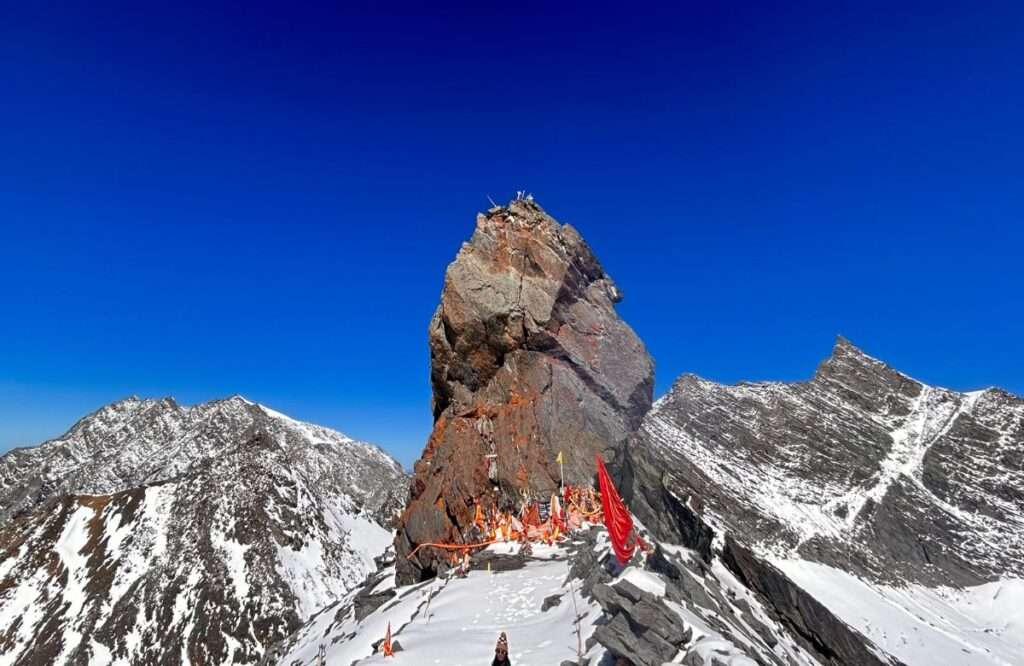
26. Manimahesh Kailash: The Southern Kailash
Manimahesh surprised me with its raw power. Unlike the well-trodden path to Mount Kailash in Tibet, this Himalayan peak remains one of India’s best-kept secrets. The journey through narrow trails fragrant with wildflowers prepared me for what awaited. What struck me most was how the landscape changed with each step—lush green valleys giving way to rocky outcrops, then back to dense rhododendron forests.
Why Manimahesh captivates:
- The sacred peak considered the “Kailash of the South”
- The natural lake at the base where Shiva is said to have meditated
- The powerful energy field that intensifies during the full moon
- The legend of Shiva and Parvati’s celestial wedding here
- The annual pilgrimage during Janmashtami when thousands gather
What moved me most was witnessing the full moon pilgrimage. Thousands of devotees gathered at the lake’s edge, their faces illuminated by the moonlight as they performed simple rituals. An elderly sadhu explained that Manimahesh represents the perfect balance between Shiva and Shakti—the masculine and feminine aspects of the divine.
During my visit, I joined local villagers for the ritual of circumambulating the lake. Unlike the elaborate ceremonies at other temples, their worship involved simple offerings of milk and wildflowers. As we walked, they shared stories passed down through generations about how the mountain protects the valley from natural disasters.
Practical insight: Visit between August and October for ideal weather and the Janmashtami pilgrimage. Stay in a village homestay to experience the temple’s role in daily life. Don’t miss the opportunity to join the full moon ritual—it connects you to the cosmic energy that makes this place special. Bring warm clothing; nights can be freezing even in summer.
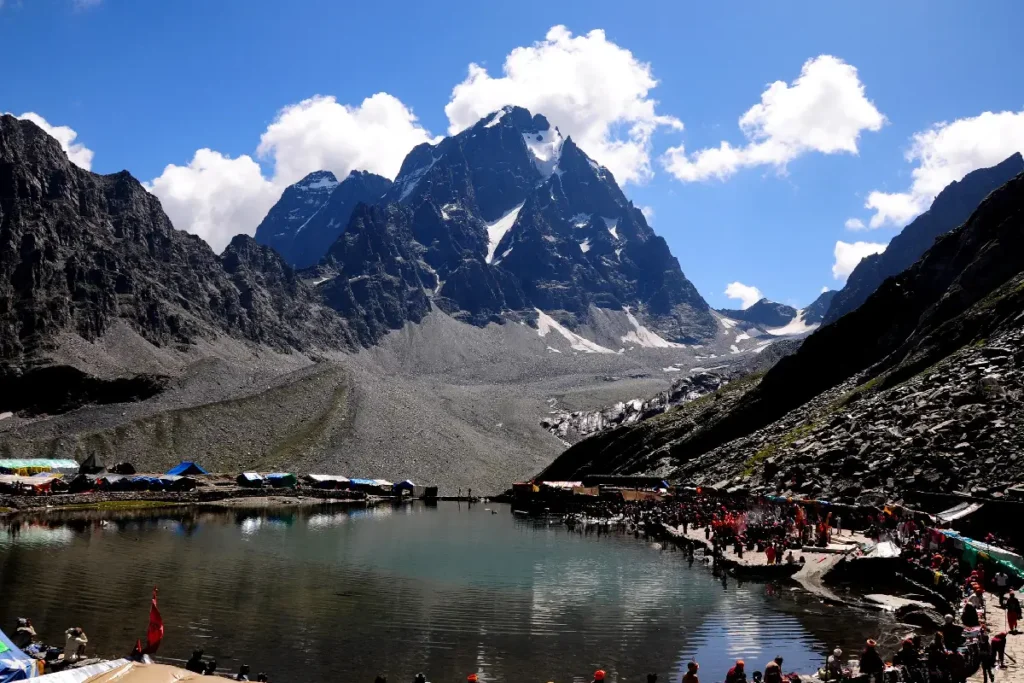
27. Tapkeshwar Mahadev: The Cave of Meditation
Tapkeshwar tested my spirit in ways I hadn’t anticipated. The final stretch to this temple involved navigating narrow paths along steep cliffs, with the sound of the river far below. Unlike traditional temples, Tapkeshwar isn’t a building but a cave sanctuary hidden in the Shivalik hills. When I finally entered the dimly lit cave, the air felt charged with centuries of meditation.
Why Tapkeshwar captivates:
- The natural cave setting that creates an intimate, womb-like atmosphere
- The hanging jata (matted locks) of Shiva represented by natural rock formations
- The continuous dripping of water from the cave ceiling onto the lingam
- The powerful sense of Shiva as the ascetic yogi
- The relative isolation that makes darshan feel deeply personal
The cave is small—barely large enough for a few people to stand comfortably—and the lingam appears to emerge from the cave wall, with water continuously dripping on it from above. What moved me most was seeing the natural rock formations that resemble Shiva’s matted locks hanging from the cave ceiling—a detail that gives Tapkeshwar its name (“Lord of the Hair”).
During my visit, I met a group of sadhus who had been meditating in the cave for weeks. One elder explained that Tapkeshwar represents Shiva in his most austere form—the wandering yogi who owns nothing but his matted locks. As I sat quietly in the cave’s cool darkness, listening to the steady drip of water on stone, I understood why this is considered one of the most spiritually intense cave temples in North India.
Practical insight: Visit between October and March for ideal weather. Prepare for a challenging trek—this temple is often overlooked by tourists. Don’t attempt the journey during monsoon season when landslides are common. Bring a flashlight for the cave interior, and be prepared for cool temperatures even in summer. Most importantly, approach with humility; this temple demands respect for its wild, untamed energy.
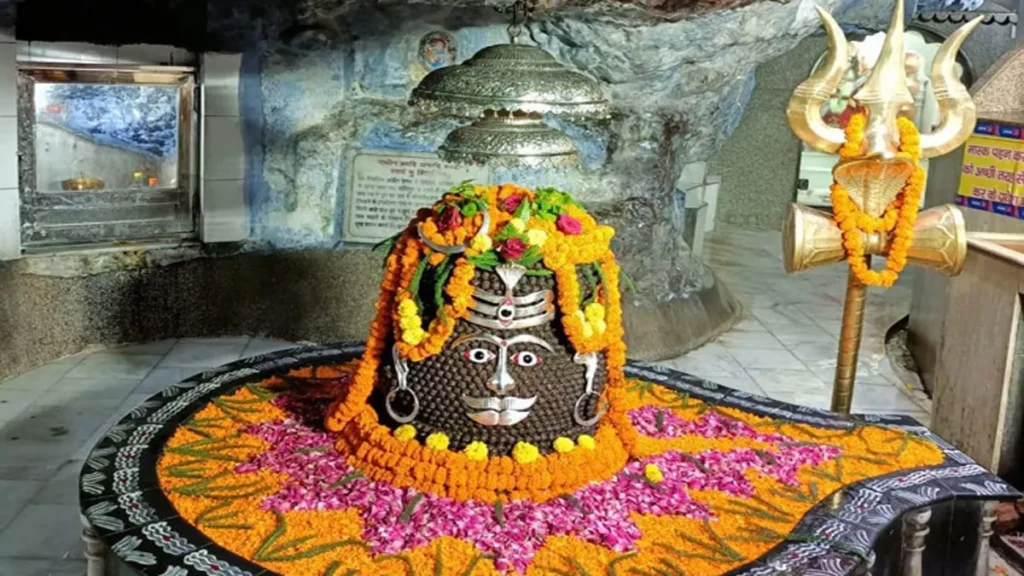
28). Chidambaram Nataraja Temple, Tamil Nadu: Where Stone Dances
Chidambaram hit me with its energy before I even entered the complex. The air hummed with the rhythm of dance, and the massive gopurams (gateway towers) seemed to pulse with life. As I removed my shoes and stepped onto the cool stone, I felt the vibrations of centuries of devotion beneath my feet.
Why Chidambaram captures the soul:
- The intricate bronze sculptures depicting Shiva’s 108 dance poses
- The golden roof of the Chit Sabha (Hall of Consciousness), symbolizing the heavens
- The rare practice of offering fragrant oils instead of flowers
- The daily ritual of changing the deity’s garments at precise astrological moments
- The palpable sense of Shiva’s presence in the empty space of the sanctum
What moved me most was witnessing the priests perform the ritual of changing the deity’s clothes—a ceremony that has continued uninterrupted for over 1,000 years. As they worked with practiced precision, their faces illuminated by flickering lamps, I understood why this temple is considered the spiritual heart of Bharatanatyam dance.
During my visit, I joined a group of dancers practicing in the temple courtyard. Unlike the elaborate performances for tourists, their morning practice was raw and authentic—each movement a prayer, each gesture a story. An elderly guru explained that dancing here isn’t performance; it’s worship made visible.
Practical insight: Visit during the annual Natyanjali dance festival (March-April) when dancers from across India perform in the temple courtyard. Go early in the morning when the first light streams through the hall, illuminating the dance poses carved into the walls. Don’t miss the opportunity to sit quietly in the Chit Sabha—close your eyes and feel the vibrations of centuries of dance.
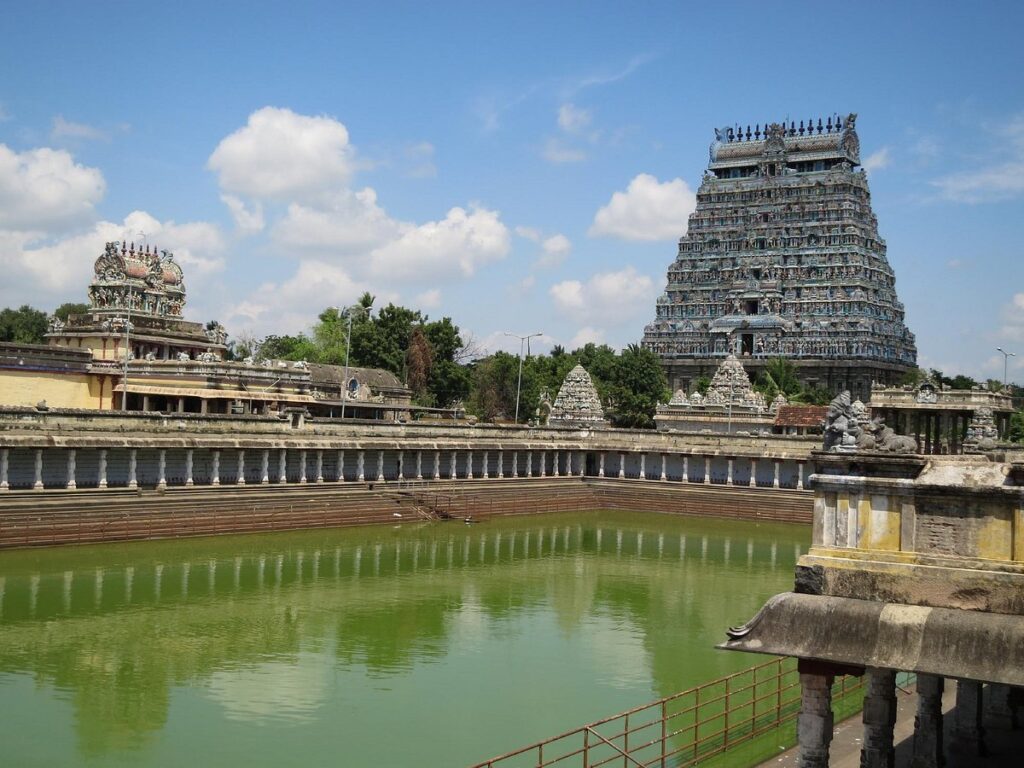
29). Lingaraj Temple, Bhubaneswar: The Living Stone
Bhubaneswar’s Lingaraj Temple surprised me with its sheer presence. Unlike the ornate temples of South India, this one felt primal—a massive stone structure that seems to grow from the earth itself. The journey through narrow lanes fragrant with jasmine and incense prepared me for what awaited.
Why Lingaraj captivates:
- The ancient Kalinga-style architecture that dominates the city skyline
- The intricate carvings depicting daily life alongside divine scenes
- The sacred pond where priests perform morning rituals
- The unique blend of Shaivism and Vaishnavism in its worship
- The legend of the temple being built in a single night by divine architects
What struck me most was the temple’s integration with daily life. Unlike temples that exist apart from the community, Lingaraj is woven into the fabric of the city. During my visit, I watched as office workers stopped to offer quick prayers before work, and students performed puja between classes. The priest explained that the temple’s rituals align with the city’s rhythm—morning rituals for workers, evening rituals for families.
One afternoon, I joined local women preparing offerings of fresh milk and seasonal fruits. As we worked, they shared stories of how the temple has been their spiritual anchor through political changes and natural disasters. Later, sitting by the sacred pond, I understood why this is considered one of the oldest Shiva temples in India—it’s not just ancient; it’s alive.
Practical insight: Visit between October and March for ideal weather. Go early in the morning to experience the temple without crowds. Don’t miss the opportunity to witness the ritual of offering water to the lingam—it’s a deeply personal experience that connects you to centuries of tradition. Combine your visit with a walk through the Old Town to see how the temple influences the city’s layout.
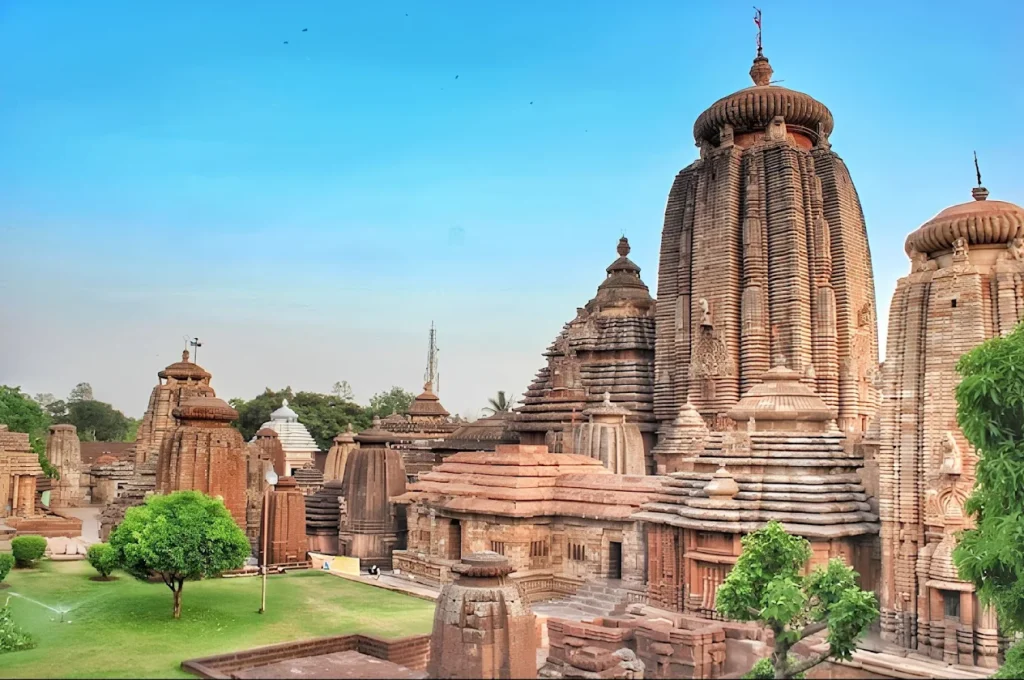
30). Shore Temple, Mahabalipuram: Where Sea Meets Stone
Mahabalipuram’s Shore Temple hit me with its raw power. Unlike the protected temple complexes I’d visited, this one stands exposed to the elements, with the Bay of Bengal crashing against its foundations. The journey along the Coromandel Coast, with the scent of salt and fish in the air, prepared me for what awaited.
Why the Shore Temple captivates:
- The dramatic coastal location with ocean views from the temple courtyard
- The ancient Pallava architecture that has withstood centuries of erosion
- The legend of the temple being one of seven “Pagodas” that once lined the coast
- The powerful energy that intensifies during high tide
- The intricate carvings that depict both divine and everyday scenes
What surprised me most was how the temple changes with the tides. During low tide, I could walk around the entire structure, examining the carvings up close. But during high tide, the ocean would crash against the lower levels, creating a dramatic interplay of water and stone. An elderly fisherman explained that local legend says the temple was built to calm the ocean’s fury—a belief reinforced when I witnessed the temple standing firm during a sudden storm.
During my visit, I joined a group of local children who come here after school to practice traditional dance. Unlike the formal performances for tourists, their practice was spontaneous and joyful, with the sound of waves providing a natural rhythm. As they danced, an elderly teacher shared stories of how the temple’s carvings inspired their movements.
Practical insight: Visit during low tide to examine the carvings up close. Go early in the morning to avoid crowds and heat. Don’t miss the opportunity to witness the evening aarti when the setting sun illuminates the temple in golden light. Be prepared for sudden weather changes—the temple is exposed to the elements.
31). Uttarkashi Vishwanath Temple: Where the Ganges Meets the Divine
Uttarkashi hit me with its mountain energy long before I saw the temple. As my jeep wound through the final switchbacks, the air grew cooler and the forest denser. What surprised me most was how the landscape changed with each turn—lush green valleys giving way to rocky outcrops, then back to dense deodar forests. Unlike the crowded ghats of Varanasi, Uttarkashi felt like stepping into a living meditation.
Why Uttarkashi Vishwanath captivates:
- The temple’s location on the banks of the Bhagirathi River (upper Ganges)
- The ancient stone structure that seems to grow from the mountain itself
- The morning chants echoing through the valley like a heartbeat
- The powerful energy field that intensifies at sunrise
- The legend of Shiva appearing here to bless the Himalayas
When I arrived, the morning mist was still clinging to the hillsides. The temple itself is deceptively simple—a small stone structure surrounded by ancient trees—but the air hummed with a palpable energy. As I walked around the courtyard, an elderly priest explained that this is where Shiva anchors the spiritual energy of the Himalayas. “In Varanasi, Shiva is the king of the city,” he said. “Here, he is the king of the mountains.”
What moved me most was witnessing the seamless integration of nature and worship. During my visit, I joined local villagers for the morning ritual of offering water from the Bhagirathi River to the lingam. Unlike the elaborate ceremonies at urban temples, their worship involved simple offerings of wild mountain flowers and honey. An elderly woman explained that they’ve been coming here since before the temple was built, recognizing this as sacred ground long before stone was laid.
One morning, as I sat by the river at dawn, I watched as the first light hit the temple’s shikhara (spire), illuminating it in golden light while the Ganges flowed silently below. A group of sadhus arrived for their morning meditation, their chants blending with the sound of flowing water. In that moment, I understood why this place is called “Uttarkashi”—the northern counterpart to Varanasi. It’s not a copy; it’s a different expression of the same divine presence.
Practical insight: Visit between April and June or September and November for ideal weather. Stay in a riverside guesthouse to experience the morning rituals when the mist clears from the hills. Don’t miss the opportunity to walk along the river at dawn—it’s said that the Ganges here carries the purity of its source. Bring warm clothing even in summer; nights can be surprisingly cold at this altitude.on’t miss the Vishwanath corridor recently opened, which provides a more dignified approach to the temple. Be prepared for intense spiritual energy—this temple can be overwhelming for first-time visitors.
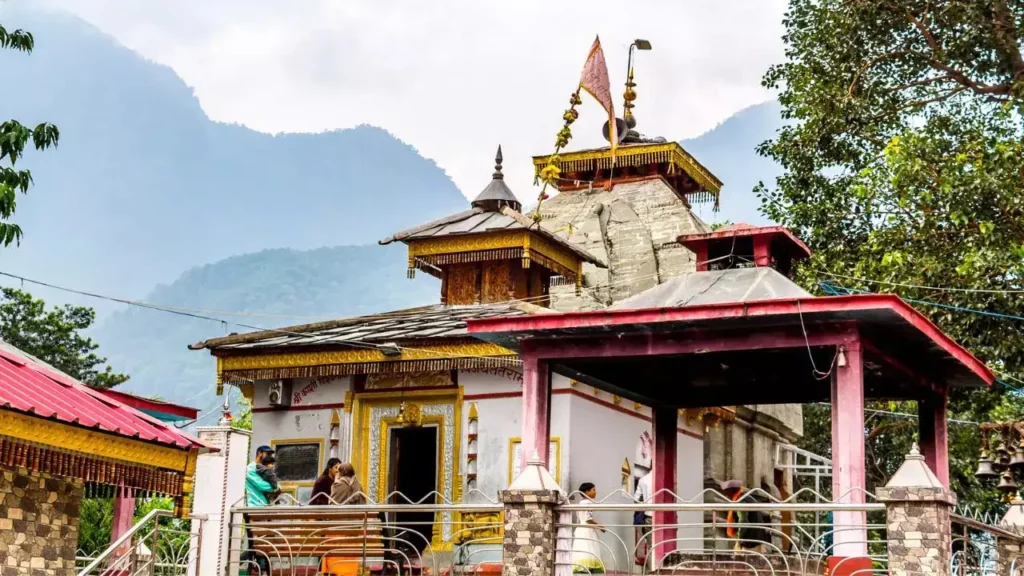
32). Someshwar Mahadev Temple, Varanasi: The Hidden Sanctuary
Tucked away in the narrow lanes of Varanasi, Someshwar Mahadev remains one of the city’s best-kept secrets. Unlike the crowded Kashi Vishwanath, this temple feels like stepping into a living postcard. The stone structure sits slightly elevated, with the sound of the Ganges providing a constant backdrop to temple bells.
Why Someshwar captivates:
- The temple’s location in a quiet neighborhood away from main tourist routes
- The ancient stone architecture that blends seamlessly with the surrounding houses
- The peaceful atmosphere with few tourists but genuine local devotion
- The traditional offerings of local honey and wildflowers
- The surrounding area where sadhus gather for evening discussions
What surprised me most was how the temple is integrated into daily neighborhood life. During my visit, I watched as shopkeepers paused their businesses to offer quick prayers, and children performed puja on their way home from school. The priest explained that the temple has been maintained by the local community for centuries, with each family taking turns caring for the deity.
One afternoon, an elderly resident shared stories passed down through generations about how Shiva appeared here to bless a local merchant. As he spoke, a group of sadhus arrived for their evening gathering, sitting in the courtyard to discuss philosophy while the temple bells chimed softly.
Practical insight: Visit between October and March for ideal weather. Ask locals for directions—this temple is easy to miss without proper guidance. Don’t bring plastic or packaged items; the community is committed to preserving the neighborhood’s purity. Most importantly, approach with respect; this is a living part of the community’s spiritual life.
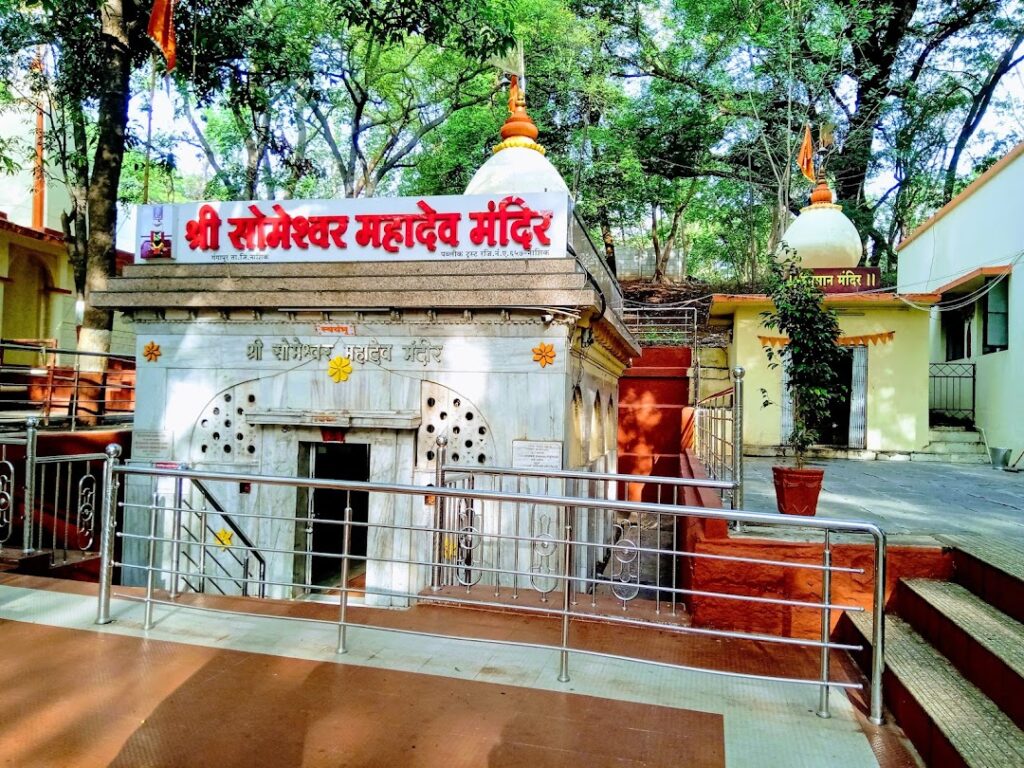
33). Siddheshwar Nath Temple: The Mountain Anchor
The journey to Siddheshwar Nath felt like traveling through layers of time. As my jeep navigated the switchbacks of the Himalayan foothills, the air grew cooler and the forest denser. What surprised me most was how the landscape changed with each turn—lush green valleys giving way to rocky outcrops, then back to dense rhododendron forests.
Why Siddheshwar captivates:
- The dramatic setting atop a hill overlooking the river valley
- The ancient rock-cut architecture blending with natural formations
- The powerful energy field that intensifies as you approach the sanctum
- The legend of Shiva appearing here to bless a local king
- The tradition of offering milk and water directly onto the lingam
When I arrived, the morning mist was still clinging to the hillsides. The temple itself is deceptively simple—a small stone structure surrounded by ancient trees—but the air hummed with a palpable energy. As I walked around the courtyard, an elderly priest explained that this is where Shiva anchors the spiritual energy of the region.
What moved me most was witnessing a group of local villagers performing their morning rituals. Unlike the elaborate urban temples, their worship involved simple offerings of milk and wildflowers. An elderly woman explained that they’ve been coming here since before the temple was built, recognizing this as sacred ground long before stone was laid.
Practical insight: Visit between April and June or September and November for ideal weather. Stay in the temple guesthouse to experience the morning rituals when the mist clears from the hills. Don’t miss the opportunity to sit by the temple’s natural spring—it’s said to have healing properties. Bring warm clothing even in summer; nights can be surprisingly cold at this altitude.
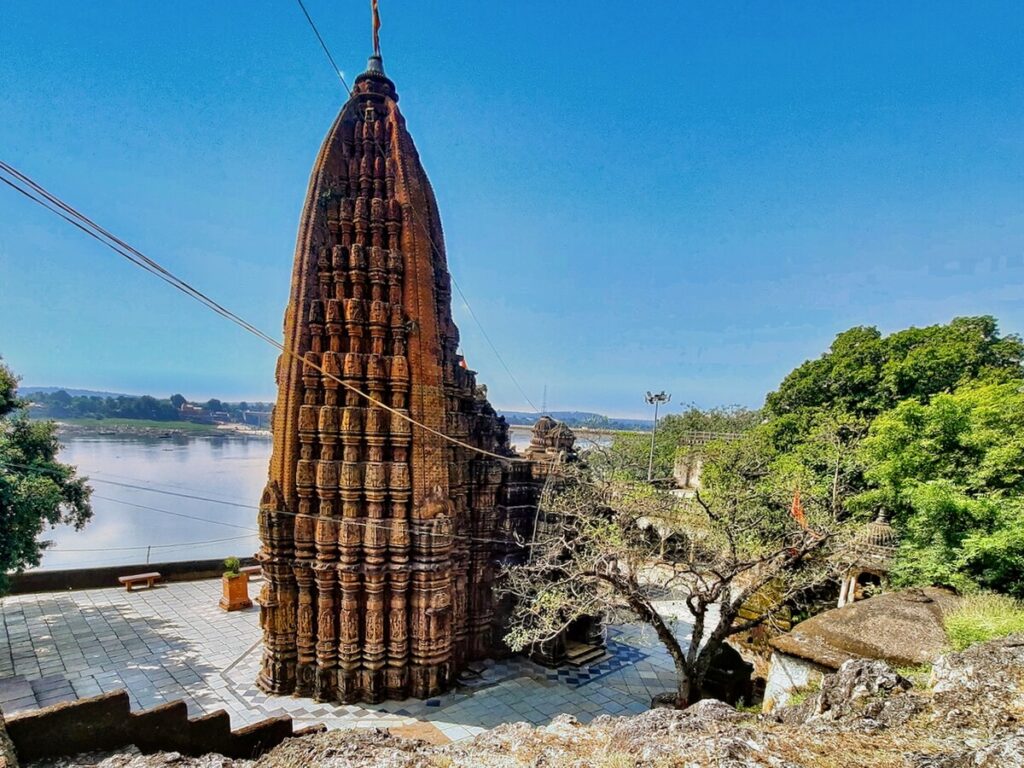
34). Om Temple, Aizawl: The Mountain Whisper
Mizoram’s Om Temple surprised me with its quiet dignity. Unlike the grand urban temples, this one felt more like a living part of the landscape. The journey through narrow lanes fragrant with pine and incense prepared me for what awaited. The temple itself is deceptively simple from the outside, but inside, the air vibrated with a unique spiritual energy.
Why the Om Temple captivates:
- The massive “Om” symbol carved into the mountain face
- The integration of traditional Mizo culture with Shaivism
- The panoramic views of the surrounding hills and valleys
- The peaceful atmosphere with few tourists but genuine local devotion
- The unique blend of tribal spirituality with Hindu traditions
What struck me most was how the temple represents a cultural bridge. During my visit, I joined local Mizo devotees for the morning ritual of offering rice beer (zu) instead of traditional milk or water. An elderly priest explained that this adaptation honors both Shiva and local traditions—a practice that has created harmony between different spiritual paths.
One afternoon, as I sat quietly in the temple courtyard, a group of local women arrived for their weekly puja. They wore traditional Mizo shawls while performing Hindu rituals, their movements a beautiful fusion of cultures. Later, they shared stories of how the temple has brought different communities together in a region once divided by conflict.
Practical insight: Visit between October and March for ideal weather. Go early in the morning to experience the temple without crowds. Don’t miss the opportunity to witness the ritual of offering zu to the lingam—it’s a deeply personal experience that connects you to the local culture. Combine your visit with a walk through Aizawl’s markets to experience the unique blend of Mizo and Indian cultures.

35). Shankaracharya Temple, Srinagar: The Mountain Throne
Srinagar’s Shankaracharya Temple tested my resolve. For two hours, I climbed the steep path up Takht-e-Suleiman hill, my breath coming in short gasps at 1,000 feet. But when the temple came into view, everything changed. The air itself felt charged, as if the mountain was holding its breath.
Why Shankaracharya captivates:
- The dramatic hilltop location with panoramic views of Srinagar and Dal Lake
- The ancient stone structure that seems to grow from the mountain itself
- The morning chants echoing through the valley like a heartbeat
- The legend of Adi Shankaracharya meditating here to unify Hindu philosophy
- The powerful energy that makes even non-believers feel something indescribable
What moved me most was witnessing the seamless integration of different faiths. During my visit, I saw Muslim boatmen from Dal Lake making the climb to offer prayers, alongside Hindu pilgrims and Buddhist monks. An elderly caretaker explained that for centuries, this temple has been a place of unity in a region often divided—Shiva’s presence transcending religious boundaries.
During my darshan, I noticed how the lingam appeared to be made of natural stone rather than sculpted—jagged and irregular, as if it had simply emerged from the earth. The priest explained that this is considered one of the oldest Shiva temples in Kashmir, with the lingam forming naturally from the mountain’s minerals. As I left the sanctum, a local Kashmiri Pandit grasped my hand and said, “This isn’t a temple you visit; it’s a temple that visits you.”
Practical insight: Visit between April and October when the temple is accessible. Hire a local guide who knows the hidden viewpoints along the trek—there’s a spot halfway up where you can see the entire valley spread out below like a living map. After darshan, sit quietly on the hillside and let the mountain’s silence sink into your bones.
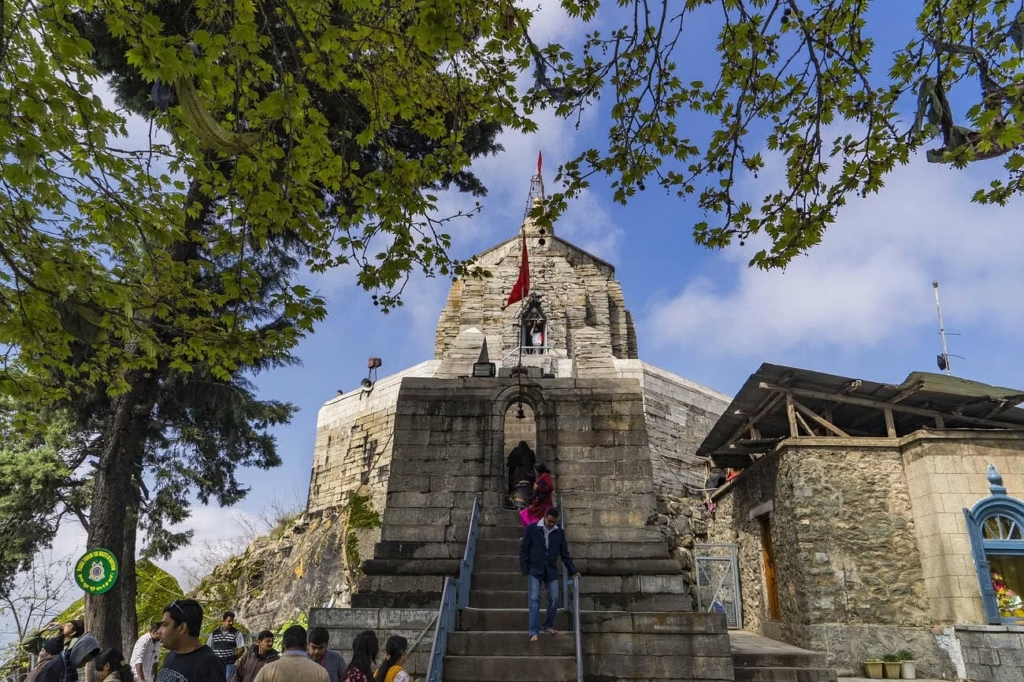
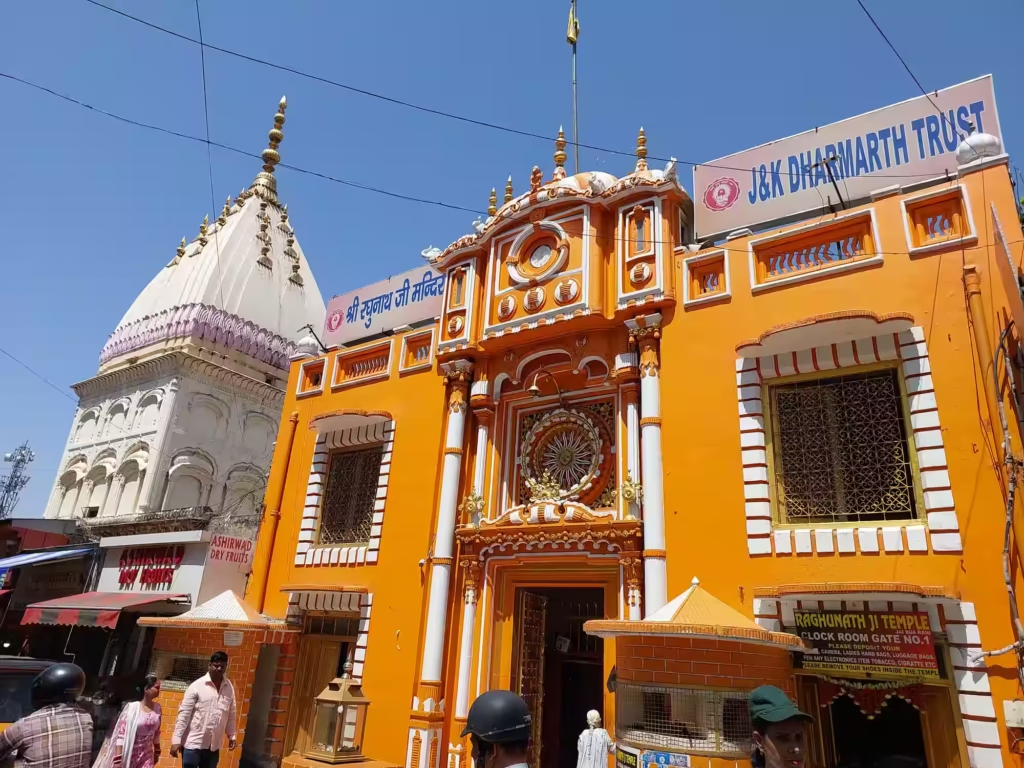
36). Raghunath Mandir, Jammu: The Living Scripture
Jammu’s Raghunath Mandir hit me with its vibrant energy. Unlike the quiet sanctuaries I’d visited, this one felt alive with activity—devotees chanting, priests performing rituals, and the constant flow of people creating a river of devotion. The journey through the bustling city streets, fragrant with incense and flowers, prepared me for what awaited.
Why Raghunath Mandir captivates:
- The complex of seven shrines dedicated to different forms of Vishnu and Shiva
- The intricate carvings depicting scenes from the Ramayana and Mahabharata
- The library housing rare manuscripts and ancient texts
- The powerful energy that intensifies during evening aarti
- The tradition of continuous chanting that never stops, day or night
What surprised me most was the temple’s role as a living library. During my visit, I joined scholars studying ancient manuscripts in the temple’s library, where texts have been preserved for centuries. An elderly scholar explained that the temple isn’t just a place of worship—it’s a center of learning where spiritual knowledge is passed down through generations.
One afternoon, as I sat quietly in the courtyard, a group of children arrived for their daily scripture lessons. Unlike the formal classrooms I’d seen elsewhere, their learning happened through storytelling and song, with the temple’s carvings serving as visual aids. Later, the teacher shared how each carving tells a story that brings the scriptures to life.
Practical insight: Visit between October and March for ideal weather. Go early in the morning to experience the temple without crowds. Don’t miss the opportunity to attend the evening aarti when the entire complex is illuminated with oil lamps. Ask about the manuscript viewing schedule—the temple occasionally allows visitors to see selected ancient texts.
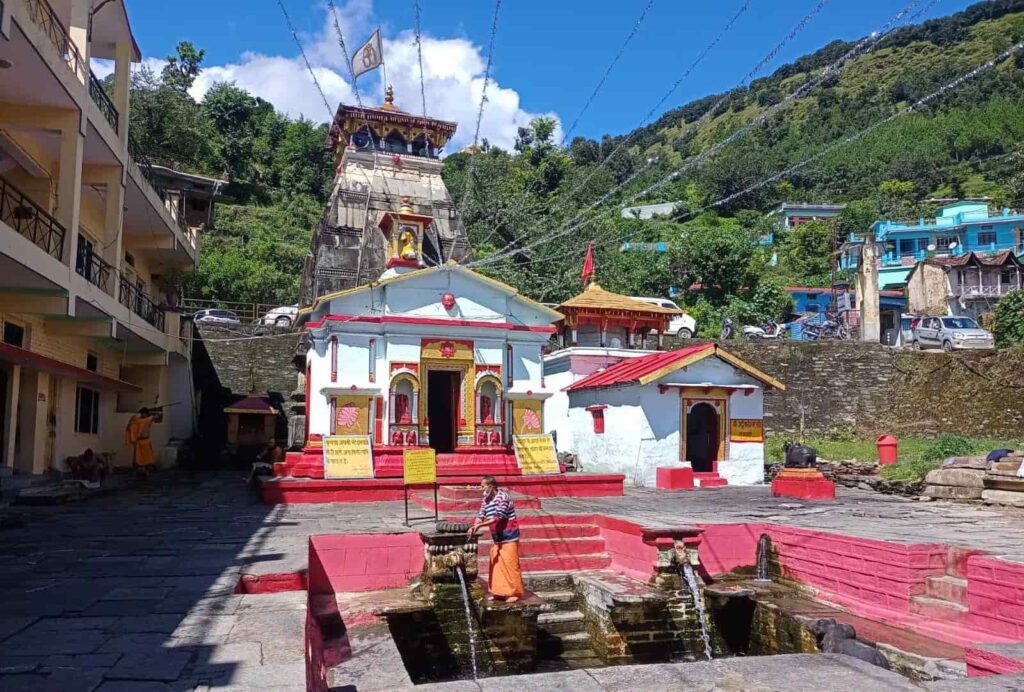
37). Guptkashi Temple, Uttarakhand: The Hidden Light
The journey to Guptkashi felt like traveling through layers of time. As my jeep navigated the switchbacks of the Himalayan foothills, the air grew cooler and the forest denser. What surprised me most was how the landscape changed with each turn—lush green valleys giving way to rocky outcrops, then back to dense rhododendron forests.
Why Guptkashi captivates:
- The temple’s location in a valley surrounded by snow-capped peaks
- The ancient stone structure that seems to grow from the earth itself
- The powerful energy field that intensifies at sunrise
- The legend of Shiva appearing here in secret (gupta) form
- The tradition of offering wild mountain flowers instead of conventional puja items
When I arrived, the morning mist was still clinging to the hillsides. The temple itself is deceptively simple—a small stone structure surrounded by ancient trees—but the air hummed with a palpable energy. As I walked around the courtyard, an elderly priest explained that this is where Shiva revealed himself to the Pandavas after the Kurukshetra war.
What moved me most was witnessing a group of local shepherds performing their morning rituals. Unlike the elaborate urban temples, their worship involved simple offerings of milk and wildflowers. An elderly shepherd explained that they’ve been coming here since before the temple was built, recognizing this as sacred ground long before stone was laid.
Practical insight: Visit between May and October for ideal weather. Stay in the temple guesthouse to experience the morning rituals when the mist clears from the hills. Don’t miss the opportunity to sit by the temple’s natural spring—it’s said to have healing properties. Bring warm clothing even in summer; nights can be surprisingly cold at this altitude.
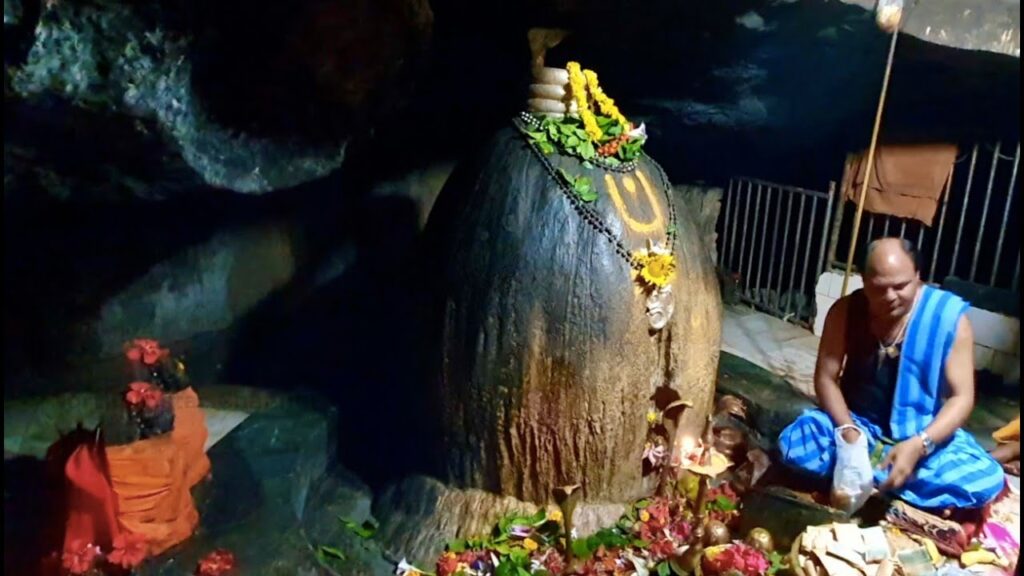
38). Gupteshwar Temple, Koraput: The Cave of Secrets
Gupteshwar tested my spirit in ways I hadn’t anticipated. The final stretch to this temple involved navigating narrow paths along steep cliffs, with the sound of the river far below. Unlike traditional temples, Gupteshwar isn’t a building but a cave sanctuary hidden in the Eastern Ghats. When I finally entered the dimly lit cave, the air felt charged with centuries of meditation.
Why Gupteshwar captivates:
- The natural cave setting that creates an intimate, womb-like atmosphere
- The hanging jata (matted locks) of Shiva represented by natural rock formations
- The continuous dripping of water from the cave ceiling onto the lingam
- The powerful sense of Shiva as the ascetic yogi
- The relative isolation that makes darshan feel deeply personal
The cave is small—barely large enough for a few people to stand comfortably—and the lingam appears to emerge from the cave wall, with water continuously dripping on it from above. What moved me most was seeing the natural rock formations that resemble Shiva’s matted locks hanging from the cave ceiling—a detail that gives Gupteshwar its name (“Secret Lord”).
During my visit, I met a group of sadhus who had been meditating in the cave for weeks. One elder explained that Gupteshwar represents Shiva in his most austere form—the wandering yogi who owns nothing but his matted locks. As I sat quietly in the cave’s cool darkness, listening to the steady drip of water on stone, I understood why this is considered one of the most spiritually intense cave temples in Eastern India.
Practical insight: Visit between October and March for ideal weather. Prepare for a challenging trek—this temple is often overlooked by tourists. Don’t attempt the journey during monsoon season when landslides are common. Bring a flashlight for the cave interior, and be prepared for cool temperatures even in summer. Most importantly, approach with humility; this temple demands respect for its wild, untamed energy.
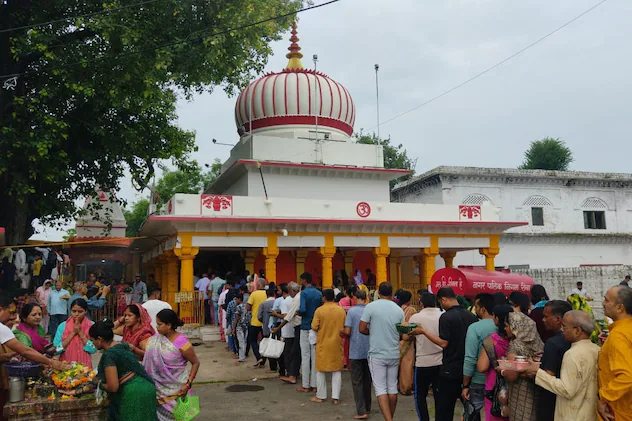
39). Mahamrityunjay Temple – Varanasi, UP: The Temple of Immortality
Most travelers flock to Kashi Vishwanath, but few know about Mahamrityunjay just a short walk away. I discovered it by accident while getting lost in Varanasi’s narrow lanes. The scent of jasmine and incense led me to a modest entrance where the air immediately grew cooler and heavier with devotion.
Why Mahamrityunjay captivates:
- The powerful chanting of the Maha Mrityunjaya Mantra that never stops
- The ancient stone structure that seems to hum with vibration
- The sacred well where water is believed to cure incurable diseases
- The palpable sense of Shiva as the conqueror of death
- The legend of Markandeya’s encounter with Shiva here
What moved me most was witnessing a group of terminally ill patients and their families performing rituals with quiet determination. Unlike the bustling energy of Kashi Vishwanath, this temple hums with a different frequency—a deep, resonant vibration that seems to penetrate your bones. During my visit, I joined the continuous chanting of the Maha Mrityunjaya Mantra, feeling how the sound waves physically resonated through the temple walls.
One afternoon, an elderly priest explained that this is where Shiva revealed the secret of overcoming death to the sage Markandeya. As he spoke, a woman with advanced cancer sat quietly by the sacred well, her face transformed by something I can only describe as peace. Later, I learned she’d returned home to die, but with a calmness that astonished her doctors.
Practical insight: Visit between October and March for ideal weather. Go early in the morning to experience the powerful chanting without crowds. Don’t miss the opportunity to sit quietly in the inner courtyard—close your eyes and feel the vibrations of centuries of chanting. Bring offerings of white flowers (Shiva’s favorite) rather than the typical marigolds.
40). Gyaraspur Shiva Temples – MP: The Forgotten City of Stone
The journey to Gyaraspur felt like traveling back in time. As my jeep navigated the dusty roads of Vidisha district, the landscape changed from modern fields to ancient ruins. What surprised me most was how the temples emerged from the landscape—not as isolated structures, but as part of a living archaeological site where farmers still work among the ruins.
Why Gyaraspur captivates:
- The cluster of 9th-10th century temples in various states of preservation
- The intricate carvings depicting everyday life alongside divine scenes
- The sacred pond where priests perform morning rituals
- The powerful energy field that intensifies at sunrise
- The legend of the temples being built by the Gurjara-Pratihara dynasty
When I arrived, the morning mist was still clinging to the ancient stones. The main Shiva temple, with its damaged but still majestic tower, stood as a testament to forgotten glory. What struck me most was how the local community has integrated the ruins into daily life—children play cricket among the pillars, and farmers use the temple courtyards for threshing grain.
During my visit, I joined a group of local women preparing offerings of fresh milk and seasonal fruits. As we worked, they shared stories of how the temples have been their spiritual anchor through centuries of change. Later, sitting by the sacred pond, I understood why this is considered one of the oldest Shiva temple complexes in Central India—it’s not just ancient; it’s alive.
Practical insight: Visit between October and March for ideal weather. Hire a local guide from the nearby village—this site is easy to miss without proper context. Don’t bring plastic or packaged items; the community is committed to preserving the site’s integrity. Most importantly, approach with respect; this is both a living community space and a sacred site.

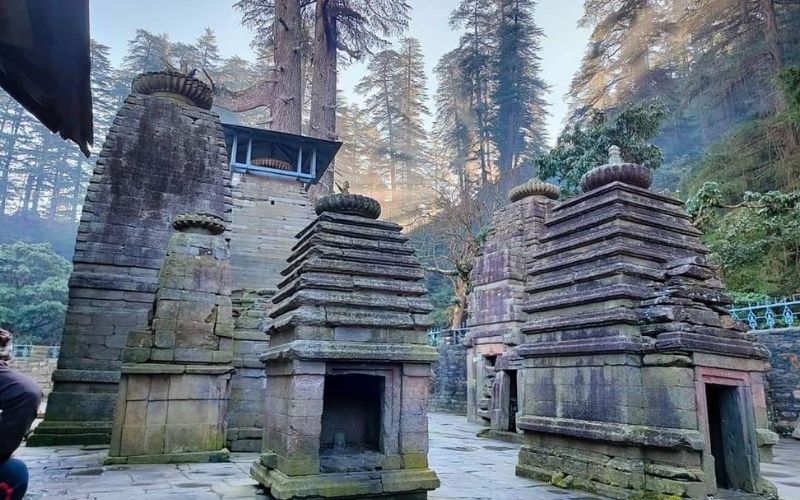
41). Jageshwar Temple Complex – Almora, Uttarakhand: The Mountain Sanctuary
Jageshwar surprised me with its scale and serenity. Nestled in a forested valley in the Kumaon hills, the complex contains over 120 ancient temples spread across a peaceful landscape. Unlike the crowded Kedarnath, this temple feels like stepping into a living postcard—stone structures emerging from the forest like natural growths.
Why Jageshwar captivates:
- The cluster of ancient temples spread across a serene forest valley
- The natural spring that flows through the temple complex
- The powerful energy field that intensifies during the Magh Mela festival
- The legend of Shiva appearing here to bless the sages
- The integration of Shaivism with local mountain traditions
What moved me most was witnessing the seamless integration of nature and worship. During my visit, I joined local villagers for the morning ritual of offering water from the natural spring to the lingam. Unlike the elaborate ceremonies at urban temples, their worship involved simple offerings of wild mountain flowers and honey. An elderly woman explained that they’ve been coming here since before the temples were built, recognizing this as sacred ground long before stone was laid.
One morning, as I sat quietly in the main temple courtyard, I watched as the first light hit the ancient carvings, illuminating stories that had been hidden in shadow all night. A group of sadhus arrived for their morning meditation, their chants blending with the sound of birdsong. In that moment, I understood why this place is considered one of the most powerful Shiva pilgrimage sites in the Himalayas.
Practical insight: Visit between April and June or September and November for ideal weather. Stay in the temple guesthouse to experience the morning rituals when the mist clears from the hills. Don’t miss the opportunity to walk the entire temple complex—it takes about two hours and reveals hidden shrines along the way. Bring warm clothing; nights can be freezing even in summer.
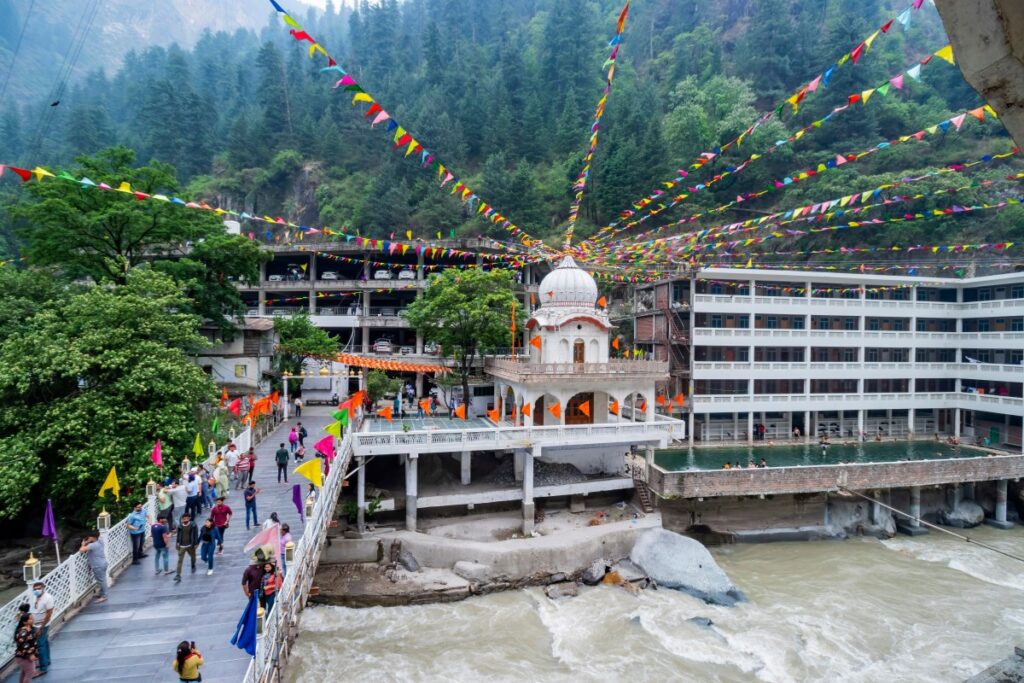
42). Manikaran Shiv Temple – Himachal Pradesh: The Hot Spring Sanctuary
Manikaran hit me with its elemental power. Unlike traditional temples, this one centers around natural hot springs where the water itself is considered sacred. The journey through the Parvati Valley, with the river roaring alongside the road, prepared me for what awaited.
Why Manikaran captivates:
- The natural hot springs where pilgrims cook rice as offering
- The sacred river Parvati flowing through the temple complex
- The legend of Shiva losing his diamond earring (mani) here
- The powerful energy field that intensifies at sunrise
- The integration of Hindu and Sikh traditions at the site
What surprised me most was how the hot springs function as both temple and kitchen. During my visit, I joined pilgrims cooking rice in the natural springs—a practice that dates back centuries. An elderly sadhu explained that the steam rising from the springs is considered Shiva’s breath, and the cooked rice (prasad) carries his blessing.
One afternoon, as I sat by the main spring, I watched as Sikh pilgrims from the nearby Gurudwara shared langar (community meal) with Hindu devotees. A local priest explained that Manikaran is one of the few places where both communities consider the site sacred—Sikhs believe Guru Nanak visited here, while Hindus revere it as a Shiva site.
Practical insight: Visit between May and October for ideal weather. Go early in the morning to experience the temple without crowds. Don’t miss the opportunity to cook your own prasad in the hot springs—it’s a deeply personal experience. Be prepared for the strong sulfur smell; it’s part of the sacred experience.
43). Bijli Mahadev Temple – Kullu, HP: The Lightning Temple
Bijli Mahadev tested my resolve. For two hours, I climbed the steep path up the mountain, my breath coming in short gasps at 2,460 meters. But when the temple came into view, everything changed. The air itself felt charged, as if the mountain was holding its breath.
Why Bijli Mahadev captivates:
- The dramatic hilltop location with panoramic views of the Kullu Valley
- The ancient stone structure that seems to grow from the mountain itself
- The legend of the lightning strike that shattered the original lingam
- The tradition of replacing the shattered lingam with a new one
- The powerful energy that intensifies during thunderstorms
What moved me most was learning about the temple’s unique ritual cycle. Unlike most temples where the lingam is permanent, Bijli Mahadev’s lingam is shattered by lightning approximately every 12 years, then replaced in a special ceremony. During my visit, I met a priest who had witnessed three such events in his lifetime. “Shiva reminds us of his power through the lightning,” he explained. “The broken pieces are distributed to devotees as sacred relics.”
One afternoon, as I sat quietly in the courtyard, a sudden storm rolled in. The air grew electric, and I understood why this temple is called “Bijli Mahadev” (Lightning Shiva). As lightning flashed across the valley, the priest performed a special puja, his chants barely audible over the thunder.
Practical insight: Visit between April and October when the temple is accessible. Hire a local guide who knows the hidden viewpoints along the trek—there’s a spot halfway up where you can see the entire valley spread out below. After darshan, sit quietly on the hillside and let the mountain’s silence sink into your bones. Don’t attempt the climb during monsoon season when lightning strikes are frequent.

44). Bagnath Temple – Bageshwar: The Confluence Sanctuary
Bageshwar surprised me with its strategic beauty. Nestled at the confluence of the Sarayu and Gomati rivers, the temple complex sits where two powerful waterways meet—a location considered especially sacred in Hindu tradition. The journey through the Kumaon hills, with the sound of rushing water growing louder with each turn, prepared me for what awaited.
Why Bagnath captivates:
- The dramatic location at the confluence of two sacred rivers
- The ancient stone structure that has withstood centuries of flooding
- The powerful energy field that intensifies during the Kumbh Mela
- The legend of Shiva appearing here to bless the region
- The integration of local mountain traditions with Shaivism
What struck me most was how the temple functions as both spiritual center and community hub. During my visit, I watched as office workers stopped to offer quick prayers before work, and students performed puja between classes. The priest explained that the temple’s rituals align with the river’s rhythm—morning rituals for the waking river, evening rituals for the sleeping river.
One morning, as I sat by the confluence, I watched as the first light hit the temple’s shikhara, illuminating it in golden light while the rivers flowed silently below. A group of sadhus arrived for their morning meditation, their chants blending with the sound of flowing water. In that moment, I understood why this place is considered one of the most powerful confluence sites in Uttarakhand.
Practical insight: Visit between October and March for ideal weather. Go early in the morning to experience the temple without crowds. Don’t miss the opportunity to witness the ritual of offering water to the lingam—it’s a deeply personal experience that connects you to centuries of tradition. Be prepared for sudden weather changes—the confluence creates its own microclimate.
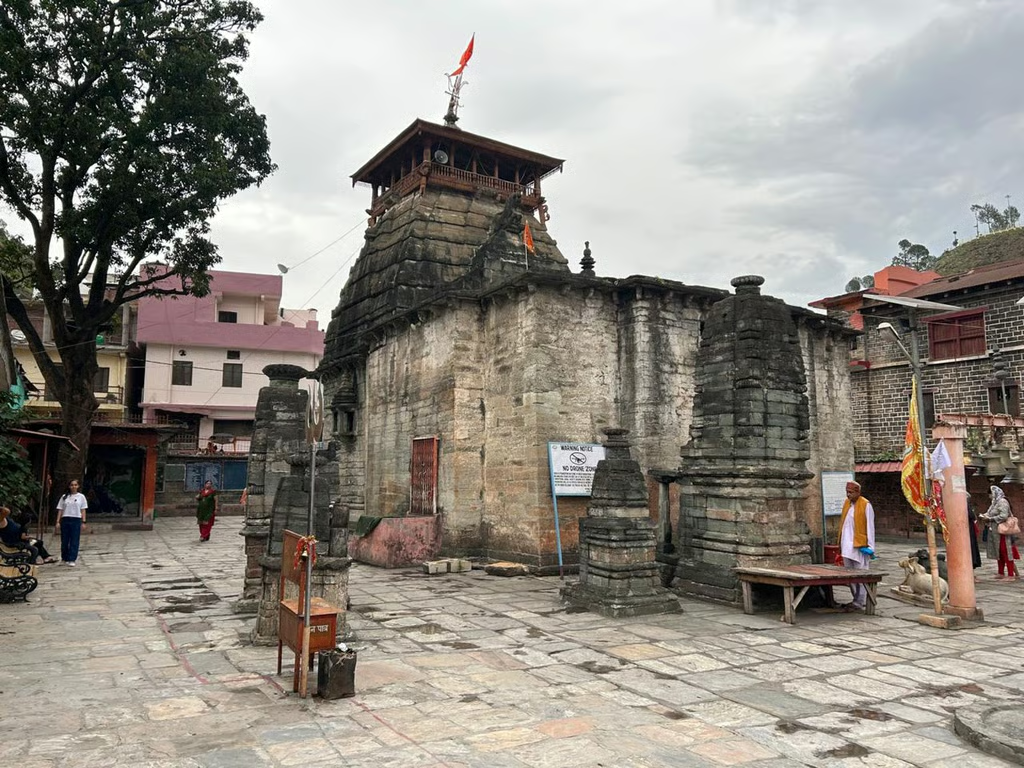
45). Gauri Shankar Temple – Dasholi: The Divine Union
Dasholi’s Gauri Shankar surprised me with its quiet dignity. Unlike the grand urban temples, this one felt more like a living part of the landscape. The journey through narrow lanes fragrant with jasmine and incense prepared me for what awaited. The temple itself is deceptively simple from the outside, but inside, the air vibrated with centuries of devotion to the divine union of Shiva and Shakti.
Why Gauri Shankar captivates:
- The ancient stone structure built in the North Indian Nagara style
- The dual sanctum housing both Shiva and Parvati
- The natural spring believed to have curative properties
- The powerful connection to marital harmony and family unity
- The legend of Shiva and Parvati’s celestial wedding
What moved me most was witnessing a group of newlyweds performing their first joint puja. Unlike the elaborate ceremonies at other temples, their worship involved simple offerings of milk and flowers to both deities. An elderly priest explained that this temple is especially revered by couples seeking harmony—many return annually to renew their vows before the divine couple.
During my darshan, I noticed how the two lingams stood side by side, connected by a single platform. The priest explained that this is considered one of the most ancient representations of the divine union in North India, with the stone formation naturally occurring rather than sculpted. As I left the sanctum, a newlywed couple grasped my hand and shared their prasad—a gesture that felt deeply personal.
Practical insight: Visit between October and March for ideal weather. Go early in the morning to experience the temple without crowds. Don’t miss the opportunity to witness the ritual of offering water to both lingams—it’s a deeply personal experience that connects you to the concept of divine union. Combine your visit with a walk along the river for a complete spiritual experience.
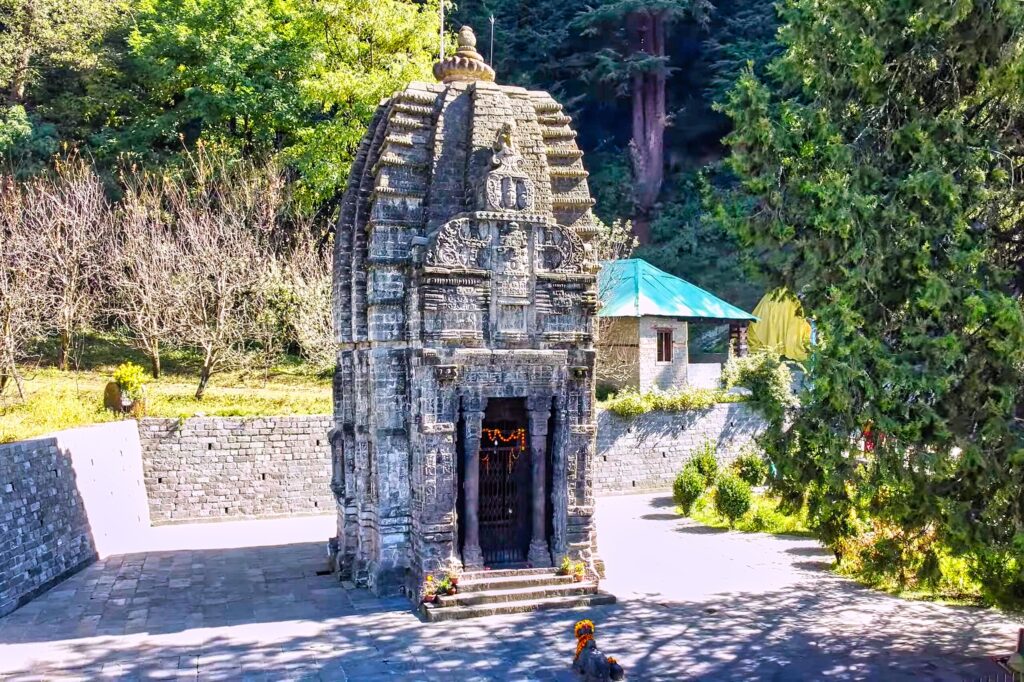
46). Gondeshwar Temple – Sinnar, Nashik: The Hidden Gem
Sinnar’s Gondeshwar surprised me with its architectural brilliance. Nested in the foothills of the Western Ghats, this 12th-century temple is a masterpiece of Hemadpanti architecture that most travelers miss. The journey through narrow lanes fragrant with marigolds and incense prepared me for what awaited.
Why Gondeshwar captivates:
- The intricate Hemadpanti architecture with detailed carvings
- The five shrines dedicated to different forms of Shiva
- The natural spring that flows through the temple complex
- The powerful energy field that intensifies at sunrise
- The legend of the temple being built by the Yadava dynasty
What struck me most was how the temple integrates with the natural landscape. During my visit, I watched as water from the natural spring flowed through carefully designed channels to each shrine, creating a living water feature that also serves ritual purposes. The priest explained that the entire temple is designed as a mandala, with each element positioned according to sacred geometry.
One afternoon, as I sat quietly in the courtyard, I noticed how the light changed throughout the day, illuminating different carvings at different times. An elderly scholar explained that the temple’s architects designed it so that on specific days of the year, sunlight would fall precisely on certain carvings, revealing hidden meanings.
Practical insight: Visit between October and March for ideal weather. Go early in the morning to experience the temple without crowds. Don’t miss the opportunity to examine the carvings on the northern side—they’re illuminated by morning light and tell the story of Shiva’s cosmic dance. Hire a knowledgeable guide; the temple’s architectural significance isn’t obvious to casual visitors.
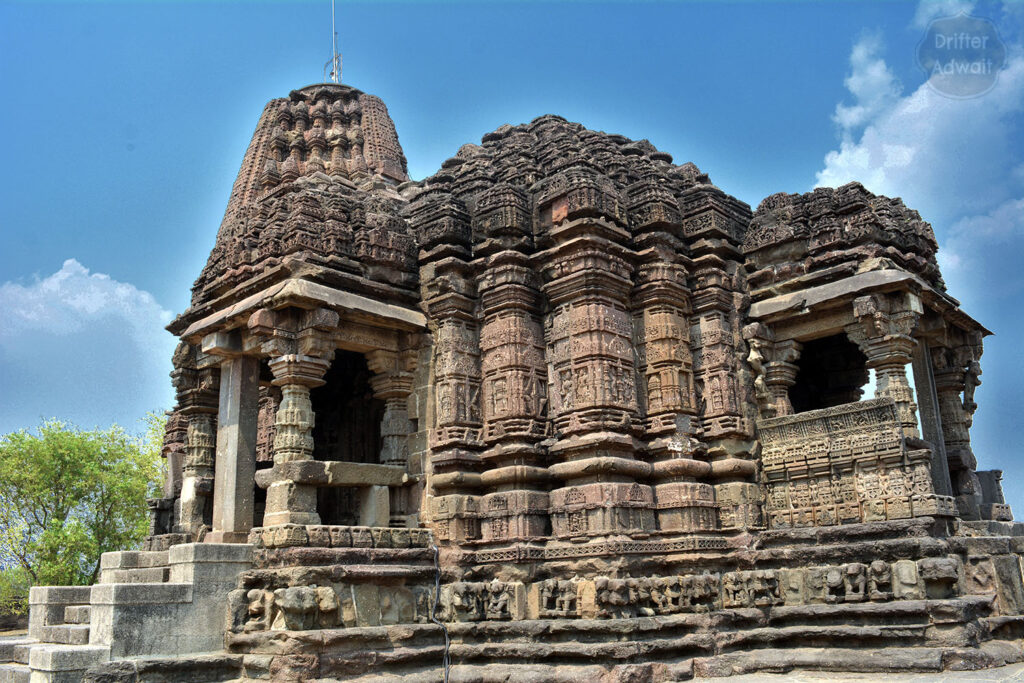
47). Ambareshwar Mahadev – Rajasthan: The Desert Shiva
Rajasthan’s Ambareshwar surprised me with its unexpected presence in the desert landscape. Unlike the ornate temples of South India, this one felt primal—a simple stone structure that seems to grow from the earth itself. The journey through the Thar Desert, with the scent of dust and camel bells in the air, prepared me for what awaited.
Why Ambareshwar captivates:
- The ancient stone structure that contrasts with the desert landscape
- The natural spring that miraculously flows in the desert
- The powerful energy field that intensifies during the monsoon
- The legend of Shiva appearing here to bless the desert tribes
- The integration of local tribal traditions with Shaivism
What moved me most was witnessing the annual monsoon festival. During my visit, I joined local villagers for the ritual of offering water to the lingam—the first rainwater of the season. Unlike the elaborate ceremonies at urban temples, their worship involved simple offerings of desert flowers and milk. An elderly woman explained that they’ve been coming here since before the temple was built, recognizing this as sacred ground long before stone was laid.
One morning, as I sat by the natural spring, I watched as the first light hit the temple’s spire, illuminating it in golden light against the desert backdrop. A group of Rabari tribespeople arrived for their morning puja, their colorful traditional clothing a vibrant contrast to the sandy landscape. In that moment, I understood why this place is considered one of the most powerful Shiva sites in the desert.
Practical insight: Visit between July and October for the monsoon festival. Go early in the morning to experience the temple without crowds. Don’t miss the opportunity to witness the ritual of offering first rainwater to the lingam—it’s a deeply personal experience that connects you to centuries of tradition. Be prepared for extreme temperature changes—the desert is hot during the day but cold at night.
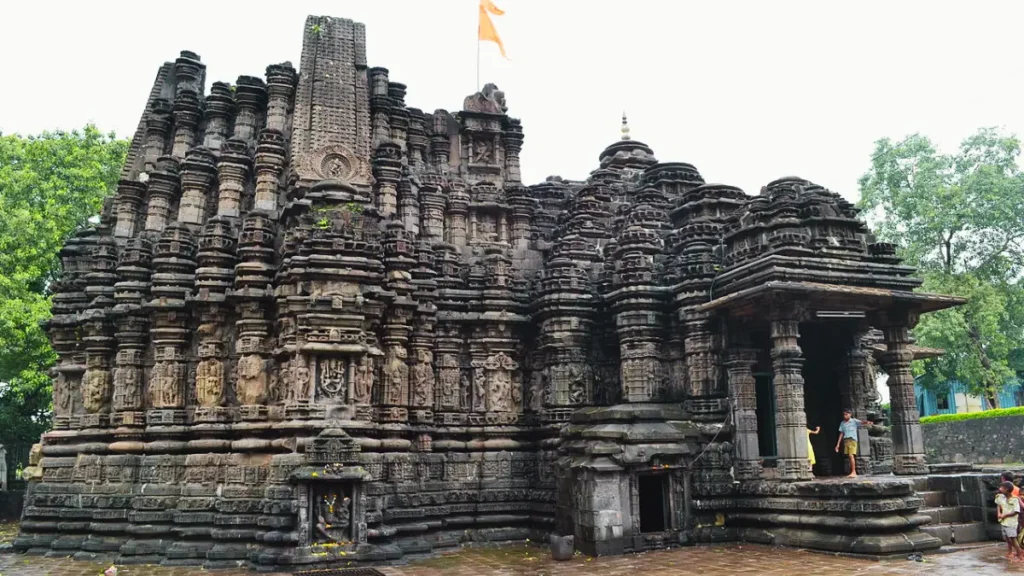
48). Kamnath Mahadev – Bhavnagar: The Coastal Guardian
Bhavnagar’s Kamnath surprised me with its dramatic coastal setting. Unlike the inland temples I’d visited, this one faces the Gulf of Khambhat, creating a unique blend of mountain and ocean energy. The temple complex sat slightly elevated, with the sound of waves providing a constant backdrop to temple bells.
Why Kamnath captivates:
- The dramatic coastal location with ocean views from the temple courtyard
- The ancient stone structure that has withstood centuries of erosion
- The legend of Shiva protecting the coast from natural disasters
- The powerful energy that devotees say protects against maritime dangers
- The nearby beach where devotees perform rituals for departed ancestors
What surprised me most was how the temple changes with the tides. During low tide, I could walk around the entire structure, examining the carvings up close. But during high tide, the ocean would crash against the lower levels, creating a dramatic interplay of water and stone. An elderly fisherman explained that local legend says the temple was built to calm the ocean’s fury—a belief reinforced when I witnessed the temple standing firm during a sudden storm.
During my visit, I joined local fishermen for their morning ritual of offering coconut water to the lingam. Unlike the elaborate ceremonies at other temples, their worship involved simple offerings that reflected their daily lives. As we worked, they shared stories passed down through generations about how the temple has protected them during storms.
Practical insight: Visit between October and March for ideal weather. Combine your visit with the nearby Palitana temples for a complete spiritual experience. Don’t miss the opportunity to walk along the beach at sunset when the temple glows golden in the fading light. Be prepared for sudden weather changes—the coast creates its own microclimate.
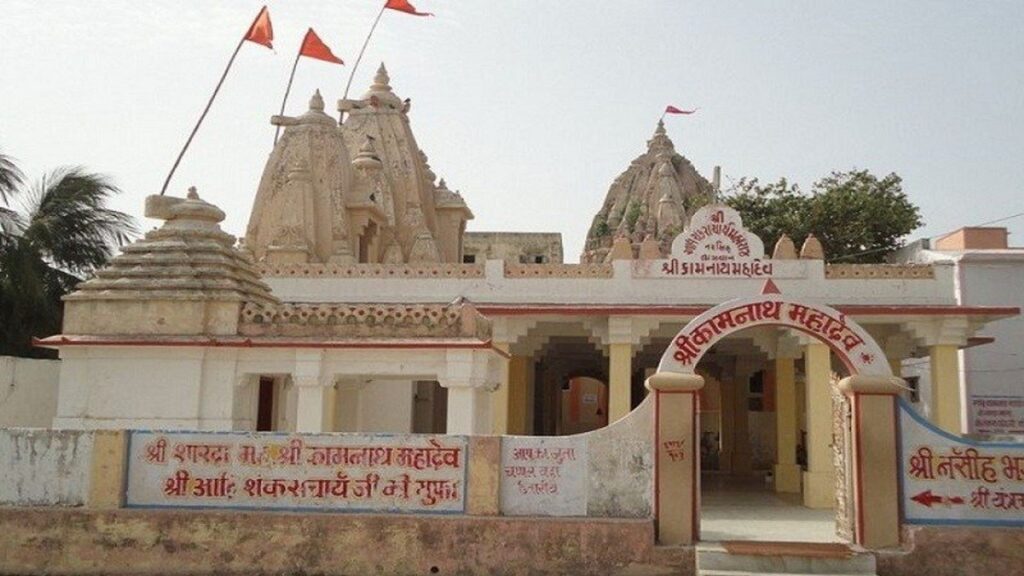
49). Adi Yogi Shiva Temple – Coimbatore: The Cosmic Dancer
Coimbatore’s Adi Yogi Temple hit me with its modern grandeur. Unlike the ancient temples I’d visited, this one is a contemporary masterpiece dedicated to Shiva as the first yogi. The journey through the city streets, with the scent of jasmine and incense in the air, prepared me for what awaited.
Why Adi Yogi captivates:
- The massive 33-meter statue of Shiva in yogic posture
- The modern architecture that blends ancient symbolism with contemporary design
- The meditation halls designed for large group practices
- The powerful energy field that intensifies during sunrise
- The legend of Shiva transmitting yoga to the Saptarishis
What struck me most was how the temple functions as both spiritual center and educational hub. During my visit, I watched as office workers stopped to meditate before work, and students attended yoga classes between classes. The priest explained that the temple’s schedule aligns with the rhythms of modern life—morning sessions for workers, evening sessions for families.
One morning, as I sat quietly in the meditation hall, I watched as the first light hit the massive statue, illuminating it in golden light. A group of international visitors arrived for their morning practice, their diverse backgrounds united by a common search for peace. In that moment, I understood why this place is considered one of the most powerful modern Shiva sites.
Practical insight: Visit between October and March for ideal weather. Go early in the morning to experience the meditation sessions without crowds. Don’t miss the opportunity to attend a yoga session—it’s a deeply personal experience that connects you to the living tradition of yoga. Be prepared for large crowds on weekends—the temple attracts visitors from around the world.
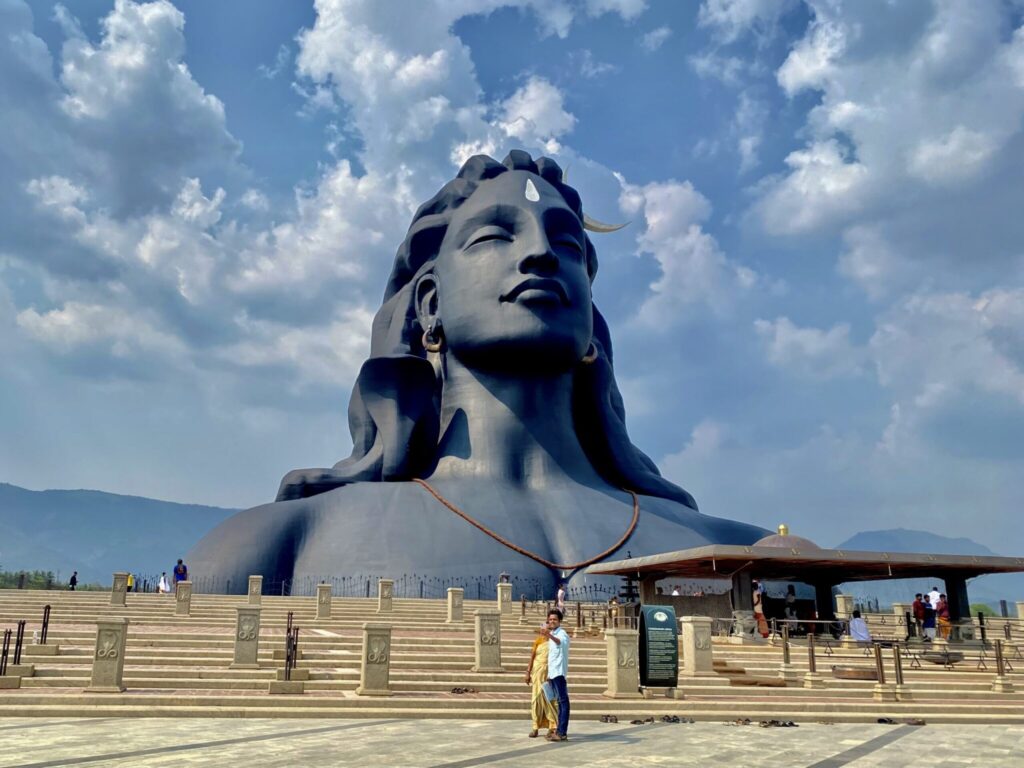
50). Uma Maheshwaram Temple – Telangana: The Divine Union
Telangana’s Uma Maheshwaram surprised me with its strategic hilltop location. Perched on a rocky outcrop, the temple commands panoramic views of the surrounding countryside. The journey up the 1,000 steps, with the sound of chanting growing louder with each turn, prepared me for what awaited.
Why Uma Maheshwaram captivates:
- The dramatic hilltop location with panoramic views of the Nallamala Hills
- The ancient rock-cut architecture blending with natural formations
- The powerful energy field that intensifies during the full moon
- The legend of Shiva and Parvati’s celestial wedding here
- The annual pilgrimage during Shivaratri when thousands gather
What moved me most was witnessing the full moon pilgrimage. Thousands of devotees gathered at the temple complex, their faces illuminated by the moonlight as they performed simple rituals. An elderly sadhu explained that Uma Maheshwaram represents the perfect balance between Shiva and Shakti—the masculine and feminine aspects of the divine.
During my visit, I joined local villagers for the ritual of circumambulating the temple. Unlike the elaborate ceremonies at other temples, their worship involved simple offerings of milk and wildflowers. As we walked, they shared stories passed down through generations about how the mountain protects the valley from natural disasters.
Practical insight: Visit between October and March for ideal weather. Stay in the temple guesthouse to experience the morning rituals when the mist clears from the hills. Don’t miss the opportunity to join the full moon ritual—it connects you to the cosmic energy that makes this place special. Bring warm clothing; nights can be freezing even in summer.