There are places in the Himalayas that exist purely for the pilgrim, and then there are those that hold a deeper, more resonant energy places where the natural world and the divine world intersect, not just in summer, but in the deep, silent heart of winter. Kharsali Village is one such village.
Tucked away in the Uttarkashi district of Uttarakhand, cradled by the formidable peaks of the Garhwal Himalayas, Kharsali is far more than a mere stopover on the legendary Char Dham Yatra. It is the consecrated winter sanctuary of Goddess Yamuna, a small hamlet that swells with profound spiritual importance when the main temple at Yamunotri is swallowed by snow. Known locally as ‘Khushimath’ the ‘Abode of Happiness’ this village is a rich tapestry woven with ancient mythology, distinctive Pahadi architecture, and the raw, unadulterated beauty of a life lived in harmony with the mountains.
To truly understand Kharsali is to look beyond the popular pilgrimage season and appreciate its role as a spiritual and cultural anchor for the entire Yamunotri valley, particularly during the months when the world above is frozen still. This is where the ancient rhythms of the Himalayas live on, untouched by the modern rush.
The Winter Sanctuary: A Sacred Migration
The primary identity of Kharsali, the one that grants it its exceptional sanctity, is its role as the Winter Seat (or Winter Dhaam) of Goddess Yamuna.
The Utsav Doli and the Closing of the Gates
The yearly ceremonial migration of the Goddess is an event steeped in centuries of tradition and local lore, marking the closing and opening of the Char Dham pilgrimage circuit. As the onset of winter makes the Yamunotri temple perched at an altitude of 3,293 meters inaccessible due to heavy snowfall, the decision is made to close the temple gates (Kapat).
This closure is not an end, but a transition. On the auspicious day of Bhai Dooj (or Yama Dwitiya), which typically falls two days after Diwali in late October or early November, the sacred idol of Maa Yamuna, known as the Utsav Doli (ceremonial palanquin), is formally relocated. In a magnificent, centuries-old procession led by the temple priests, local villagers, and accompanied by the haunting music of traditional Garhwali instruments, the deity is carried down the mountainside. The arduous, ritual-bound journey concludes in Kharsali, where the idol is placed inside the revered Shani Dev Temple.

This act is more than logistical; it is deeply symbolic. Lord Shani (Saturn) is considered the brother of Goddess Yamuna. The ritual, therefore, is seen as the brother bringing his sister home to rest and be protected during the harsh mountain winter. For the next six months, Kharsali becomes the focal point of the Yamunotri pilgrimage, where all daily rituals, aartis, and worship continue uninterrupted inside the Shani Dev Temple.
The Spring Reopening: The Divine Return
The cycle completes in the spring, usually on the auspicious day of Akshaya Tritiya (late April or early May). Once the snow melts enough to allow safe passage, the Goddess Yamuna is ceremonially carried back in her doli from Kharsali to the main Yamunotri temple. This return marks the official re-opening of the Yamunotri shrine and the commencement of the summer Char Dham Yatra.
For the devotee, a visit to Kharsali during the winter months offers a unique, intimate spiritual experience that is impossible to replicate during the crowded summer pilgrimage. Here, the worship is performed in a smaller, quieter, and deeply personal village setting, allowing for a connection that transcends the hustle of the main Dhaam.

Kharsali’s Ancient Heart: The Shani Dev Temple
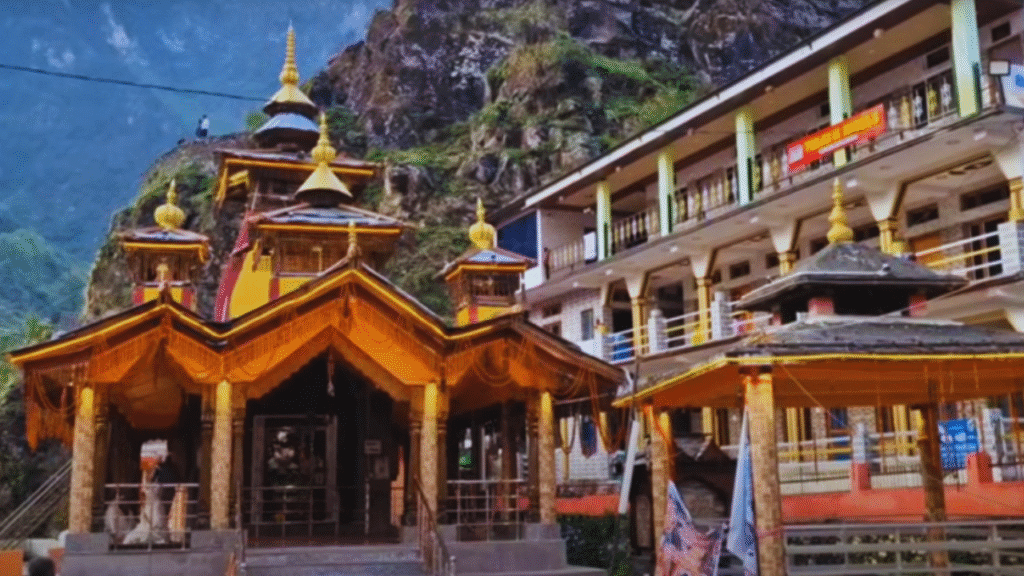
The temple that hosts the Goddess for half the year is a masterpiece of Himalayan antiquity and local engineering. The Shani Dev Temple, or Shani Mandir, at Kharsali is an architectural marvel and a significant pilgrimage site in its own right.
Architecture and Legend
The temple is said to be one of the oldest Shani Dev temples in India, with local legends attributing its construction to the Pandavas from the epic Mahabharata. What truly sets it apart is its unique construction style:
- Himalayan Architecture: It is built using the traditional, earthquake-resistant Kath-Kuni style of architecture, which relies on interlocking beams of massive Deodar and local wood without the use of cement.
- Unique Mortar: The stone blocks and wooden logs are held together not by modern mortar, but by a paste traditionally made from Urad Dal (Black Gram pulse), which provides incredible flexibility and resilience against natural calamities like earthquakes.
- Symbolism: The structure is predominantly made of wood, often intricately carved, showcasing the deep-rooted wood-craftsmanship of the region.
Inside, the ambiance is one of serene power. The temple houses the bronze idol of Lord Shani Dev, along with other local deities. When Goddess Yamuna’s idol is present from Bhai Dooj to Akshaya Tritiya, the combined presence creates a powerful confluence of spiritual energy, making this small, wooden temple the temporary hub of the Garhwal’s spiritual universe.
Life and Culture in Khushimath
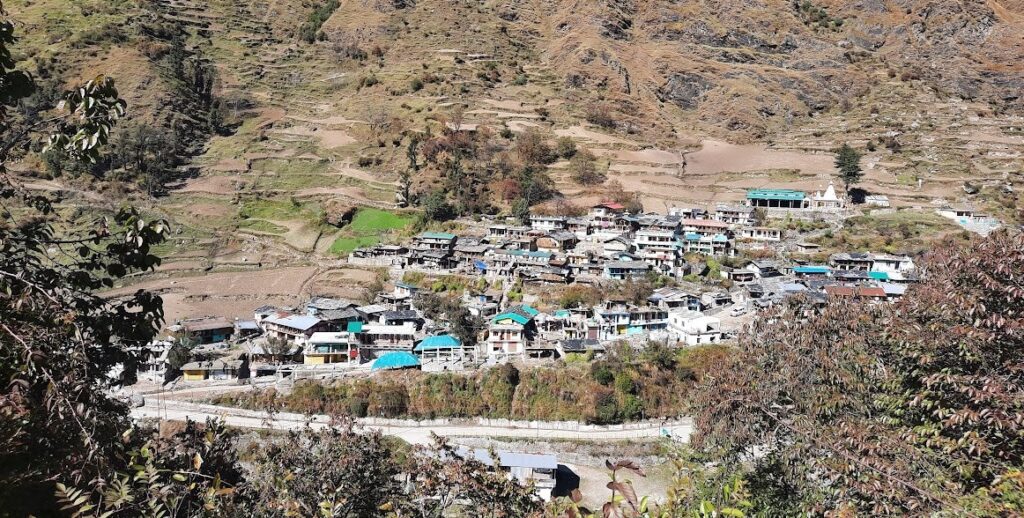
Kharsali, which sits at an elevation of approximately 2,675 meters (8,776 feet), is more than just a religious center; it is a living, breathing example of traditional Garhwali village life. The name Khushimath itself suggests a cheerful, contented atmosphere, a reflection of the hardy yet hospitable nature of its residents.
The People and Their Heritage
The local community is predominantly Rawaltas and other Garhwali clans, many of whom have been the hereditary priests (Pandas) of the Yamunotri temple for generations. Their lives are intimately linked to the rituals and the cycle of the seasons.
- Hospitality: The people of Kharsali are known for their warmth. Unlike the commercial centers lower down, Kharsali offers an authentic glimpse into the Pahadi (mountain) way of life. Travelers often find themselves welcomed into simple, traditional homes, sharing meals of locally grown barley, maize, and indigenous vegetables.
- Architecture: The homes themselves are a sight to behold, built with local stone and wood, often featuring multiple stories and intricately carved wooden balconies and door frames, reflecting a vernacular design meant to withstand heavy snow and cold.
- Culture: The village comes alive during the bi-annual doli processions, which are major community events filled with music, dance, and collective devotion. Even in the quiet winter months, the chanting and the gentle chiming of bells from the Shani Dev Temple maintain a pervasive spiritual atmosphere.
The Someshwar Temple and Hot Springs
While the Shani Dev Temple draws the most attention, Kharsali is also home to an ancient Lord Shiva Temple, where Shiva is worshipped in his Someshwar avatar. This adds another layer of divine significance to the tiny hamlet.
Furthermore, being close to the geothermal zone of Yamunotri, the region features natural thermal springs. While the most famous Surya Kund is near the main Yamunotri shrine, smaller, lesser-known hot springs are also present in the vicinity of Kharsali and the nearby town of Janki Chatti (just 1 km away). These springs, believed to possess medicinal properties, offer a natural remedy for the cold and an important pre-pilgrimage cleansing ritual for devotees.
The Gateway to Adventure: Kharsali as a Base
While its religious importance is paramount, Kharsali’s stunning location on the banks of the Yamuna River and its proximity to the higher trekking trails make it an ideal base for nature lovers and trekkers.
The Trek to Yamunotri
For most pilgrims, Kharsali or Janki Chatti marks the final accessible point by motor vehicle (though Janki Chatti is officially the base). The 6-km trek from Janki Chatti (which is just 1 km from Kharsali) to the Yamunotri temple is a journey through dense forests of deodar and rhododendron, alongside the thundering flow of the Yamuna river. It is a moderate-level trek that takes approximately 3 to 5 hours. Kharsali serves as a serene, quieter alternative to the busier Janki Chatti for an overnight stay before or after the main pilgrimage.
Exploration and Nature Trails
The landscape around Kharsali is quintessential Garhwal Himalayan beauty.
- Village Walks: The gentle trails leading out of Kharsali offer spectacular views of the Bandarpoonch peak and the surrounding snow-capped mountains. A simple walk through the oak and deodar forests is a deeply meditative experience, especially in the pre-monsoon and post-monsoon seasons when the air is crisp and the visibility is crystal clear.
- Janki Chatti and Hot Springs: The short 1 km walk to Janki Chatti allows travelers to experience the more commercially active hub and its thermal springs, providing a balance of quiet village life and pilgrimage energy.
- Dodi Tal and Darwa Top: For serious trekkers, Kharsali is within reasonable reach of the starting points for longer expeditions. The trek to Dodi Tal (the lake of the Himalayan Golden Trout) and further up to the majestic Darwa Top (offering panoramic views of Himalayan peaks like Swargarohini) can be planned from the region, making Kharsali a starting or transit point for exploring the wider Uttarkashi wilderness.
- Camping and Stargazing: The quiet, pollution-free meadows surrounding Kharsali are excellent for camping, offering unparalleled opportunities for astrophotography and experiencing the raw silence of the high mountains under a brilliant canopy of stars.
A Practical Guide to Visiting Kharsali
To plan a genuine and respectful trip to this sacred corner of the Himalayas, practical preparation is essential.
Best Time to Visit
- Summer Pilgrimage Season (May to June): Pleasant weather, lush greenery, and the best time to undertake the trek to the main Yamunotri temple. Kharsali is bustling with pilgrims.
- Autumn (September to November): The most picturesque time. The monsoon haze is gone, the air is crisp, and the mountains are clearly visible. The weather is cool, and you can witness the traditional doli ceremony around Bhai Dooj.
- Winter (Late November to April): The truest experience of Kharsali, as the Goddess resides here. Expect heavy snowfall, extremely cold temperatures (often sub-zero), and a quiet, contemplative atmosphere. Roads can be challenging, but the worship at the Shani Dev Temple continues. This period is for the dedicated, solitude-seeking traveller.
How to Reach
Kharsali is best approached from Dehradun or Rishikesh via Barkot and Janki Chatti.
- By Air: The nearest airport is Jolly Grant Airport (DED) in Dehradun.
- By Rail: The nearest major railway station is Dehradun (DDN) or Haridwar (HW).
- By Road: From Dehradun/Rishikesh, one must travel by taxi or bus to Janki Chatti. Kharsali is located just 1 km trek from Janki Chatti. There are also local ponies or dandies (palanquins) available for hire from Janki Chatti for those unable to walk.
Accommodation
Accommodation in Kharsali is typically simpler and more intimate than in the major pilgrim towns. You will find:
- Local Guesthouses (Homestays): Offering basic, clean rooms and authentic local Garhwali food. This is the best way to interact with the community.
- Dharamshalas: Traditional pilgrim rest houses, often providing very basic, affordable shelter.
- Seasonal Camps/Cottages: Some more comfortable, modern cottage or deluxe tented accommodations open during the peak summer season near Kharsali and Janki Chatti.
Frequently Asked Questions (FAQ)
Where is Kharsali Village located?
Kharsali Village is located near Janki Chatti in the Uttarkashi district of Uttarakhand, about 6 km from Yamunotri Temple. It lies at an altitude of around 2,675 meters in the Garhwal Himalayas.
Why is Kharsali Village famous?
Kharsali is known as the winter seat of Goddess Yamuna. During the winter months, when the Yamunotri Temple closes due to snow, the idol of Goddess Yamuna is brought to Kharsali for worship.
What is the religious importance of Kharsali?
The village houses the ancient Shani Dev Temple, one of the few temples in India where Lord Shani and Goddess Yamuna are worshipped together, symbolizing brother-sister devotion.
How can I reach Kharsali Village?
By Road: Accessible from Barkot or Hanuman Chatti by jeep or local taxi.
By Air: Nearest airport is Jolly Grant Airport, Dehradun (approx. 210 km).
By Train: Nearest railway station is Dehradun (approx. 200 km).
What is the best time to visit Kharsali?
The best time to visit is from April to June and September to November. During winter (October to April), Kharsali becomes the main pilgrimage site for devotees of Goddess Yamuna.
Are there accommodations available in Kharsali?
Yes, you’ll find basic guesthouses and homestays run by locals, especially during the Char Dham Yatra season. For more options, you can stay in Barkot or Janki Chatti nearby.
What are the nearby attractions from Kharsali?
Nearby places include Yamunotri Temple, Hanuman Chatti, Barkot, and Dodital Lake. Trekkers also enjoy scenic trails around the Yamuna Valley.