
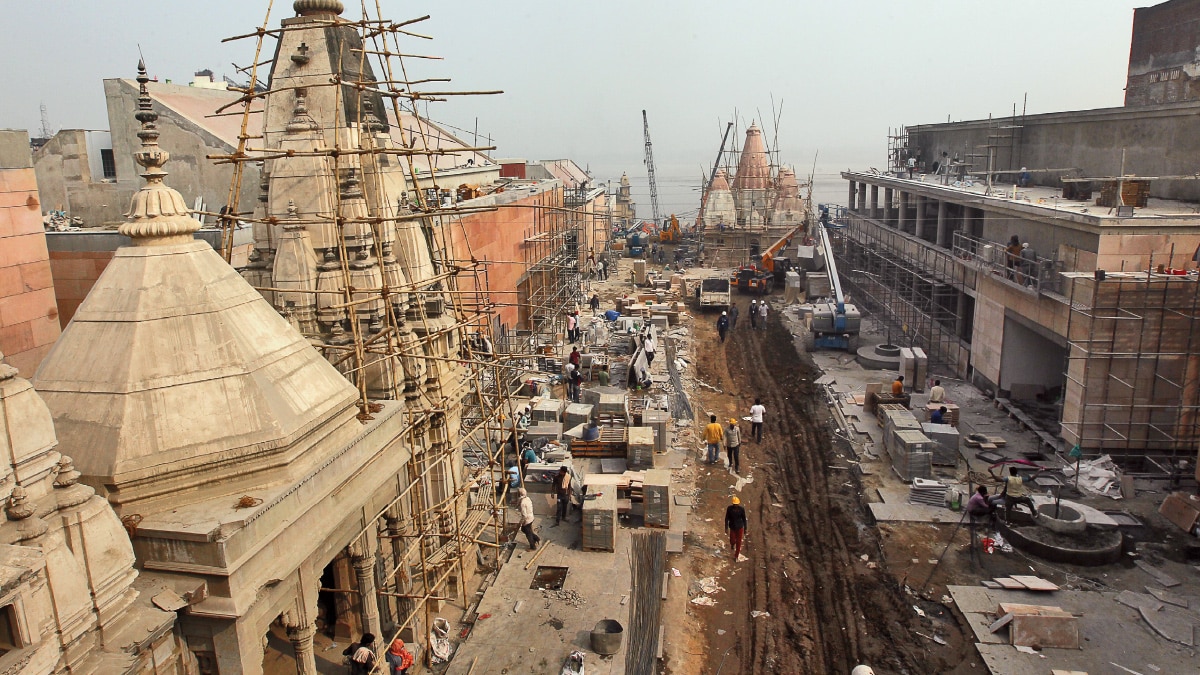
The scent hit first—jasmine and marigolds mixed with the earthy smell of the Ganga. Then came the sound: a river of chanting voices, temple bells, and street vendors calling out their wares, all blending into a single heartbeat. As I turned the corner from Vishwanath Gali, the narrow lane suddenly opened up, and there it was: Kashi Vishwanath Temple, pulsing with an energy that seemed to vibrate through the soles of my bare feet.
This wasn’t like any other famous temples I’d visited. In Varanasi, time doesn’t flow—it swirls. One moment you’re stepping over coiled electrical wires and dodging bicycles, the next you’re transported to another era by the sound of ancient mantras echoing off centuries-old walls. The air itself feels thick with devotion, like walking through liquid history.
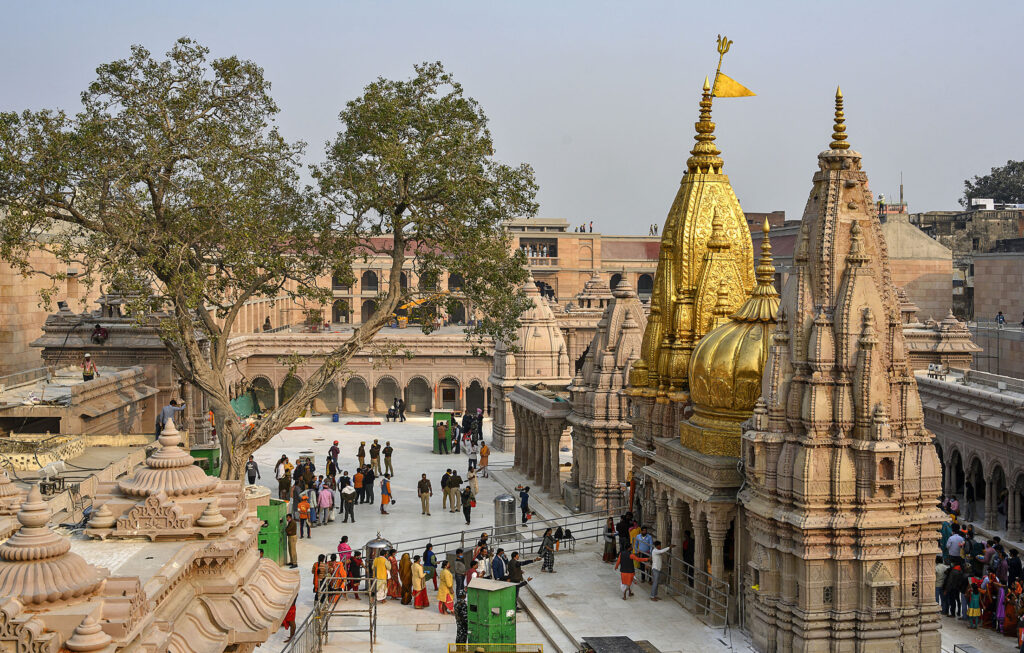
Most people think of Kashi Vishwanath as just another stop on a pilgrimage in India, but standing there with the cool marble beneath my feet, I realized this place operates on a different frequency. It’s not merely a temple; it’s the living, breathing heart of one of the world’s oldest continuously inhabited cities—a sacred space where the divine isn’t confined to stone but flows through every alley, every face, every ripple on the Ganga.
Kashi Vishwanath Temple Varanasi.
Kashi Vishwanath isn’t just a temple; it’s the physical manifestation of a cosmic story that’s been told for millennia. According to the Skanda Purana, Lord Shiva and Goddess Parvati were wandering the universe when they came to this spot on the banks of the Ganga. Shiva declared this place so sacred that even he would take the form of a lingam here—neither created nor destroyed, but eternally present.
What makes this Jyotirlinga unique is the legend of its indestructibility. When Brahma and Vishnu argued over who was supreme, Shiva appeared as an infinite pillar of light. When Brahma lied about finding its top, Shiva cursed him that he would have no temples dedicated to him on Earth. This very spot is where that cosmic pillar manifested as the Jyotirlinga—hence the name “Vishwanath,” meaning “Lord of the Universe.”
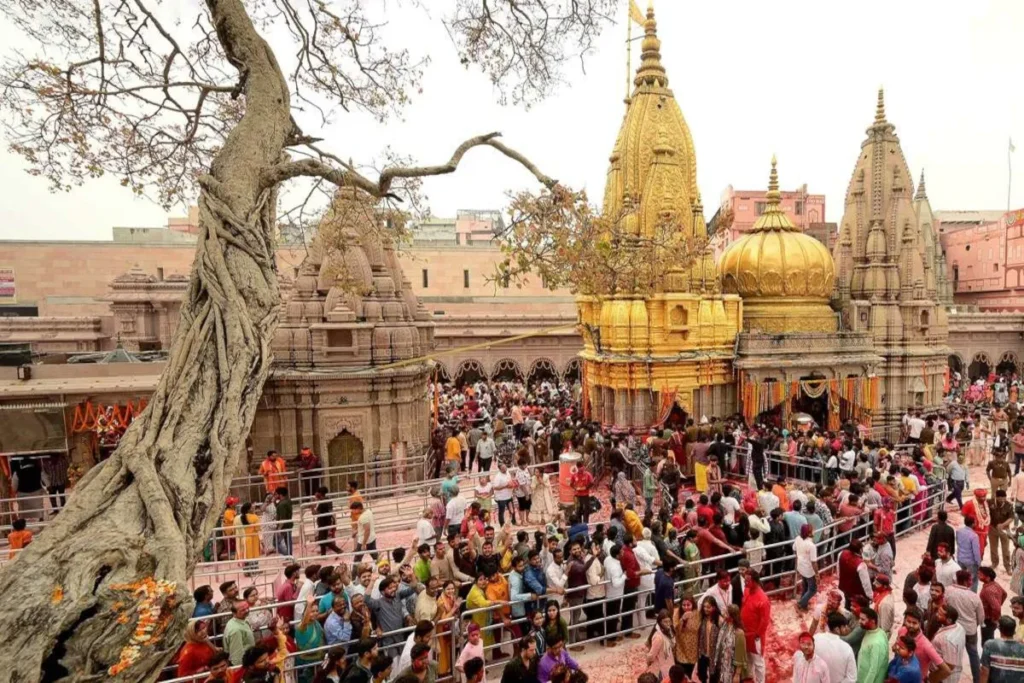
Standing before the sanctum, you can feel this legend in your bones. The temple isn’t just a building; it’s a living testament to Shiva’s promise that he would always remain in Kashi to guide souls toward liberation. Unlike other Jyotirlinga temples that feel like destinations, Kashi Vishwanath feels like a homecoming—a place where the divine doesn’t just reside but actively welcomes you.
A History Written in Ash and Marble
The story of Kashi Vishwanath is a story of resilience. Over the centuries, this sacred site has been destroyed and rebuilt not once, not twice, but seven times. Each time invaders came—whether in the 11th century by Qutb-ud-din Aibak, in the 15th century by Hussain Shah Sharqi, or most famously in 1669 by Aurangzeb—devotees returned to worship at the same spot, often with nothing more than a simple structure or even just an open space.
What most visitors don’t realize is that the current temple isn’t the original structure. The golden spire you see today was commissioned by Queen Ahilyabai Holkar of Indore in 1780, after the previous temple was destroyed. But the sanctum where the Jyotirlinga resides follows the same layout as temples that stood here for centuries before.
Walking through the complex, you can still see traces of this layered history. The black stone in certain areas dates back to the 11th century, while the intricate silver work in the main corridor was added in the 18th century. Every brick tells a story of devotion that refused to be extinguished—a powerful reminder that true spirituality can’t be destroyed by physical force.
The Living Rhythm of the Temple
What transforms Kashi Vishwanath from a historical site to a living spiritual ecosystem is its daily rhythm. The temple doesn’t follow clock time; it moves with the cosmic cycles that have governed Hindu practice for millennia.
At 3 AM, before most of the city is awake, the Bhandar Aarti begins—the ritual lighting of lamps in the sanctum. By 4 AM, the first chants rise with the dawn, mingling with the sound of the Ganga lapping against the ghats. As the sun rises, the temple comes fully alive—pilgrims streaming through the narrow lanes, priests preparing for the day’s rituals, the scent of sandalwood and incense growing stronger with each hour.
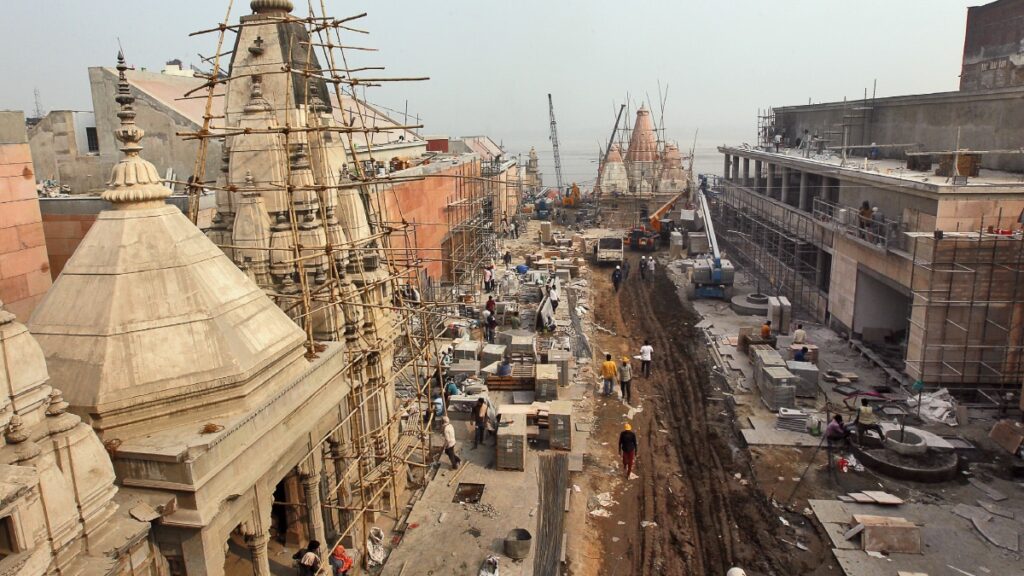
The real magic happens during the Sandhya Aarti at noon. The entire complex seems to vibrate with energy as hundreds of devotees gather for the synchronized chanting and lamp waving. The air fills with the scent of ghee lamps and the sound of conch shells, creating a multi-sensory experience that’s impossible to capture in photographs.
But the most profound moment for me came during the evening aarti, as the setting sun painted the Ganga in hues of gold and crimson. Standing on the steps of the Dashashwamedh Ghat, watching the temple illuminated against the darkening sky, I understood why this place has drawn seekers for thousands of years. It’s not just a ritual; it’s a conversation between the divine and the human that happens every single day, without fail.
The Silver Corridor: More Than Just a Pathway
Most visitors rush through the famous silver corridor that leads to the main sanctum, but this 50-meter passage is where Kashi Vishwanath’s soul truly resides. The corridor isn’t merely decorative—it’s a spiritual journey in itself, designed to prepare devotees for darshan (sacred viewing) of the Jyotirlinga.
The walls are covered in intricate silver panels depicting scenes from Hindu mythology, but what’s most striking is how the corridor narrows as you approach the sanctum. This deliberate design creates a sense of compression and release—physically mirroring the spiritual journey from worldly concerns to divine presence.
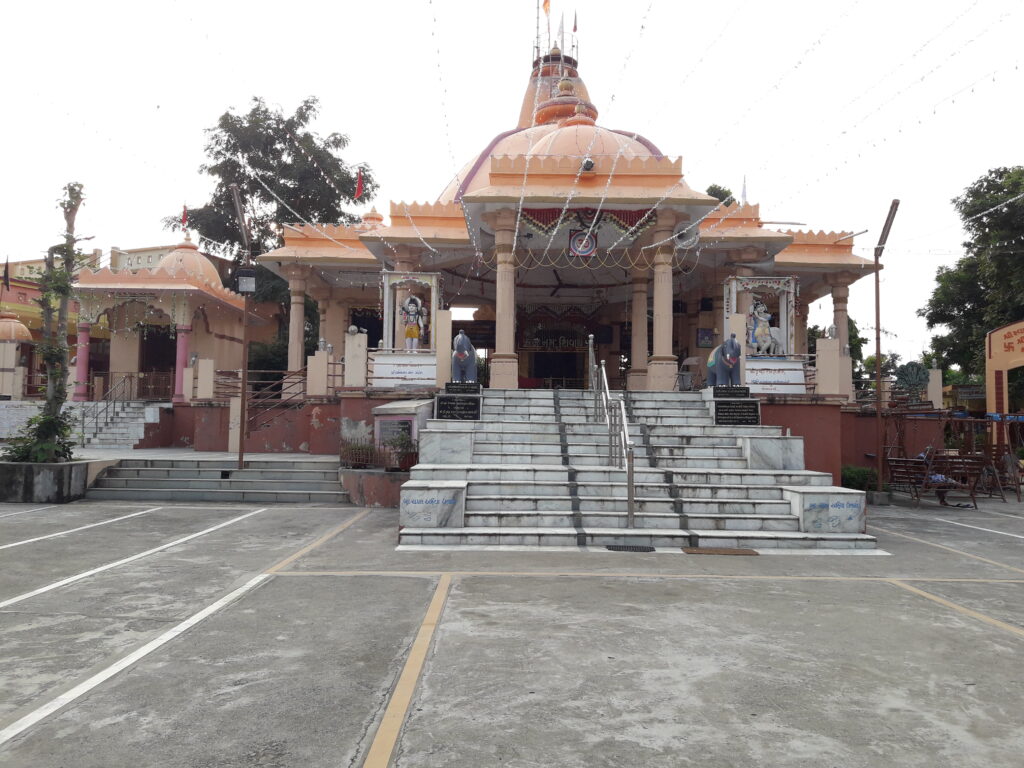
Walking through it for the first time, I noticed how the temperature drops, the noise of the outside world fades, and the scent of incense intensifies. The floor is worn smooth by centuries of bare feet, creating a natural path that guides you forward. In certain spots, the silver panels catch the light in such a way that they seem to glow from within—a subtle reminder that the divine light isn’t confined to the sanctum but permeates the entire journey.
What few visitors realize is that the corridor’s design follows ancient Vastu Shastra principles, aligning with cosmic energies. During certain astrological moments, light enters the corridor at precise angles, illuminating specific carvings that tell the story of Shiva’s cosmic dance. This isn’t just architecture; it’s a living mandala that guides your spiritual journey step by step.
The Ganga: The Liquid Manifestation of Divinity
Kashi Vishwanath isn’t complete without understanding its relationship to the Ganga. Unlike other famous temples that sit near rivers, here the river and temple are inseparable—two aspects of the same divine reality.
The Ganga isn’t just water here; it’s the physical manifestation of Goddess Ganga, who descended from heaven to Earth at Shiva’s request. Every ritual at Kashi Vishwanath incorporates Ganga water, from the daily abhishekam (ritual bathing of the lingam) to the simple act of washing hands before entering the complex.
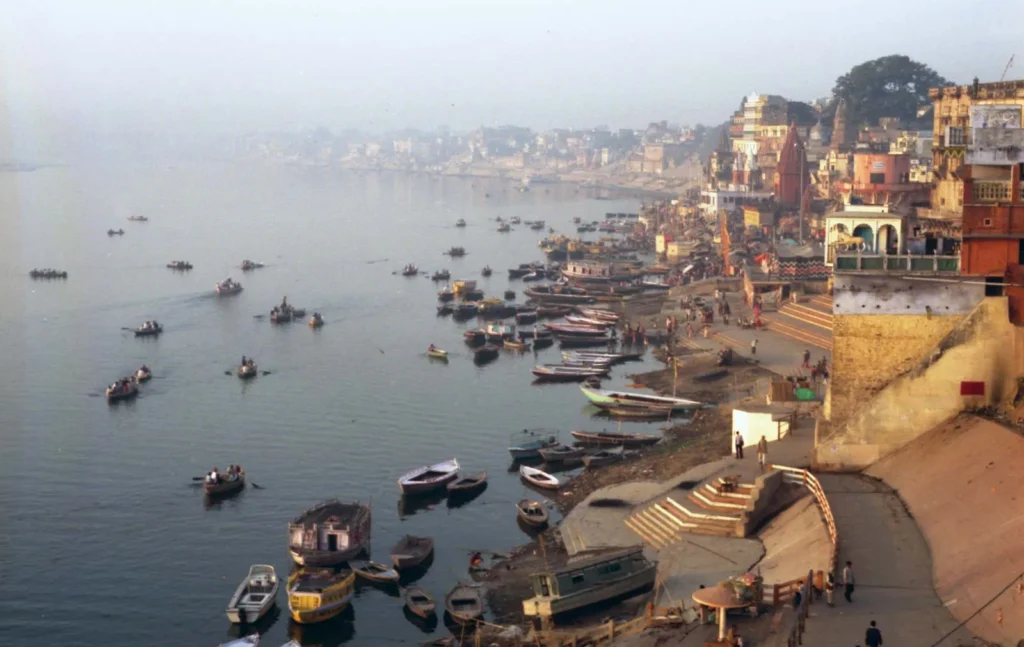
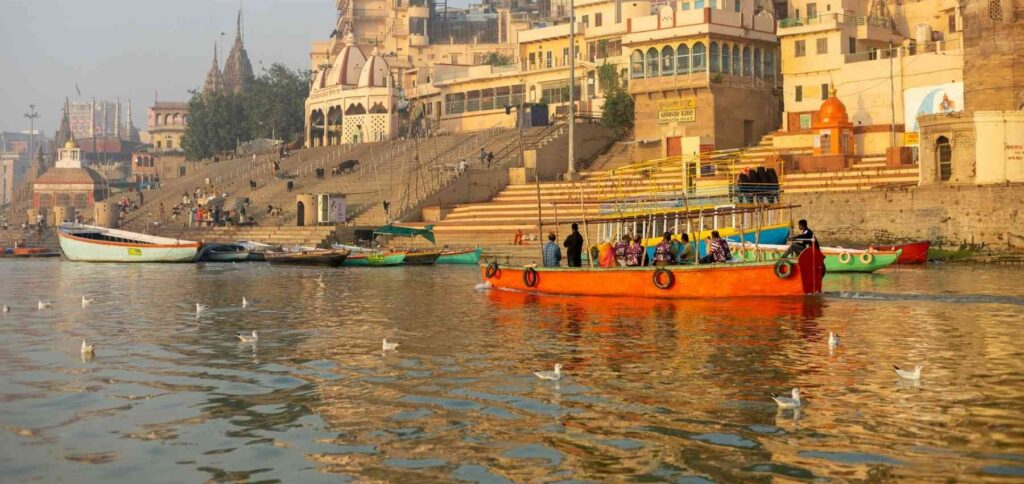
One morning, I joined the early risers at the Manikarnika Ghat, where the first light of dawn painted the water in golden hues. Watching pilgrims perform their rituals—the gentle splashing of water, the soft chanting, the offering of flowers—I understood why this river is considered sacred. It’s not just a body of water; it’s the liquid form of time itself, carrying souls from birth to death and beyond.
The most profound moment came when I floated on a boat at sunrise, watching the temple emerge from the morning mist. The reflection of the golden spire in the water created a perfect circle—a visual representation of the endless cycle of life, death, and rebirth that Kashi Vishwanath embodies. In that moment, the boundary between the physical and spiritual worlds dissolved completely.
The City as Temple: Varanasi Beyond the Walls
What makes Kashi Vishwanath unique among Jyotirlinga temples is that the entire city functions as an extension of the sacred space. Unlike other pilgrimage sites where the temple stands apart from the city, here the divine permeates every alley, every home, every business.
Walking the narrow lanes of the old city, you’ll find small shrines tucked between shops, prayer rooms above street-level stores, and entire neighborhoods dedicated to specific rituals. The city itself is laid out as a cosmic diagram, with the temple at its center and the ghats forming concentric circles around it.
One afternoon, I followed a group of pilgrims on the traditional parikrama (circumambulation) of the city. What began as a simple walk transformed into a spiritual journey as I passed:
- Small shrines to different forms of Shiva
- Ancient banyan trees considered sacred
- Hidden courtyards where sadhus meditate
- Street corners where impromptu chanting sessions break out
The most surprising discovery was how seamlessly daily life integrates with worship. Shopkeepers pause their businesses for quick prayers, students perform puja between classes, and families incorporate temple rituals into their morning routines. In Varanasi, spirituality isn’t confined to temple hours—it’s woven into the fabric of everyday existence.
The Night That Changed Everything
Most visitors leave by sunset, but staying past dark revealed a different dimension of Kashi Vishwanath. As the last tourists filed out, the temple transformed. The harsh fluorescent lights were turned off, replaced by traditional oil lamps that cast dancing shadows on the ancient walls.
Around 9 PM, the complex took on a different energy. The chanting continued, but at a slower, more meditative pace. The temperature dropped, carrying the scent of night-blooming jasmine from nearby gardens. Without the daytime crowds, the architecture revealed details I’d missed earlier—the way moonlight highlighted specific carvings, the subtle shifts in the temple’s energy as the night progressed.
The most profound experience came during the midnight ritual, when the main sanctum is closed to the public but priests perform special pujas for the deity. Standing in the outer courtyard, listening to the distant chanting and the occasional bell from the sanctum, I understood why people come here seeking transformation. The temple isn’t just a place to visit—it’s a space that changes you if you let it.
Lying on a thin mat in the temple courtyard that night, with the sound of the Ganga below and the temple bells above, I felt time itself slow down. The city’s usual chaos had given way to a deep, resonant silence that seemed to vibrate with ancient wisdom. This wasn’t just another stop on a spiritual journey; it was a direct encounter with eternity.
The Food That Feeds the Soul
Temple food in India varies widely, but the langar (community kitchen) at Kashi Vishwanath has a special character. What surprised me most was how the food connects to the spiritual energy of the place.
I spent a morning with the kitchen staff, who welcomed me despite my clumsy attempts to help. The head cook explained that everything served here comes from local farms along the Ganga: rice grown in the river silt, vegetables from nearby fields, and milk from cows that graze on sacred herbs.
“The food isn’t just nourishment,” she said as she stirred a massive pot of rice. “It’s prasad that carries the energy of this place.” She showed me how they prepare the special “Kashi Bhaat” (Varanasi rice) that’s unique to this temple—using water from the Ganga and special spices that have been used for centuries.
What moved me most was learning about the “Anna Daan” (food donation) tradition. Every day, the kitchen prepares extra food specifically for the sadhus and wandering seekers who have nothing. “Shiva is everyone’s god,” the cook explained. “Not just those who can afford to visit the temple.”
During my stay, I shared a meal with a group of pilgrims from different parts of India. As we ate with our hands (as is tradition), someone shared a story about how the temple’s food had sustained them during difficult times. “This isn’t just food,” they said. “It’s love made edible.”
The Hidden Layers: What Most Visitors Miss
Beyond the main temple complex lie layers of history and spirituality that most visitors overlook:
The Sound Garden
Behind the main temple, a small courtyard features stone pillars that produce different musical notes when struck. This ancient “temple of sound” demonstrates the connection between vibration, music, and spirituality in Hindu tradition. The pillars are tuned to specific frequencies believed to align with cosmic rhythms.
The Time Stones
In a rarely visited section of the temple, ancient stone markers track the movement of the sun and stars. These astronomical instruments, built into the temple architecture, show how the temple functions as both a place of worship and an observatory—connecting earthly rituals to cosmic events.
The Healing Courtyard
A small courtyard to the east of the main complex features medicinal plants used in traditional healing practices. For centuries, the temple has been a center of Ayurvedic medicine, with specific plants grown for ritual and medicinal purposes. The connection between physical and spiritual healing remains strong here.
The Whispering Walls
In certain parts of the temple, sound carries in unusual ways. Whisper in one spot, and your voice can be heard clearly 30 feet away. This acoustic phenomenon isn’t accidental—it’s part of the temple’s design, allowing priests to communicate during rituals without breaking concentration.
Practical Wisdom for Your Pilgrimage
Visiting Kashi Vishwanath requires more than just showing up—it’s an experience that demands preparation and respect:
Best Times to Visit
- Pre-dawn (3-5 AM): For the Bhandar Aarti ceremony
- Late morning (10 AM-12 PM): When the temple is less crowded
- Evening (5-7 PM): For the Sandhya Aarti ceremony
- Mondays and during Shravan month: For special rituals
What to Wear
- Traditional Indian clothing is preferred (dhoti/kurta for men, saree/salwar kameez for women)
- Shoulders and knees must be covered
- Remove all leather items (belts, wallets, etc.)
- Go barefoot inside the temple complex
Ritual Etiquette
- Silence is expected in the inner sanctum
- Photography is prohibited in many areas
- Offerings should be purchased from temple-approved vendors
- Follow the clockwise movement around the sanctum
Hidden Gems
- The rooftop at dawn offers panoramic views of the temple complex
- The eastern courtyard during full moon has special energy
- The small shrine to Nag Devta (serpent god) is believed to have healing properties
- The sound garden behind the main temple is most active in the early morning
What NOT to Do
- Don’t try to negotiate with sadhus (they don’t accept money for blessings)
- Don’t eat non-vegetarian food within 5 km of the temple (it’s considered disrespectful)
- Don’t rush through rituals—observe quietly before participating
- Don’t assume all areas are open (some shrines have restricted access during certain rituals)
The Spiritual Significance: Beyond Ritual
At its core, Kashi Vishwanath represents the understanding that liberation (moksha) isn’t something to be achieved after death, but a state of consciousness available in the present moment. In a world obsessed with future goals, this temple offers a different perspective: freedom is found not in escaping life, but in embracing its fullness.
The experience here transforms one’s relationship with life and death:
- Life: Not something to cling to, but to experience fully
- Death: Not something to fear, but to understand as part of the cycle
- Time: Not a linear progression, but a sacred river to be flowed with
This understanding manifests in subtle ways. Devotees don’t just come here to ask for blessings—they come to realign themselves with the cosmic rhythm. The temple teaches that true liberation comes not from escaping the cycle of birth and death, but from understanding one’s place within it.
The Living History: Destruction and Rebirth
Kashi Vishwanath’s history mirrors the cosmic cycles it represents—creation, preservation, and destruction. The temple has been destroyed and rebuilt multiple times:
- First destruction: By the army of Shakti ruler during the 7th century
- Second destruction: By the army of Qutb-ud-din Aibak in the 12th century
- Third destruction: By the army of Iltutmish in the 13th century
- Current structure: Built in the 18th century by Queen Ahilyabai Holkar
What’s remarkable isn’t just that the temple was rebuilt, but that the sacred site was never abandoned. Even when the stone structure was destroyed, devotees continued to worship at the location, often with simple structures or even just at the spot where the lingam had been. This continuity of devotion across centuries speaks to something deeper than architecture—it’s a testament to the unbroken thread of faith that connects generations.
The Modern Experience: Ancient Wisdom in Contemporary Times
In today’s fast-paced world, Kashi Vishwanath offers something increasingly rare—a space where time slows down. Despite the crowds, there’s a palpable sense of calm that permeates the temple complex. People move with purpose, not haste. Conversations happen in whispers, not shouts.
The temple has adapted to modern times while maintaining its essence:
- Digital queue systems manage the crowds without disrupting the sacred atmosphere
- Audio guides in multiple languages explain the rituals without breaking the silence
- Medical facilities serve pilgrims while respecting the spiritual environment
- Educational programs connect ancient wisdom to contemporary life
What’s most striking is how the temple serves as a bridge between generations. Elderly devotees sit side by side with young students, sharing the same space and the same devotion. The temple isn’t stuck in the past—it’s a living tradition that continues to evolve while maintaining its core essence.
The Inner Journey: What Kashi Vishwanath Teaches
More than any ritual or architectural detail, Kashi Vishwanath offers profound lessons about existence itself:
The Eternal Present
Standing before the Jyotirlinga, one understands that past and future dissolve, leaving only the eternal present—a taste of the timelessness that lies beyond time.
Unity in Diversity
The continuous flow of diverse devotees through the sacred space teaches that beneath our differences, we share the same longing for connection to something greater than ourselves.
The Sacredness of Impermanence
The constant cycle of birth, death, and rebirth witnessed at the ghats reminds us that change isn’t something to fear but to embrace as part of the divine rhythm.
The Interconnectedness of All Life
From the Ganga that nourishes the land to the pilgrims who travel from across India, Kashi Vishwanath teaches that everything is connected in the web of existence.
Final Reflections: Carrying Kashi Within
Leaving Kashi Vishwanath isn’t like leaving other places. The temple doesn’t stay behind as a memory—it becomes part of you. The rhythm of the chants continues in your heart, the cool marble beneath your feet lingers in your bones, and the scent of incense remains in your clothes long after you’ve left.
What stays with you isn’t just the beauty of the architecture or the intensity of the rituals, but a deeper understanding: that sacred spaces aren’t just locations on a map, but living landscapes that shape how we experience the divine. Kashi Vishwanath teaches that spirituality isn’t confined to temples—it flows through rivers, permeates cities, and pulses in the rhythm of daily life.
As the last glimpse of the golden spire disappears behind the city streets, you realize something profound: Kashi Vishwanath isn’t just a place you visit. It’s a state of being that you carry within you—a reminder that beneath the surface of daily life, the eternal pulse of the divine continues, steady and sure.
The real pilgrimage doesn’t end when you leave Varanasi. It begins when you return to your everyday life, carrying the temple’s rhythm in your heart, seeing the sacred not just in temples, but in the flow of ordinary moments. The city that never sleeps becomes the awareness that never sleeps within you—a constant reminder of the divine presence that permeates everything.

One thought on “Kashi Vishwanath Temple Varanasi – Jyotirlinga Darshan, History & Timings”