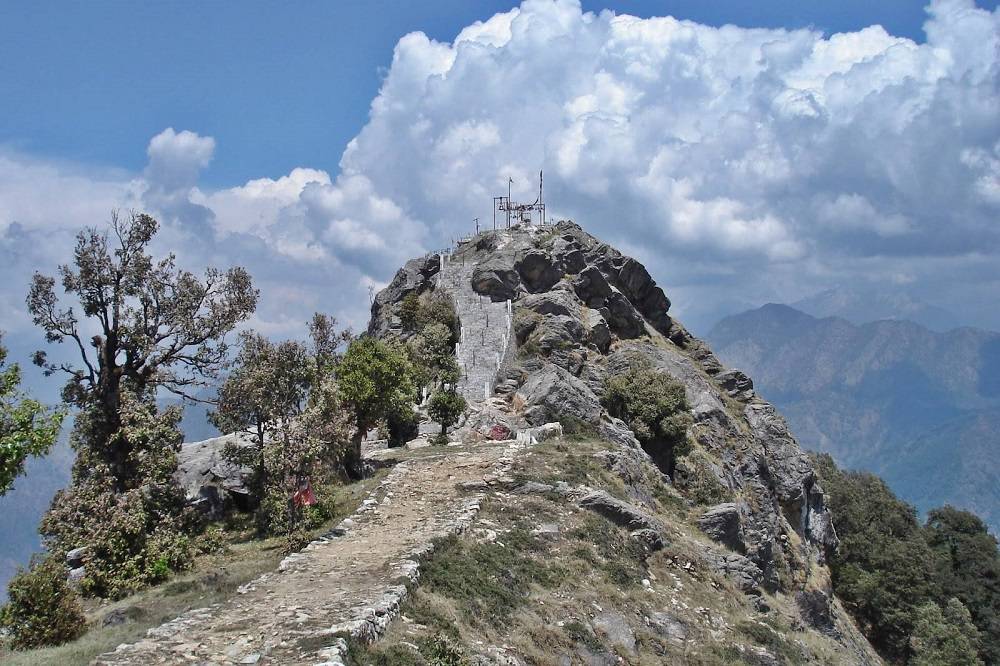
Nestled high in the serene and majestic Garhwal Himalayas of Uttarakhand, the Kartik Swami Temple is more than just a place of worship; it is a profound spiritual destination, a thrilling trekking experience, and a vantage point offering some of the most spectacular, uninterrupted 360-degree views of the colossal snow-clad peaks. Dedicated to Lord Kartikeya, the elder son of Lord Shiva, this secluded shrine stands as a testament to deep devotion, filial piety, and the raw, untamed beauty of the ‘Devbhoomi’ the Land of Gods.
The Sanctity of Kronch Parvat: Abode of the Warrior God
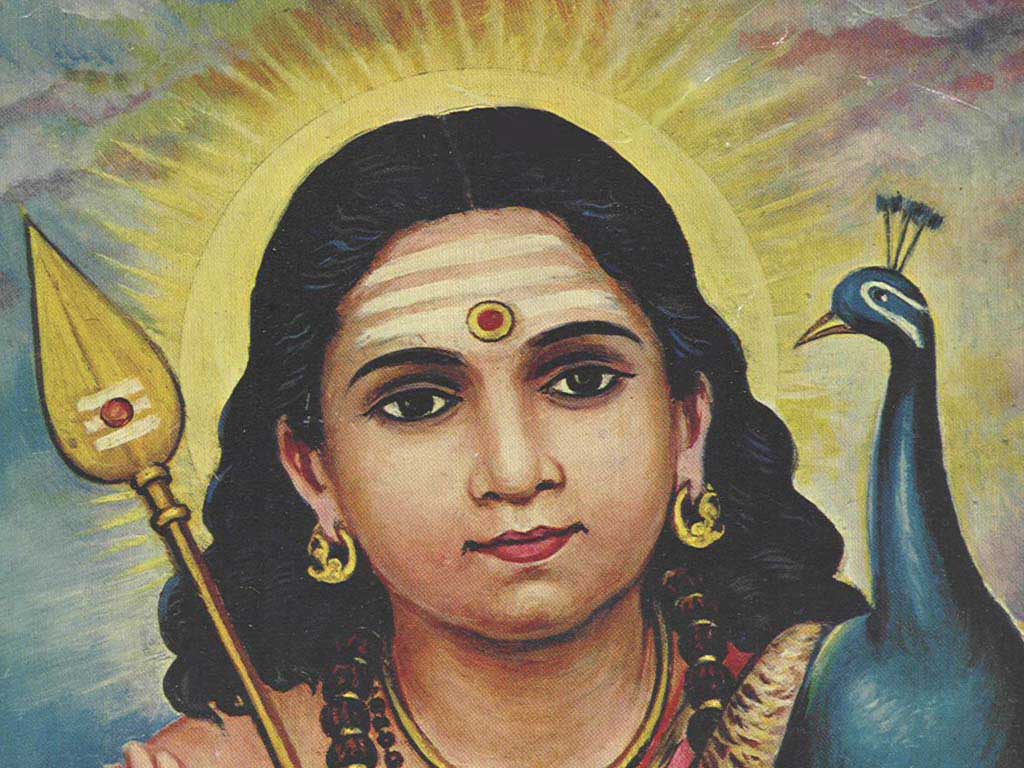
Perched precariously at an altitude of approximately 3,050 meters (10,007 feet) atop the Kronch Parvat, the Kartik Swami Temple is unique. It holds the distinction of being arguably the only major temple in North India dedicated to Lord Kartikeya, a deity otherwise overwhelmingly revered as Murugan, Skanda, or Subramanya primarily in the Southern states of India.
The very location of the temple on a narrow ridge that plunges into deep valleys on all sides lends it an aura of mystique and profound isolation. To reach this divine sanctuary is to undertake a pilgrimage not just of the body, but of the soul, traversing a path that seems to dissolve into the clouds.
The Mythological Genesis: A Tale of Renunciation and Devotion
The rich history of the Kartik Swami Temple is inextricably linked to a foundational and poignant legend from Hindu mythology, explaining why Lord Kartikeya chose this remote Himalayan peak as his abode and why he is worshipped here in a unique form.
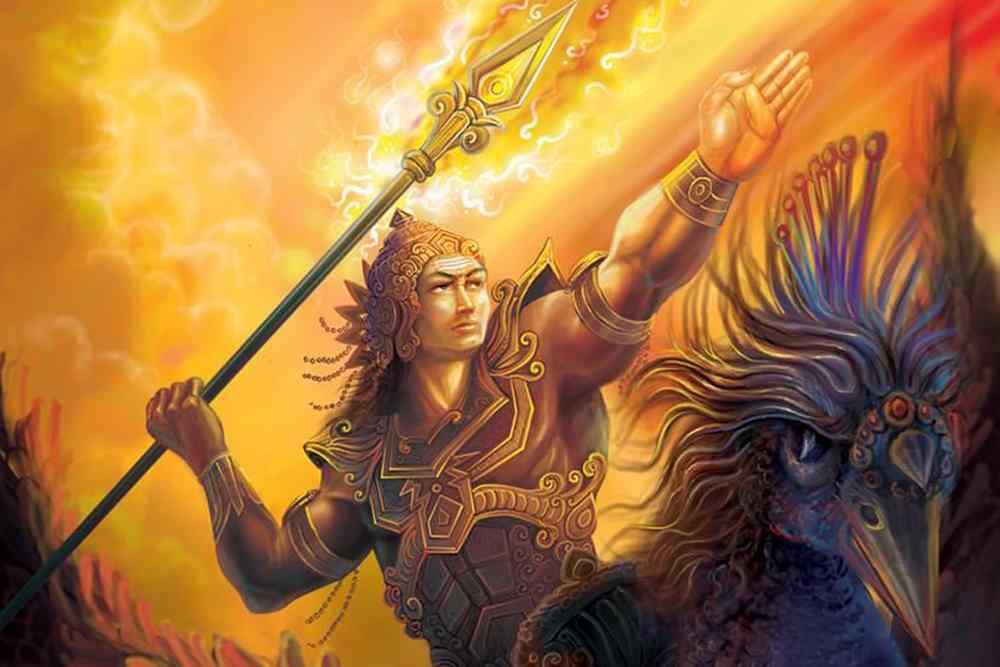
The Puranic narrative recounts a famous divine contest set forth by the parents, Lord Shiva and Goddess Parvati, for their two sons, Kartikeya and Ganesha. A celestial ‘fruit of knowledge’ (often depicted as a mango, or Gnana Palam) was offered as a prize to the son who could first complete seven circumambulations of the universe.
- Kartikeya’s Expedition: Lord Kartikeya, swift, energetic, and a master warrior, immediately mounted his vahana (vehicle), the peacock, and set off on the challenging, long journey across the cosmos. His journey was a literal adherence to the parental decree.
- Ganesha’s Wisdom: Lord Ganesha, known for his sagacity and intellect, stood for a moment of contemplation. He then simply proceeded to circumambulate his parents, Lord Shiva and Goddess Parvati, seven times. When questioned, Ganesha declared that for him, his parents were the entire universe, and therefore, circling them was equivalent to circling the cosmos.
- The Result and Renunciation: Impressed by Ganesha’s profound wisdom and philosophical interpretation, Lord Shiva declared him the winner and granted him the privilege of being worshipped first among all deities a tradition followed to this day.
- The Sacrifice at Kronch Parvat: Upon his arduous return, Kartikeya was enraged and felt a deep sense of injustice. Yet, his anger quickly transformed into a powerful, selfless act of reverence for his parents. In a magnificent gesture of absolute submission and devotion, he is said to have renounced his physical self at this very peak, offering his flesh to his mother Parvati and his bones to his father Shiva.
The temple, therefore, does not enshrine a conventional human-like statue, but a naturally carved idol on a marble-type rock (often described as black stone) which is locally believed to represent his consecrated bones. This act of profound sacrifice makes the Kartik Swami Temple a powerful symbol of filial piety, selflessness, and ultimate devotion in the face of perceived failure.
The Architectural Simplicity and Spiritual Vibrancy
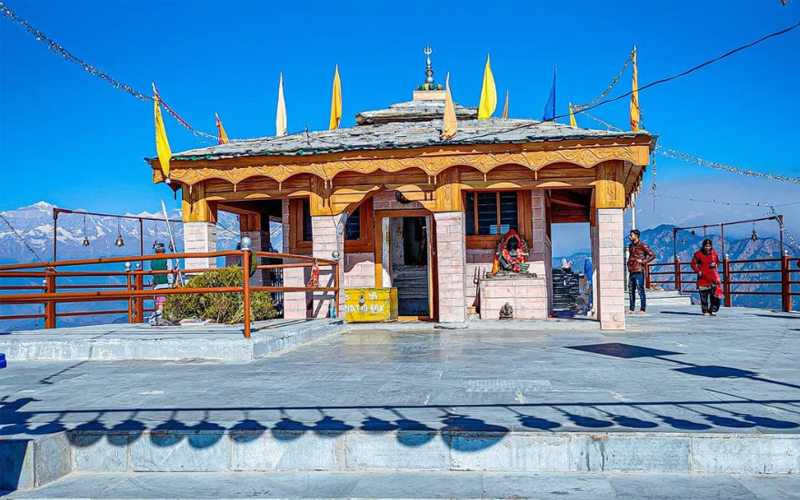
Unlike the grandiose structures often found in the plains, the architecture of the Kartik Swami Temple is characterized by a charming, traditional Garhwali simplicity that harmonizes with its austere mountain setting.
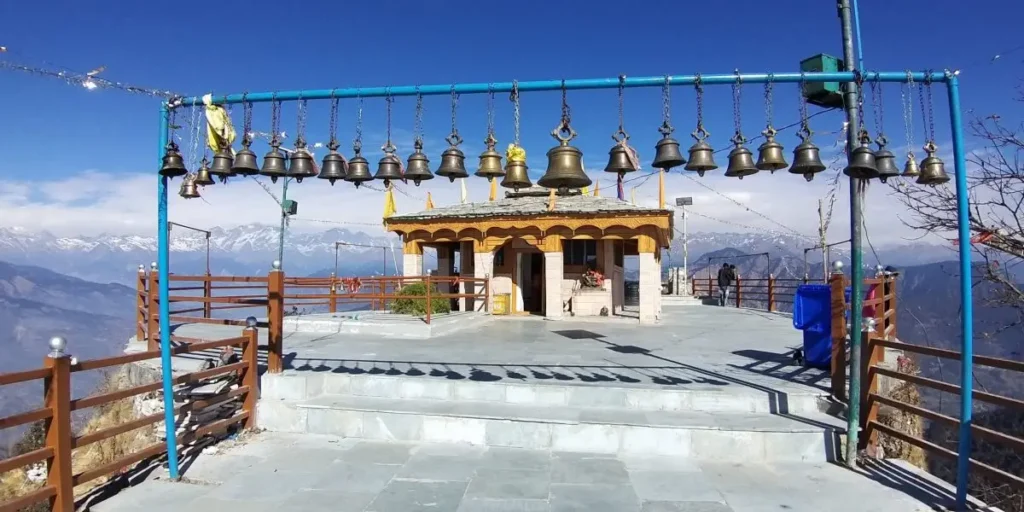
- Structure: Primarily constructed of local stone and wood, the temple features a modest sanctum (Garbgriha) that houses the sacred idol. Its architecture is functional, built to withstand the harsh Himalayan climate.
- The Bells of Devotion: A strikingly unique feature of the temple complex is the presence of hundreds of bells of varying sizes and shapes, hanging from the iron fencing and structures surrounding the main shrine. It is a deeply cherished local tradition for devotees to offer a bell upon the fulfillment of a wish. The collective, dulcet sound of these bells, particularly during the Sandhya Aarti (evening prayer), is believed to carry the pilgrims’ prayers across the valleys, and can reportedly be heard from great distances.
- The Sandhya Aarti: The evening aarti at Kartik Swami is a genuinely transcendent experience. Against the backdrop of a setting sun painting the Himalayan peaks in hues of orange and gold, the rhythmic chanting of mantras and the resonant tolling of the countless bells create a powerful, otherworldly atmosphere that deeply spiritualizes the visitor.
The Kartik Swami Trek: A Journey to the Sky
The temple’s isolated location ensures that a visit is always a rewarding adventure, primarily accessible through a well-defined and scenic trek.
The Route and Difficulty
The journey to Kartik Swami Temple begins from the quaint, picturesque Kanakchauri village, situated on the Rudraprayag-Pokhari road in the Rudraprayag district.
- Trek Distance and Duration: The trek is an easy to moderate 3-kilometer (approximately 2 miles) climb from Kanakchauri. It typically takes about 1.5 to 2 hours to ascend and slightly less to descend, making it easily manageable as a day trip. The final approach involves climbing a flight of approximately 380 stone steps leading directly to the temple complex.
- The Trail: The path is overwhelmingly enchanting, winding through a dense forest of rhododendron (Burans), oak, and deodar trees. Depending on the season, the trail is either carpeted in red and pink rhododendron blossoms (March/April) or shrouded in thick, dewy greenery (Monsoon/Post-Monsoon). The crisp mountain air and the possibility of spotting diverse Himalayan birdlife, including the Himalayan Monal Pheasant and various eagles, add layers to the experience.
The Himalayan Panorama: A 360-Degree Spectacle
The true reward for the short yet steep climb is the unparalleled view from the summit. The temple ridge acts as a perfect natural observatory, offering a breathtaking, 360-degree panoramic vista of the major Garhwal Himalayan peaks. On a clear day, the horizon is dominated by:
- Chaukhamba Peak: A magnificent massif with four prominent summits.
- Kedarnath Dome: The majestic peak overlooking the revered Kedarnath shrine.
- Trishul: Named after Lord Shiva’s trident, a trio of towering peaks.
- Nanda Devi: India’s second-highest mountain and a deeply sacred peak.
- Neelkanth, Bandarpunch, Meru & Sumeru: An awe-inspiring array of other famous, snow-covered titans.
The views of Sunrise and Sunset from this vantage point are world-renowned. The sight of the first or last rays of the sun slowly painting the colossal white peaks is often cited as a spiritual moment of profound beauty and clarity.
Festivals and Spiritual Significance
The religious calendar at Kartik Swami is marked by deep devotion, drawing pilgrims from across the region, especially during the major festivals dedicated to Lord Kartikeya.
- Kartik Purnima: The most important festival, falling on the full moon day of the Hindu month of Kartik (usually October/November). This day is celebrated as the birth anniversary of Lord Kartikeya (Kartik Jayanti). A grand fair is often held, and worship on this day is believed to bestow blessings of ethics, patience, and intelligence.
- Kartik Swami Fair (Kalash Yatra): An 11-day-long religious congregation held annually in the month of June. It involves elaborate rituals, including a Mahayagya (grand fire sacrifice) and the chanting of the Shiv Mahapuran Katha, making it a period of intense spiritual fervor.
The spiritual significance extends beyond the main festivals. Devotees believe that sincere prayers offered here help in overcoming obstacles, providing strength and courage (attributes of the Warrior God), and fulfilling the desire for progeny, particularly for couples seeking children.
A Travel and Stay Guide for the Pilgrim/Trekker
Best Time to Visit
The temple is generally accessible year-round, but the best time for a clear, comfortable experience is:
- Summer (April to June): Pleasant weather, lush rhododendron blooms, and clear skies.
- Autumn (October to November): Ideal time for trekking. Crystal-clear weather offers the most magnificent, unobstructed views of the snow-clad Himalayan ranges.
- Winter (December to February): Extremely cold with occasional snowfall. While the views are stunning, the trek can be challenging, and preparation must be meticulous.
How to Reach
- By Air: The nearest airport is Jolly Grant Airport (DED) in Dehradun, approximately 222 km away. From there, one must travel by road to Rudraprayag and then to Kanakchauri.
- By Rail: The nearest major railheads are Rishikesh (approx. 205 km) and Haridwar (approx. 287 km). Taxis and buses are easily available to Rudraprayag.
- By Road: Kartik Swami is approximately 40 km from Rudraprayag on the Rudraprayag-Pokhari route. The last motorable road ends at Kanakchauri village. Regular buses and shared taxis ply this route.
Accommodation
Accommodation options are limited, adding to the remote charm:
- Kanakchauri Village: The base village offers a few basic guest houses and homestays, providing an authentic taste of Garhwali village life.
- Rudraprayag: For more comfortable hotel options, one can stay in Rudraprayag town and drive to Kanakchauri early in the morning for the trek.
Frequenlty Asked Questions (FAQ)
Where is Kartik Swami Temple located?
Kartik Swami Temple is located about 38 km from Rudraprayag in Uttarakhand, near Kanak Chauri village at an altitude of around 3,050 meters. It offers stunning views of the snow-clad Garhwal Himalayas.
Who is Kartik Swami and why is this temple dedicated to him?
The temple is dedicated to Lord Kartikeya, the elder son of Lord Shiva and Goddess Parvati. According to legend, Lord Kartikeya offered his bones to his father as a symbol of devotion, and the temple enshrines his bones in stone form.
How can I reach Kartik Swami Temple?
By Road: From Rudraprayag, drive about 33 km to Kanak Chauri village, then trek 3–4 km uphill to the temple.
By Air: Nearest airport is Jolly Grant Airport, Dehradun (around 200 km).
By Rail: Nearest railway station is Rishikesh (about 180 km).
What is the difficulty level of the Kartik Swami Temple trek?
The trek is moderate, about 3 km one way from Kanak Chauri. The trail is well-marked through pine forests and offers breathtaking sunrise and sunset views.
What is the best time to visit Kartik Swami Temple?
The best time to visit is from March to June and October to December, when the weather is clear and views of the Himalayas are spectacular. Avoid monsoon months due to slippery trails.
Are there accommodations near Kartik Swami Temple?
Yes, you can find basic lodges and homestays in Kanak Chauri or stay at Rudraprayag where better hotels are available. Camping is also an option near the trek base.
What are the nearby attractions to Kartik Swami Temple?
Nearby attractions include Rudraprayag Sangam, Ukhimath, Chopta, Tungnath Temple, and Kalimath, all within short driving distance.
Why should travelers visit Kartik Swami Temple?
The temple offers a perfect mix of spiritual peace, natural beauty, and adventure. The 360° Himalayan panorama from the top is among the finest in Uttarakhand, making it ideal for both devotees and trekkers.