
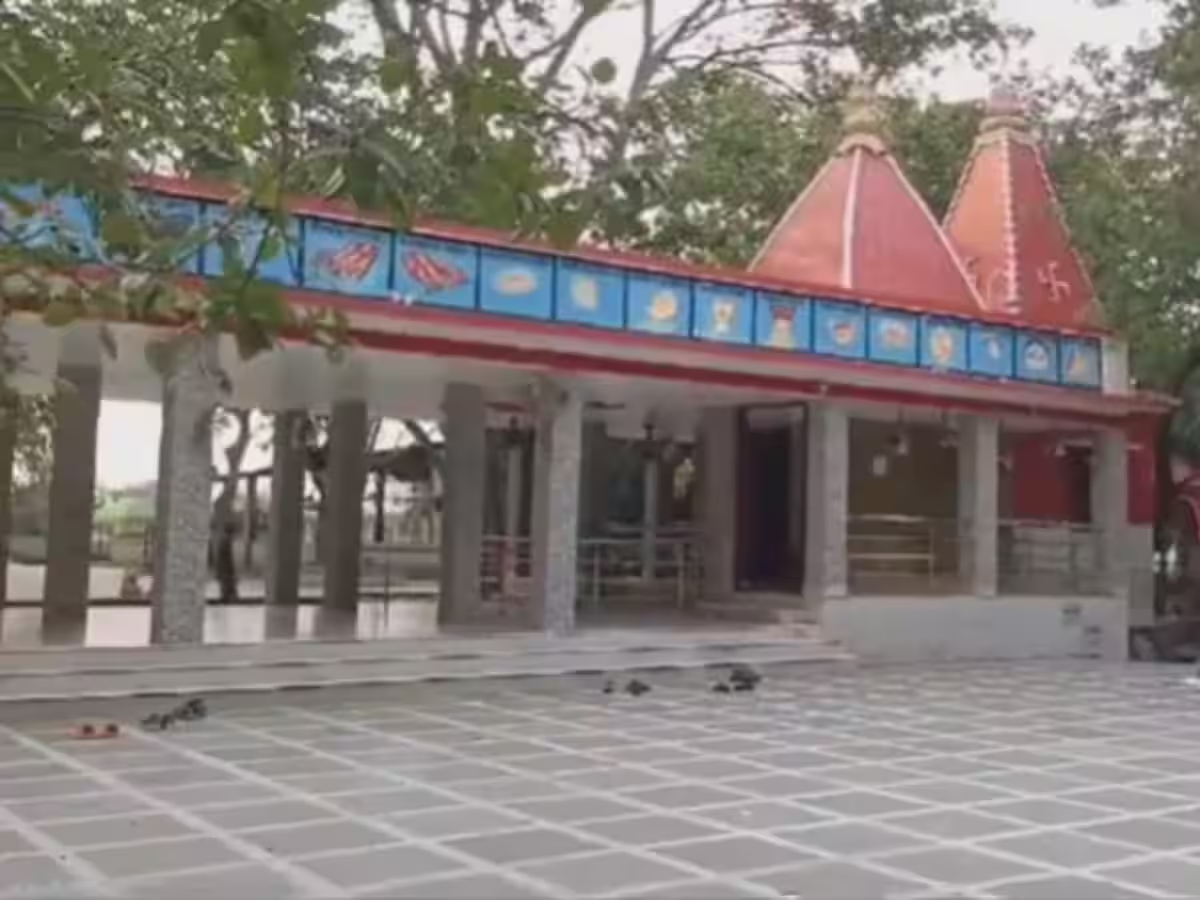
The sacred sanctuary of the Kankalitala Temple in Birbhum, West Bengal, stands as one of the most revered and enigmatic of the 51 Shakti Peethas spread across the Indian subcontinent. It is a place where mythology, history, and spiritual devotion intertwine, drawing pilgrims and travelers alike to the tranquil banks of the Kopai River. Unlike the grandiosity of many major pilgrimage sites, Kankalitala embodies a compelling simplicity, a quiet spiritual intensity that speaks volumes of the deep-rooted faith in the Divine Mother.
The Mythological Heart: Origin as a Shakti Peetha
The profound sanctity of Kankalitala is rooted in the timeless Hindu mythology surrounding the death of Goddess Sati and the cosmic dance of Lord Shiva. The legend, common to all Shakti Peethas, begins with the Daksha Yagna, a grand sacrificial ritual organized by King Daksha Prajapati, Sati’s father. Out of deep-seated animosity, Daksha deliberately insulted Lord Shiva, Sati’s husband, by not inviting him. Unable to bear the humiliation of her beloved spouse, Sati immolated herself in the sacrificial fire.
Consumed by grief and rage, Lord Shiva carried Sati’s charred corpse across the cosmos, performing the devastating Tandava, the dance of destruction, which threatened to unravel the universe. To save creation, Lord Vishnu intervened, using his Sudarshan Chakra to dismember Sati’s body into 51 pieces, which then fell to earth in various locations.
At the hallowed spot now known as Kankalitala, it is believed that the waist or pelvic bones of Goddess Sati fell. The name itself is derived from the Bengali word ‘Kankal’ (কঙ্কাল), meaning skeleton or bone. The tremendous force of the falling body part is said to have created a deep depression in the earth, which subsequently filled with water, forming the sacred Kund or pond that is the primary focus of veneration today. The Goddess in this Peetha is known as Devgarbha (the essence of the Goddess), and the accompanying Bhairava (Lord Shiva) is worshipped as Ruru.

The Soul of the Temple: Architecture and the Sacred Kund
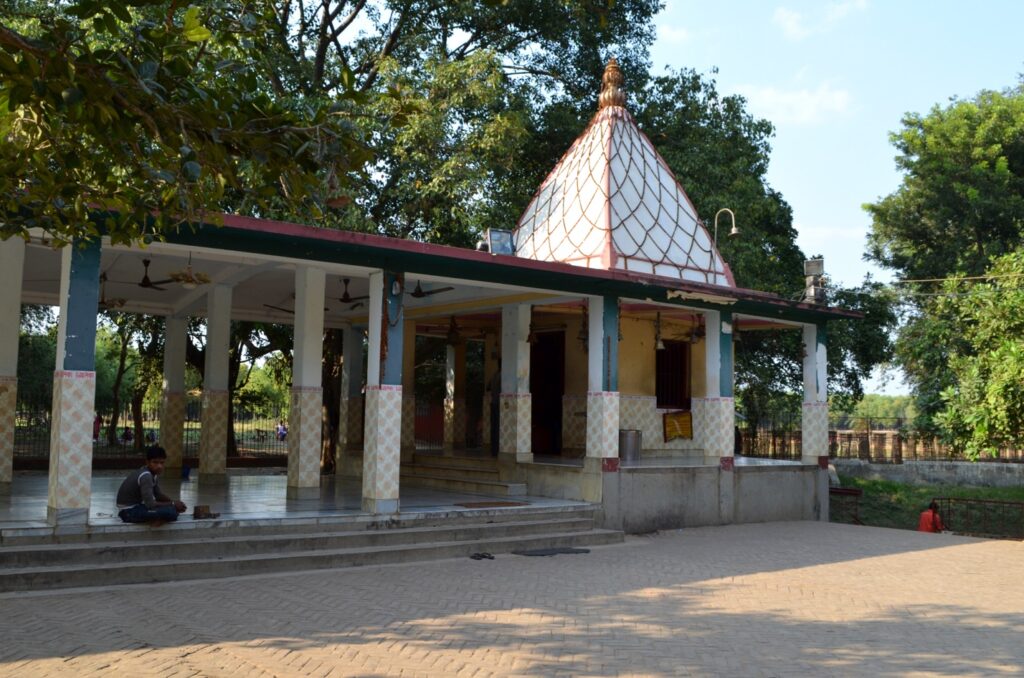
The architecture of the Kankalitala Temple complex is notably modest, a stark contrast to the elaborately carved structures of many other major temples. This simplicity, however, only enhances its spiritual allure. The main temple is a small, unadorned structure, typically featuring a pyramidal roof capped by a metallic spire, housing the sanctum or garbhagriha.
Absence of a Traditional Idol: One of the most unique aspects of Kankalitala is the absence of a three-dimensional stone, clay, or metal idol of the Goddess. Instead, the main shrine features a framed Patachitra painting or a portrait of Goddess Kali standing atop Lord Shiva. She is worshipped here as Goddess Kankali, a form that is often conflated with Kali due to the visual representation and the nature of the Shakti (power).
The Sacred Kund – The True Deity: The ultimate sacred object, and arguably the true form of the Goddess at Kankalitala, is the sacred Kund or pond located adjacent to the main temple. It is a shallow, square-shaped water body. It is strongly believed that the kankal (waist/pelvic bones) of Sati Devi are still submerged beneath the water in this pond. This Kund, and the remains it holds, is the central point of pilgrimage. Devotees often touch the water to their foreheads, seeking the Goddess’s blessings. Local folklore also suggests a mystical connection between this Kund and the sacred Manikarnika Ghat in Kashi (Varanasi), implying that the water is perennially replenished from that holy source.
Ruru Bhairava Temple: Near the entrance of the complex is the dedicated shrine to Lord Shiva, the Ruru Bhairava or Shambhu Baba. Historically, this temple housed a massive Shiva Lingam. However, a local legend recounts the destructive zeal of a 16th-century Muslim General, Kala Pahar (literally “Black Mountain”), who was notorious for destroying Hindu shrines. It is said he shattered the upward base of the great Swayambhu Shiva Lingam. Even today, the broken Lingam is partially buried, and devotees pour water and offerings into the pit, a poignant reminder of the site’s tumultuous past.
Other Elements: The temple complex also features a Nat Mandir (a raised, roofed platform) where devotees sit for prayer and viewing the main shrine. A sacred tree stands nearby, where pilgrims engage in an ancient practice of tying red threads and small stones, often praying for wishes related to childbirth or health, and returning to untie the knots upon fulfillment. Adding to the mystical atmosphere, a cremation ground (Harikath) is also located within the temple premises, a characteristic often associated with powerful Tantrik (esoteric) sites of the Mother Goddess.
Rituals, Timings, and the Local Ethos
The rhythm of life at Kankalitala is dictated by its daily rituals and seasonal festivals, adhering to the age-old customs of a Shakti Peetha.
Daily Rituals and Timings:
- Darshan Hours: The temple generally welcomes devotees from 6:00 AM to 8:00 PM (with slight variations and a possible brief closing in the afternoon). It is advisable to check local timings for the day of the visit.
- Aarti and Puja: Morning Mangala Aarti is performed around 5:00 AM, followed by daily worship (Nitya Puja). Evening Sandhya Aarti takes place around 6:30 PM.
- Unique Worship Style: Kankalitala is known for a notable lack of a rigid panda (formal priest) system compared to other major temples. Devotees are often permitted to perform their own personal pujas (worship) at the Kund, fostering a deeply personal spiritual connection.
- Anna Bhog: A rice-based offering (Anna Bhog) is prepared and offered to the Goddess daily at noon, which is later distributed as prasad to the devotees.
Festivals: The temple comes alive during major Hindu festivals, particularly those dedicated to the Mother Goddess and Lord Shiva.
- Durga Puja/Navratri: This is the most significant period, celebrated with immense fervor, special Tantrik rituals, and large gatherings.
- Kali Puja/Diwali: Another auspicious time for elaborate worship and ceremonies.
- Shivaratri: Dedicated to Ruru Bhairava, the consort of the Goddess.
- Shravan: The holy month dedicated to Lord Shiva sees the arrival of Kanwariyas who pour sacred water on the deities.
- Amavasya (New Moon) and Purnima (Full Moon): These days are particularly auspicious for Tantrik practices and special prayers.
Cultural and Spiritual Significance: The temple’s location near Santiniketan, the cultural-academic hub founded by Rabindranath Tagore, lends it an atmosphere of natural serenity. The surrounding landscape, particularly the Kopai River, provides a peaceful backdrop for contemplation and prayer. Devotees visit the temple to seek various blessings, including salvation (Moksha), prosperity, good health, and inner strength, believing the Peetha to be one of the most powerful embodiments of the Divine Feminine energy.
A Guide to Visiting Kankalitala Temple
Kankalitala is relatively easy to access, situated about 9–10 kilometers from Bolpur-Santiniketan, in the Birbhum district of West Bengal.
How to Reach:
- By Air: The nearest major airport is Netaji Subhas Chandra Bose International Airport (CCU) in Kolkata (approximately 170 km away). From Kolkata, one can take a train or hire a taxi.
- By Rail: The most convenient railway station is Bolpur Shantiniketan (BHP), which is well-connected to Kolkata (Howrah and Sealdah) and other major cities in West Bengal and India.
- By Road: Kankalitala is accessible via the Bolpur-Labhpur road. From Bolpur, local transportation is readily available:
- Auto-Rickshaws/Totos (Electric Rickshaws): These are the most common and convenient way to reach the temple from Bolpur, taking about 30 minutes.
- Buses: Local buses plying the Bolpur to Labpur route pass through Kankalitala.
- Taxis/Cabs: Hired cars offer a more comfortable and direct journey.
Visitor’s Tips:
- Best Time to Visit: The winter months (October to March) are ideal for comfortable travel, avoiding the intense heat and humidity of the summer. The periods during Navratri and Durga Puja are the most spiritually vibrant but also the most crowded.
- Dress Code: While there is no strict dress code, modest attire is always recommended out of respect for the sanctity of the temple.
- Facilities: The area around the temple complex features small shops selling offerings (puja samagri), flowers, and souvenirs. Parking facilities are usually available.
- Nearby Attractions: Kankalitala is perfectly located to be combined with a visit to the cultural town of Santiniketan, including the Visva Bharati University campus and the Tagore Museum. The region is also home to other nearby Shakti Peethas like Fullara (where Sati’s lips fell) and Bahula (where Sati’s left arm fell), making Birbhum a crucial circuit for Shakti worshippers.
Fequently Asked Questions (FAQ’S)
Where is Kankalitala Temple located?
It is located near Bolpur in Birbhum district, West Bengal, about 9 km from Santiniketan.
Why is Kankalitala Temple famous?
It is one of the 51 Shakti Peethas where Goddess Sati’s waist is believed to have fallen.
Which goddess is worshipped at Kankalitala Temple?
The temple is dedicated to Maa Kankaleshwari, a form of Goddess Parvati.
What is the best time to visit Kankalitala Temple?
October to February is ideal, with special festivals like Navratri and Durga Puja attracting devotees.
What are nearby attractions?
Nearby attractions include Santiniketan, Visva Bharati University, and Kopai River, making it a great spiritual and cultural trip.

One thought on “Kankalitala Temple Birbhum – Famous Shakti Peetha Near Bolpur, West Bengal”