
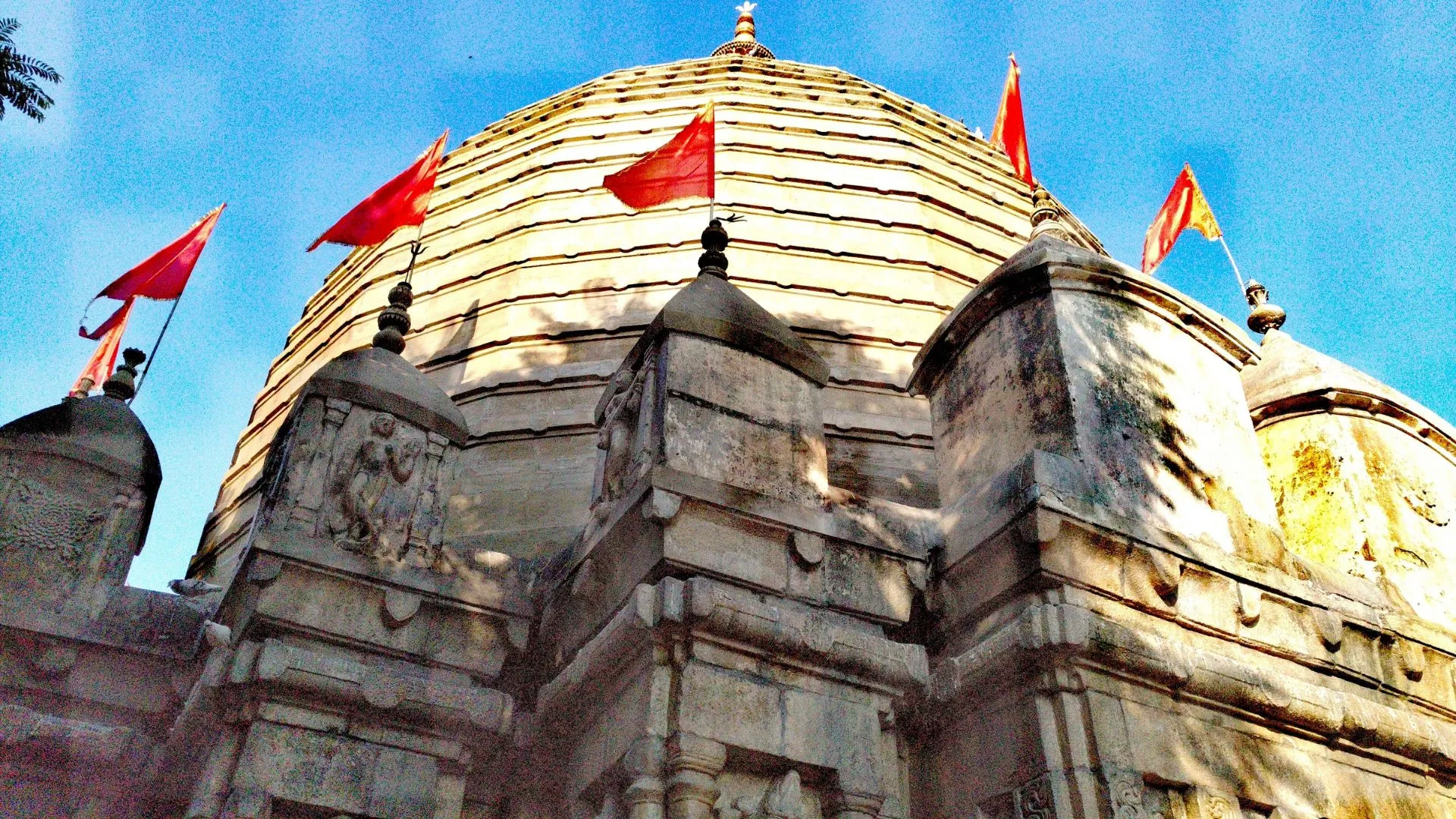
Nestled on the Nilachal Hill in Guwahati, Assam, the Kamakhya Temple is one of the most powerful and unique places of worship in India. Unlike most temples, it does not house an idol of the goddess. Instead, devotees worship a natural stone formation that represents the yoni or womb, symbolizing feminine energy, fertility, and the cycle of creation.
The temple is not only a Shakti Peetha but also a sacred space for both devotees of the goddess and Tantric practitioners. Over the centuries, Kamakhya has stood as a spiritual center, where rituals, legends, and cultural traditions merge into a fascinating religious experience.
This article will take you deep into the history, mythology, rituals, architecture, festivals, and travel details of Kamakhya Temple, so you can truly understand why it holds such a unique place in Indian spirituality.

The Mythological Significance of Kamakhya
The story of Kamakhya Temple is rooted in the legend of Goddess Sati and Lord Shiva. According to Hindu mythology, when Goddess Sati immolated herself during Daksha’s yajna, Lord Shiva was devastated. He carried her body across the universe in grief, and Lord Vishnu cut it into pieces with his Sudarshan Chakra to calm Shiva. These body parts fell in different places across the Indian subcontinent, creating the 51 Shakti Peethas.
At Kamakhya, it is believed that the yoni (womb) of Sati fell. This made the site an extraordinary seat of Shakti worship, where the divine feminine principle of fertility and creation is revered. Unlike most temples where idols are worshipped, Kamakhya’s sanctum is a dark cave where a stone shaped like a yoni is covered with red cloth and constantly bathed by a natural spring. This symbolism makes Kamakhya unlike any other temple in India.

Historical Journey of the Temple
The earliest references to Kamakhya go back to ancient texts such as the Kalika Purana and Yogini Tantra, both of which establish the temple as one of the most important centers of Tantric worship.
Over the centuries, the temple faced invasions and destruction. It was reconstructed in the 17th century by King Nara Narayan and his brother Chilarai of the Koch dynasty, whose contributions gave the temple its current form. The blend of indigenous Assamese architectural elements with shikhara-style structures makes it distinct.
Later, during the Ahom rule in Assam, the temple gained even more prominence and patronage. Since then, Kamakhya has remained not just a religious site but also a cultural landmark for the Assamese people.
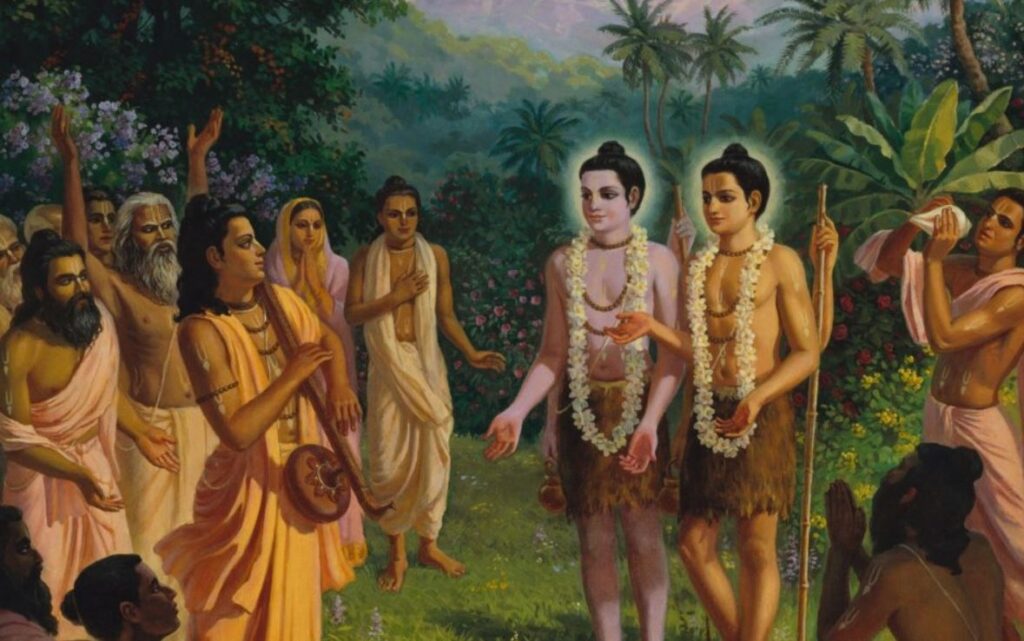
Unique Religious Practices and Beliefs
Worship of the Yoni
Unlike other Shakti Peethas, Kamakhya Temple emphasizes the worship of the womb or yoni. Devotees believe that this symbolizes the creative force of the universe. The sanctum, located underground, houses the stone structure bathed by an eternal spring, making it a living symbol of fertility.
Ambubachi Mela – The Menstruation of the Goddess
Perhaps the most famous ritual of Kamakhya is the Ambubachi Mela, celebrated every year in June. During this time, it is believed that the goddess undergoes her annual menstrual cycle. The temple is closed for three days, symbolizing rest for the goddess. On the fourth day, it reopens, and thousands of devotees gather to seek blessings. This festival celebrates womanhood, fertility, and the natural cycles of life.
Tantric Practices
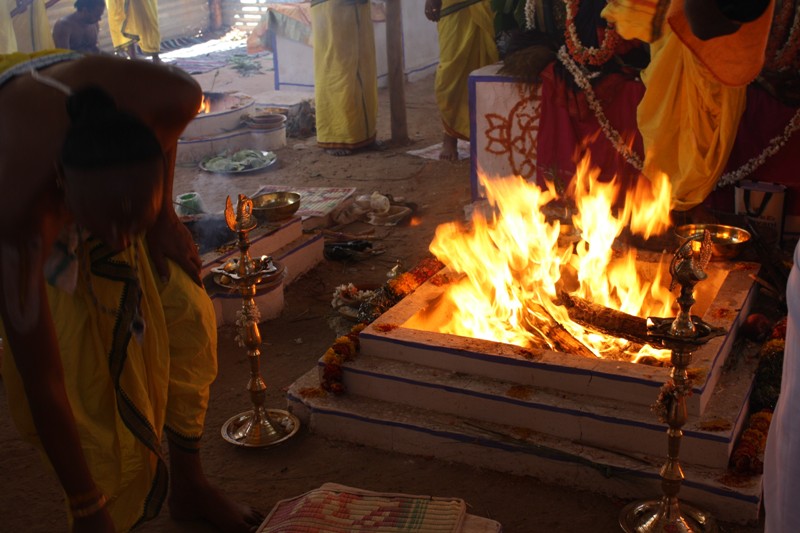
Kamakhya is one of the few temples in India where Tantric rituals are openly practiced. Tantric practitioners believe the temple is the most powerful seat of Shakti. Rituals here often include offerings of red flowers, vermillion, and animal sacrifices, which are believed to appease the goddess.
Architectural Marvel of Kamakhya Temple
The temple complex is an architectural blend of Nagara style shikhara and indigenous Assamese designs.
- The Shikhara (Spire): The main dome is shaped like a beehive and surrounded by smaller domes, creating a grand silhouette against the Nilachal Hill backdrop.
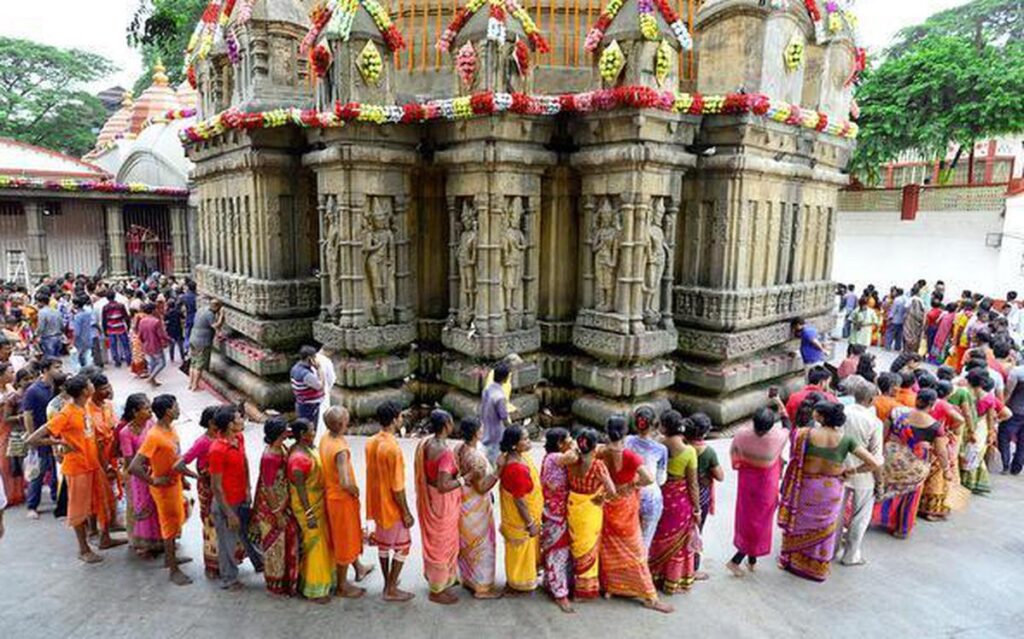
- Sculpted Panels: The walls of the temple are decorated with intricate carvings depicting gods, goddesses, flowers, and mythical creatures.
- The Sanctum Sanctorum: The sanctum is a cave accessed by narrow steps, dimly lit and filled with an aura of deep devotion. Here, the sacred stone formation is worshipped.
- Temple Complex: Kamakhya is not a single temple but a group of shrines dedicated to different forms of the goddess, including Kali, Tara, Bhairavi, Chinnamasta, and Tripura Sundari.
This architectural and spiritual fusion makes Kamakhya a site of both artistic and religious wonder.
Festivals at Kamakhya
1. Ambubachi Mela
- The most important festival, celebrated in June.
- Attracts lakhs of devotees, including sadhus from across India.
- Symbolizes the menstruation of the goddess and celebrates fertility.

2. Durga Puja
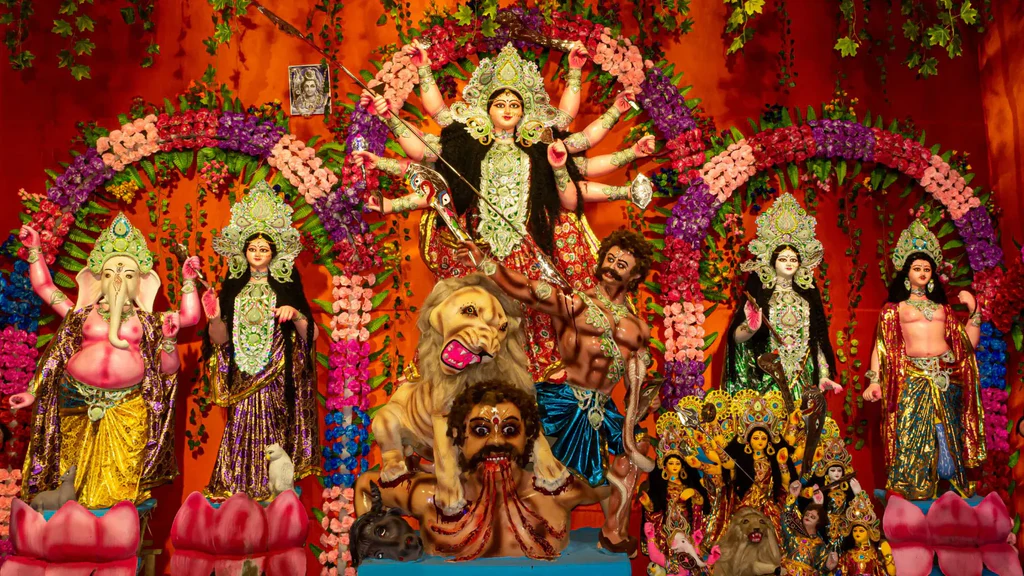
Like elsewhere in India, Durga Puja is celebrated with grandeur, with special rituals honoring the goddess as Mahishasura Mardini.
3. Manasha Puja and Kumari Puja
Other regional festivals are also celebrated, highlighting Assam’s blend of spirituality and culture.

Why Kamakhya is Unique
- It is one of the few temples in the world that celebrates menstruation as sacred.
- The absence of an idol makes it different from most Hindu temples.
- It is a central hub for Tantric traditions, attracting practitioners from India and Nepal.
- The temple blends mythology, ritual, and cultural traditions into one powerful experience.
Location and Setting
The Kamakhya Temple is located on Nilachal Hill in Guwahati, about 8 kilometers west of the city center. Standing at an elevation of nearly 800 feet above sea level, the temple offers panoramic views of the Brahmaputra River and the surrounding valleys. The spiritual aura of the temple, combined with the natural beauty of its location, makes it a powerful destination for both devotees and travelers.

How to Reach Kamakhya Temple
By Air
The nearest airport is Lokpriya Gopinath Bordoloi International Airport in Guwahati, approximately 20 kilometers away. The airport is well-connected to major Indian cities like Delhi, Mumbai, Kolkata, and Bengaluru. From the airport, taxis and app-based cabs are easily available.

By Rail
Guwahati Railway Station is the closest major station, located just 7 kilometers from the temple. It connects Assam to almost all parts of India. From the station, local taxis, buses, and autos take visitors directly to the base of Nilachal Hill.

By Road
Guwahati is well-connected by national highways. Regular buses, tourist coaches, and shared vehicles operate within the city and from nearby states. From the city center, it’s a short drive up to the temple.
Temple Timings
The temple follows specific opening hours that every visitor should keep in mind:
- Morning: 8:00 AM – 1:00 PM
- Afternoon Break: 1:00 PM – 2:30 PM
- Evening: 2:30 PM – 5:30 PM
During festivals like Ambubachi Mela, timings may change, and queues can be very long. Arriving early morning is highly recommended.
Best Time to Visit Kamakhya Temple
- October to March: Pleasant weather, ideal for sightseeing and temple visits.
- April to May: Warm but manageable. A good time for those who prefer fewer crowds.
- June: For devotees, this is the month of the Ambubachi Mela, the grandest event of Kamakhya. But it also means huge crowds, long queues, and high demand for accommodation.
- July to September: Monsoon months; the temple remains open, but heavy rains can make travel challenging.
The Pilgrimage Experience
Visiting Kamakhya Temple is not just about sightseeing; it is an intense spiritual journey.
- The Climb: Pilgrims often climb up Nilachal Hill on foot as an act of devotion, though vehicles can go up to the temple gates.
- The Queue: Expect long queues, especially on weekends and during festivals. The line moves slowly because entry into the sanctum is limited.
- The Sanctum: The descent into the dark cave where the stone yoni is worshipped is a deeply moving experience. Many devotees describe it as one of the most powerful spiritual encounters of their life.
- Offerings: Devotees usually offer red flowers, vermillion, coconuts, and cloth. Goats are sometimes sacrificed, especially during Tantric rituals.
Travel Tips for Visitors
- Start Early: Arrive as early as possible to avoid long queues.
- Footwear: Comfortable footwear is necessary for climbing steps, but remember they must be removed before entering the temple.
- Dress Code: Modest attire is recommended. White or red clothing is commonly worn by devotees.
- Accommodation: During Ambubachi Mela, book hotels at least a month in advance. Guwahati has a wide range of budget to luxury stays.
- Guides: Hiring a local guide can help in understanding the rituals and legends better.
- Respect Traditions: Photography inside the sanctum is not allowed. Maintain silence and respect during rituals.
Beyond the Temple – Other Attractions Nearby
Visiting Kamakhya Temple can be combined with exploring Guwahati and nearby attractions:
- Umananda Temple: Situated on Peacock Island in the Brahmaputra River.
- Assam State Museum: Offers insights into Assamese culture and history.
- Navagraha Temple: Dedicated to the nine planets, another important spiritual site.
- Kaziranga National Park: A few hours away, famous for the one-horned rhinoceros.
This blend of spirituality, culture, and nature makes a Kamakhya trip even more rewarding.
Cultural Impact of Kamakhya Temple
Kamakhya is not just a temple—it is a cultural institution. Its annual Ambubachi Mela transforms Guwahati into a global hub of spiritual seekers, Tantric practitioners, and tourists. The temple plays a vital role in preserving Assamese traditions, rituals, and art.
It also challenges conventional views by celebrating menstruation as sacred and divine. In a society where menstruation is often stigmatized, Kamakhya stands as a bold cultural statement, highlighting the sanctity of the natural processes of womanhood.
FAQs
1. Why is Kamakhya Temple famous?
Kamakhya Temple is one of the 51 Shakti Peethas, dedicated to Goddess Kamakhya, symbolizing divine feminine power.
2. Where is Kamakhya Temple located?
It is located on Nilachal Hill in Guwahati, Assam.
3. What is Ambubachi Mela at Kamakhya Temple?
It’s an annual festival celebrating the Goddess’s fertility, held every June, attracting thousands of devotees.
4. What are the temple timings?
Generally, the temple opens from 8:00 AM to 1:00 PM and 2:30 PM to 5:30 PM.
5. Is there an idol of Goddess Kamakhya?
No, the temple worships a yoni-shaped stone fed by a natural spring, symbolizing creative energy.
6. How can I reach Kamakhya Temple?
The temple is about 7–8 km from Guwahati Railway Station and 20 km from the airport.
7. What is the best time to visit Kamakhya Temple?
October to March is ideal, but June is special for the Ambubachi Mela.
8. Is photography allowed inside Kamakhya Temple?
Photography is restricted inside the sanctum but allowed in temple premises.
9. Do I need to register for visiting during Ambubachi Mela?
No, but you should expect large crowds and long queues.
10. Are senior citizen facilities available?
Yes, there are resting areas and assistance for senior devotees.

One thought on “Kamakhya Temple Assam – History, Timings & Festivals”