
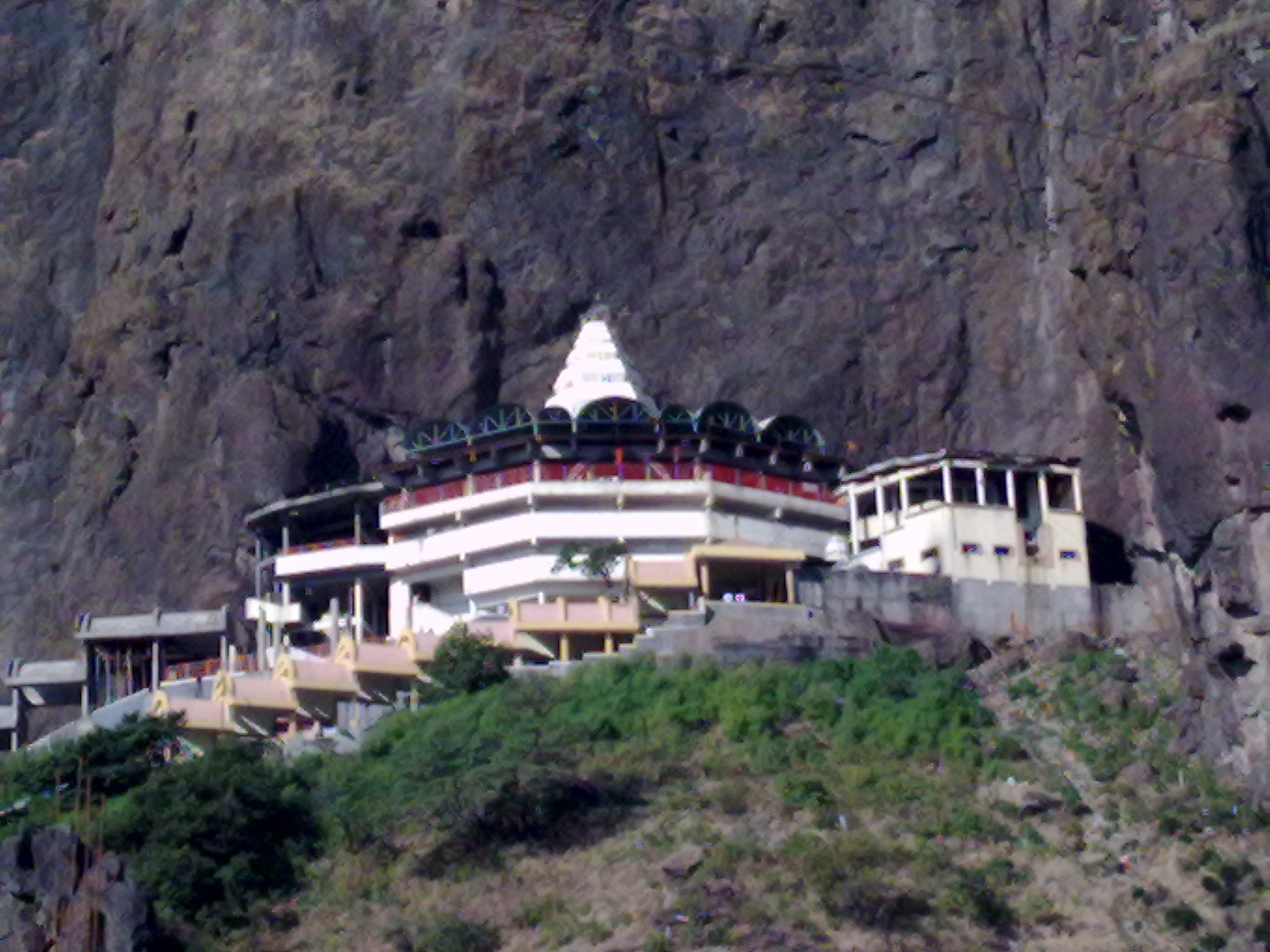
The Saptashrungi Devi Temple, nestled amidst the breathtaking seven peaks of the Sahyadri range near Nashik, Maharashtra, is one of the most powerful and revered pilgrimage sites in India. It is primarily known as Janasthan Shakti Peeth, a place steeped in profound mythology, where the divine energy of the Mother Goddess, Shakti, is believed to be eternally present. The journey to the temple is not just a visit, but a spiritual and physical ascent to the abode of the goddess, providing a profound connection with both divinity and nature.
The Sacred Mythology and History
The history of the Janasthan Shakti Peeth, more popularly known as Saptashrungi, is intrinsically linked to the grand narratives of Hindu mythology, specifically the epic tale of Sati’s self-immolation and the subsequent creation of the 51 Shakti Peethas.
The Origin: Sati’s Sacrifice and the ‘Chin’ (or Arm)
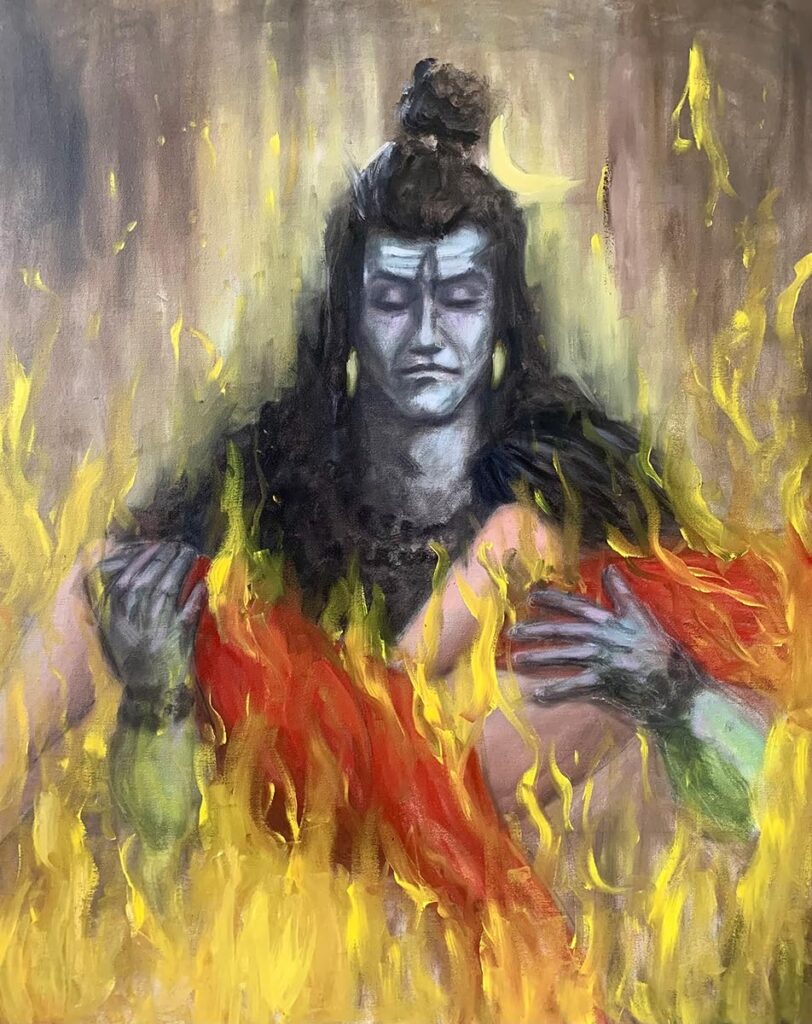
The most significant mythological basis for Janasthan is its status as a Shakti Peetha. The legend states that Sati, the first wife of Lord Shiva, self-immolated at the Yajna (sacrificial fire) of her father, King Daksha, unable to bear the insult to her husband. Grief-stricken, Lord Shiva carried her lifeless body across the universe in a destructive frenzy known as the Tandava. To restore cosmic order, Lord Vishnu used his Sudarshan Chakra to dismember Sati’s body.
According to various Puranas and local traditions, the pieces of Sati’s body fell at 51 different spots, which became the sacred Shakti Peethas. At Janasthan, it is believed that Sati’s ‘Chin’ (or Chibuka in Sanskrit) fell, which is why the Devi is locally known as Bhramari or Chibuka. However, other strong traditions and sources, including those that designate it as one of the three-and-a-half Shakti Peethas of Maharashtra, suggest that her Right Arm (or a limb of the right arm) fell here.
The consort of the Goddess (Shiva’s manifestation) at this Peetha is known as Vikrakatakkha or Vriktaksh (one with crooked eyes), also sometimes referred to as Sarvasiddhish.
The Mahishasura Mardini Legend
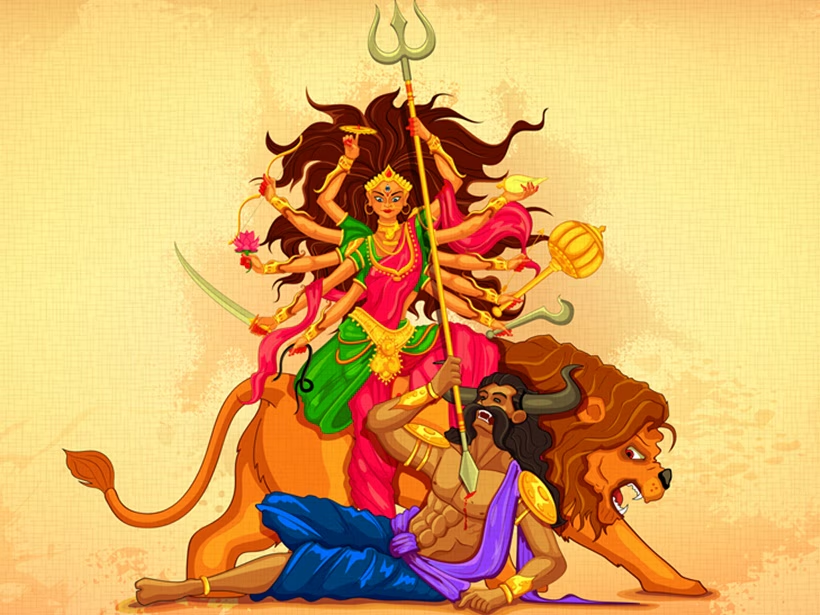
Beyond the Shakti Peetha narrative, Saptashrungi is overwhelmingly identified with the form of Mahishasura Mardini the slayer of the Buffalo Demon, Mahishasura.
Legend holds that the demon Mahishasura had obtained a boon of invincibility from any man or god, allowing him to wreak havoc across the three worlds. The combined powers of all the Gods manifested as the magnificent Goddess Durga to vanquish him. It is at the Saptashrungi hills that the fierce battle took place, and the Goddess, in her eighteen-armed form, successfully slew the demon. This act earned her the title Saptashrungi Nivasini (She who resides on the seven peaks) and Mahishasura Mardini. To commemorate this victory, a stone image of a buffalo’s head, representing the slain demon, is situated at the foot of the hill, marking the start of the ascent.
The Ramayana Connection and Sage Markandeya
The region of Nashik, particularly the area historically known as Janasthan, holds great significance in the Ramayana. This was part of the ancient Dandakaranya forest where Lord Rama, Goddess Sita, and Lord Lakshmana spent part of their exile. It is said that they came to these hills to pray to the Goddess and seek her blessings. Furthermore, when Lakshmana was unconscious in the war, the Saptashrungi hills are believed to be the area from which Lord Hanuman gathered the life-restoring medicinal herbs (Sanjeevani).
Near Saptashrungi is a hill named after the ancient Sage Markandeya, a devout worshipper of the Devi. The sage is believed to have performed his tapasya (meditation) in a cave here, reciting the Puranas to the Goddess.
The Temple and the Deity: An Architectural and Divine Marvel
The Saptashrungi Garh (Fort)
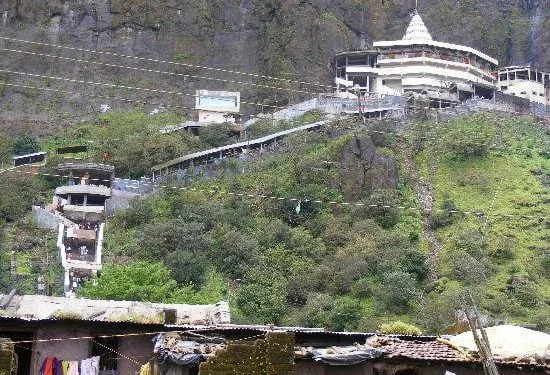
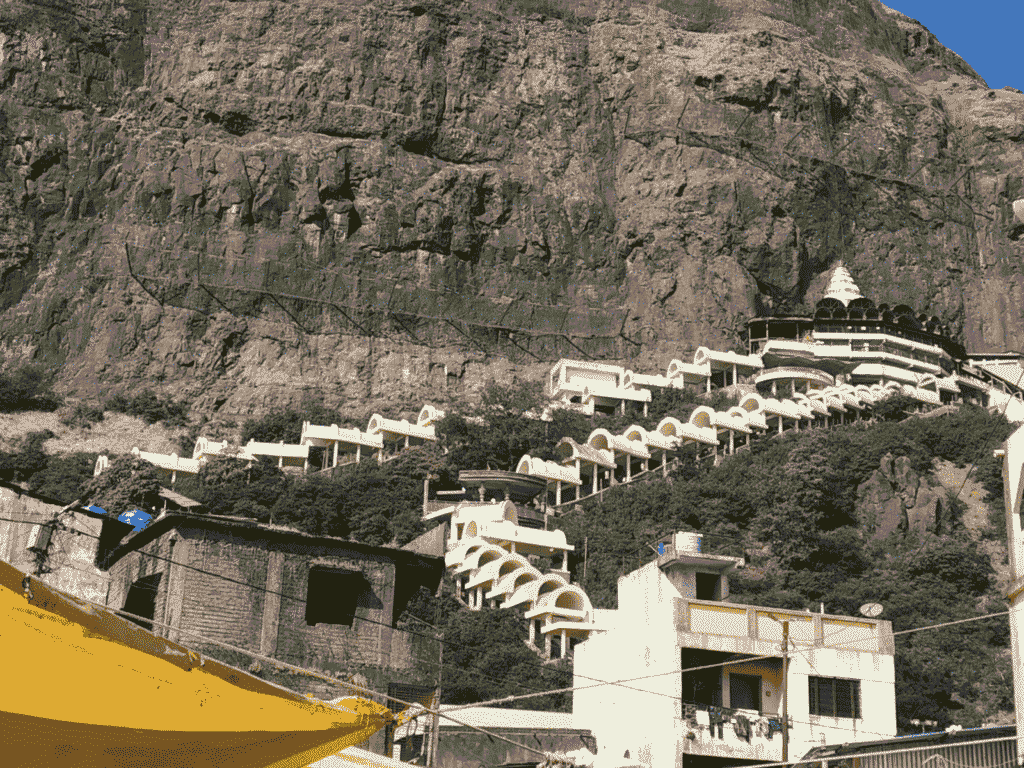
The name Saptashrungi literally translates to ‘Seven Peaks’ (Sapta meaning seven and Shrung meaning peaks). The temple is perched dramatically on a cliff face amidst a cluster of seven hills, which are locally called Ghads. The entire mountain range, part of the Sahyadri, is rich in forests and is believed to contain numerous medicinal herbs and 108 kundas (water bodies), adding to its sacred and natural beauty.
The temple structure itself is a two-storey shrine built into a natural cave on the steep face of the mountain.
The Self-Manifested Idol
The main idol of Goddess Saptashrungi is the centerpiece of the shrine. It is believed to be ‘Swayambhu’ (self-manifested), having been naturally carved from the rock of the sheer cliff.
- Form and Size: The colossal image stands approximately 8 feet (10 feet by some accounts) tall.
- 18 Arms: The Goddess is uniquely depicted with eighteen arms, each holding a celestial weapon gifted to her by the Gods to vanquish Mahishasura. These weapons include the Trishul (Trident), Sudarshan Chakra (Discus), Mace, Bow, Arrow, Battle Axe, Sword, and more, symbolizing her omnipotence and protection.
- Adornment: The idol is perpetually covered in Sindoor (vermilion), a sign of auspiciousness and Shakti. She is dressed in new robes daily and adorned with an elegant crown, a silver nose-ring, and precious ornaments. Before being dressed, the Devi is given a ritual Abhishekam (holy bath).
A Comprehensive Pilgrim’s Guide to Saptashrungi
How to Reach the Temple
Saptashrungi is located at Vani, a village approximately 60 km from Nashik city, in Maharashtra.
| Mode of Travel | Nearest Point | Distance/Information |
| By Road | Nashik | Well-connected by Maharashtra State Transport Corporation (MSTC) buses and private taxis from Nashik, Mumbai (approx. 185 km), and Pune (approx. 220 km). |
| By Rail | Nashik Road Railway Station (NK) | The nearest major railway station, approximately 70 km from the temple. Taxis and buses are available from the station. |
| By Air | Nashik Airport (Gandhinagar Airport) | The nearest domestic airport, about 80 km away. Mumbai’s Chhatrapati Shivaji International Airport (approx. 231 km) is the closest international hub. |
The Ascent to the Temple
The pilgrimage to the temple requires an ascent, which symbolizes the devotee’s dedication and overcoming of physical hurdles for spiritual gain.
- Stairway: The traditional path involves climbing approximately 510 steps carved into the mountain. This path is physically challenging but offers breathtaking views.
- Ropeway / Funicular Trolley: A modern funicular trolley system has been introduced, making the journey much easier, especially for the elderly, disabled, and families with young children. The trolley ride is quick, and a short set of stairs is still required from the upper station to the main temple.
Temple Timings and Rituals
| Event | Approximate Timings | Notes |
| Temple Opening & Darshan | 6:00 AM | The start of the day’s worship. |
| Mangala Aarti | Dawn | The ritual to awaken the Goddess. |
| Abhishekam & Alankar | Various times during the day | Holy bath and adorning of the idol. |
| Langar / Prasadam (Food) | 11:00 AM to 2:00 PM and 7:00 PM to 9:00 PM | Low-cost or free meals are offered to devotees, particularly during festivals. |
| Temple Closing | 6:00 PM to 9:00 PM (Varies) | While official closure may be noted at 6:00 PM in some sources, local timings can extend up to 9:00 PM, especially during festivals. Always check locally. |
Note: Photography is generally not allowed inside the main sanctum of the temple.
Major Festivals and Spiritual Significance
Chaitrotsav: The Grand Festival
The Chaitrotsav (Chaitra Festival) is the most important and grandest festival celebrated at Saptashrungi.
- Timing: It begins on Rama Navami (the ninth lunar day in the bright fortnight of the Hindu month of Chaitra typically March/April) and culminates on Chaitra Poornima (Full Moon day).
- Significance: Millions of devotees from Maharashtra, Gujarat, and other states flock to the temple, especially childless women seeking the Goddess’s blessing for progeny. The highlight is the ritualistic hoisting of the deity’s banner on the hill peak at midnight on the penultimate day.
Navratri and Dussehra
Both the Sharadiya Navratri (September-October) and the Chaitra Navratri are celebrated with immense fervor, as the temple is the abode of the Goddess Durga/Shakti. These nine-day festivals see the temple decorated vibrantly with lights, music, and special processions.
Spiritual Beliefs and Boons
Devotees visit the Saptashrungi temple seeking blessings for:
- Protection: As Mahishasura Mardini, the Goddess is the ultimate protector from all evil, negative energies, and black magic.
- Mental Peace: The serene and powerful location is believed to grant profound mental peace.
- Progeny: Childless couples undertake the pilgrimage to pray for children.
- The Bhairav Connection: As with all Shakti Peethas, the presence of the corresponding Bhairav (Shiva) as Vikrakatakkha ensures the fulfillment of all wishes (Sarvasiddhish).
The Saptashrungi Devi Temple is more than just a place where a body part of Sati fell; it is a vital, living seat of cosmic power where the legends of Sati, Durga, and Rama converge. It is a testament to the enduring faith in the Divine Mother, poised elegantly on seven majestic peaks, offering both a challenge and a profound spiritual reward to all who make the pilgrimage.

One thought on “Janasthan Shakti Peeth Nashik – Sacred Temple Guide”