I’ve always believed that temples are not just places of worship; they’re living stories. They carry whispers of devotion, layers of history, and a kind of energy that’s hard to describe until you’ve stood inside one. My recent journey to Chidambaram Nataraja Temple in Tamil Nadu was exactly that not just a visit, but a soulful experience.
If you’ve ever wondered what it feels like to step into a space where spirituality, culture, and architecture all merge seamlessly, this temple is the answer. And in this post, I’ll walk you through everything the history, the beauty, the rituals, and some travel tips all from the perspective of someone who went there with curiosity and came back with a heart full of stories.
First Impressions of Chidambaram
When you travel to a temple town, you expect devotion, some busy markets, and maybe the usual rhythm of pilgrims. But Chidambaram, in Tamil Nadu, hits you differently. It’s not just a town with a famous temple; it feels like a living ecosystem built around faith, art, and rhythm. The first moments I stepped into Chidambaram, I knew this wasn’t going to be one of those in-and-out temple visits. This place had layers and my first impressions were enough to make me want to stay longer.
The Arrival – A Town Wrapped Around a Temple
Driving toward Chidambaram, the first thing I noticed was how the temple gopurams dominate the skyline. No matter which road you take, they rise above the buildings like guardians. It almost feels like the town itself is bowing to the temple.
As I entered the main streets, it was clear that life here orbits entirely around the Nataraja Temple. Shops selling garlands, brass lamps, idols of Shiva and Parvati, and even tiny Nataraja figurines line the narrow lanes. There are street-side stalls with coconuts ready for offerings, incense sticks stacked in colorful boxes, and fruit sellers arranging bananas like small pyramids.
I couldn’t help but smile. The air smelled of jasmine, camphor, and freshly fried vadas from a nearby tiffin shop. It was both spiritual and everyday-life in one frame.

The Bustling Markets – Color and Chaos
Before even stepping into the temple, the markets outside pulled me in. Vendors call out to pilgrims in Tamil, sometimes breaking into Hindi or English when they catch the eye of outsiders. A woman with henna on her palms insisted I buy a brass bell, telling me it would bring “Shiva’s blessings” into my home.
I wasn’t planning on shopping, but the energy is contagious. Bright garlands of marigold and jasmine, baskets of bilva leaves sacred to Shiva, and colorful kumkum powders in red and yellow it felt like walking into a moving painting.
What struck me was the friendliness. In bigger cities, sellers often seem rushed. Here, they’d ask where I was from, smile knowingly when I said “traveler,” and sometimes even offer a free flower as a blessing. That warmth left a mark.
The Gopurams – Stone Stories That Stop You in Your Tracks
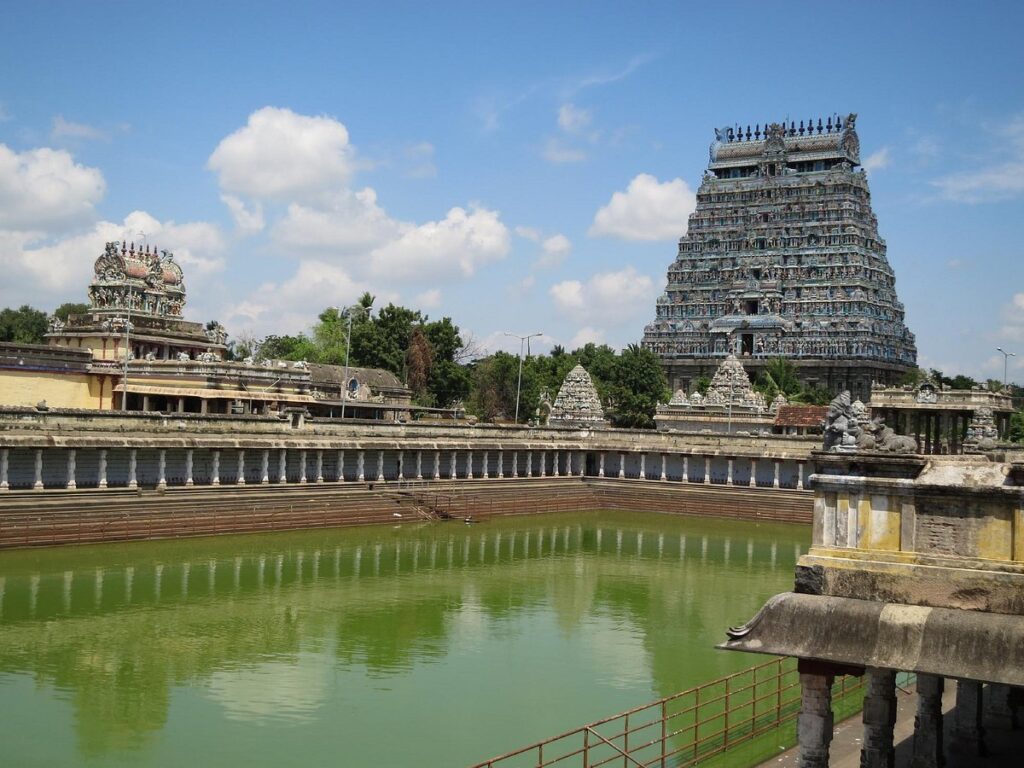
Then came the real showstopper the gopurams of Chidambaram Temple. I’d seen pictures, but nothing prepares you for the scale and detail. These gateway towers are massive, each covered in sculptures of gods, dancers, warriors, and mythical beings.
Standing before the eastern gopuram, I tilted my head back until my neck hurt, trying to take in the entire tower. Every layer felt like a page from a storybook carved in stone. I spotted scenes from the Ramayana and Mahabharata, but also everyday life dancers frozen mid-move, musicians holding instruments, animals leaping with grace.
The gopurams gave me my first real sense of how deeply intertwined devotion and art are in Chidambaram. It’s not just about worshiping; it’s about expressing faith through creation, through rhythm, through beauty.

The Atmosphere – A Blend of Serenity and Buzz
One of my strongest impressions was the strange balance the town holds. On one side, you have the buzzing markets, the chatter of vendors, and the constant flow of pilgrims. On the other, once you step a little away, you’ll find pockets of calm a tea stall where men quietly sip their filter coffee, a priest walking silently with a brass pot of holy water, or a group of children giggling as they play near the temple walls.
That duality is what makes Chidambaram special. It’s not overly commercial like some pilgrimage towns, yet it isn’t frozen in time either. It breathes, it moves, it welcomes you into its rhythm without overwhelming you.
The People – Faces of Devotion and Everyday Life
Another thing that struck me almost immediately was the variety of people you see here. Pilgrims in traditional dhotis and sarees walk barefoot with coconuts in hand. Young couples come seeking blessings for a new beginning. Classical dance students arrive with their gurus, offering a small dance to Nataraja as a mark of respect.
One of my favorite moments was watching an elderly man sitting cross-legged by the temple tank. He wasn’t praying loudly, just quietly gazing at the gopuram with folded hands. There was something about his stillness that made me pause. It reminded me that faith doesn’t always have to be dramatic; sometimes, it’s just silent gratitude.

Sounds and Smells – The Senses Awaken
Chidambaram is a sensory experience. The sound of temple bells mixes with the cries of vendors. The chants of “Om Namah Shivaya” float through the air, blending with honking autos outside.
The smells are equally layered fresh jasmine garlands, ghee lamps burning inside the temple, the earthy scent of stone floors cooling after a hot day, and the irresistible aroma of dosas being flipped at a nearby eatery. For a traveler, these small details create memories far stronger than photographs.
The Temple Tank – A Mirror of the Skies
Even before entering the main sanctum, I wandered near the large temple tank, known as Sivaganga Tank. The water reflected the gopurams beautifully, almost like the sky itself had bent down to admire the temple. Children were playing by the steps, while a group of women filled brass pots with water, chatting and laughing.
There was something grounding about watching everyday life unfold around such a sacred place. The tank wasn’t just water; it was a living part of the community.

A Sense of History and Timelessness
As I stood at the entrance, ready to finally step inside the temple, one thought kept circling in my head how many feet had walked this very path before me? Kings, poets, saints, dancers, and ordinary people like me. The temple dates back over a thousand years, and yet it still feels alive, still pulsing with energy.
That’s the magic of Chidambaram. It doesn’t feel like a museum piece. It feels like a place where past and present shake hands every single day..
The Legend Behind the Temple
The Chidambaram Nataraja Temple is dedicated to Lord Shiva in his cosmic dancer form, Nataraja. According to legend, Shiva performed the Ananda Tandava, the dance of bliss, here in Chidambaram. This isn’t just symbolic it’s considered the very center of the universe, where the spiritual meets the physical.
One unique aspect is the presence of the Chidambara Rahasyam (the secret of Chidambaram). Inside the temple, there’s an empty space veiled by golden bilva leaves. This represents the formless, omnipresent nature of God a reminder that divinity isn’t always something you can see, but something you feel.
Standing there, in front of that sacred curtain, I couldn’t help but reflect on the simplicity of it all. Sometimes the absence of form speaks louder than the grandest idol.
Exploring the Architecture
Spread over 40 acres, this temple is a masterpiece of Tamil architecture. The four gopurams, each facing a cardinal direction, are breathtaking. I spent a good 20 minutes just tracing the carvings on the southern tower scenes from the Ramayana, Mahabharata, and countless smaller tales that our ancestors wanted to preserve forever.
Inside, the Kanaka Sabha (Golden Hall) glows with a quiet elegance. This is where Lord Nataraja’s idol resides, adorned beautifully, surrounded by chants and bells. The polished wooden pillars and golden tiles reflect the flicker of lamps, creating an almost otherworldly aura.
Don’t miss the Thousand Pillar Hall, which isn’t just an architectural wonder but also a reminder of how art and devotion were inseparable in ancient times. Even if you’re not deeply religious, the sheer craftsmanship will leave you spellbound.
The Daily Rhythm of Rituals
Temples in South India aren’t just tourist spots they’re living, breathing spaces. At Chidambaram, the daily rituals are performed with a precision that feels timeless. There are six pujas every day, from early dawn to late evening.
I joined the crowd for the evening deeparadhana (lamp worship). As the priests waved lamps before the deity, the air filled with the sound of conch shells, temple bells, and rhythmic chanting. Goosebumps. That’s the only way I can describe it.
A local next to me whispered, “Every movement here has been performed the same way for centuries.” Suddenly, I wasn’t just watching a ritual; I was witnessing a tradition unbroken by time.
Festivals That Bring the Temple Alive
If you want to see Chidambaram in its most vibrant form, plan your visit around one of its major festivals. The Natyanjali Dance Festival, held in February-March, is simply magical. Dancers from across the country gather here to perform in front of Lord Nataraja, offering their art as devotion.
Why Festivals Matter in Chidambaram
Chidambaram is no ordinary temple town. Dedicated to Lord Nataraja, the cosmic dancer, its very essence is about rhythm, movement, and balance. Festivals here aren’t just rituals; they are living expressions of that cosmic dance. They connect devotees with Shiva’s energy, while also binding the community together in a tapestry of devotion, art, and celebration.
And trust me if you plan your trip around one of these festivals, you’ll see Chidambaram at its most vibrant.
The Grand Natyanjali Festival – Dance Meets Devotion
If there’s one festival that captures the spirit of Chidambaram, it’s Natyanjali. Held around Maha Shivaratri, this festival transforms the temple into a stage for Bharatanatyam dancers from across India and the world.
Imagine this: the golden statue of Nataraja in the sanctum, lit by the glow of countless oil lamps. Outside, under the carved pillars, dancers dressed in colorful silk perform intricate steps, each movement an offering to Shiva. The sound of ankle bells mixes with the beats of mridangam and the chanting of mantras.
I still remember the goosebumps when I first witnessed a young dancer bow before beginning her performance. It wasn’t entertainment; it was pure surrender. Every movement seemed to echo the cosmic dance of Nataraja himself.
For travelers, Natyanjali is the best time to experience how deeply art and faith are woven into Chidambaram’s soul.
Maha Shivaratri – A Night of Endless Energy
While Natyanjali brings the dance, Maha Shivaratri itself brings devotion in its most intense form. The temple stays awake all night, and so does the town. Thousands of devotees gather, chanting “Om Namah Shivaya” in unison. The sound resonates through the stone halls like a wave.
The atmosphere is electric. Some people meditate quietly, others sing bhajans, and many stand in long lines to glimpse the deity. Priests perform rituals with fire, milk, and honey, offering them to Lord Shiva in an atmosphere heavy with incense and devotion.
For me, the most powerful moment was around midnight, when the chants reached their peak. It felt like the entire town was breathing together, bound by faith. Whether you’re deeply spiritual or just curious, being here during Shivaratri is an experience that stays with you.
The Ani Thirumanjanam – A Festival of Grandeur
Come June-July, Chidambaram comes alive again with the Ani Thirumanjanam festival. This is when the temple celebrates Lord Nataraja with grandeur and majesty.
The highlight? The Abhishekam (holy bath) of Nataraja. Priests carefully bathe the deity with milk, honey, sandal paste, and holy water, while devotees chant and throw flower petals in joy. It’s not just a ritual it’s a spectacle of devotion.
Later, the idol is adorned with dazzling jewels and silk, placed on a massive chariot, and taken out in a grand procession through the streets of Chidambaram. Thousands of people line the lanes, some singing, some throwing flowers, others simply folding hands with tears in their eyes.
Standing among the crowd, I felt how festivals here blur all boundaries. Whether you are a local or a visitor, you are swept up in the collective energy.
Arudra Darshan – Witnessing the Cosmic Dance
If you want to witness the most mystical festival of Chidambaram, plan for Arudra Darshan, held in December-January. This festival celebrates the day Lord Shiva performed his cosmic dance, the Ananda Tandava.
The rituals begin before dawn. As the temple bells ring and conch shells blow, the idol of Nataraja is brought out for darshan. There’s something magical about seeing the deity bathed in the first rays of sunlight while priests chant the Thiruvempavai hymns composed by Saint Manikkavachakar.
I’ll admit, waking up that early wasn’t easy, but as I stood among the devotees, I realized why it mattered. There was a sense of renewal, as if the universe itself was waking up with the sun.
For a traveler, Arudra Darshan offers not just rituals but a chance to feel the philosophy of Chidambaram that creation and destruction are but parts of the same cosmic dance.
The Temple Chariot Processions – A Moving Spectacle
During many festivals, especially Ani Thirumanjanam and Arudra Darshan, the sight of the temple’s massive chariot rolling through the streets is unforgettable. Decorated with flowers, lights, and silk, the chariot carries the idol of Nataraja as thousands of devotees pull the ropes together.
The air vibrates with chants and drumbeats, while children run alongside with excitement. For me, this was the most human side of the festival people of all ages and walks of life coming together, united by a single purpose. The sight of hundreds of hands pulling the same rope gave me a lesson in community spirit I’ll never forget.
Beyond the Temple Walls – A Town Transformed
What impressed me most during festival time was how the celebrations spill into every corner of Chidambaram. Streets glow with lights, markets buzz with energy, and food stalls serve endless plates of pongal, vadas, and sweet payasam.
Even the simplest things like sipping hot filter coffee at a roadside stall while hearing distant temple drums become part of the festival mood. The town itself feels like it’s dancing along with Nataraja.
Practical Travel Tips for Visitors
After my visit, here are a few things I wish someone had told me before I went. Consider these my little traveler-to-traveler notes:
- Best Time to Visit: October to March is ideal. Summers can be sweltering, and monsoons bring heavy showers that might make travel tricky.
- Dress Code: Keep it modest. For men, dhoti or pants with a shirt; for women, sarees or salwar suits are preferred. Some parts of the temple are strict about attire.
- Footwear: Like most temples, you’ll need to leave your shoes outside. Keep a small bag or token with the footwear stand.
- Timing: Morning hours (7 AM to 9 AM) or evenings (5 PM to 7 PM) are the best for a peaceful darshan.
- Guides: Hiring a local guide is worth it. Mine shared stories I’d have easily missed like how one sculpture on the gopuram shows Shiva with 10 arms, symbolizing his infinite dance moves.
- Nearby Spots: Combine your visit with Pichavaram Mangrove Forest, just 20 minutes away. A boat ride there is the perfect balance of nature after all the temple energy.
The Human Side of the Temple
What struck me most about the Chidambaram Nataraja Temple wasn’t just its grandeur or history it was the people. I saw a young couple praying for their child, a group of classical dance students practicing steps in a quiet corner, and an elderly man sitting cross-legged, eyes closed, lost in his own conversation with Shiva.
Each person seemed to have their own reason for being there, but together, they added layers to the temple’s atmosphere. I realized then that this place is more than stone, more than rituals. It’s a canvas where faith, art, and human stories meet.
My Personal Takeaway
Traveling to Chidambaram wasn’t about ticking another temple off a list. It was about slowing down and letting the temple tell its story. Walking barefoot on the cool stone floors, listening to chants echoing through ancient halls, and simply standing before Lord Nataraja’s cosmic dance it all reminded me why travel is so much more than sightseeing.
This temple teaches you balance. Just like Nataraja’s dance balances creation and destruction, life too is about rhythm sometimes fast, sometimes slow, but always meaningful.
FAQs
Q1. Where is Chidambaram Nataraja Temple located?
It is in Chidambaram town, Cuddalore district, Tamil Nadu.
Q2. Who is the main deity of Chidambaram Temple?
The temple is dedicated to Lord Shiva in the form of Nataraja, the cosmic dancer.
Q3. Why is Chidambaram Nataraja Temple famous?
It symbolizes the cosmic dance of Shiva and is one of the five Pancha Bhoota Sthalas.
Q4. What is unique about the temple’s architecture?
It showcases Dravidian style with magnificent gopurams, sculptures, and spacious halls.
Q5. When was Chidambaram Nataraja Temple built?
Its origins date back to the Chola dynasty (around the 10th century), though the site is much older.
Q6. What is the significance of the cosmic dance here?
It represents creation, preservation, destruction, illusion, and liberation in Hindu philosophy.
Q7. What are the temple timings?
Generally, it opens early morning around 6 AM and closes by 9 PM, with daily rituals.
Q8. What festivals are celebrated at Chidambaram Temple?
Natyanjali Festival, Maha Shivaratri, and Arudra Darshan are celebrated grandly.
Q9. Is there an entry fee to visit the temple?
No, entry is free for devotees, though special darshan may have a nominal fee.
Q10. How can one reach Chidambaram Nataraja Temple?
It is well connected by road and rail; the nearest airport is Pondicherry (65 km).