

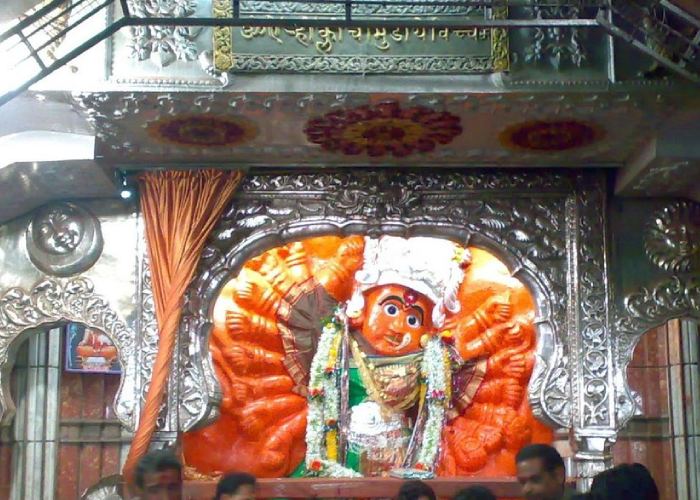
The Bhramari Shakti Peeth, located at Janasthana near the city of Nashik, Maharashtra, is a profound and ancient site of worship, holding immense significance among the 51 Shakti Peethas. This pilgrimage center is unique for its association with the powerful form of the Divine Mother known as Bhramari Devi, the Goddess of the Black Bees, whose fierce yet protective energy is deeply rooted in local history and cosmic mythology.
Nashik, an area famed in the Ramayana as a key location in the Dandakaranya forest, is already imbued with spiritual gravity. The presence of a major Shakti Peeth here transforms it into a nexus where the legends of Sati, the power of Shiva, and the ancient sanctity of the Ramayana converge.
The Foundational Legend of the Shakti Peetha
The sanctity of Bhramari Peeth originates from the universal myth of the Shakti Peethas—the tragic self-immolation of Goddess Sati at her father Daksha’s yagna, and the cosmic sorrow that followed.
Sati’s Sacrifice and the Fallen Part
When the distraught Lord Shiva performed the Tandava (dance of destruction) carrying Sati’s body, Lord Vishnu used his Sudarshan Chakra to dismember the corpse. Each place where a body part or ornament fell became a consecrated Shakti Peetha.
- Body Part Fallen: At the site of the Bhramari Peeth, it is widely believed that the Chin (Chibuka) or Anklet (Nupura) of Goddess Sati fell. This spot, therefore, remains eternally charged with Sati’s divine energy, specifically symbolizing the protective power of the Goddess’s utterance (chin/mouth) or the grounding energy of her movement (anklet).
- Deity of the Peeth (Shakti): The presiding deity is Maa Bhramari (also sometimes referred to as Bhramara Ambika). Her name, derived from Bhramar (black bee), links the Goddess to an extremely potent narrative of her divine manifestation.
- Guardian (Bhairava): Lord Shiva, the eternal consort and protector of the Peeth, is worshipped as Vikritaksh Bhairava (The one with distorted or fierce eyes), a form that reflects the intensity and transformative power of the Goddess Bhramari.
The Manifestation of Bhramari Devi: The Goddess of Bees
The primary mythology specific to this Peeth is detailed in the Devi Bhagavata Purana and the Skanda Purana, which narrate the magnificent manifestation of Bhramari Devi.
The Demon Arunasura
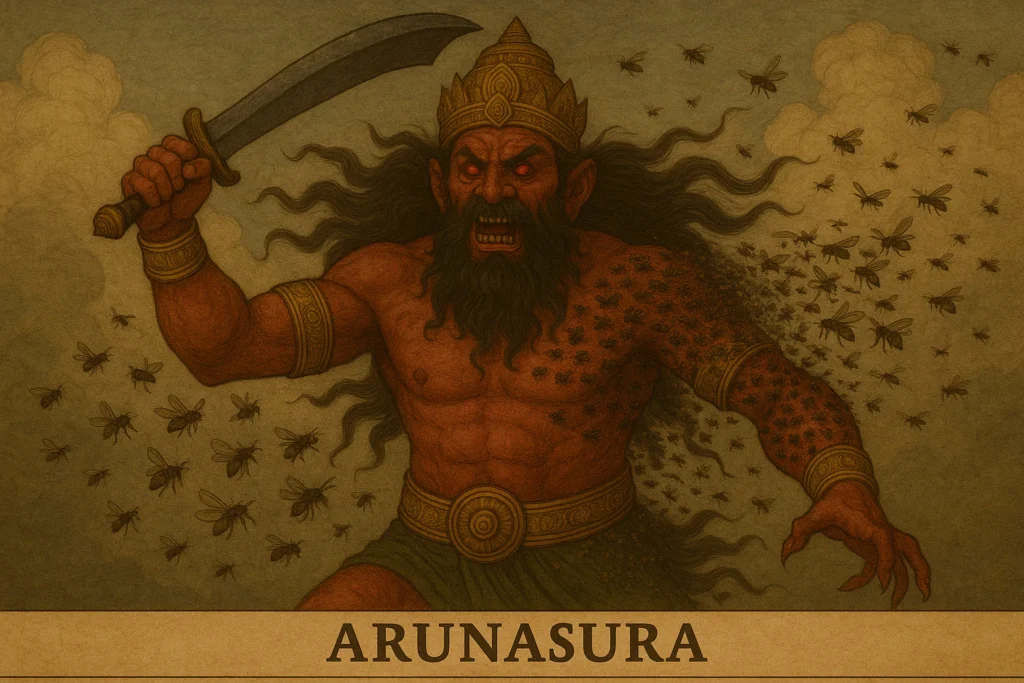
The legend tells of a powerful demon named Arunasura, who gained a boon from Brahma that he could not be killed by any two-legged or four-legged creature. Empowered by this invincibility, Arunasura defeated the gods and seized control of the heavens, plunging the universe into chaos and silencing all sacred rituals.
When the gods, led by Indra, fervently prayed to the Divine Mother, she responded by taking the terrifying and astonishing form of Bhramari Devi.
The Swarm of Power
This form of the Goddess was characterized by a myriad of black bees, hornets, wasps, and other stinging insects that emerged from her body. The Goddess appeared as a colossal figure, her hands and legs covered entirely by the massive swarm. The buzz of the bees alone was enough to terrify the demon army.
Bhramari Devi then unleashed the enormous swarm, which attacked Arunasura and his forces relentlessly, gnawing and stinging them until the demon army was entirely destroyed. Since the bees were classified neither as two-legged nor four-legged creatures, Arunasura’s boon was circumvented, and the Goddess restored order. The name Bhramari thus means “She who is like the black bees” or “The Mother of the Bees.”
Worshipping Bhramari Devi at this Peeth is therefore an invocation of her primal, unifying power—the power to overcome insurmountable odds, to destroy massive negative forces, and to utilize collective strength (the swarm) for righteous defense.
Janasthana: A Place of Eternal Holiness
The geographical location of the Bhramari Peeth near Nashik adds layers of cultural and spiritual importance.
Ramayana Connection
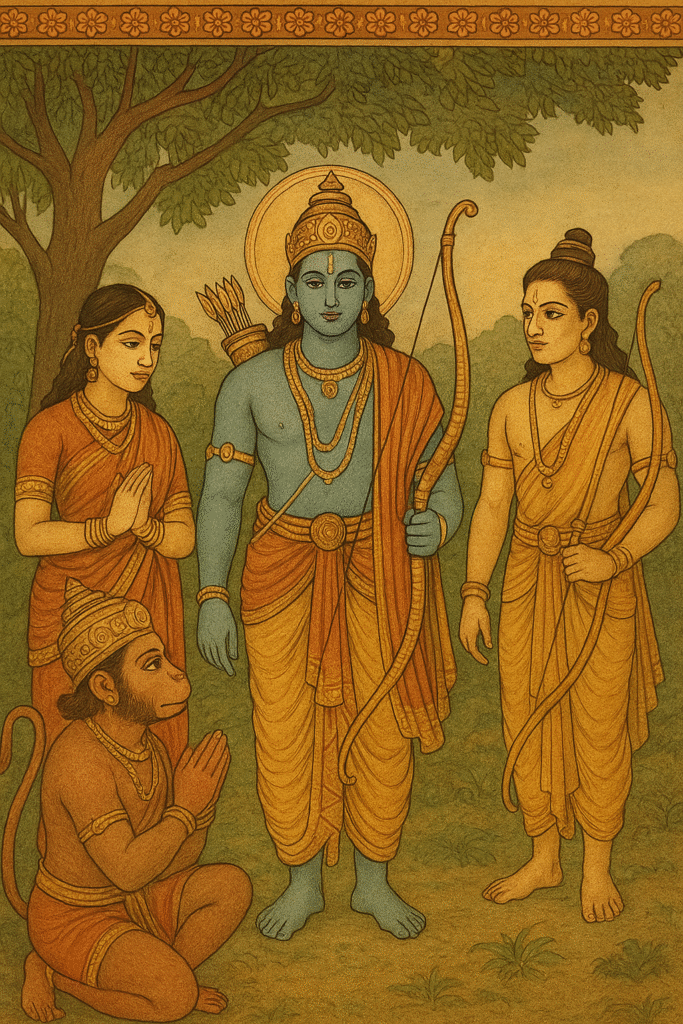
Nashik is part of the historic Janasthana region of the Dandakaranya forest, where Lord Rama, Sita, and Lakshmana spent a significant part of their fourteen-year exile.
- The nearby sacred river Godavari, one of India’s most holy rivers, runs through Nashik, transforming it into a spiritual center often called “Mini Kashi.”
- The proximity to significant Ramayana sites, such as Panchavati and the caves where Sita resided, ensures that the spiritual atmosphere of the Bhramari Peeth is profoundly connected to the ancient moral and religious order established by Lord Rama.
The Maharashtra Shakti Circuit
The Bhramari Peeth forms a crucial link in the major Shakti temples of Maharashtra, which include the renowned Tulja Bhavani (Tuljapur), Mahalakshmi (Kolhapur), and Renuka (Mahur) temples. A pilgrimage to all these sites is considered highly auspicious for devotees of the Goddess. The presence of Bhramari, with her unique symbolism, completes the spectrum of the Divine Mother’s power in the region—from the motherly Renuka and the prosperous Mahalakshmi to the fiercely protective Bhramari.
The Temple Experience and Spiritual Practice
While the precise location of the Bhramari Peeth is debated among scholars (some place it near Trimbakeshwar or within the Nashik city limits), the spiritual devotion remains centralized around the fierce, protective manifestation of Bhramari.
Worship and Seeking Protection
Devotees flock to this Shakti Peeth seeking two primary forms of blessing from Maa Bhramari:
- Protection from Enemies: Given her history as the destroyer of the demon Arunasura, the Goddess is a powerful refuge for those seeking protection from external threats, internal vices (such as ego and anger), and negative influences.
- Spiritual Unification: The swarm of bees is a powerful symbol of unity and focused energy. Devotees pray for the capacity to focus their energies, overcome scattered thoughts, and achieve spiritual concentration.
Festivals and Rituals
The temple attracts its largest crowds during the major festivals dedicated to the Goddess:
- Navaratri: The nine-day festival is celebrated with great pomp. The Goddess is worshipped in her various forms, and special pujas (worship ceremonies) are performed to invoke her protective strength.
- Chaitra Pournima (Full Moon in March/April): This is a key time for Shakti worship, where special yagnas and rituals are conducted.
In essence, the Bhramari Shakti Peeth at Nashik (Janasthana) is a powerful testament to the Divine Mother’s readiness to defend the cosmic order. It is a sanctuary where the collective power of the swarm and the singular strength of the Goddess combine, offering protection, focus, and liberation to every devoted pilgrim.
Frequently Asked Questions (FAQ’s)
Where is Bhramari Shakti Peeth located?
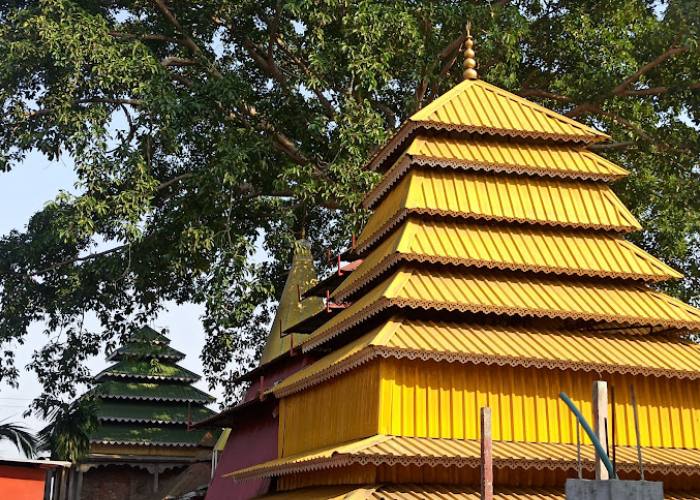
Bhramari Shakti Peeth is located in Kamlabari village near Guwahati, Assam, nestled amidst scenic hills and dense forests along the banks of the Brahmaputra River.
Why is Bhramari Shakti Peeth famous?
It is believed that Goddess Sati’s left leg fell at this site. Here, Goddess Bhramari Devi (a form of Goddess Parvati) is worshipped, known for destroying evil forces in the form of bees (“Bhramar” means bee).
Who is the presiding deity?
The main goddess worshipped here is Bhramari Devi, and Lord Bhairav is worshipped as Ambar.
What are the temple timings?
The temple usually opens from 5:00 AM to 8:00 PM, with morning and evening aartis and special rituals during Navratri and Durga Puja.
How can I reach Bhramari Shakti Peeth?
The temple is accessible from Guwahati, which is about 70 km away. The nearest airport is Lokpriya Gopinath Bordoloi Airport (Guwahati), and the nearest railway station is Goalpara.
When is the best time to visit?
The best time to visit Bhramari Shakti Peeth is between October and March, when the weather is cool and several religious festivals are held.
Are accommodations available nearby?
Yes, visitors can find guest houses, dharamshalas, and hotels in nearby towns like Goalpara and Guwahati.

One thought on “Bhramari Shakti Peeth – Location, History & Temple Timings”