

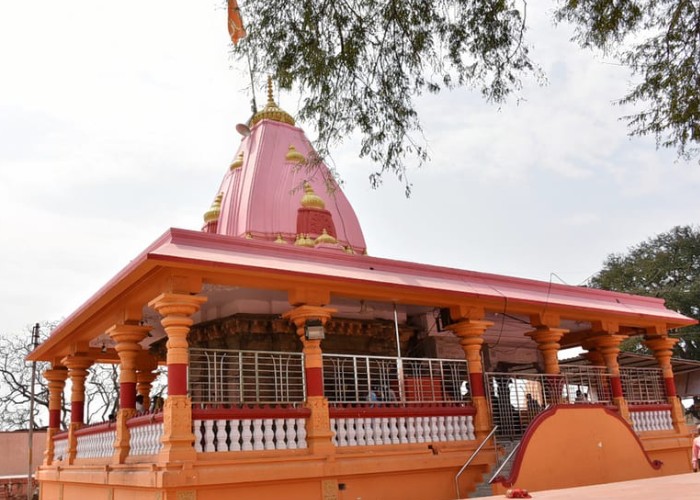
The Avanti Shakti Peeth, a beacon of primordial energy, is one of the most revered centers of Hindu pilgrimage, nestled in the ancient city of Ujjain, Madhya Pradesh, India. Ujjain itself, known historically as Avantika or Ujjayini, holds a unique position as one of the seven sacred cities (Sapta Puri) that grant moksha (salvation), and the Avanti Shakti Peeth is a vital part of this spiritual geography.
The Mythological Roots: A Cosmic Tragedy
The significance of Avanti Shakti Peeth is intricately linked to the Shakti Peethas legend, a narrative of immense cosmic power, love, grief, and divine intervention.
The Sacrifice of Sati
The story begins with the self-immolation of Goddess Sati, the daughter of Prajapati Daksha and the first consort of Lord Shiva. Anguished by her father’s deliberate insult to her husband, Shiva, during a grand Yajna (fire ritual), Sati sacrificed her life in the sacrificial fire.
Shiva’s Sorrow and Vishnu’s Intervention
Devastated and enraged, Lord Shiva carried Sati’s lifeless body on his shoulder and performed the furious celestial dance of destruction, the Tandava, threatening to annihilate the entire universe. To save creation from Shiva’s wrath and grief, Lord Vishnu intervened. He used his Sudarshan Chakra to cut Sati’s corpse into several pieces, which then fell at various spots across the Indian subcontinent and beyond. Each spot where a fragment of Sati’s body or ornament fell transformed into a Shakti Peetha, a powerful seat of the Divine Mother.
The Avanti Peeth Manifestation
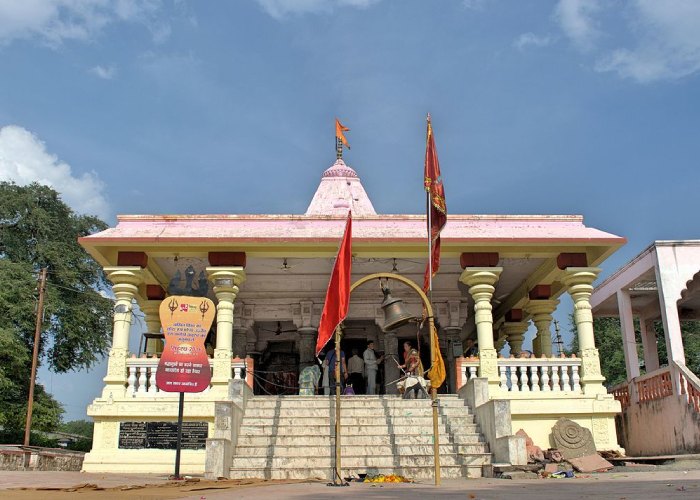
The Avanti Shakti Peeth, also popularly known locally as Gad Kalika Temple, is believed to be the spot where a part of Sati’s body fell. While some traditions, like the Pithanirnaya Tantra, state that her Upper Lip fell here, others suggest it was her Elbow or Left Shoulder. Regardless of the exact fragment, the spot is imbued with the raw, transformative energy of the Goddess.
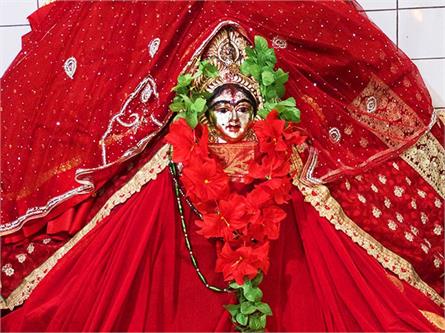
Here, the Divine Mother is worshipped as Avanti or Avantika (a form of Goddess Durga/Mahakali), and Lord Shiva, as her consort and protector, is revered as Lambakarna Bhairav or Batuk Bhairav. The name ‘Avanti’ itself, meaning ‘modest,’ harks back to the historical name of the region, solidifying the ancient link between the city and the deity.
The Presiding Deities: Mahakali and Lambkarna
The Avanti Shakti Peeth is a major center for the worship of the fierce aspect of the Goddess, Mahakali, and her consort Bhairav.
Maa Avanti as Mahakali
The principal deity in the inner sanctum (garbhagriha) is revered as Maa Avanti or Mahakali. The idol is often described as fierce, with an extended tongue, and is continuously draped in a red sari, a color highly auspicious for married Hindu women and a symbol of power (Shakti). The presence of Mahakali is deeply symbolic. In an alternate legend, Mahakali took this form to combat the demon Andhakasur, who terrorized the earth.
The demon had a boon that every drop of his blood spilled would create a new demon. During the battle, the Goddess spread her tongue to absorb every drop of blood, eventually defeating him, cementing the site’s association with the fierce, protective power of the Divine Feminine.
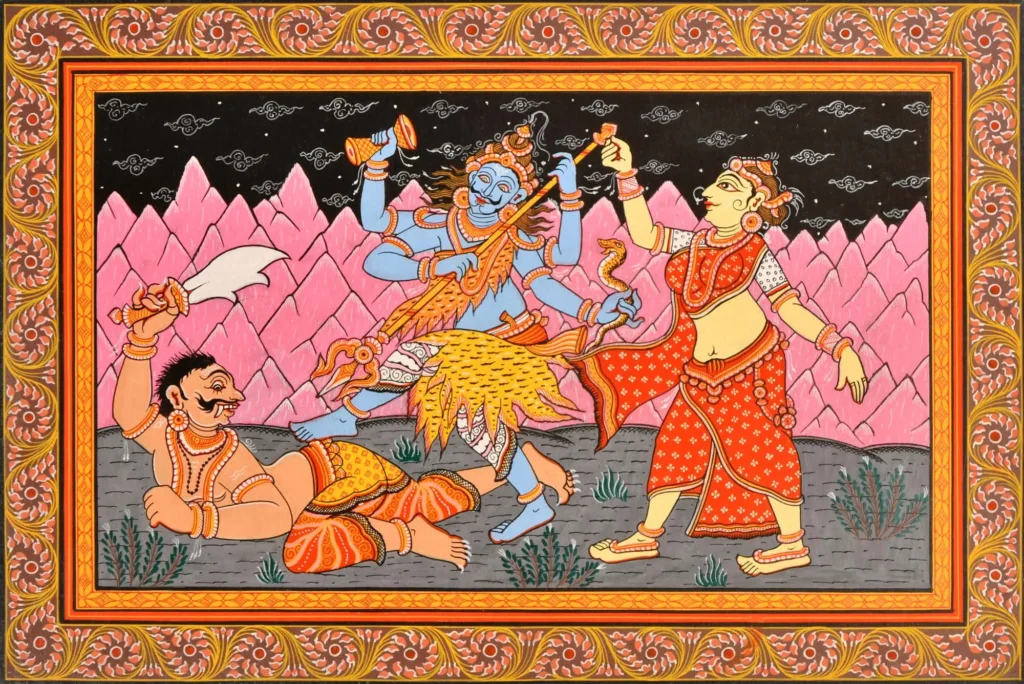
Lambkarna Bhairav
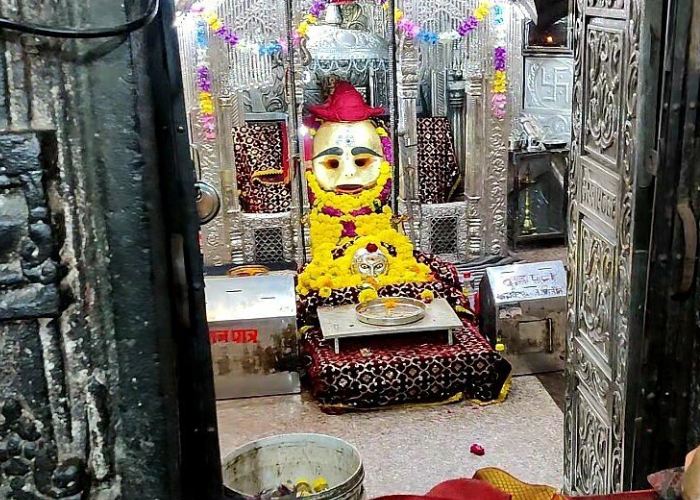
Accompanying the Goddess, as is tradition in all Shakti Peethas, is the form of Shiva, Lambkarna Bhairav (‘the long-eared one’), who acts as the guardian of the Peeth. His presence signifies the eternal balance of the masculine (Shiva) and feminine (Shakti) energies that govern the universe. Ujjain is also home to the famous Kaal Bhairav Temple, a significant shrine for the Ashta Bhairavas (eight Bhairavas) and a testament to the city’s ancient roots in Tantric and Shaivite traditions. The worship of Bhairav here, the commander-in-chief (Senapati) of Ujjain, underscores the dual protection afforded to the sacred city by both Mahakal (at the nearby Jyotirlinga) and Bhairav (the guardian).
Ujjain’s Spiritual Tapestry: A City of Confluence
The Avanti Shakti Peeth’s significance is multiplied by its location in Ujjain, a city steeped in spiritual and historical importance, making it a powerful confluence of different divine energies.
The Seat of Mahakaleshwar
Ujjain is most famously known as the home of the Mahakaleshwar Jyotirlinga, one of the twelve most sacred shrines of Lord Shiva. The coexistence of the Avanti Shakti Peeth (Mahakali) and the Mahakaleshwar Temple (Mahakal) within the same ancient city highlights the deep-seated philosophical concept of the inseparable unity of Shiva and Shakti. The city’s spiritual pulse beats to the rhythm of this eternal union.
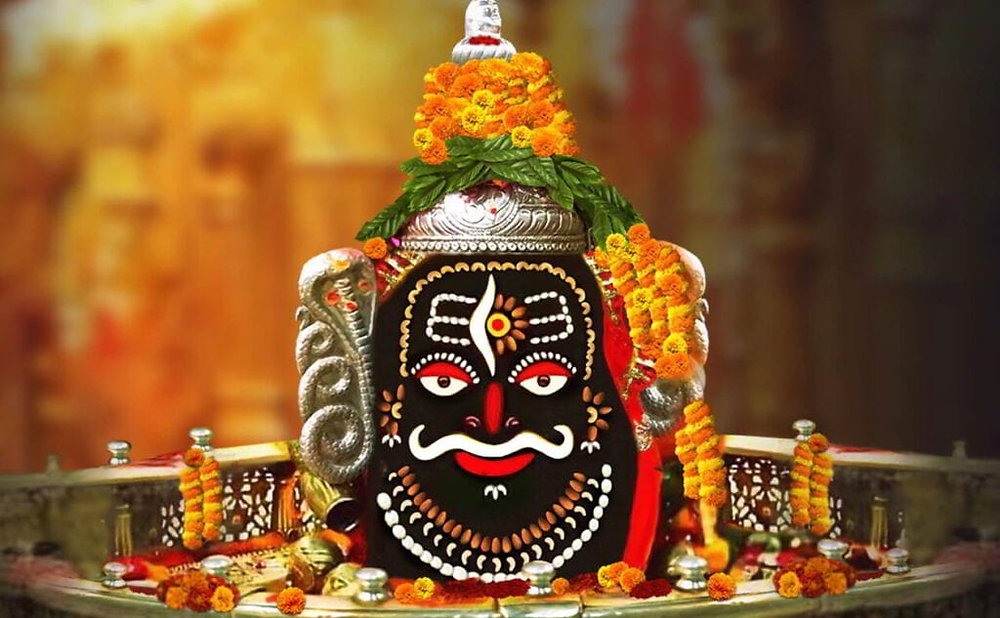
Center of Knowledge and Time
Ancient Ujjain was not only a religious center but also a hub of learning and astronomical study. It was here that Lord Krishna, his brother Balarama, and his friend Sudama received their education from Maharshi Sandipani at the Sandipani Ashram. Furthermore, Ujjain was historically considered the Prime Meridian for Hindu geographers and astronomers, thus being the very center from which time was calculated, a concept symbolized by its presiding deity, Mahakal (the Great Lord of Time). The Avanti Peeth, located on Bhairav Parvat on the banks of the sacred Shipra River, connects the Shakti energy to these profound historical and cosmic concepts.
Temple Architecture, Rituals, and Festivals
While the exact date of the temple’s construction remains a mystery, historical evidence suggests its origins may date back to the 4th century BC, coinciding with the rise of the Avanti Kingdom. The temple’s architecture, constructed from ancient stone, reflects the long spiritual heritage of India.
The temple is a magnet for devotees seeking blessings for progeny, marriage proposals, and general prosperity. Daily prayers and rituals are meticulously performed, sustaining the powerful energetic presence of the Goddess. The inner sanctum is often described as small, dark, and intimate, lit by the flickering glow of oil lamps, emphasizing the powerful, palpable presence of the Divine Mother over grand scale.
The most vibrant celebrations at the Avanti Shakti Peeth occur during the Hindu festivals of Navratri (twice a year) and Mahashivratri. These periods witness an immense influx of pilgrims who come to celebrate the powerful cosmic balance between Shiva and Shakti. Moreover, Ujjain hosts the Kumbh Mela (Sinhastha) every twelve years, an unparalleled gathering of spirituality that draws pilgrims from across the globe, further cementing the city and its Peethas as cornerstones of Hindu faith.
The Avanti Shakti Peeth in Ujjain is more than just a temple; it is a point of powerful spiritual convergence, a testament to the enduring myth of Sati, and a vibrant center for the worship of the primordial power, Maa Avanti, the ultimate Mother Goddess.
Frequently Asked Questions (FAQ’s)
Where is Avanti Shakti Peeth located?
Avanti Shakti Peeth is located in Ujjain, Madhya Pradesh, one of India’s holiest cities known for its deep spiritual and mythological roots.
Why is Avanti Shakti Peeth famous?
It is believed that the upper lip of Goddess Sati fell here, making it one of the 51 revered Shakti Peethas where Goddess Avanti is worshipped along with Lord Shiva as Lambakarna.
What are the temple timings?
The temple remains open from 5:00 AM to 8:00 PM, with special rituals during Navratri, Mahashivratri, and Kumbh Mela.
How can I reach Avanti Shakti Peeth?
Ujjain is well connected by road and rail. The nearest railway station is Ujjain Junction, and the nearest airport is Indore Airport (55 km away).

One thought on “Avanti Shakti Peeth Ujjain – Temple Timings, History & Significance”