
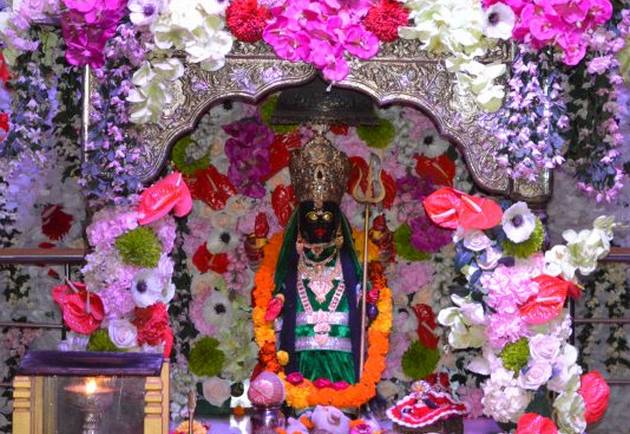
The soil of Kurukshetra, eternally echoing the chants of the Bhagavad Gita and the clash of the Mahabharata war, holds another sanctuary of immense spiritual power: the Savitri Shakti Peeth, famously known as Shri Devikoop Bhadrakali Mandir. It is not merely a temple but one of the most sacred spots in the Hindu cosmos, a Shakti Peetha, where the divine feminine energy, the Shakti, is believed to be palpably present, offering strength and ultimate grace. This temple is a magnificent tapestry woven with threads of deep mythology, ancient history, and enduring faith, making it a mandatory stop on any spiritual pilgrimage across India.
The Mythological Core: A Tale of Sacrifice and Power
The very existence of the Savitri Shakti Peeth is rooted in the foundational myth of the Shakti Peethas, a poignant tale of cosmic love, profound sacrifice, and the restoration of balance.
The Legend of Sati and the 51 Holy Sites
The legend begins with Goddess Sati, the first wife of Lord Shiva, who married him against the wishes of her father, Prajapati Daksha. Nursing a deep-seated resentment for Shiva, Daksha organized a grand Yajna (fire sacrifice) and deliberately invited every deity and sage, save his daughter Sati and son-in-law Shiva.
Unable to bear her husband’s humiliation, Sati, consumed by rage and grief, immolated herself in the sacrificial fire. Lord Shiva, upon hearing the news, was plunged into a cataclysmic grief, transforming into the fierce form of Virabhadra who destroyed Daksha’s Yajna. Clutching Sati’s lifeless body, Shiva began the Tandava, the cosmic dance of destruction, threatening to annihilate the universe.
To restore cosmic order, Lord Vishnu intervened, using his Sudarshan Chakra to dismember Sati’s body. The parts fell to Earth in various locations, sanctifying these spots eternally as Shakti Peethas.
The Kurukshetra Revelation: The Ankle Bone
The Shri Devikoop Bhadrakali Mandir marks the sacred spot where the Right Ankle (Gulpha) or a portion of the ankle/lower limb of Goddess Sati is believed to have fallen. This specific body part links the temple directly to the celestial narrative of the Shakti Peethas, imbuing it with unparalleled spiritual potency.
In this divine geography, the Goddess is worshipped as Savitri (the name associated with the Peetha) or the main presiding deity, Bhadrakali, a fierce and protective form of the divine mother. Her consort, Lord Shiva, is worshipped here in his manifestation as Sthanu Mahadev.
Historical and Religious Significance
Kurukshetra’s spiritual gravity is not solely derived from the Mahabharata; the Savitri Shakti Peeth contributes a deep layer of Shaktism (worship of the Divine Feminine) to the region. The temple is referred to by multiple names, each indicating a facet of its importance:
- Savitri Peeth: Direct reference to the Goddess form here.
- Devikoop: Meaning the ‘Well of the Goddess,’ referring to the ancient well or pond near the spot where the ankle is believed to have fallen.
- Kalika Peeth or Aadi Peeth: Highlighting its antiquity and connection to the fierce, primal form of Kali/Bhadrakali.
The Mahabharata Connection and the Horse Offering
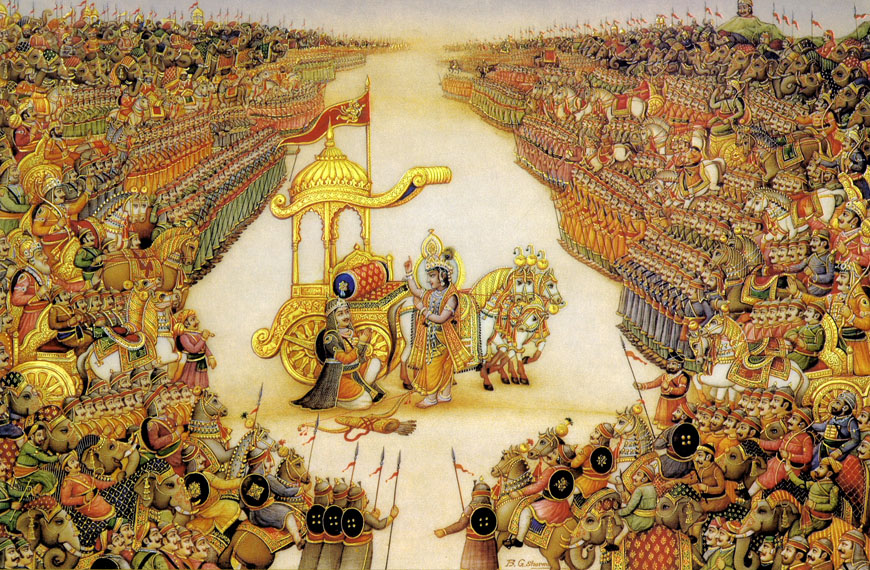
A unique tradition at this temple is directly tied to the epic history of Kurukshetra. It is strongly believed that before the great battle of the Mahabharata, the Pandavas, accompanied by Lord Krishna, came here to seek the blessings of the Goddess Durga/Bhadrakali for victory over the Kauravas. Upon their triumphant return, they fulfilled their vow by offering the horses of their chariots in gratitude.
This historical event gave rise to a distinctive and enduring ritual: the offering of terracotta, clay, or metal horses by devotees whose wishes have been fulfilled. The sight of countless miniature horses, offered as tokens of gratitude, is a remarkable feature of the temple complex, symbolizing the age-old connection between the Goddess, the Pandavas, and the land of Kurukshetra.
The Mundan Ceremony of Krishna and Balaram
Another cherished local legend suggests that the Mundan Sanskar (the first hair-shaving ceremony) of Lord Krishna and his elder brother Balaram was performed at this very temple. This belief makes the temple a popular location for modern devotees to perform the mundan ceremony for their own children, seeking the protective grace of the Goddess for their offspring.

Architectural Overview and Temple Premises
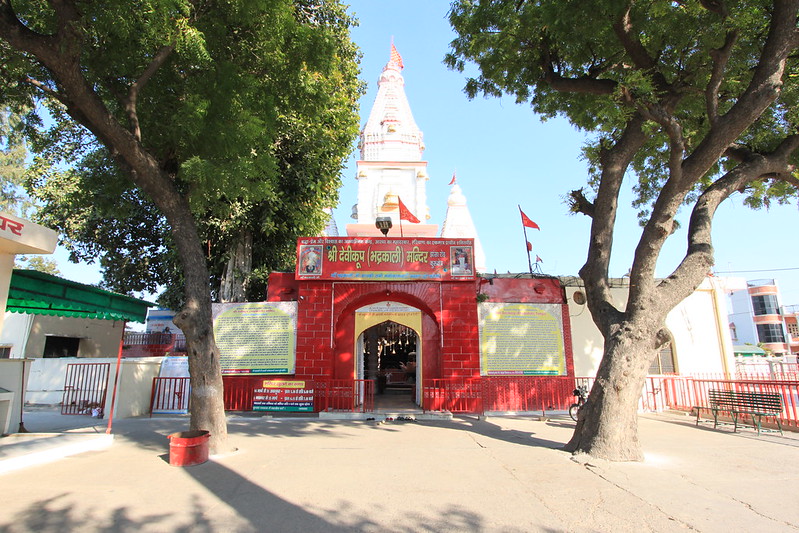
The Shri Devikoop Bhadrakali Mandir today stands as a modern reconstruction in the typical Hindu temple architectural style, a testament to continuous worship over centuries, built over the original sacred site.
- Structure: The temple is characterized by a high main Shikhar (spire) and a vast compound. The structure is typically painted in white at the base, with vibrant red, orange, and golden hues adorning the spires, giving it a classic and lively spiritual appearance.
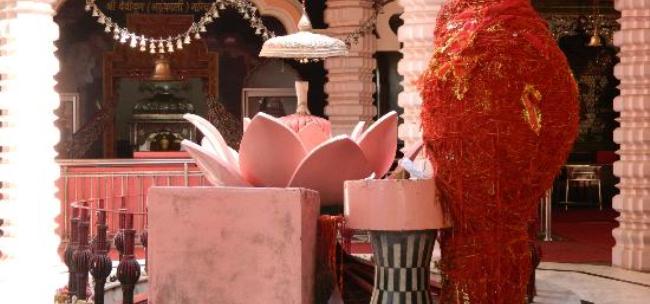
- The Devikoop (The Sacred Spot): At the entrance of the main temple room, there is a circular, well-shaped area, sometimes featuring a beautiful marble lotus sculpture. This structure marks the exact legendary spot of the ancient well/pond where Sati’s ankle fell. It is an extremely venerated point, and a metal idol or a representation of the right ankle is placed here for devotees to worship and bow before proceeding to the sanctum.
- The Sanctum Sanctorum (Garbhagriha): The main idol worshipped here is that of Maa Bhadrakali, a powerful and beautifully adorned form of the Goddess. The main shrine is surrounded by a path for Parikrama (circumambulation).
- Other Deities: The temple complex is a complete spiritual hub, housing shrines for various other deities, including Maa Saraswati, Maa Gayatri, Shri Ram Darbar, Radha-Krishna, and Lord Ganesh, along with a separate shrine for Shri Bhairav Ji (Sthanu Mahadev), Sati’s divine consort. The first floor often hosts a Shiv Lingam and sculptures depicting the moment of Lord Vishnu using the Sudarshan Chakra and Lord Shiva carrying Sati’s body.
A Guide to Visiting Savitri Shakti Peeth
A visit to the Savitri Shakti Peeth is a deeply moving experience. The following is a comprehensive guide to assist pilgrims and travelers.
Location and Accessibility
- Address: Jhansa Road, Thanesar, Kurukshetra District, Haryana, India. It is situated in a serene spiritual location, close to the Dwaipayan Lake and the bustling town of Thanesar.
- By Air: The nearest major airport is Chandigarh International Airport (IXC), approximately 90-100 km away. Alternatively, Indira Gandhi International Airport, Delhi (DEL) is about 160 km away. From the airport, one can hire a taxi directly to Kurukshetra.
- By Rail: Kurukshetra Junction (KKDE) is a well-connected railway station, receiving numerous trains from all major Indian cities. The temple is a short ride (about 5-7 km) from the station by auto-rickshaw or taxi.
- By Road: Kurukshetra is excellently connected via National Highway 44 (the old NH-1). Bus services are frequent, and the drive from Delhi takes approximately 3-4 hours.
Temple Timings and Best Time to Visit
The temple is open all days of the week, but timings vary slightly between summer and winter seasons:
- Summers (Approx. March 1 to November 15): 5:30 AM to 8:00 PM
- Winters (Approx. November 16 to February 28): 6:00 AM to 7:30 PM
- Special Days: On Saturdays and during the nine days of Navratras, the temple remains open longer, often till 8:30 PM due to high devotee turnout.
Rituals and Traditions
- Darshan and Pooja: Devotees first seek Darshan of the marble ankle representation near the entrance of the main shrine, and then proceed for the worship of Maa Bhadrakali.
- Horse Offering: A primary ritual is the offering of a miniature horse (made of clay, silver, or other metals) upon the fulfillment of a prayer or wish. These miniature horses are sold at stalls around the temple.
- Mundan Sanskar: Many families perform the ritualistic shaving of their child’s first hair here, following the belief connected to Lord Krishna and Balaram.
- Aarti and Bhajan: Attending the morning and evening Aarti (worship with light) and the devotional Bhajan Sandhya (evening devotional singing) is a deeply rewarding spiritual experience.
Festivals
The atmosphere is most electrifying during the major Hindu festivals:
- Navratri: Celebrated with nine days of continuous fasting, special pujas, decorations, and religious programs. This is the most auspicious time to visit.
- Durga Puja and Maha Shivratri are also celebrated with great fervor, drawing huge crowds.
Kurukshetra: A Spiritual Circuit
A pilgrimage to the Savitri Shakti Peeth is incomplete without exploring the other magnificent sites of Kurukshetra, the land of Dharma:
- Brahma Sarovar: One of the world’s largest man-made sacred tanks, believed to have been created by Brahma himself. A dip here is considered highly auspicious.
- Sannihit Sarovar: Believed to be the meeting point of seven sacred rivers. Taking a holy dip here on Amavasya (new moon day) is particularly meritorious.
- Jyotisar: The exact spot under a Banyan tree where Lord Krishna delivered the sermon of the Bhagavad Gita to Arjuna. A place of profound meditation and contemplation.
- Sthaneshwar Mahadev Temple: An ancient Shiva temple, integral to the legend of Sthanu Mahadev, the Bhairav of the Shakti Peeth.
FAQs
What is Savitri Shakti Peeth?
Savitri Shakti Peeth is a revered Hindu temple in Kurukshetra, dedicated to Goddess Savitri, part of the sacred Shakti Peeth network.
Where is Savitri Shakti Peeth located?
It is located in Kurukshetra, Haryana, India, attracting devotees from across the country.
Which part of Goddess Sati is associated with this temple?
Savitri Shakti Peeth is believed to be linked to the sacred body part of Goddess Sati, making it spiritually significant.
What are the temple timings?
The temple generally opens early morning around 6:00 AM and closes in the evening around 8:00 PM. Timings may vary during festivals.
What festivals are celebrated at Savitri Shakti Peeth?
Major festivals like Navratri see large gatherings of devotees who come to offer prayers and seek blessings.
How can one reach Savitri Shakti Peeth?
It is accessible by road and rail. Kurukshetra is well-connected, and the temple is easily reachable from the city center.
Are there accommodation options near the temple?
Yes, Kurukshetra has multiple hotels and guest houses suitable for pilgrims and tourists.
Any tips for visiting the temple?
Visitors should maintain decorum, wear modest attire, and plan their visit during non-peak hours for a peaceful experience.

One thought on “Savitri Shakti Peeth Kurukshetra – Sacred Temple Guide”