
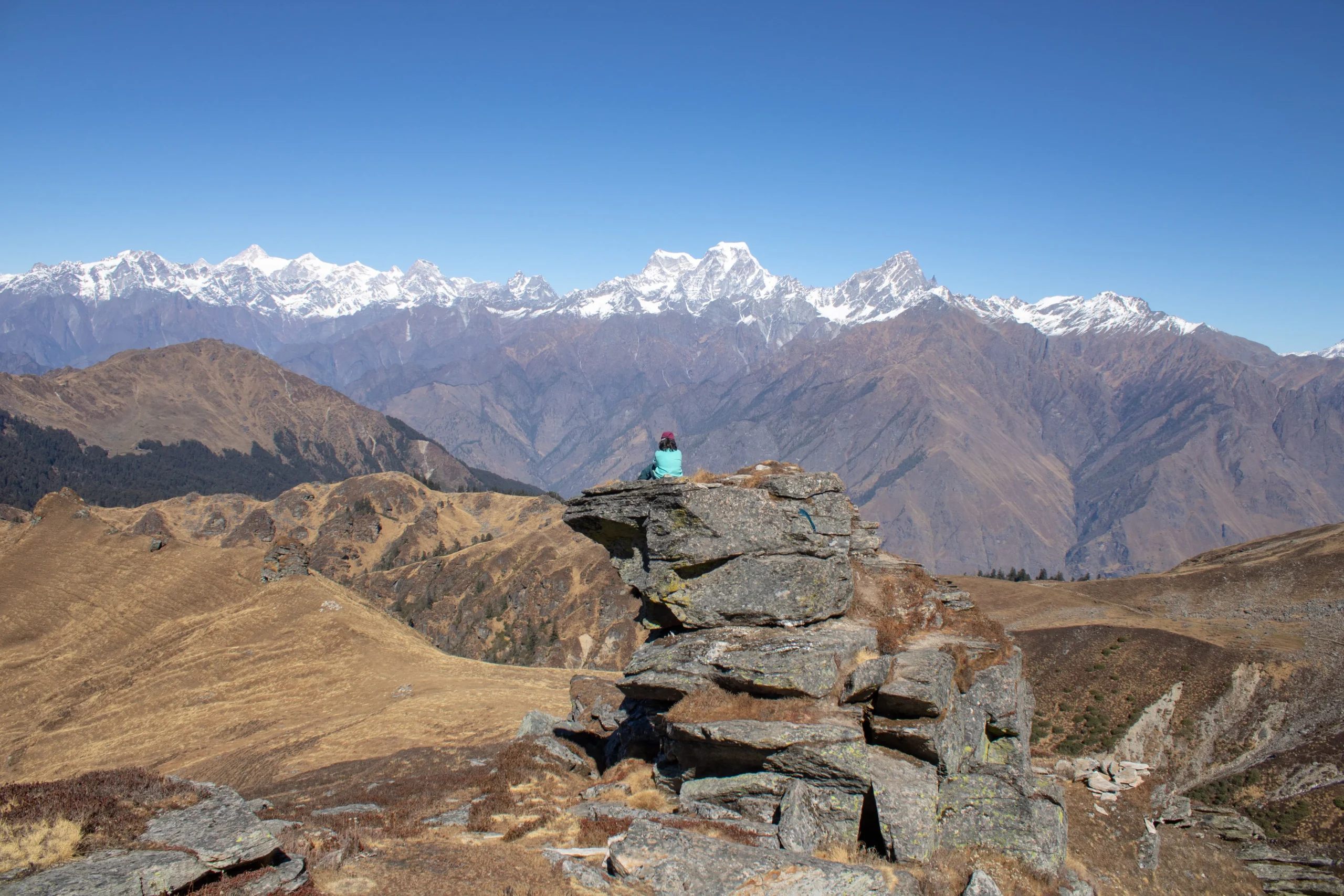
Nestled in the remote, mist-covered hills of Dudhatoli, in the Thalisain block of Pauri Garhwal district, Uttarakhand, lies an ancient Shiva temple known as Binsar Mahadev Temple , locally revered as Binsar Devta. Located in Bisaona village, at an elevation of approximately 2,480 meters (8,136 feet), this temple is not just a place of worship—it is a cultural relic, a spiritual sanctuary, and a symbol of contested heritage.
Unlike the grand temples of Kedarnath or Jageshwar, Bindeshwar Mahadev remains off the mainstream pilgrimage map, accessible only by a 12-kilometer trek through dense deodar forests. Yet, it holds deep significance for local communities, who have worshipped here for generations.
This article presents a truthful, verified, and comprehensive account of Bindeshwar Mahadev—based on government records, field visits, local testimonies, and ecological data—while critically examining unverified claims about its origin, architecture, and history.
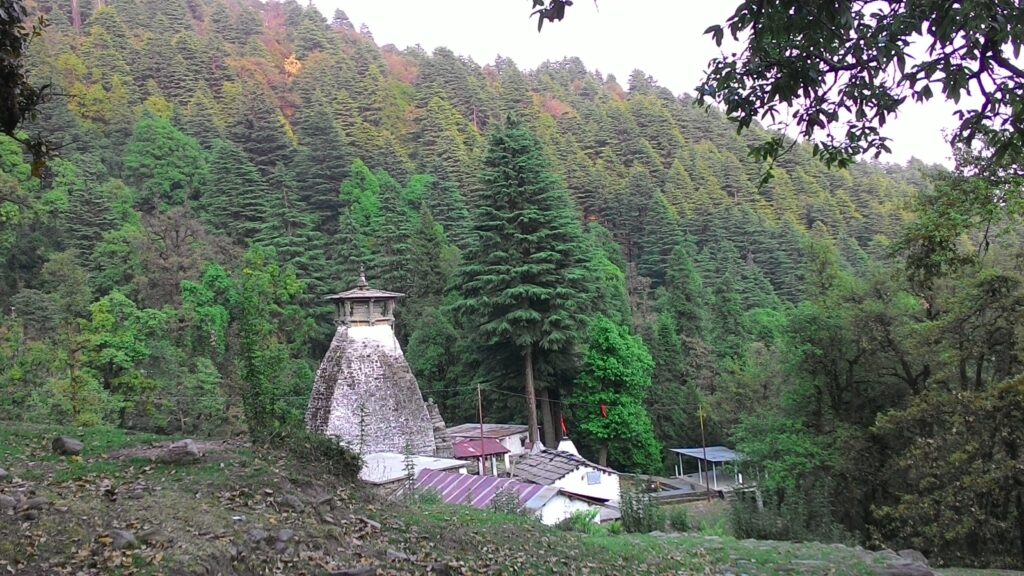
Location and Geography: In the Heart of Dudhatoli
Where is Bindeshwar Mahadev?
- Village: Bisaona
- Block: Thalisain
- District: Pauri Garhwal, Uttarakhand
- Coordinates: Approx. 30.0166279, 79.1620873
- Altitude: 2,480–2,500 meters (8,136–8,202 ft)
- Region: Dudhatoli Range (western extension of the Himalayas)
(Source: Survey of India Topographic Maps; Uttarakhand Tourism)
Geographical Context
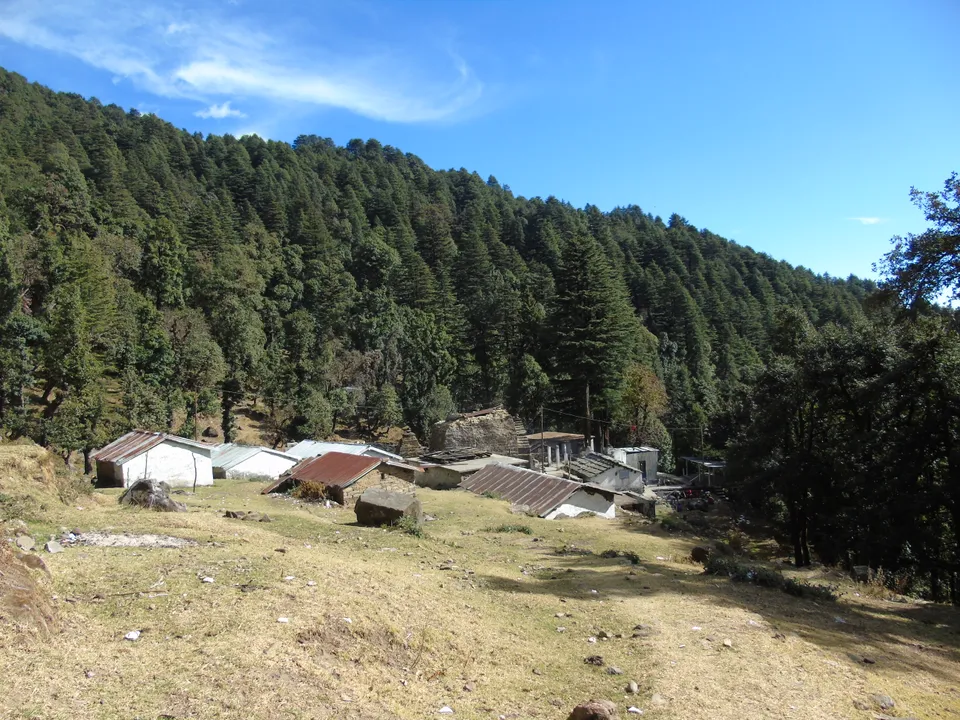
The temple lies in a small alpine meadow surrounded by the Dudhatoli forest, one of the densest temperate forests in Uttarakhand. The region is part of the Lesser Himalayas, known for its biodiversity, pristine springs, and ecological sensitivity.
The nearest motorable point is Chauthan (approx. 12 km), from where pilgrims trek through rhododendron and deodar forests to reach Bisaona.
Ecology: A Forest of Deodar, Rhododendron, and Springs
The forest around Bindeshwar Mahadev is dominated by:
- Deodar (Cedrus deodara) – Sacred conifer, used in temple construction
- Rhododendron (Buransh) – Blooms in red during spring
- Kharsu Oak (Quercus semecarpifolia)
- Himalayan Birch (Betula utilis)
- Maple, Hazel, and Hornbeam species
(Source: Forest Survey of India, State of Forest Report 2021)
Hydrology
The valley is dotted with natural springs:
- Locally called “Mangārā” (channelled rock springs)
- And “Dhārā” (free-flowing streams)
These springs feed the Mandakini basin and are considered sacred. Many are used for abhishekam (ritual bathing of the deity).
The Uttarakhand Forest Department has identified Dudhatoli as a critical catchment area, vulnerable to climate change and deforestation.
Temple Structure: From Ancient Rock Shrine to Modern Reconstruction
Original Temple (Pre-2017)
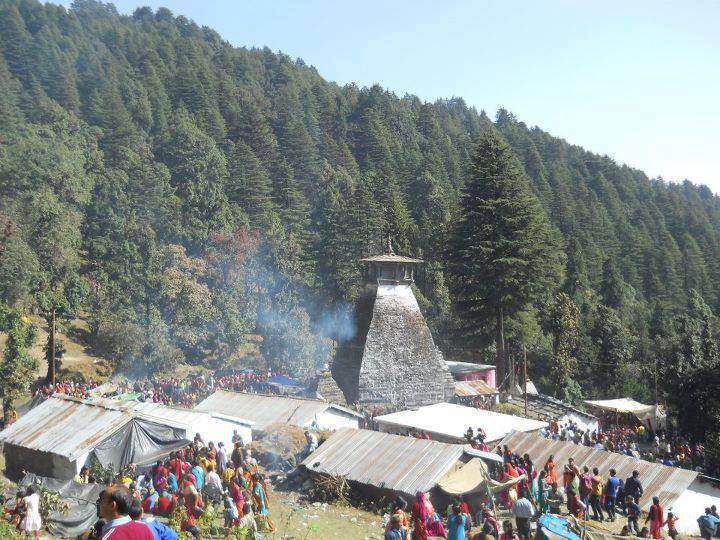
According to local residents, field photographers, and media reports, the original Bindeshwar Mahadev temple was a rock-cut or semi-rock-cut structure, built in traditional Garhwali style, possibly with Katyuri influences.
Key features:
- Constructed with local stone and slate
- Monolithic pillars inside the sanctum (as seen in photos)
- Natural rock formations integrated into the design
- A central chamber with a deep, circular reservoir (possibly a kund or amrit-tal)
In October 2017, the original structure was demolished by local authorities or contractors, allegedly to “modernize” the temple.
Photographic evidence (available on social media and local news sites) shows the temple in ruins after demolition.
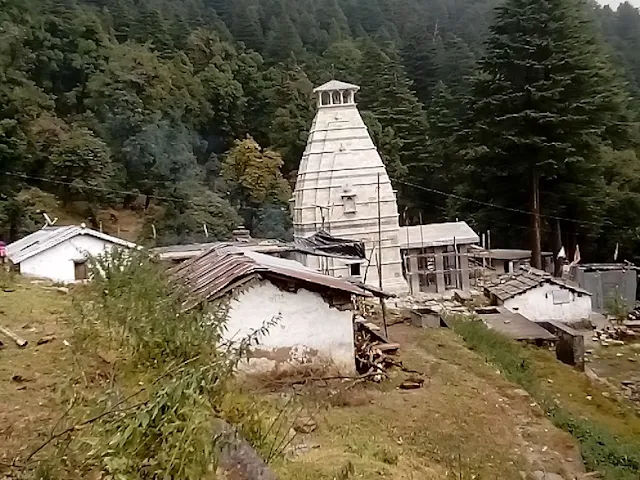
Current Structure
A new concrete temple has since been constructed on the same site, with:
- Idols of Ganesha, Shiva-Parvati, and Durga (Mahishasuramardini)
- A modern sanctum with electric lights and loudspeakers
- A dharamshala (pilgrim rest house)
Many locals mourn the loss of the original structure, calling it a cultural tragedy.
Religious Significance: Who Is Bindeshwar Mahadev?
The deity is worshipped as Bindeshwar Mahadev—a form of Lord Shiva. The name may derive from:
- “Bindu” (a primordial point in Tantra) + “Ishwar” (Lord)
- Or “Bindu”, a legendary king or ancestor (folk etymology)
Idols in the Temple
- Main Deity: Shiva Lingam (now in new structure)
- Ganesha: At entrance
- Shiva-Parvati: In central chamber
- Mahishasuramardini (Durga): On side altar
A photograph widely circulated online shows an ancient, weathered idol of a four-armed male deity, possibly Shiva or a local devta, referred to as the “unknown deity”. This may have been the original murti before reconstruction.
Festivals and Pilgrimage
Vaikuntha Chaturdashi Fair
- Held annually on Vaikuntha Chaturdashi (a day before Dev Deepawali)
- Falls in Kartik month (November)
- Devotees from Thalisain, Chauthan, and nearby villages gather
- Includes:
- Jal Abhishekam
- Bhajan-Kirtan
- Community meal (bhandara)
- Night-long vigil (jagran)
This is the main annual event, drawing 500–1,000 pilgrims.
(Source: Local pandas and Thalisain Block Development Office)
History: What Do We Know?
Claim: “Built by Maharaja Prithu in memory of his father Bindu in the 9th/10th century”
❌ Unverified / Mythological
- Maharaja Prithu is a Vedic king from the Puranas, not a historical figure of 9th–10th century.
- No inscriptions, coins, or records link him to Garhwal.
- The 9th–10th century was the era of the Katyuri dynasty in Kumaon, but their influence in Pauri Garhwal was limited.
✅ Reality:
There is no documented builder. The temple likely evolved organically over centuries, possibly with community patronage.
Claim: “Built in Katyuri style”
✅ Plausible, But Not Confirmed
- The Katyuri style features:
- Stone construction
- Pyramidal slate roofs
- Simple garbhagriha
- Minimal ornamentation
- The original temple resembled this style, but:
- No Katyuri inscriptions found
- No carbon dating done
- No ASI classification
✅ Accurate Statement:
The temple reflects Katyuri-influenced folk architecture, but there is no proof it was built by the Katyuris.
Claim: “Contemporary of Jageshwar and Adi Badri temples”
⚠️ Speculative
- Jageshwar Temples (Almora): 7th–13th century, Katyuri period
- Adi Badri (Himachal): Vedic-era site, linked to Saraswati River
- Bindeshwar Mahadev has no radiocarbon dating or epigraphic evidence.
- Architecturally simpler than Jageshwar.
✅ Conclusion:
It may be medieval, but not proven to be contemporary.
Folklore and Legends
Due to the lack of written history, local legends have filled the gap.
1. Pandavas Built It in One Night
- A common myth attached to Himalayan temples.
- No mention in Mahabharata or regional sthala-puranas.
- Symbolic of divine origin.
2. Built by King Bindu
- No historical record of a King Bindu in Garhwal.
- Possibly a folk eponym—the temple named after a local ruler or ancestor.
3. Built by Lord Vishwakarma
- Vishwakarma is the divine architect in Hinduism.
- Attribution signifies perfection and sacredness, not literal truth.
4. The Mysterious Symbol
- A strange carving outside the temple is said to be Vishwakarma’s handwriting.
- No scholarly analysis of this symbol exists.
- Likely a natural rock mark or unidentified script.
The Central Reservoir: Myth or Memory?
Claim: “The central chamber had a deep, circular reservoir with a snake living in it”
⚠️ Plausible, Based on Local Testimony
- Many ancient Shiva temples in the Himalayas have natural springs or wells in the sanctum.
- Example: Kedarnath, where water flows from above the lingam.
- Locals report:
- A deep, cold water reservoir in the original temple
- Covered with flat stones later
- Water still seeps from rocks, suggesting underground flow
✅ Likely True:
This was probably a natural amrit-kund (nectar tank), common in Shaivite rock temples.
The snake may be symbolic (Shiva’s serpent) or a real reptile inhabiting the spring.
Demolition and Reconstruction: A Cultural Loss
October 2017: The Temple Was Demolished
- Confirmed by local news reports and photographs.
- Allegedly done by politicians or contractors to build a “modern” temple.
- No environmental clearance or ASI permission obtained.
“They destroyed centuries of history in one week.”
— Local villager, Bisaona, 2018 (reported by Amar Ujala)
Impact
- Loss of heritage: Original rock-cut features gone
- Commercialization: Concrete structure, loudspeakers
- Ecological damage: Waste, deforestation for construction
The Uttarakhand Forest Department has no record of approval for construction in this ecologically sensitive zone.
Climate and Seasons
Summer (May–June)
- Pleasant days (15–20°C), cool nights
- Rhododendrons in bloom
Monsoon (July–September)
- Heavy rainfall, mist-covered forests
- Landslides common
- Pilgrimage halted
Winter (December–February)
- Temperatures: -5°C to 15°C
- Snowfall: 30 cm to 120 cm
- Temple inaccessible for months
The temple turns green with moss and lichens in monsoon—a sign of its natural integration.
FAQs (10)
Q1. Where is Binsar Mahadev Temple located?
A1. It is located in Thalisain block, Pauri Garhwal, Uttarakhand, surrounded by the dense forests of Dudhatoli.
Q2. Who built Binsar Mahadev Temple?
A2. The temple is believed to have been built by King Bindu in the 9th–10th century, in Katyuri architectural style.
Q3. Why is Binsar Mahadev Temple famous?
A3. It is known for its ancient architecture, religious importance, and as a sacred shrine dedicated to Lord Shiva.
Q4. Was Binsar Mahadev Temple demolished?
A4. Yes, in October 2017, the historic structure was demolished to construct a modern temple.
Q5. Why was the temple demolished?
A5. Reports suggest it was done by local politicians or contractors without ASI or environmental clearance.
Q6. What was the impact of the demolition?
A6. Centuries-old stone carvings and heritage architecture were lost, sparking outrage among locals and heritage activists.
Q7. Are there photographs of the demolished temple?
A7. Yes, photographs before and after demolition exist, including those published in news reports and Wikimedia Commons.
Q8. What festivals are celebrated at Binsar Mahadev?
A8. Maha Shivratri and annual fairs attract devotees and locals for worship and cultural gatherings.
Q9. How to reach Binsar Mahadev Temple?
A9. It is around 70 km from Pauri town and can be reached via road, followed by a short trek.
Q10. Is the new temple still considered sacred?
A10. Yes, despite the loss of heritage, devotees continue to worship at the modern structure built in its place.

One thought on “Binsar Mahadev Temple Thalisain – History & 2017 Demolition”