
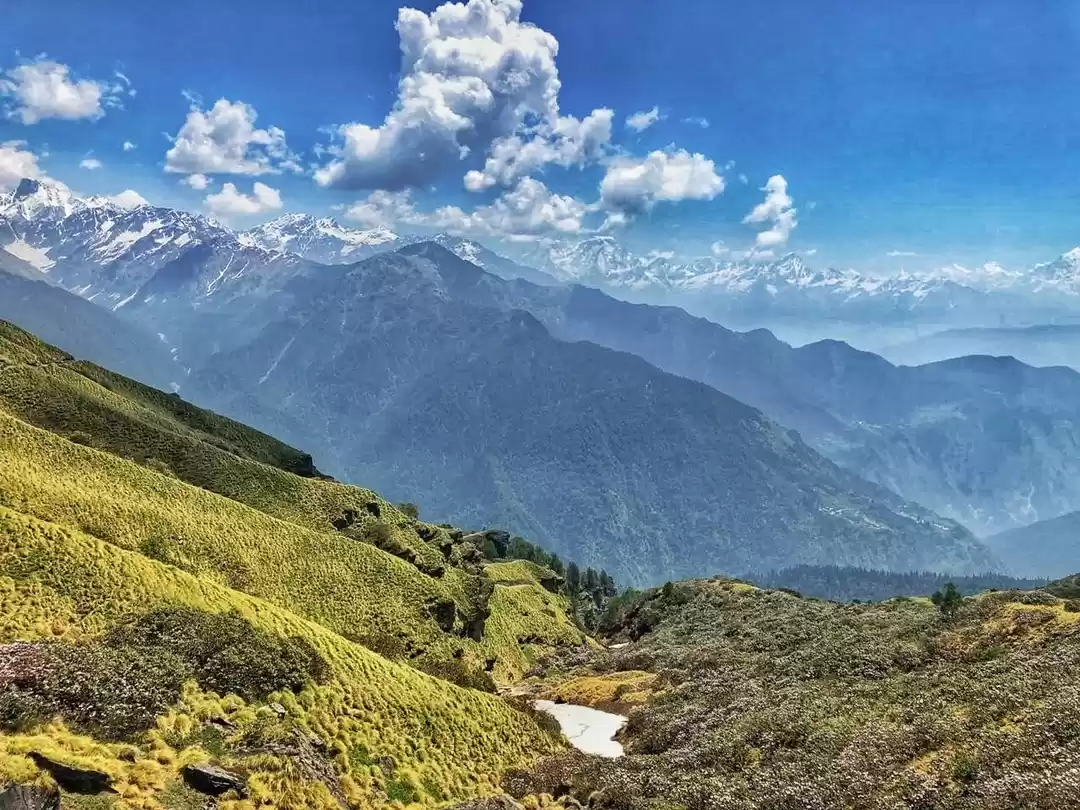
If the Himalayas were a symphony, Rudranath temple would be the deepest, most resonant bass note the one that shakes you to your core. This is not the gentle, tourist-friendly walk-in-the-park of some other famous temples. This is a commitment. This is where the landscape demands respect, and the reward is a spiritual clarity that only comes from earning your view.
Rudranath is the third temple in the sacred Panch Kedar pilgrimage circuit, and it holds a unique, revered place: it is where the face (the Mukha) of Lord Shiva is worshipped, emerging naturally from a rock formation. The energy here is primal, ancient, and utterly mesmerizing. The name itself translates to “Him who is Angry,” suggesting a powerful, untamed divinity that mirrors the very terrain protecting it.
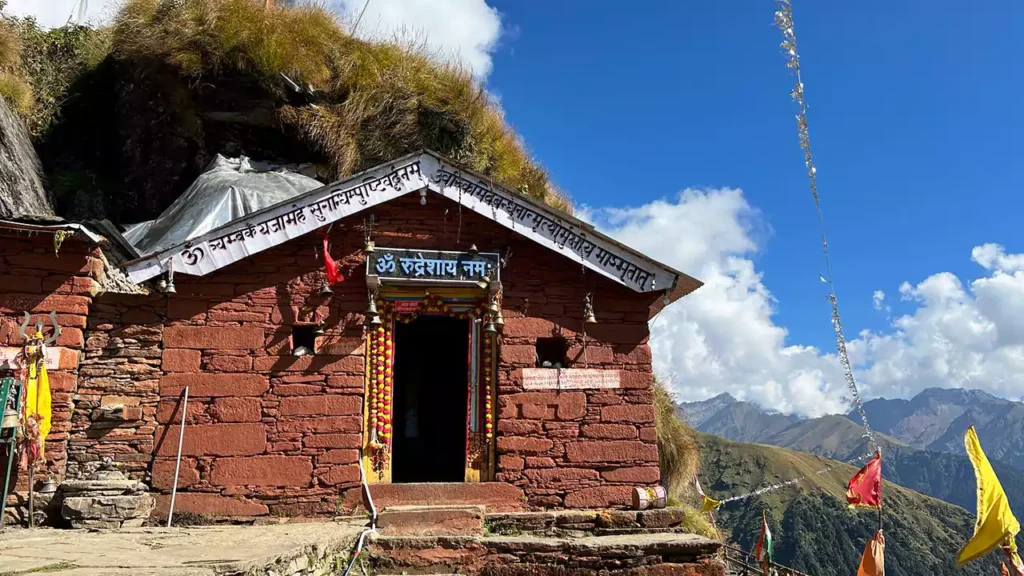
To reach this shrine, perched at over 11,800 feet (3,600 meters) in the vast, open meadows of the Garhwal Himalayas, you must conquer what locals famously call, “Rudranath ki chadhai aur German ki ladai” (The climb to Rudranath is like fighting the Germans) a testament to its unrelenting, almost brutal, uphill nature. This is the journey for the traveler who seeks a genuine challenge and a profound spiritual payoff.
The Ascent: The Challenge and The Revelation
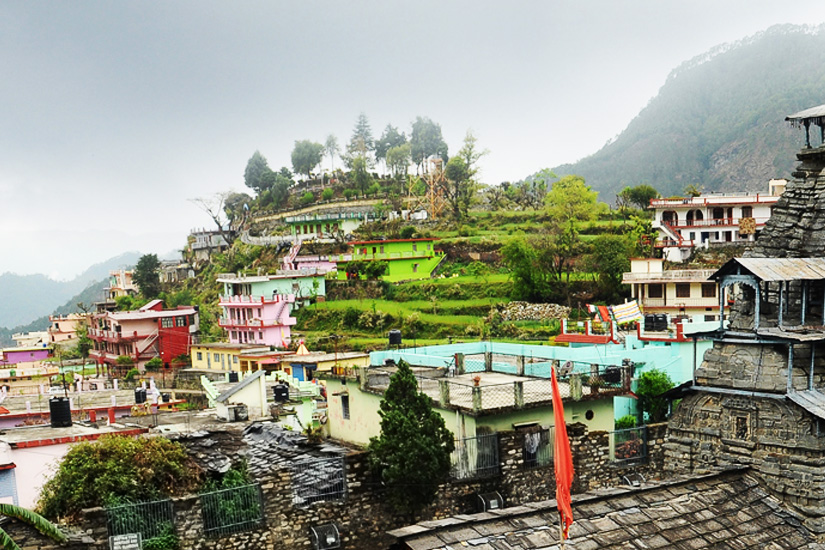
The trek to Rudranath is less a path and more a raw, 20-22 kilometer pilgrimage that typically takes 3 to 4 demanding days of hiking. The most popular starting point is Sagar Village, a beautiful, terraced community just outside Gopeshwar in the Chamoli district.
The Trail’s Temperament
The difficulty rating is unequivocally Moderate to Difficult. This is not a trek for beginners without significant cardiovascular training. You gain a massive amount of altitude very quickly, and the terrain is ceaseless in its complexity:
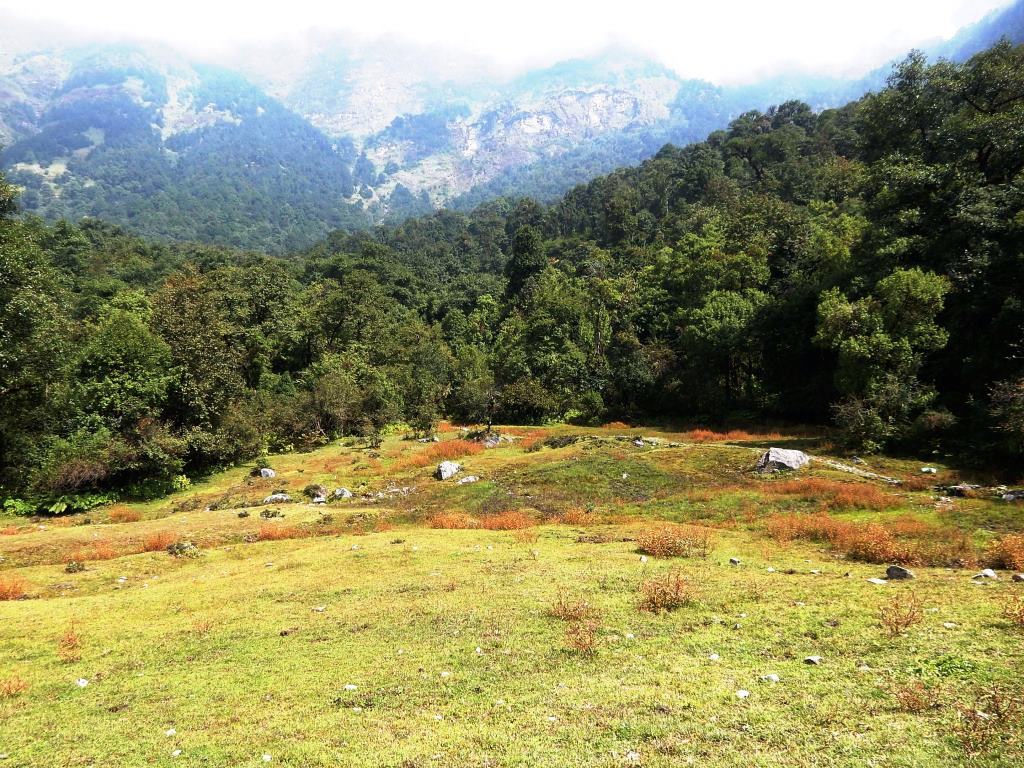
- The Relentless Uphill: From Sagar, the path immediately begins a severe, continuous ascent. The trail winds through dense, magnificent forests of oak and rhododendron, where the sunlight struggles to penetrate. This initial phase demands endurance and tests your will right from the first hour.
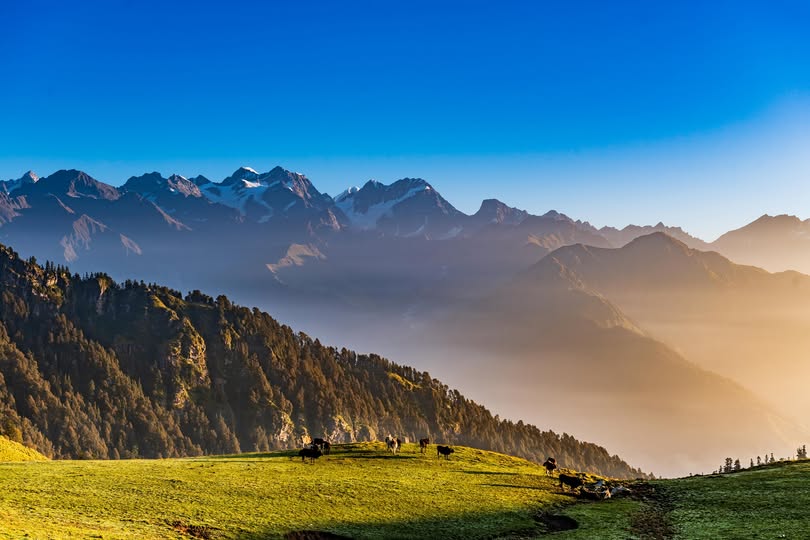
- The Bugyals (Alpine Meadows): The trail’s magic is revealed in the vast, emerald meadows it connects. You trek through stunning landscapes like Pung Bugyal and Panar Bugyal. These sprawling, high-altitude grasslands, speckled with countless wildflowers in the spring and autumn, offer momentary, breathtaking relief. Here, the landscape opens up, and you truly feel the scale of the Kedar Valley.
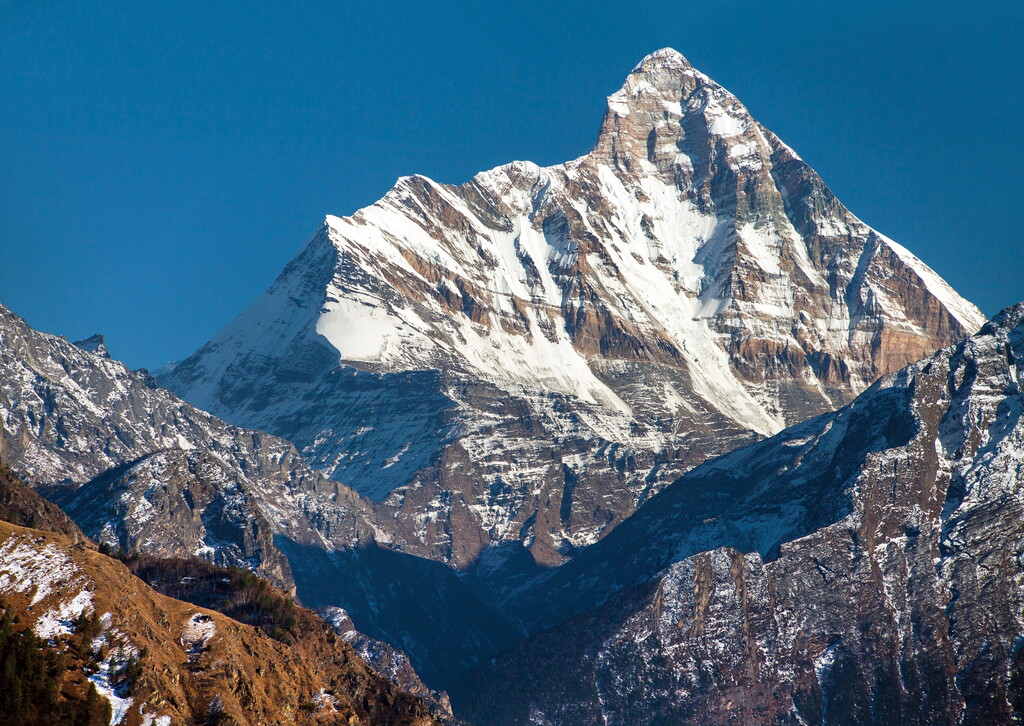
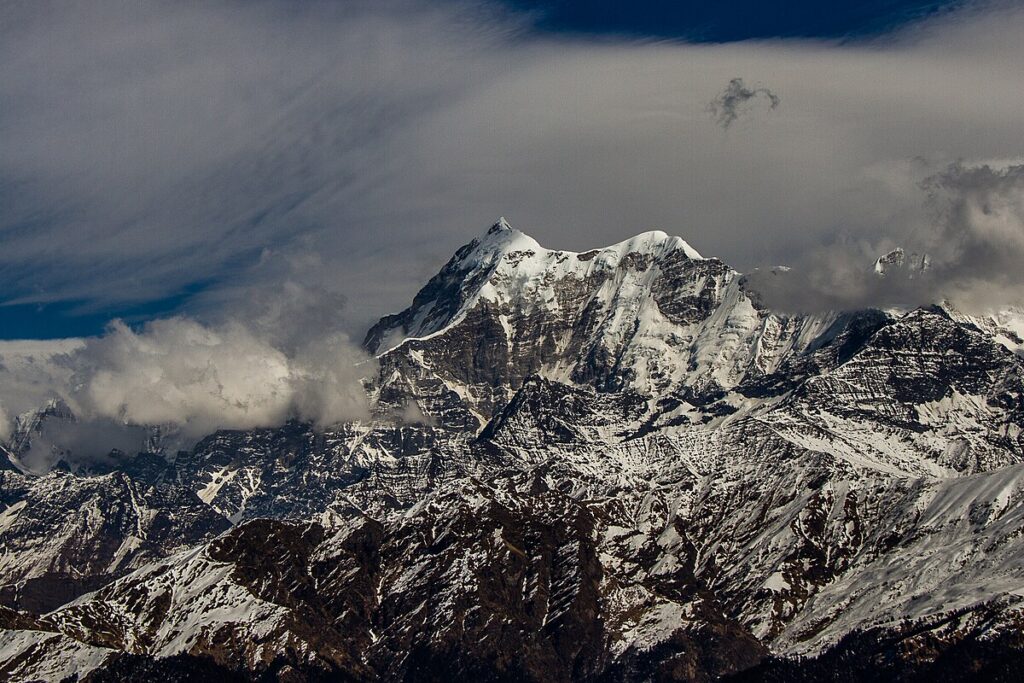
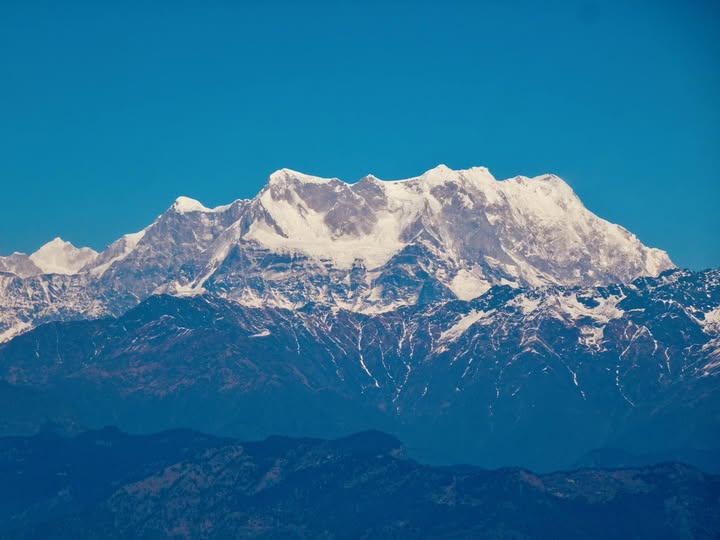
- Pitradhar: The Ridge of Ancestors: The climb continues steeply to Pitradhar (The Seat of Ancestors), the highest point on the main route. This ridge is a vital spiritual halt where pilgrims historically performed rituals for their departed ancestors. It marks the transition from the forested belt to the pure alpine zone and offers the first, jaw-dropping panoramic views of the entire Himalayan chain, including titans like Nanda Devi, Trisul, and Chaukhamba. From here, the world drops away, leaving only the pilgrim and the peaks.
Life on the Trail
Unlike highly commercialized routes, the infrastructure here is minimal but authentic. You stay in basic Dharamshalas or tented camps managed by local villagers along the Bugyals. Food is simple, wholesome, and energy-rich typically dal, rice, and local vegetables. Carrying enough water and energy snacks, and relying on the occasional dhaba found at key halting points like Pung and Panar, is part of the self-sufficiency the trail demands.
The Sacred Heart: The Temple and its Unique Darshan
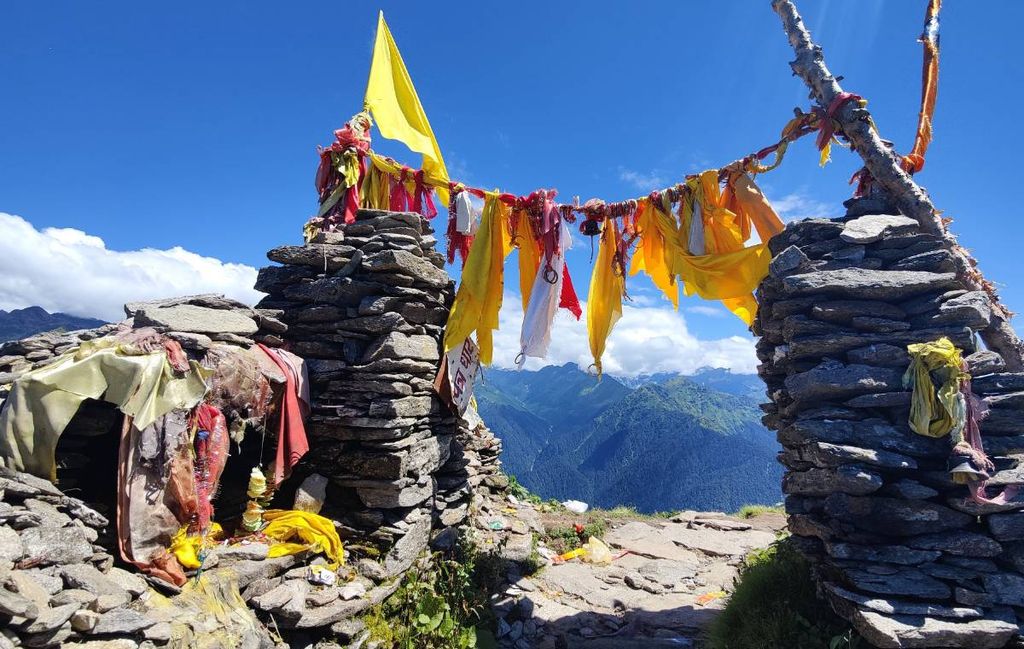
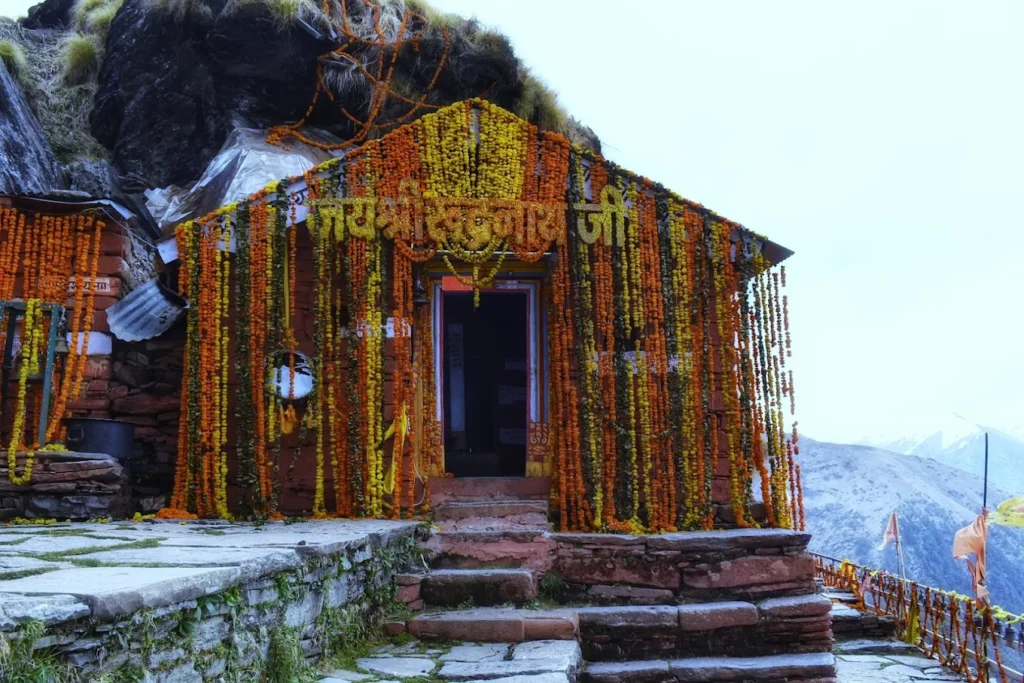
After the sweat and strain of the climb, reaching the Rudranath Temple complex is an experience of overwhelming calm and revelation. The temple is set amidst a cluster of holy water tanks and streams, surrounded by the immense, quiet presence of the peaks.
The Face of Shiva
The primary object of worship is not a typical sculpted idol but the natural rock formation inside the sanctum, believed to be the Mukha (Face) of Lord Shiva. This face is serene yet powerful, often adorned with silver or gold ornamentation by the priests. The darshan (viewing) here feels intensely personal, direct, and unadulterated, connecting you directly to the earth and the deity.
The Water Bodies: A Divine Reservoir
Rudranath is blessed by numerous sacred Kunds (ponds) essential to the pilgrimage:
- Surya Kund, Chandra Kund, Tara Kund: Named after the Sun, Moon, and Stars, devotees take a dip in these icy waters before entering the temple, an act of purification before facing the divine.
- Vaitarani (Baitarani) River: This stream flows near the temple and is considered the legendary “River of Crossing,” which Hindus believe one must cross to reach the afterlife. Bathing in its cold waters here is believed to grant salvation.
The entire valley functions as an outdoor temple, where every stream, rock, and meadow holds a story of the divine.
The Best Time: When to Answer the Call
Rudranath demands clear skies and accessible trails, making its visiting window relatively narrow but intensely beautiful.
- Spring/Early Summer (Mid-May to June End): The Bloom: This is a beautiful time to visit. The snow has mostly melted from the lower paths, and the meadows burst into life. The rhododendrons (the buransh of the hills) carpet the hillsides in vibrant red, and the air is clear. Temperatures are moderate and perfect for trekking, though the early stages of the ascent can feel warm.
- Autumn (September to Late October): The Clarity: This is the most rewarding period for the serious hiker and photographer. The monsoon has scoured the air clean, providing the clearest, sharpest mountain views of the entire year. The greens of the meadows begin to turn a golden-brown, and the trekking is less strenuous than during the summer heat. The temple closes for winter around the end of October or early November.
- When to Avoid: The entire monsoon season (July and August) is highly risky. Heavy, incessant rains make the already steep trail slippery, prone to landslides, and the deep forests become treacherous. Winter (November to April) brings heavy snow, closing the trails entirely, and the deity is moved to the Gopinath Temple in Gopeshwar for winter worship.
Getting to the Gateway
The journey to Rudranath begins long before the first uphill stride from Sagar. It starts with reaching the base region in Chamoli district.
The Travel Hubs
The nearest major railhead is Rishikesh or Haridwar, and the nearest accessible airport is Jolly Grant Airport (DED) near Dehradun. The distance from these hubs is significant, requiring a full day’s drive of 8–10 hours to reach Gopeshwar or Sagar village.
- The Drive: From Rishikesh, the route is stunning, tracing the Alaknanda River, passing through the sacred confluences (Prayags) like Devprayag and Rudraprayag, before climbing toward Gopeshwar (the main district town) and finally to the small, idyllic village of Sagar, which is the official trek starting point. This drive is a meditation in itself, preparing your mind for the altitude and isolation to come.
Logistical Grace
Before starting the Rudranath trek, two steps are crucial:
- Hiring a Guide: The Rudranath trail is less marked and more remote than Kedarnath or Tungnath. Local guides, who often belong to the priest families, are essential not just for navigation but for safety, knowledge of the weather, and sharing the local history.
- Acclimatization: Spend a day resting in Gopeshwar or Sagar. The rapid altitude gain is challenging; proper rest is non-negotiable to avoid the risks of acute mountain sickness.
The Final Lesson of the Face
Rudranath is not a tick on a list; it is a pilgrimage that strips away the superfluous. The sheer physical challenge ensures that when you arrive, you are not just a tourist but a deeply humbled, prepared devotee.
You walk through forests where the air is so clean it stings, across meadows where wildflowers grow in astonishing indifference to the vast peaks towering above, and finally, you kneel before a rock the immutable Face of Shiva.
The greatest gift of Rudranath is the silence. It is the raw, pure echo of the Himalayas reflecting the face of the Angry One, whose anger is ultimately the force that destroys illusion. When you descend, you carry not souvenirs, but the undeniable knowledge that you earned your peace, step by grueling, magnificent step.
Frequently Asked Questions (FAQ’s)
Where is Rudranath Temple located?
Rudranath Temple is located in the Chamoli district of Uttarakhand, India, nestled in the Garhwal Himalayas at an altitude of about 3,600 meters (11,800 ft). It is one of the five sacred Panch Kedar temples dedicated to Lord Shiva.
What is the significance of Rudranath Temple?
According to Hindu mythology, Lord Shiva’s face (Rudra form) is worshipped here. It is believed that after the Mahabharata war, the Pandavas built this temple as part of their penance to seek forgiveness from Lord Shiva.
How can I reach Rudranath Temple?
To reach Rudranath, you must first travel by road to Sagar village, Mandal, or Urgaon, which serve as base points. From there, it’s a trek of about 18–20 km through dense forests, meadows, and mountain streams.
What is the best time to visit Rudranath Temple?
The best time to visit is May to October, when the weather is pleasant and the temple is open. The temple remains closed during winter (November–April) due to heavy snowfall, and the deity is shifted to Gopeshwar.
How long does it take to complete the Rudranath trek?
Typically, it takes 2 to 3 days to complete the trek, including the return journey. Most trekkers stay overnight at Panar Bugyal or Lyuti Bugyal, enjoying stunning views of Nanda Devi and Trishul peaks.
Are there accommodations near Rudranath Temple?
Yes, basic accommodations like guest houses and homestays are available in Sagar and Gopeshwar. During the trek, you’ll find tents and dhabas at stops like Panar Bugyal and Pitradhar.
Is Rudranath part of the Panch Kedar circuit?
Yes. Rudranath is the third temple in the Panch Kedar pilgrimage, after Kedarnath and Tungnath, and before Madhyamaheshwar and Kalpeshwar.

4 thoughts on “Rudranath Temple Trek: Route, Distance & Travel Guide”